

Capital General Directorate of Traffic Light vehicle
Practice mode· Road signsCapital General Directorate of Traffic - Bahrain Road Signs Practice Test 1
Covers the first 22 road signs - mandatory signs, prohibitory signs and warning triangles. Learn what each sign looks like and what it requires you to do.
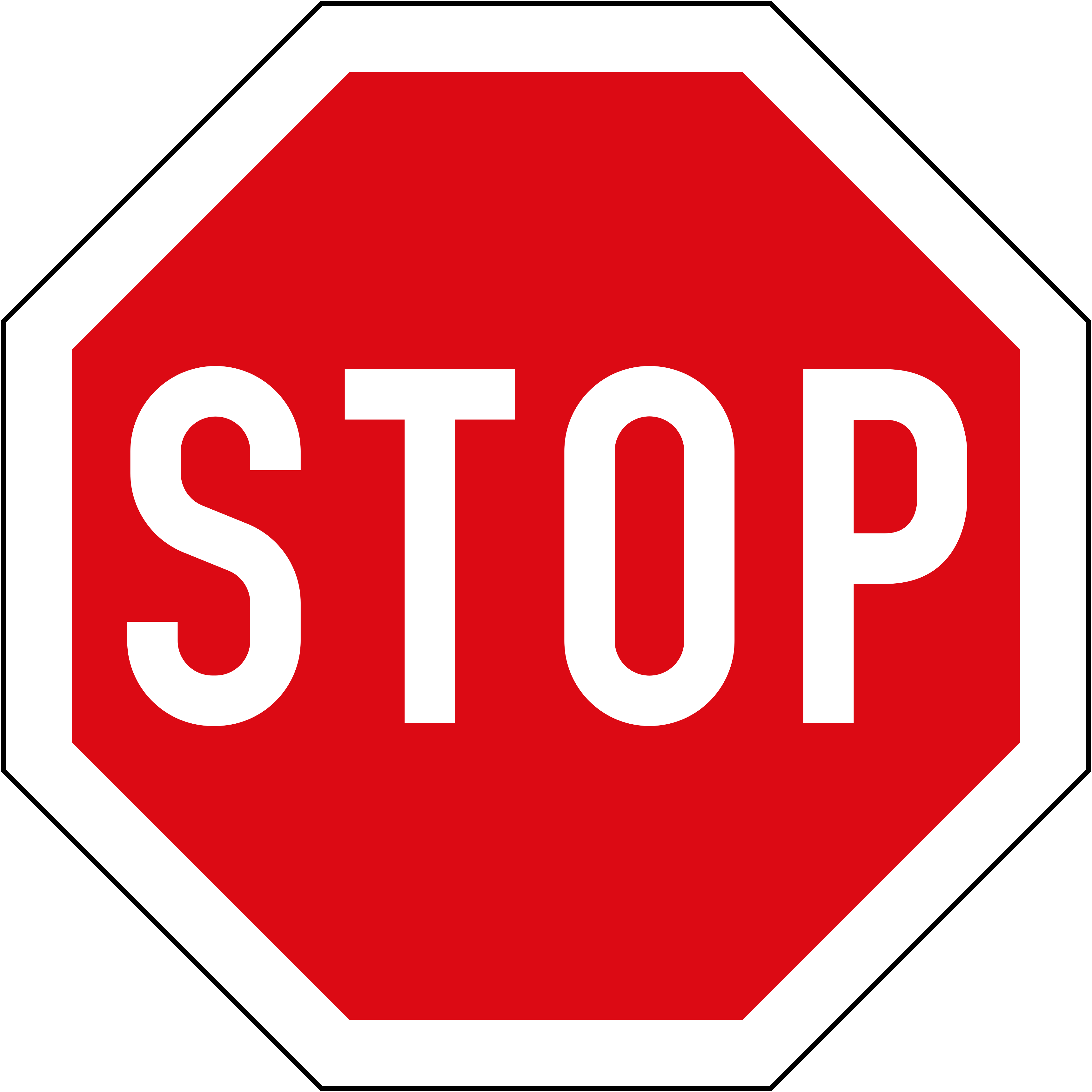
What does this sign mean?
The other 12 questions in this test
Read them all. The answer and the reason for each, and the timed 22-question run, are in the Bahrain Driving Test Questions PDF.
- Q11Road signs and signals
What does this sign warn drivers about?
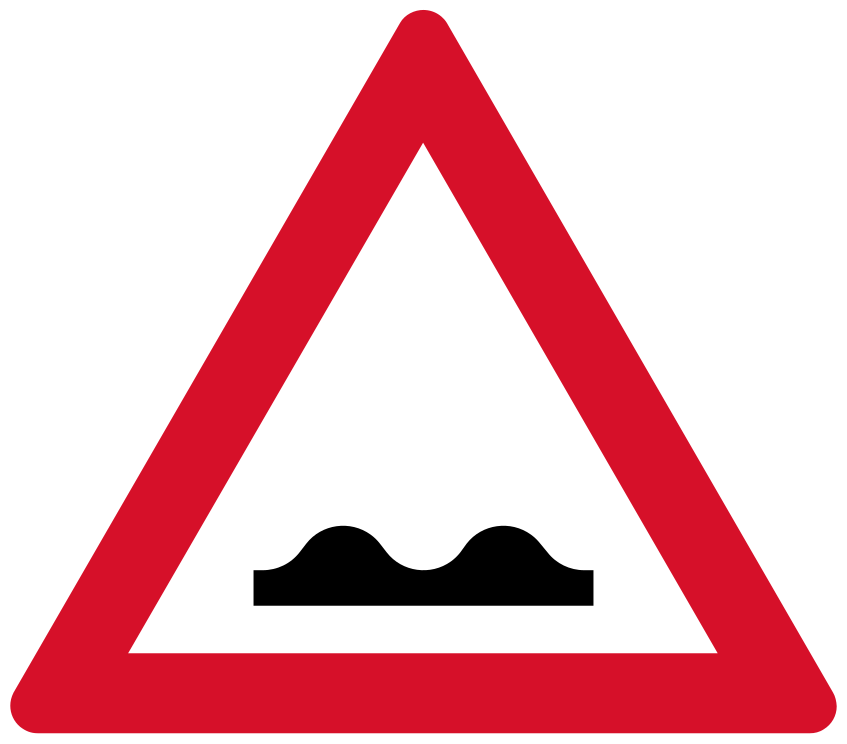
- AA bridge with a weight limit is ahead
- BA speed bump or raised surface is ahead
- CThe road surface is uneven due to construction
- DA level crossing is ahead
Answer and explanation in the bank
- Q12Road signs and signals
You arrive at a STOP sign but can clearly see no traffic in any direction. What should you do?
- ASlow down to 10 km/h and continue if the road is clear
- BProceed without stopping since no vehicles are visible
- CStop fully at the line, check, then proceed when safe
- DSound your horn and proceed slowly
Answer and explanation in the bank
- Q13Road signs and signals
A No Overtaking sign is displayed but the road ahead is a three-lane road. Which statement is correct?
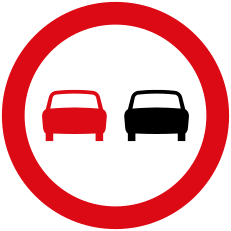
- AYou must not pass any moving vehicle on any lane while the sign applies
- BYou may overtake in the left (fast) lane only
- CThe restriction applies only to the rightmost lane
- DYou may overtake bicycles and motorcycles but not cars
Answer and explanation in the bank
- Q14Road signs and signals
You approach a Give Way sign at a T-junction. There is no approaching traffic. What should you do?
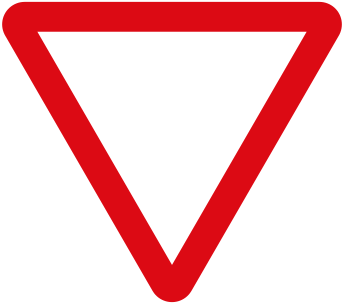
- ASlow down and check before proceeding; stop if necessary
- BProceed at normal speed since no vehicles are visible
- CTreat it the same as a STOP sign and stop completely
- DSound your horn and enter the main road
Answer and explanation in the bank
- Q15Road signs and signals
You are driving on a road posted at 120 km/h. Heavy rain begins. What speed should you choose?
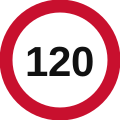
- AExactly 120 km/h because that is the legal limit
- BA speed that is safe for conditions, which may be well below 120 km/h
- CAt least 100 km/h to keep up with traffic
- D120 km/h but only in the right (slow) lane
Answer and explanation in the bank
- Q16Road signs and signals
A pedestrian is waiting at a marked crossing where this warning sign is displayed. What must you do?
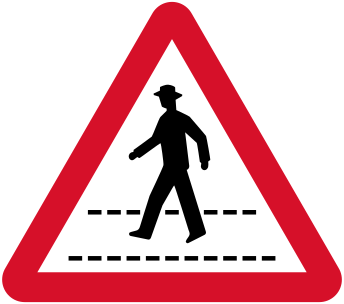
- AFlash your headlights to signal the pedestrian to wait
- BSound your horn and continue if the pedestrian has not stepped onto the road
- CStop and let the pedestrian cross
- DSlow down but only stop if the pedestrian is already on the road
Answer and explanation in the bank
- Q17Road signs and signals
You see this sign after crossing a desert highway section with loose sand on the road. What is the most important action?
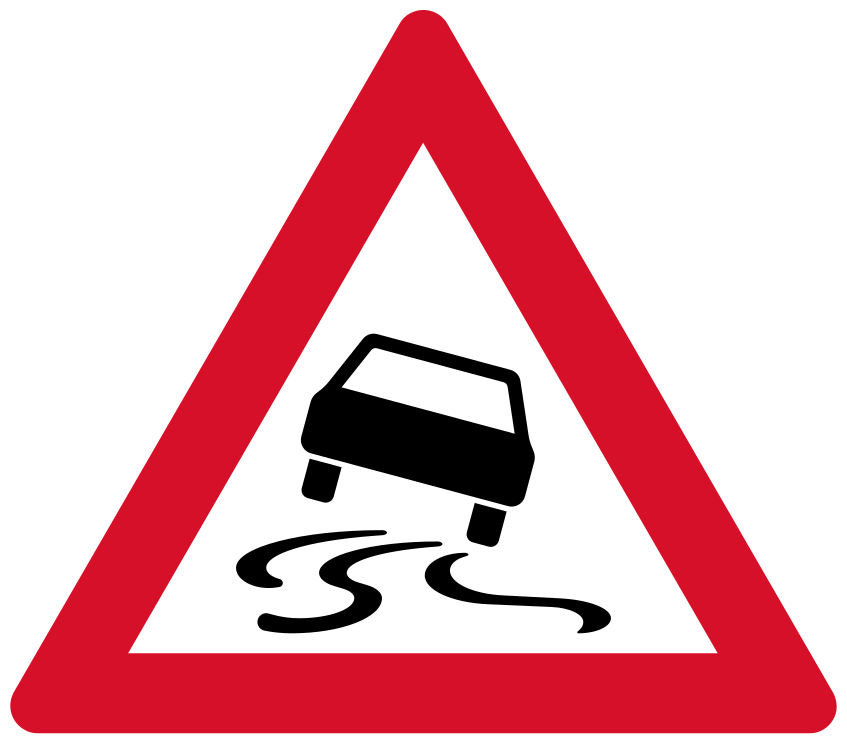
- AActivate four-wheel drive and continue at normal speed
- BMove to the left (fast) lane to avoid sand
- CReduce speed and avoid sudden steering or braking inputs
- DIncrease speed so tyres clear the sand quickly
Answer and explanation in the bank
- Q18Road signs and signals
You see a Roundabout Ahead warning sign. Which lane should you be in if you want to take the third exit?
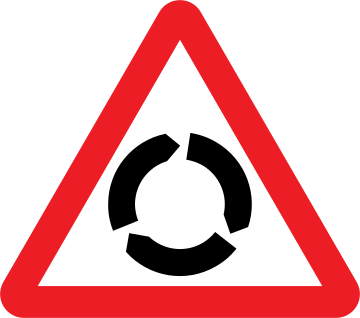
- AThe left (fast) lane throughout
- BThe right lane initially, moving to an appropriate lane inside the roundabout
- CAny lane; lane position at a roundabout does not matter
- DThe right lane and stay in it through the entire roundabout
Answer and explanation in the bank
- Q19Road signs and signals
In Bahrain, which lane is used for normal driving on a multi-lane highway?
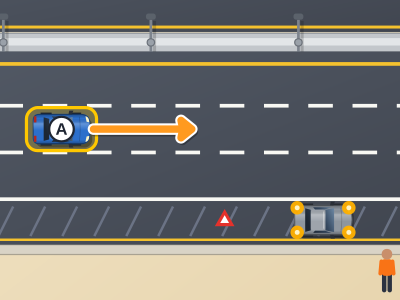
- AThe left lane
- BThe centre lane at all times
- CAny lane at the driver's preference
- DThe right lane
Answer and explanation in the bank
- Q20Road signs and signals
What colour is a mandatory instruction sign (such as a minimum speed or compulsory direction sign) in the GCC standard?
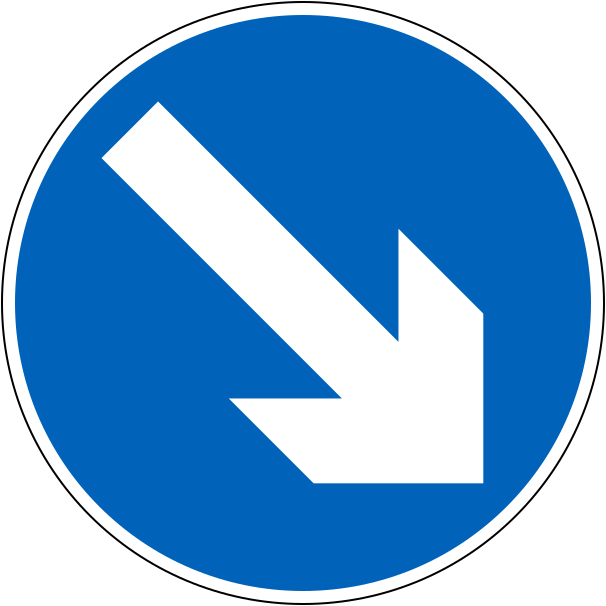
- ARed triangle with black symbol
- BYellow diamond with black symbol
- CGreen rectangle with white text
- DBlue circle with white symbol
Answer and explanation in the bank
- Q21Road signs and signals
What shape is a warning sign in Bahrain?
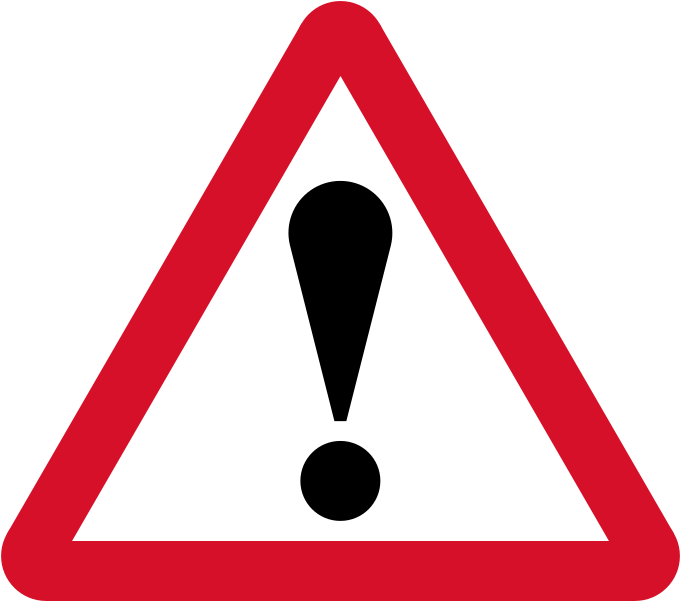
- AA red-bordered triangle
- BA red octagon
- CA blue circle
- DA green rectangle
Answer and explanation in the bank
- Q22Road signs and signals
What does a white rectangular sign with a black border typically provide?
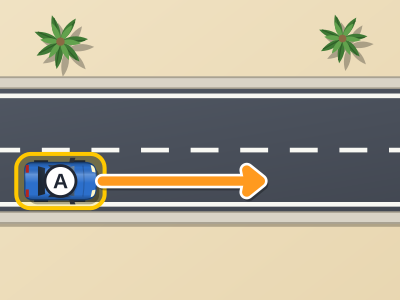
- AA prohibition that must be obeyed immediately
- BA warning about a hazard ahead
- CSupplementary information such as distance or hours of operation
- DAdvance direction information for motorways
Answer and explanation in the bank
Every answer above, with the rule it comes from, plus the full 22-question timed test.
Get the Bahrain Driving Test Questions - BHD 3What this test covers
Topics include road signs, traffic signals, right of way, roundabouts, speed limits, seat belts, fines and penalties, and the safe-driving rules specific to your vehicle category. Full question-by-question feedback with explanations is shown immediately after you finish the test above.
Frequently asked questions
How many questions is the Capital General Directorate of Traffic light vehicle theory test?
The official General Directorate of Traffic light vehicle theory test in Capital has 35 questions and you need 26 correct (75%) to pass. This practice test has 22 questions.
Is this the real exam?
These are practice questions to help you revise, written to the published rules and to what candidates report from the real test. They are not the official Bahrain exam and the real question bank, format, fees and pass mark are set by the General Directorate of Traffic (Ministry of Interior), and can change. Always confirm the current requirements with your driving school or the traffic department.
Is this practice test free?
The first 10 questions are free, with no signup, and each shows the answer and the reason. The full 22-question test, timed, is in the Bahrain Driving Test Questions PDF (BHD 3, one payment), with every question in the bank.
What does the Capital light vehicle theory test cover?
Road signs, traffic signals, right of way, roundabouts, speed limits, seat belts, penalties and safe-driving rules, plus the handling and safety topics specific to your vehicle.