

Capital General Directorate of Traffic Light vehicle
Practice mode· Right of way & safetyCapital General Directorate of Traffic - Bahrain Safe Driving Practice Test
Covers defensive driving, following distances, fatigue, visibility, adverse weather and hazard awareness. Safe driving habits save lives and keep your licence clean.
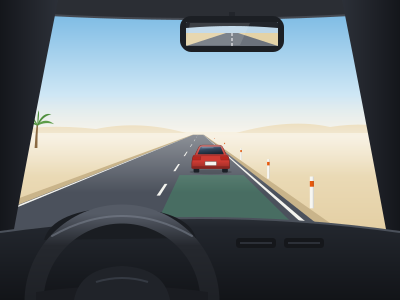
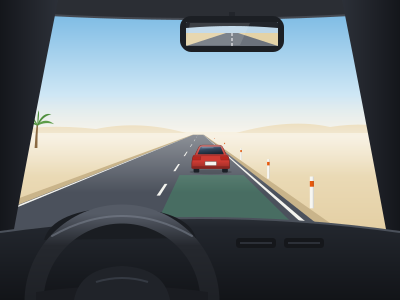
What is the minimum recommended following distance behind the vehicle in front on a dry road in Bahrain?
The other 12 questions in this test
Read them all. The answer and the reason for each, and the timed 22-question run, are in the Bahrain Driving Test Questions PDF.
- Q11Safe driving
How often should you check your mirrors while driving in normal traffic conditions?
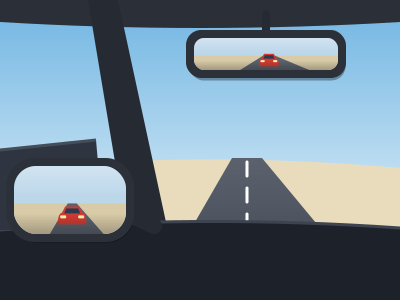
- AOnly when you intend to change lanes or turn
- BEvery 5 to 8 seconds
- COnce every minute is sufficient at motorway speeds
- DThere is no fixed rule; check whenever you remember
Answer and explanation in the bank
- Q12Safe driving
Before changing lanes on a Bahrain expressway, you check your mirrors and see the lane is clear. What must you still do?
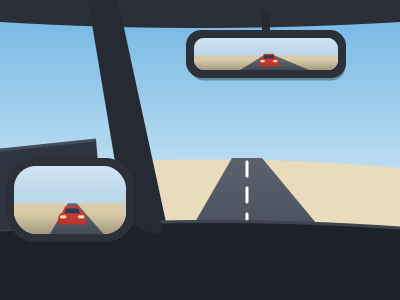
- ASound the horn to warn drivers in the other lane
- BFlash your headlights to signal your intention
- CGlance over the appropriate shoulder to check the blind spot
- DNothing further; mirrors provide a complete view of surrounding traffic
Answer and explanation in the bank
- Q13Safe driving
Who is required to wear a seat belt in Bahrain?
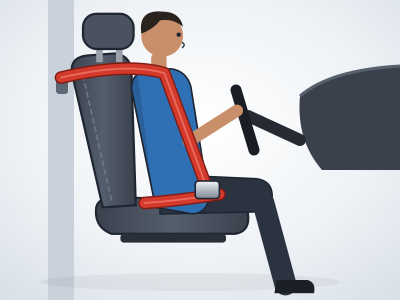
- AOnly the driver and front passenger
- BOnly passengers under the age of 12
- COnly occupants travelling on highways; seat belts are optional inside cities
- DAll occupants in every seating position that has a belt fitted
Answer and explanation in the bank
- Q14Safe driving
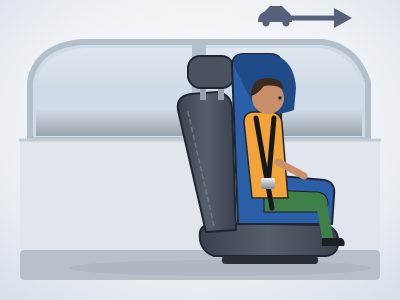
A child that is too small for an adult seat belt must travel in a vehicle using which restraint?
- AThe adult lap belt only, without the diagonal shoulder strap
- BAn approved child safety seat appropriate for the child's age, weight, and height
- CAn adult holding the child on their lap
- DNo restraint is needed for children under 5 years old
Answer and explanation in the bank
- Q15Safe driving
You are fitting a rear-facing infant seat. Which seating position should you avoid if the vehicle has an active front passenger airbag?
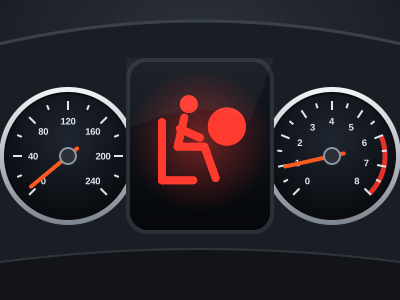
- AThe front passenger seat, unless the airbag is deactivated
- BThe rear centre seat because it lacks side-impact protection
- CAny seat behind the driver because the infant cannot see forward
- DThere is no restriction; airbags are designed to be safe for all child seats
Answer and explanation in the bank
- Q16Safe driving
Which of the following is a recognised early warning sign of driver fatigue?
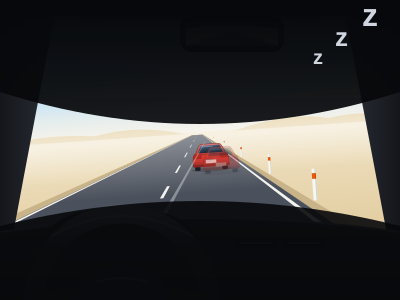
- ADifficulty keeping eyes open and missing exits or road signs
- BAn increase in fuel economy as the engine warms up
- CThe steering feeling heavier than usual
- DThe dashboard temperature gauge reading higher than normal
Answer and explanation in the bank
- Q17Safe driving
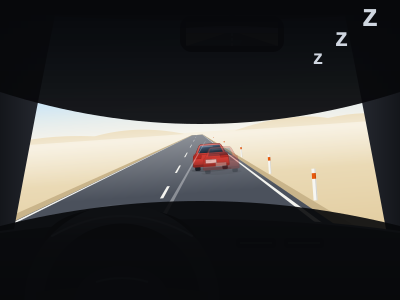
You are driving from Bahrain toward the Saudi border on a long journey and feel drowsy. What is the most effective action?
- ADrink several cups of coffee and keep driving to reach your destination
- BOpen all windows and turn the air conditioning to maximum cold
- CDrive slightly faster so the journey ends sooner
- DPull over safely, take a short nap of 15 to 20 minutes, then continue
Answer and explanation in the bank
- Q18Safe driving
You are driving in dense fog near Bahrain International Airport. Which lights should you use?
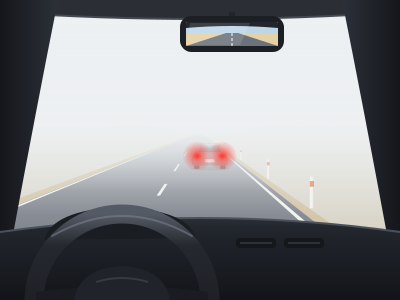
- ADipped (low-beam) headlights and rear fog lights if fitted
- BFull-beam (high-beam) headlights to see as far ahead as possible
- CHazard warning lights instead of headlights
- DSidelights only, to avoid dazzling other drivers
Answer and explanation in the bank
- Q19Safe driving
A sudden dust storm reduces visibility to near zero on a Bahrain highway. What should you do?
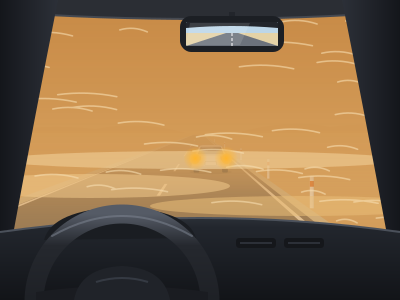
- AContinue driving slowly with hazard lights on to avoid being rear-ended
- BAccelerate to pass through the dust cloud as quickly as possible
- CPull onto the hard shoulder and leave headlights on so others can see you
- DPull well off the road, switch off your headlights, and wait for the storm to pass
Answer and explanation in the bank
- Q20Safe driving
It has just started raining after a long dry spell in Bahrain. Why are roads particularly dangerous in the first few minutes?
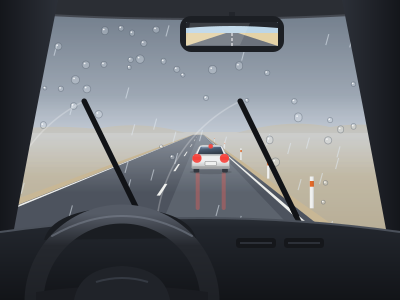
- ARain mixes with oil and dust on the road surface, making it extremely slippery
- BRain reduces vehicle visibility but does not affect road grip
- CThe road surface cools quickly and may freeze
- DRain improves tyre grip by cleaning the road surface
Answer and explanation in the bank
- Q21Safe driving
An oncoming vehicle dazzles you with its full-beam headlights at night. What should you do?
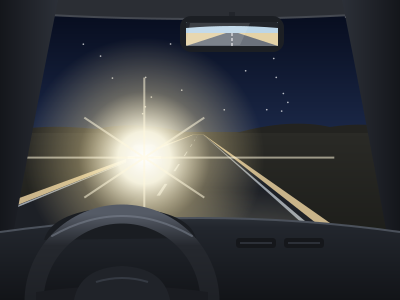
- AFlash your high beams repeatedly until the other driver dips theirs
- BClose your eyes briefly until the vehicle passes to protect your night vision
- CSlow down, look toward the left edge of your lane, and avoid staring into the lights
- DSwerve right to create maximum distance from the oncoming vehicle
Answer and explanation in the bank
- Q22Safe driving
Which statement best describes defensive driving?
- ADriving very slowly at all times to allow others to pass
- BAnticipating hazards and adjusting your driving to reduce risk, regardless of other road users' behaviour
- CUsing your horn frequently to warn other drivers of your presence
- DFollowing the vehicle ahead closely to benefit from their view of the road ahead
Answer and explanation in the bank
Every answer above, with the rule it comes from, plus the full 22-question timed test.
Get the Bahrain Driving Test Questions - BHD 1.5What this test covers
Topics include road signs, traffic signals, right of way, roundabouts, speed limits, seat belts, fines and penalties, and the safe-driving rules specific to your vehicle category. Full question-by-question feedback with explanations is shown immediately after you finish the test above.
Frequently asked questions
How many questions is the Capital General Directorate of Traffic light vehicle theory test?
The official General Directorate of Traffic light vehicle theory test in Capital has 35 questions and you need 26 correct (75%) to pass. This practice test has 22 questions.
Is this the real exam?
These are practice questions to help you revise, written to the published rules and to what candidates report from the real test. They are not the official Bahrain exam and the real question bank, format, fees and pass mark are set by the General Directorate of Traffic (Ministry of Interior), and can change. Always confirm the current requirements with your driving school or the traffic department.
Is this practice test free?
The first 10 questions are free, with no signup, and each shows the answer and the reason. The full 22-question test, timed, is in the Bahrain Driving Test Questions PDF (BHD 1.5, one payment), with every question in the bank.
What does the Capital light vehicle theory test cover?
Road signs, traffic signals, right of way, roundabouts, speed limits, seat belts, penalties and safe-driving rules, plus the handling and safety topics specific to your vehicle.