

Capital General Directorate of Traffic Motorcycle
Timed mock exam· Full mock examsCapital General Directorate of Traffic - Bahrain Motorcycle Theory Mock Test 1
A full 35-question timed practice exam for the Bahrain motorcycle (bike) theory test. Covers shared road rules and signs plus motorcycle-specific control and safety. Aim for 26/35 (75%) to pass.
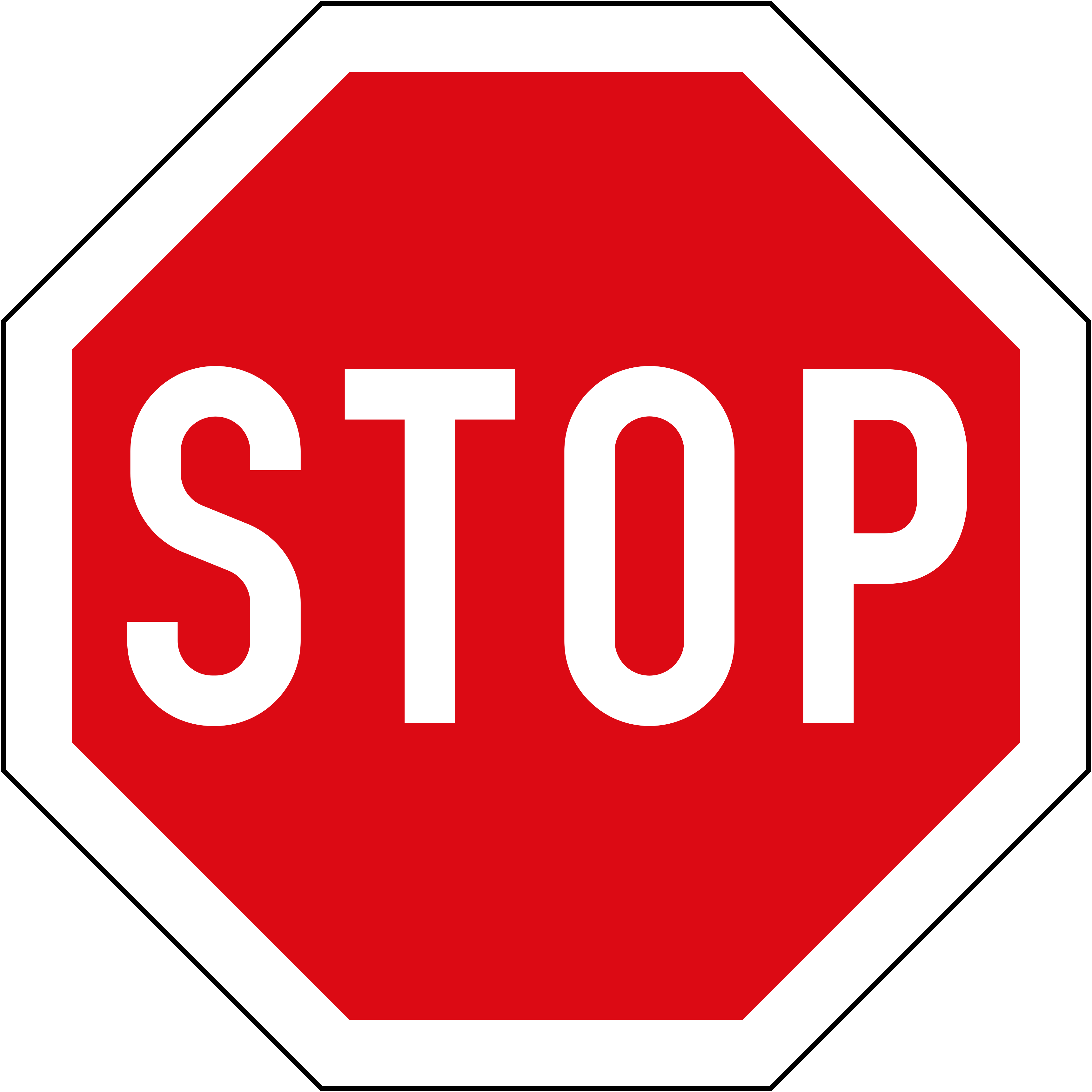
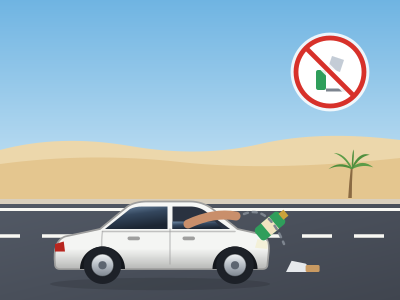
What does this sign mean?
The other 25 questions in this test
Read them all. The answer and the reason for each, and the timed 35-question run, are in the Bahrain Driving Test Questions PDF.
- Q11Safe driving
In which of the following conditions should you at least double your normal 2-to-3-second following distance?
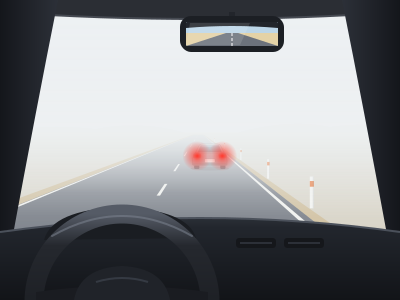
- ARain, fog, or night driving
- BWhen the road has a painted white centre line
- CWhen travelling at less than 40 km/h
- DWhen driving an automatic transmission vehicle
Answer and explanation in the bank
- Q12Penalties and fines
What can happen to an expatriate found driving under the influence of alcohol in Bahrain?
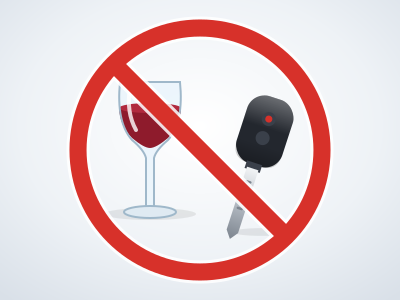
- AImprisonment and possible deportation after serving the sentence
- BA written warning on the first offence only
- CA small fine with no further consequences
- DMandatory attendance at a road-safety lecture
Answer and explanation in the bank
- Q13Motorcycle control
At very low speeds, which technique best helps a motorcyclist maintain balance?
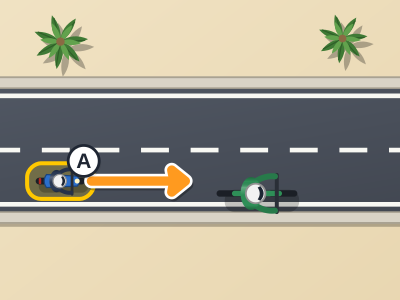
- AKeeping both feet on the footpegs and coasting
- BLeaning heavily to one side to compensate
- CLooking ahead at a fixed point and using slight throttle with rear brake control
- DApplying the front brake gently to stabilise the steering
Answer and explanation in the bank
- Q14Motorcycle safety
How should a motorcycle helmet chin-strap be fastened to provide effective protection?
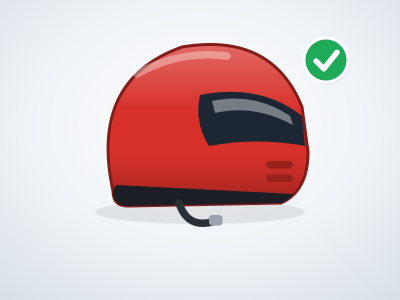
- ALoosely, so the helmet can be removed quickly in a crash
- BTightened as firmly as possible regardless of comfort
- CThe chin-strap is optional if the helmet fits tightly on the head alone
- DFastened snugly so that only one or two fingers fit between the strap and the chin
Answer and explanation in the bank
- Q15Road signs and signals
What does this sign tell you about your speed?
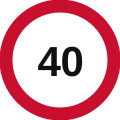
- AYou must drive at exactly 40 km/h
- BYou must not exceed 40 km/h
- CThe recommended speed in wet conditions is 40 km/h
- DYou are 40 km from the next town
Answer and explanation in the bank
- Q16Traffic rules
After overtaking a vehicle on a Bahraini highway, when should you return to the right lane?
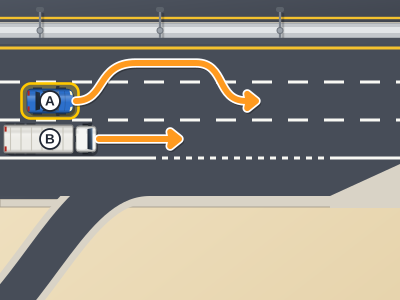
- AAfter travelling at least 5 km in the left lane
- BAs soon as you can safely do so without cutting off the vehicle you passed
- COnly when a faster vehicle approaches from behind
- DYou may stay in the left lane if the road ahead is clear
Answer and explanation in the bank
- Q17Right of way
You are travelling east at an unmarked crossroads. A vehicle is approaching from the south, which is your right. What should you do?
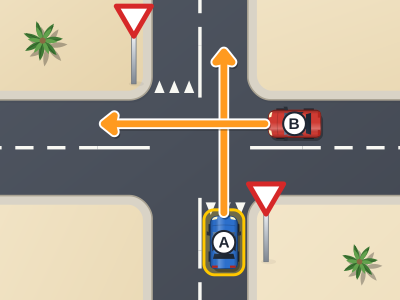
- AContinue because you arrived at the junction first.
- BSound your horn to establish priority and proceed.
- CFlash your headlights and cross ahead of the approaching vehicle.
- DWait and give way to the vehicle coming from the south.
Answer and explanation in the bank
- Q18Safe driving
Which two components make up the total stopping distance of a vehicle?
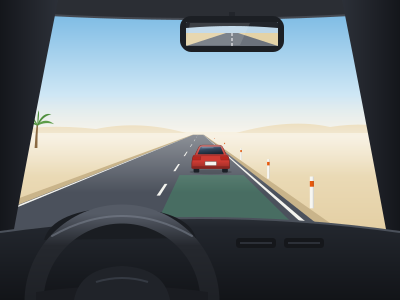
- ABraking distance plus the vehicle's length
- BVisibility distance plus skid distance
- CReaction time plus tyre-wear distance
- DThinking (reaction) distance plus braking distance
Answer and explanation in the bank
- Q19Penalties and fines
A driver is stopped at a checkpoint and found to have alcohol on their breath. Which outcome is most accurate under Bahrain law?
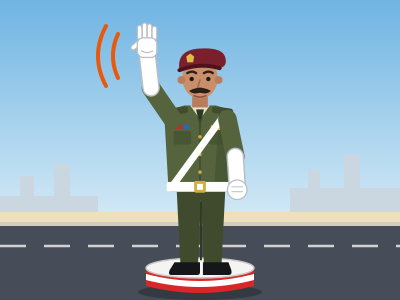
- AThe driver will be issued a fixed penalty notice and allowed to continue
- BThe driver's vehicle will be impounded for 24 hours only
- CThe driver will be arrested and faces criminal prosecution
- DThe driver must call a sober adult to take over and no further action is taken
Answer and explanation in the bank
- Q20Motorcycle control
When should you squeeze the clutch lever to change gear smoothly?
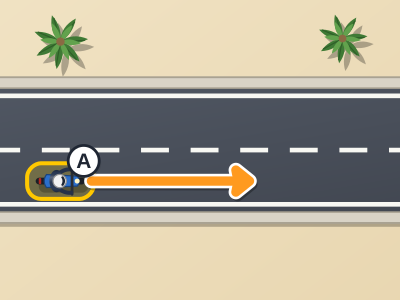
- AChange gear without using the clutch to save time
- BHalf-squeeze the clutch and change gear at the same time
- CSqueeze the clutch only when changing down, not up
- DFully squeeze the clutch before moving the gear lever, then release it smoothly
Answer and explanation in the bank
- Q21Motorcycle safety
In Bahrain's extreme summer heat, what protective clothing approach is recommended for motorcyclists?
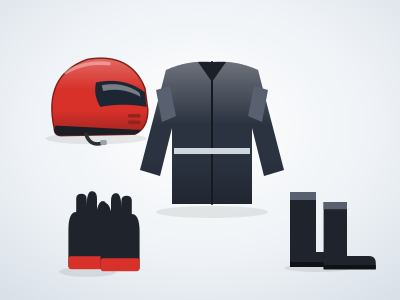
- AWear as little clothing as possible to avoid heat stroke; skin will protect against minor road rash
- BWear ventilated, abrasion-resistant motorcycle jacket and trousers (with CE-rated armour) designed for hot climates rather than shorts and a t-shirt
- CA leather suit is mandatory in Bahrain; textile gear is not legally acceptable
- DOnly the helmet is required; other clothing is entirely the rider's personal choice with no safety consideration
Answer and explanation in the bank
- Q22Road signs and signals
What is the maximum permitted speed shown by this sign?
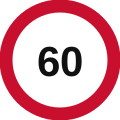
- A60 mph
- BThe minimum speed is 60 km/h
- CSpeed limit ends at 60 km/h
- D60 km/h
Answer and explanation in the bank
- Q23Traffic rules
You are in the right lane on a two-lane road and wish to overtake, but an active bus lane occupies the left lane. What is the correct action?
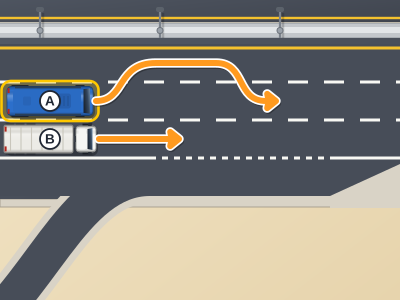
- AEnter the bus lane briefly to overtake if no bus is visible
- BSound your horn and proceed through the bus lane
- CWait behind the vehicle you wish to pass until the bus lane restriction ends
- DOvertake on the right using the hard shoulder
Answer and explanation in the bank
- Q24Right of way
All four vehicles arrive simultaneously at an unmarked crossroads. How is the order of passage decided?
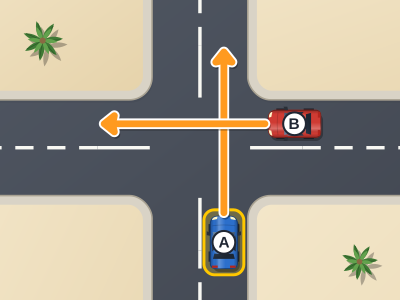
- AThe fastest vehicle goes first.
- BEach driver gives way to the vehicle on their right, creating a safe order of passage.
- CVehicles turning left always have priority.
- DVehicles going straight ahead always have priority.
Answer and explanation in the bank
- Q25Safe driving
If you double your speed from 60 km/h to 120 km/h, how does your braking distance change on a dry road?
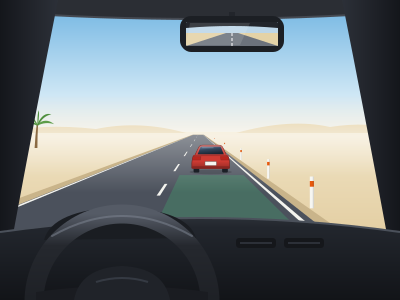
- AIt doubles
- BIt increases by 50 percent
- CIt approximately quadruples (increases four times)
- DIt stays the same because modern ABS compensates
Answer and explanation in the bank
- Q26Penalties and fines
Which of the following is true about using a hand-held mobile phone while driving in Bahrain?
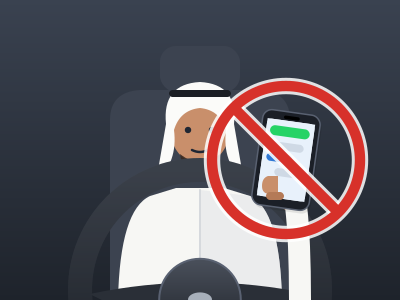
- AIt is allowed provided the driver keeps both eyes on the road
- BIt is prohibited; a hand-held call while driving can bring up to 6 months in prison and/or a fine of BD 50 to 500
- CIt is only banned on highways, not in cities
- DDrivers may use a phone at traffic lights because the vehicle is stationary
Answer and explanation in the bank
- Q27Motorcycle control
Which braking combination provides the most effective stopping power on a dry road?
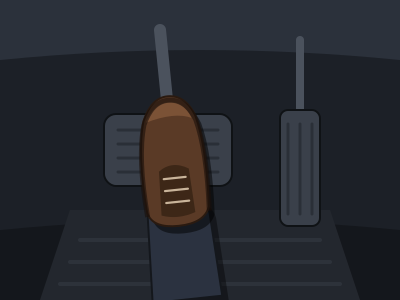
- ABoth front and rear brakes applied progressively together
- BFront brake only, applied as hard as possible
- CRear brake only, pumped rapidly
- DEngine braking alone by downshifting quickly
Answer and explanation in the bank
- Q28Motorcycle safety
Why are motorcycle-specific gloves an important piece of protective equipment?
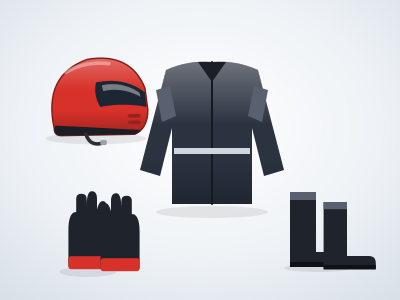
- AHands are the first point of contact with the ground in a fall, and gloves protect against abrasion, fractures, and impact
- BGloves improve grip on the throttle and clutch lever only; they have no crash protection value
- CGloves are only necessary in cold weather; in Bahrain's heat they are not recommended
- DGloves reduce hand sensitivity and should be avoided for safer throttle control
Answer and explanation in the bank
- Q29Road signs and signals
You see this sign on an urban road. What does it mean?
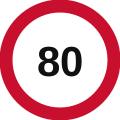
- AThe minimum speed limit is 80 km/h
- BYou are in an 80-zone where no speed cameras apply
- CThe maximum speed limit is 80 km/h
- DYou must reduce to 80 km/h only at night
Answer and explanation in the bank
- Q30Traffic rules
Which statement about lane discipline in Bahrain is correct?
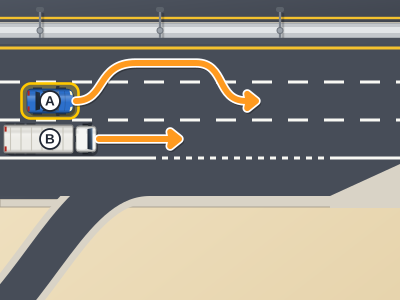
- AKeep left and only move right to overtake
- BChoose any lane and stay in it throughout your journey
- CThe middle lane is always the safest place to drive
- DKeep right and only move left to overtake
Answer and explanation in the bank
- Q31Right of way
At an unmarked T-junction with no STOP or GIVE WAY sign, how should the driver on the minor road treat the junction?
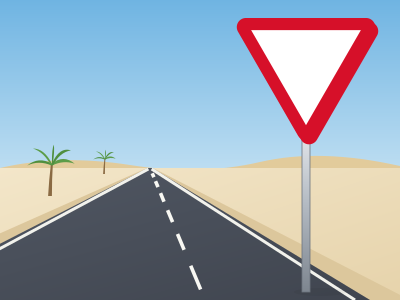
- AWith equal rights: proceed at personal discretion.
- BSound the horn and proceed if no approaching vehicle is visible.
- CAs a give way situation: yield to all traffic on the through road before entering.
- DTraffic on the minor road always has priority.
Answer and explanation in the bank
- Q32Safe driving
How does a wet road surface affect your braking distance compared to a dry road?
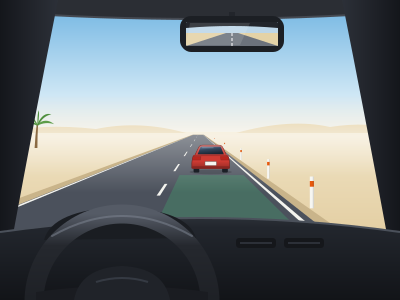
- AIt reduces braking distance because wet rubber grips better
- BIt has no significant effect on modern vehicles
- CIt only affects vehicles without ABS
- DIt can more than double your braking distance
Answer and explanation in the bank
- Q33Penalties and fines
What device may a driver legally use to make or receive calls while driving in Bahrain?
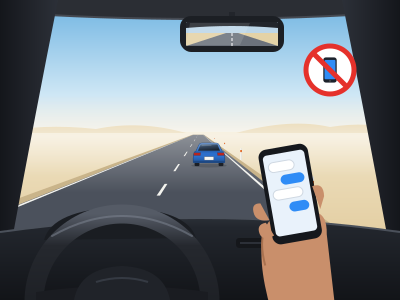
- AA phone placed on the passenger seat so only one hand holds the wheel
- BA phone on loudspeaker resting on the dashboard
- CAny device, provided a Bluetooth earpiece is also worn
- DA hands-free system that requires no physical handling of the phone
Answer and explanation in the bank
- Q34Motorcycle control
What is the main danger of applying only the front brake with full force in an emergency?
- AThe rear wheel spins uncontrollably
- BThe engine stalls immediately
- CSteering becomes heavier because of weight transfer to the rear
- DThe front wheel can lock and slide, causing the rider to be thrown over the handlebars
Answer and explanation in the bank
- Q35Motorcycle safety
How does wearing high-visibility (hi-vis) clothing benefit a motorcyclist on Bahrain's roads?
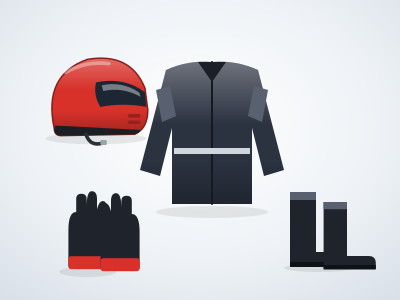
- AIt makes the rider easier to see by other drivers, reducing the risk of collisions caused by a motorcyclist being overlooked
- BIt reduces heat absorption in the sun because bright colours reflect more light
- CIt is a legal requirement at all times in Bahrain; riding without hi-vis results in an automatic fine
- DHi-vis clothing is only beneficial at night; it offers no advantage in daylight
Answer and explanation in the bank
Every answer above, with the rule it comes from, plus the full 35-question timed test.
Get the Bahrain Driving Test Questions - BHD 3What this test covers
Topics include road signs, traffic signals, right of way, roundabouts, speed limits, seat belts, fines and penalties, and the safe-driving rules specific to your vehicle category. Full question-by-question feedback with explanations is shown immediately after you finish the test above.
Frequently asked questions
How many questions is the Capital General Directorate of Traffic motorcycle theory test?
The official General Directorate of Traffic motorcycle theory test in Capital has 35 questions and you need 26 correct (75%) to pass. This practice test has 35 questions.
Is this the real exam?
These are practice questions to help you revise, written to the published rules and to what candidates report from the real test. They are not the official Bahrain exam and the real question bank, format, fees and pass mark are set by the General Directorate of Traffic (Ministry of Interior), and can change. Always confirm the current requirements with your driving school or the traffic department.
Is this practice test free?
The first 10 questions are free, with no signup, and each shows the answer and the reason. The full 35-question test, timed, is in the Bahrain Driving Test Questions PDF (BHD 3, one payment), with every question in the bank.
What does the Capital motorcycle theory test cover?
Road signs, traffic signals, right of way, roundabouts, speed limits, seat belts, penalties and safe-driving rules, plus the handling and safety topics specific to your vehicle.