

Muharraq General Directorate of Traffic Light vehicle
Practice mode· Right of way & safetyMuharraq General Directorate of Traffic - Bahrain Safe Driving Practice Test
Covers defensive driving, following distances, fatigue, visibility, adverse weather and hazard awareness. Safe driving habits save lives and keep your licence clean.
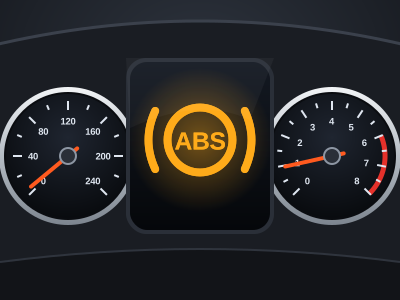
What is the main safety benefit of Anti-lock Braking System (ABS)?
The other 12 questions in this test
Read them all. The answer and the reason for each, and the timed 22-question run, are in the Bahrain Driving Test Questions PDF.
- Q11Safe driving
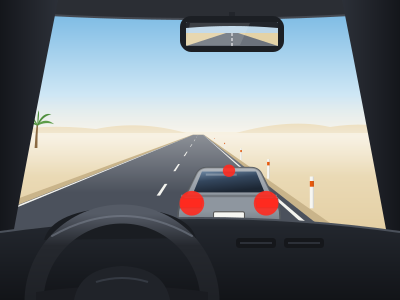
Why is tailgating (following too closely) so dangerous?
- AIt causes excessive tyre wear on the front tyres
- BIt reduces fuel economy due to aerodynamic turbulence
- CIt removes the time and space needed to stop if the vehicle ahead brakes suddenly
- DIt is only dangerous on wet roads, not on dry roads
Answer and explanation in the bank
- Q12Safe driving
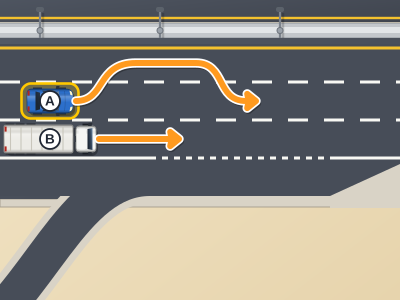
When overtaking another vehicle on a Bahrain highway, which gap should you have in front of the overtaken vehicle before pulling back in?
- AYou can move back in as soon as your vehicle's front clears the overtaken vehicle's front
- BAny gap is safe if you indicate when returning to the lane
- CYou should be able to see the overtaken vehicle fully in your interior mirror before moving back in
- DOne car length is sufficient at any speed
Answer and explanation in the bank
- Q13Safe driving
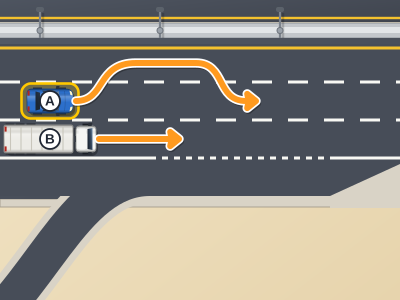
In Bahrain, vehicles drive on the right. When overtaking on a multi-lane road, the overtaking vehicle moves into which lane?
- AA lane to the right of the slower vehicle, which is the shoulder lane
- BA lane to the left of the slower vehicle, which is the faster lane closer to the road centre
- CEither side is permitted; the driver chooses whichever has more space
- DThe same lane, using the hard shoulder to pass
Answer and explanation in the bank
- Q14Safe driving
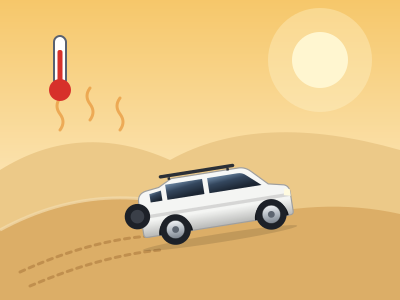
Bahrain's summer temperatures regularly exceed 40 degrees Celsius. How does dehydration affect your driving?
- ADehydration only affects physical strength, not mental alertness
- BIt slows reaction times and impairs concentration, similar to mild alcohol intoxication
- CDrinking water while driving is more dangerous than mild dehydration
- DDehydration has no significant effect on driving performance
Answer and explanation in the bank
- Q15Safe driving
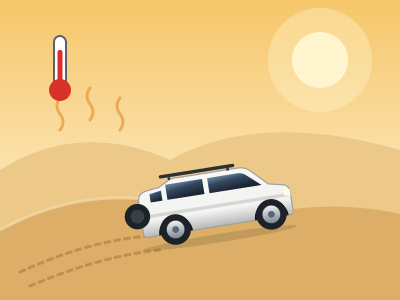
You are driving in Bahrain's summer heat and notice a passenger feeling dizzy, nauseous, and sweating heavily. What should you do?
- AOpen all windows and continue to your destination as quickly as possible
- BStop the vehicle in a safe shaded area, move the person to a cool environment, and give water if they are conscious
- CGive the person a cold carbonated drink and continue driving
- DPark and wait in the vehicle with the engine and air conditioning running indefinitely
Answer and explanation in the bank
- Q16Safe driving
Before driving, how should you position your seat?
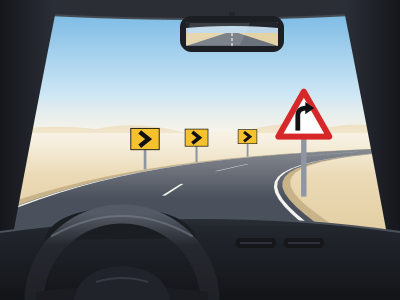
- ASo you can fully depress the clutch or brake pedal with a slight bend in the knee, and hold the steering wheel with a slight bend in the elbows
- BAs far back as possible so your arms are fully extended to the steering wheel
- CAs close as possible to the steering wheel so you can reach all controls easily
- DSeat position does not matter as long as you can see the road over the dashboard
Answer and explanation in the bank
- Q17Safe driving
How should you set your interior rear-view mirror before driving?
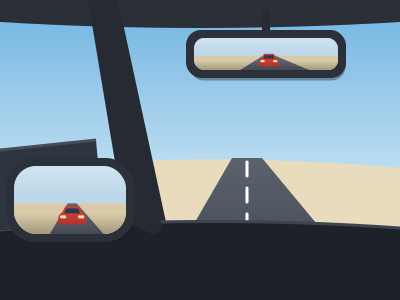
- ASo you can see the full rear window without moving your head significantly
- BTilted downward to reduce glare from the road surface
- CAngled to see yourself, so you know what your appearance looks like while driving
- DThe interior mirror does not need adjusting if the door mirrors are set correctly
Answer and explanation in the bank
- Q18Safe driving
Large trucks and buses in Bahrain have significant blind spots. Where are these blind spots typically located?
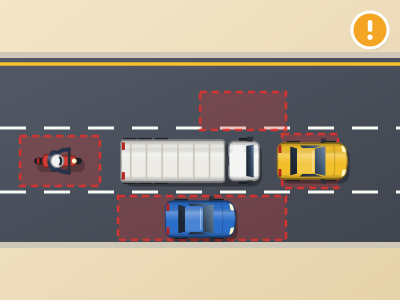
- AOnly directly behind the rear of the trailer
- BOnly on the passenger side because the driver sits on the left
- CDirectly behind, directly in front, and alongside both sides of the vehicle
- DLarge vehicles have no blind spots because they are fitted with larger mirrors
Answer and explanation in the bank
- Q19Safe driving
When overtaking a large truck on a Bahrain expressway, why should you complete the manoeuvre quickly and not linger alongside the truck?
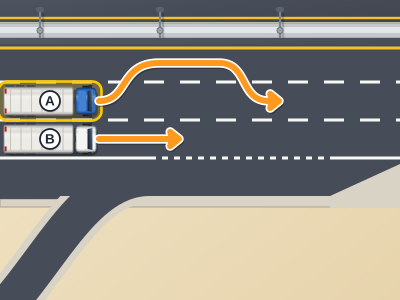
- ABecause the truck creates a vacuum that pulls small cars closer to it
- BBecause you are in the truck's blind spot alongside it and the driver may not be aware of your presence
- CBecause overtaking at exactly the same speed as the truck is illegal
- DThere is no additional risk in lingering alongside a truck
Answer and explanation in the bank
- Q20Safe driving
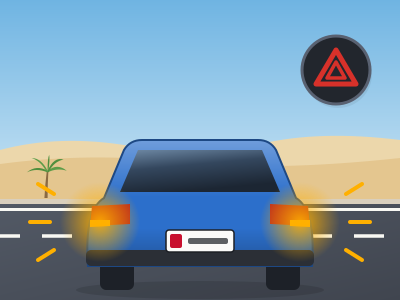
Your vehicle breaks down on a Bahrain expressway. What is the first priority?
- AGet out immediately and signal to passing drivers for help
- BCall for roadside assistance from the driver's seat while keeping the vehicle on the carriageway
- CTry to restart the vehicle several times before taking any other action
- DMove the vehicle off the carriageway onto the hard shoulder or emergency stopping area and switch on hazard lights
Answer and explanation in the bank
- Q21Safe driving
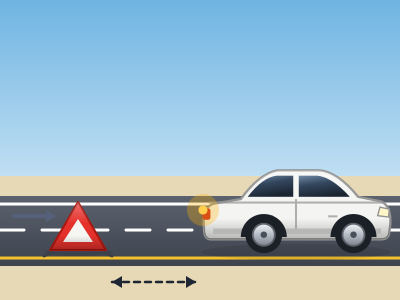
After pulling onto the hard shoulder due to a breakdown, where should you place your warning triangle?
- ADirectly behind the vehicle's rear bumper
- BWarning triangles are optional if your hazard lights are working
- COn top of the vehicle's roof to make it more visible
- DAt least 100 metres behind the vehicle to give approaching drivers adequate warning
Answer and explanation in the bank
- Q22Safe driving
You arrive at the scene of a road crash in Bahrain where there are no emergency services yet. What are the first steps?
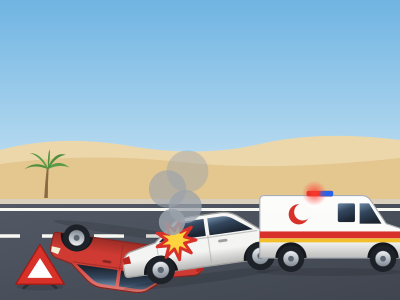
- AImmediately move all casualties away from the vehicles to prevent further injury
- BTake photographs for insurance purposes before calling for help
- CMake the scene safe, call emergency services, and do not move casualties unless there is immediate danger of fire or further collision
- DAsk injured persons if they are insured before providing assistance
Answer and explanation in the bank
Every answer above, with the rule it comes from, plus the full 22-question timed test.
Get the Bahrain Driving Test Questions - BHD 1.5What this test covers
Topics include road signs, traffic signals, right of way, roundabouts, speed limits, seat belts, fines and penalties, and the safe-driving rules specific to your vehicle category. Full question-by-question feedback with explanations is shown immediately after you finish the test above.
Frequently asked questions
How many questions is the Muharraq General Directorate of Traffic light vehicle theory test?
The official General Directorate of Traffic light vehicle theory test in Muharraq has 35 questions and you need 26 correct (75%) to pass. This practice test has 22 questions.
Is this the real exam?
These are practice questions to help you revise, written to the published rules and to what candidates report from the real test. They are not the official Bahrain exam and the real question bank, format, fees and pass mark are set by the General Directorate of Traffic (Ministry of Interior), and can change. Always confirm the current requirements with your driving school or the traffic department.
Is this practice test free?
The first 10 questions are free, with no signup, and each shows the answer and the reason. The full 22-question test, timed, is in the Bahrain Driving Test Questions PDF (BHD 1.5, one payment), with every question in the bank.
What does the Muharraq light vehicle theory test cover?
Road signs, traffic signals, right of way, roundabouts, speed limits, seat belts, penalties and safe-driving rules, plus the handling and safety topics specific to your vehicle.