

Muharraq General Directorate of Traffic Motorcycle
Timed mock exam· Full mock examsMuharraq General Directorate of Traffic - Bahrain Motorcycle Theory Mock Test 1
A full 35-question timed practice exam for the Bahrain motorcycle (bike) theory test. Covers shared road rules and signs plus motorcycle-specific control and safety. Aim for 26/35 (75%) to pass.
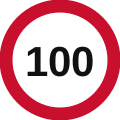
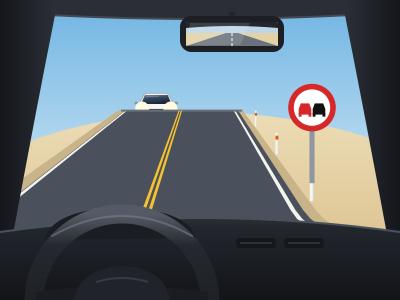
On which type of road would you most likely see this sign?
The other 25 questions in this test
Read them all. The answer and the reason for each, and the timed 35-question run, are in the Bahrain Driving Test Questions PDF.
- Q11Safe driving
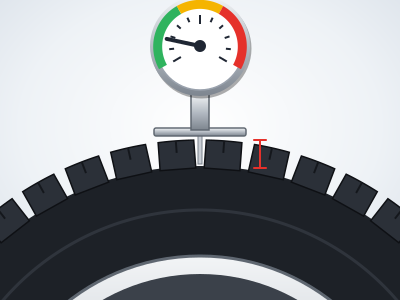
While driving on a Bahrain highway at 110 km/h, your front-left tyre suddenly blows out. What is the correct immediate response?
- ASteer sharply to the right and brake hard to stop quickly
- BGrip the steering wheel firmly, ease off the accelerator gradually, and do not apply hard braking
- CAccelerate briefly to regain vehicle stability before braking
- DApply the handbrake smoothly to slow down
Answer and explanation in the bank
- Q12Penalties and fines
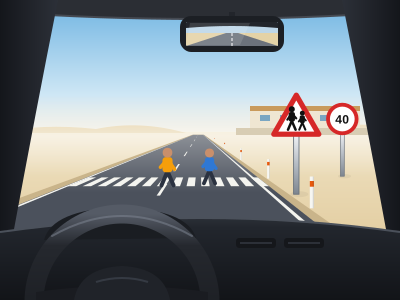
What is the correct way to transport a child under four years old in a car in Bahrain?
- AOn an adult's lap in the front seat so the driver can monitor the child
- BIn the rear seat held by an adult passenger
- CIn the rear seat with a standard adult seatbelt adjusted over the child
- DIn an approved child safety seat appropriate for the child's age and weight, correctly fitted
Answer and explanation in the bank
- Q13Motorcycle control
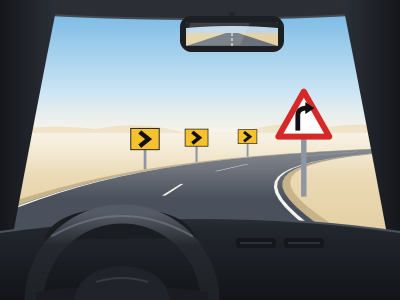
When cornering, which body position best supports the motorcycle through the turn?
- ASit rigidly upright and hold the handlebars tightly to resist lean
- BLean your upper body sharply opposite to the turn to balance
- CExtend both legs outward to lower the centre of gravity
- DGrip the tank with your knees, keep your upper body relaxed, and look through the corner
Answer and explanation in the bank
- Q14Motorcycle safety
What is a safety buffer zone for a motorcyclist?
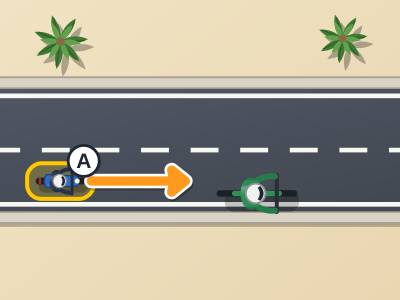
- AA marked zone on the road reserved for motorcycles at traffic lights
- BThe distance between the front tyre and the kerb when parking
- CA safety feature built into modern motorcycles that automatically maintains following distance
- DA space kept around the motorcycle in all directions so the rider has time and room to react to hazards
Answer and explanation in the bank
- Q15Road signs and signals
What does this sign tell you to do at the junction ahead?
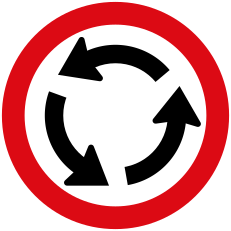
- AStop and wait for all vehicles already in the roundabout to clear
- BFollow the roundabout direction and give way to circulating traffic on your left
- CTraffic entering the roundabout has priority over circulating traffic
- DTurn right immediately before the roundabout
Answer and explanation in the bank
- Q16Traffic rules
You are waiting to enter a roundabout in Bahrain. Traffic is approaching from your left. What should you do?
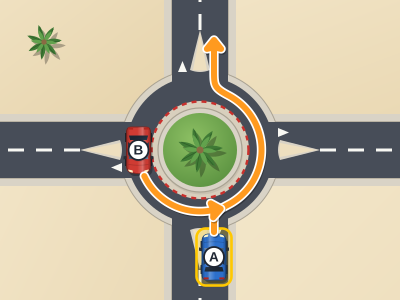
- AAccelerate to merge before the circulating vehicles reach you
- BSound your horn to signal your intention to enter
- CGive way to that traffic and wait for a safe gap before entering
- DEnter immediately as you have equal priority
Answer and explanation in the bank
- Q17Right of way
You approach an unmarked Y-junction where two roads merge into one. A vehicle merging from the road on your right is alongside you. What should you do?
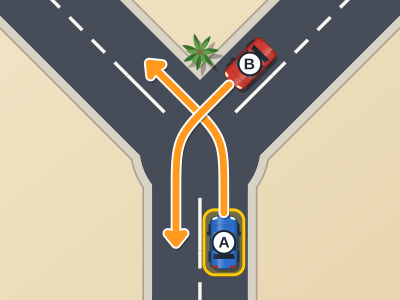
- AAccelerate to get ahead before the merge point.
- BSound your horn and maintain your speed.
- CThe vehicle on the left must always give way at a Y-junction.
- DGive way to the vehicle on your right.
Answer and explanation in the bank
- Q18Safe driving
A rear tyre blows out at highway speed. How does this differ from a front blowout in terms of the vehicle's behaviour?
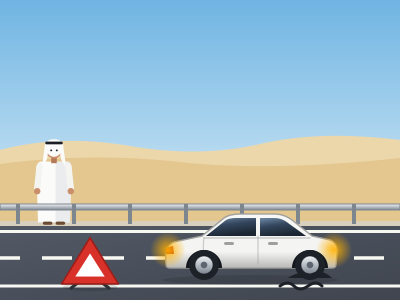
- AThe steering becomes lighter and easier to control than in a front blowout
- BA rear blowout has little effect on vehicle control at highway speed
- CThe vehicle will pull strongly and consistently to the right regardless of which rear tyre burst
- DThe rear of the vehicle will fishtail or sway rather than pulling sharply to one side
Answer and explanation in the bank
- Q19Penalties and fines
A parent is fined because their seven-year-old was seated in the front passenger seat without a booster seat. Which rule did they break?
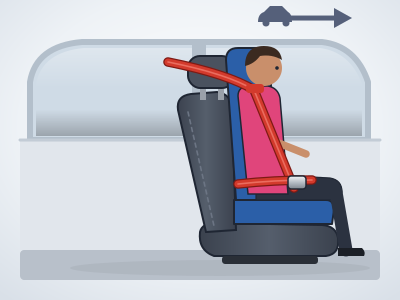
- AChildren above age five may sit anywhere in the car without restriction
- BThe front seat is permitted for children if they are wearing an adult seatbelt
- CChildren under 10 must not sit in the front seat, and young children must use a child seat
- DOnly children under two are required to use a child seat
Answer and explanation in the bank
- Q20Motorcycle control
When performing a slow U-turn on a wide road, where should you direct your gaze?
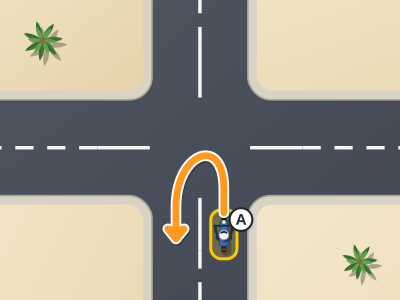
- AAt the road surface directly in front of the front wheel
- BIn your mirrors to check for following traffic throughout the turn
- CStraight ahead to keep your head level and avoid dizziness
- DTowards the exit point of the U-turn, not at the ground in front of the wheel
Answer and explanation in the bank
- Q21Motorcycle safety
Is lane-splitting (riding between lanes of slow or stopped traffic) permitted in Bahrain?
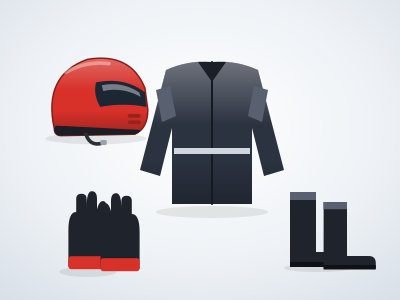
- AIt is fully permitted at all times and at any speed
- BIt is permitted only on motorways, not in urban areas
- CIt is not permitted; riders must stay within their lane
- DIt is permitted provided the speed difference between the motorcycle and traffic does not exceed 30 km/h
Answer and explanation in the bank
- Q22Road signs and signals
What does this sign warn you about?
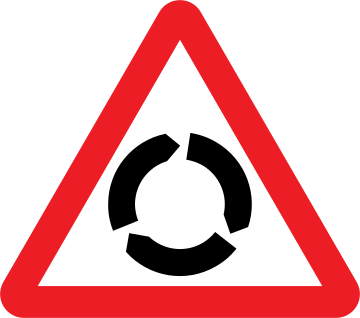
- AA sharp bend to the right is ahead
- BA U-turn is permitted ahead
- CA roundabout junction is ahead
- DA one-way system begins ahead
Answer and explanation in the bank
- Q23Traffic rules
You intend to take the third exit at a roundabout in Bahrain. Which approach lane is generally correct?
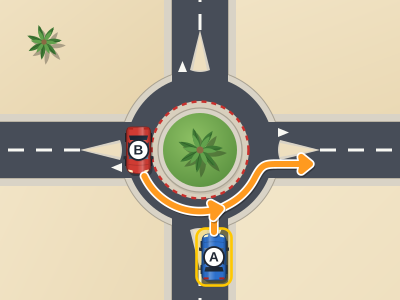
- AAlways the right lane regardless of the exit
- BAlways the left lane regardless of the exit
- CEither lane, as roundabout lane choice is optional in Bahrain
- DThe left lane, as the third exit requires going more than halfway around
Answer and explanation in the bank
- Q24Right of way
At a roundabout in Bahrain, who has priority?
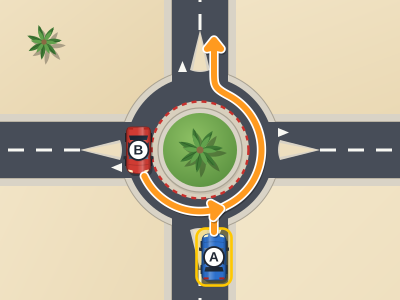
- AVehicles entering the roundabout from the right.
- BYour vehicle, if you reached the give way line first.
- CTraffic already on the roundabout, approaching from your left.
- DLarger vehicles always have priority on roundabouts.
Answer and explanation in the bank
- Q25Safe driving
What is the main safety benefit of Anti-lock Braking System (ABS)?
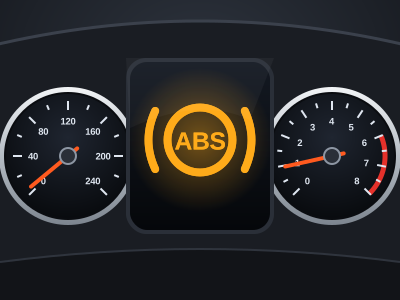
- AIt prevents the wheels from locking so you can steer while braking hard
- BIt automatically applies the brakes when the vehicle gets too close to another car
- CIt shortens stopping distance on all surfaces including ice
- DIt eliminates the need to increase following distance in wet weather
Answer and explanation in the bank
- Q26Penalties and fines
What do speed cameras on Bahrain roads automatically do?
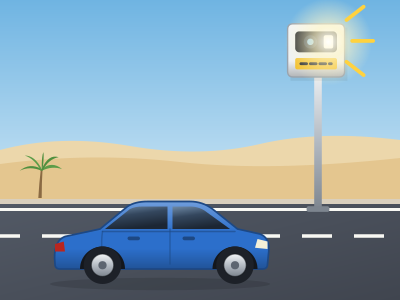
- ACapture and record the licence plate of any vehicle exceeding the posted speed limit
- BDisplay a warning message to the driver and record nothing
- CAlert the nearest police station but do not issue fines automatically
- DOnly activate during night hours when traffic is lower
Answer and explanation in the bank
- Q27Motorcycle control
How does carrying a pillion passenger affect the motorcycle's braking distance compared to riding solo?
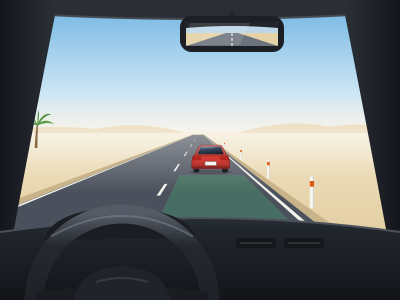
- ABraking distance decreases because more weight improves tyre grip
- BBraking distance is unchanged because the brakes work the same regardless of load
- CBraking distance increases because the combined weight requires more force to stop
- DBraking distance increases only if the pillion shifts their weight sideways
Answer and explanation in the bank
- Q28Motorcycle safety
In which area around a large vehicle such as a truck or bus is a motorcycle most difficult for the driver to see?
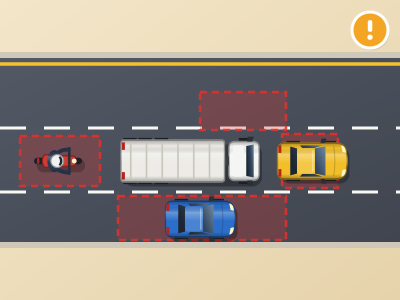
- ADirectly alongside, slightly behind the cab (the side blind spot), and directly behind the vehicle
- BDirectly in front of the vehicle at a distance of 10 metres
- CIn the lane to the left of the truck when it is turning right
- DLarge vehicles have no blind spots because they use multiple mirrors
Answer and explanation in the bank
- Q29Road signs and signals
What hazard does this sign warn you about?
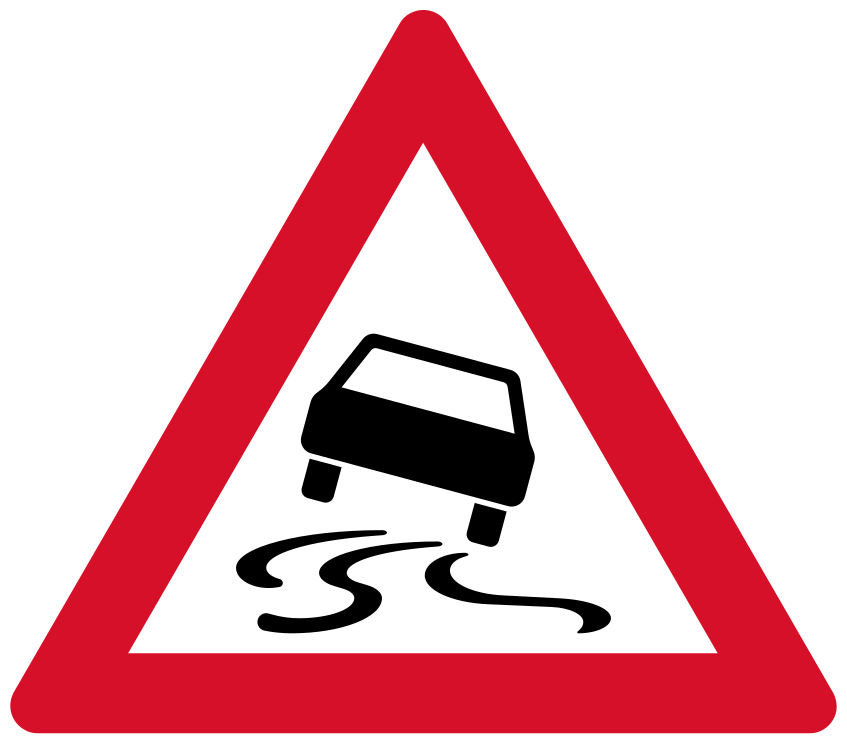
- AA car wash is located ahead
- BThe road surface ahead may be slippery
- CFlooding is expected on this road
- DThe road curves sharply to the left
Answer and explanation in the bank
- Q30Traffic rules
When leaving a roundabout in Bahrain, when should you signal?
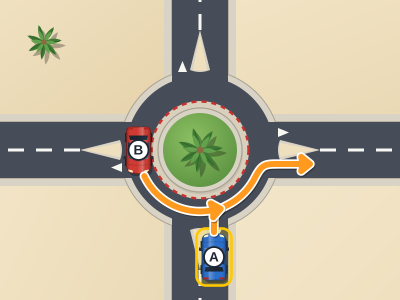
- ASignal right just before your intended exit
- BSignal left as soon as you enter the roundabout
- CNo signal is needed inside a roundabout
- DSignal right when you first join the roundabout
Answer and explanation in the bank
- Q31Right of way
In which direction does traffic flow around a roundabout in Bahrain?
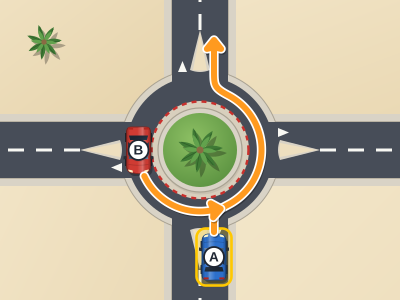
- AClockwise.
- BEither direction, depending on the roundabout.
- CCounter-clockwise.
- DStraight through the central island.
Answer and explanation in the bank
- Q32Safe driving
You have ABS and need to make an emergency stop. What is the correct braking technique?
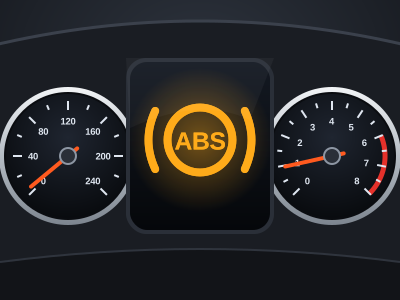
- APump the brake pedal rapidly to prevent wheel lock
- BPress lightly to avoid triggering the ABS warning light
- CApply gradual increasing pressure and release fully before the vehicle stops
- DPress the brake pedal firmly and hold it down; do not pump the pedal
Answer and explanation in the bank
- Q33Penalties and fines
What is the consequence of repeatedly speeding on Bahrain roads beyond just a fine?
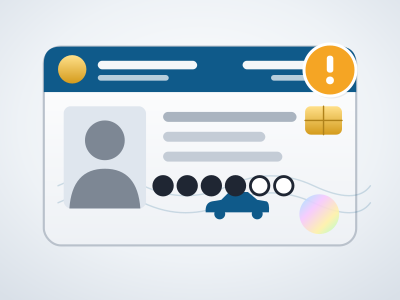
- AAccumulation of black points that can lead to licence suspension
- BA congratulatory letter from the traffic authority noting good awareness of speed
- CAutomatic enrolment in a free defensive-driving course with no other penalty
- DNo additional consequence beyond the monetary fine
Answer and explanation in the bank
- Q34Motorcycle control
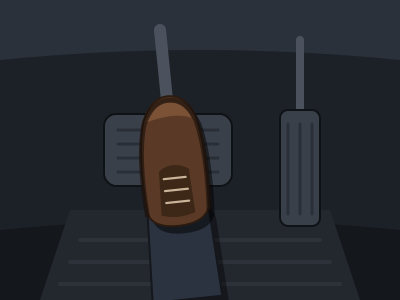
When starting uphill on a motorcycle, which technique prevents the bike from rolling backwards?
- AHold the rear brake on, bring the clutch to the friction point, then release the brake as you open the throttle
- BApply the front brake hard and release the clutch quickly to lurch forward
- CSelect first gear and immediately drop the clutch to move off fast
- DUse neutral gear and push off with both feet before engaging first gear
Answer and explanation in the bank
- Q35Motorcycle safety
When you notice sand or loose gravel on a road surface in Bahrain, what is the correct response?
- AReduce speed well before reaching the hazard, ride through it smoothly without sudden braking or steering inputs, and avoid hard acceleration on the hazardous surface
- BBrake hard just before the hazard to scrub off as much speed as possible before entering
- CSwerve sharply to avoid the hazard even if it means entering another lane
- DSand and loose gravel have no significant effect on motorcycle tyre grip and can be ignored
Answer and explanation in the bank
Every answer above, with the rule it comes from, plus the full 35-question timed test.
Get the Bahrain Driving Test Questions - BHD 3What this test covers
Topics include road signs, traffic signals, right of way, roundabouts, speed limits, seat belts, fines and penalties, and the safe-driving rules specific to your vehicle category. Full question-by-question feedback with explanations is shown immediately after you finish the test above.
Frequently asked questions
How many questions is the Muharraq General Directorate of Traffic motorcycle theory test?
The official General Directorate of Traffic motorcycle theory test in Muharraq has 35 questions and you need 26 correct (75%) to pass. This practice test has 35 questions.
Is this the real exam?
These are practice questions to help you revise, written to the published rules and to what candidates report from the real test. They are not the official Bahrain exam and the real question bank, format, fees and pass mark are set by the General Directorate of Traffic (Ministry of Interior), and can change. Always confirm the current requirements with your driving school or the traffic department.
Is this practice test free?
The first 10 questions are free, with no signup, and each shows the answer and the reason. The full 35-question test, timed, is in the Bahrain Driving Test Questions PDF (BHD 3, one payment), with every question in the bank.
What does the Muharraq motorcycle theory test cover?
Road signs, traffic signals, right of way, roundabouts, speed limits, seat belts, penalties and safe-driving rules, plus the handling and safety topics specific to your vehicle.