

Northern General Directorate of Traffic Light vehicle
Practice mode· Right of way & safetyNorthern General Directorate of Traffic - Bahrain Safe Driving Practice Test
Covers defensive driving, following distances, fatigue, visibility, adverse weather and hazard awareness. Safe driving habits save lives and keep your licence clean.
Which two components make up the total stopping distance of a vehicle?
The other 12 questions in this test
Read them all. The answer and the reason for each, and the timed 22-question run, are in the Bahrain Driving Test Questions PDF.
- Q11Safe driving
In dense fog with visibility below 50 metres, you should increase your following distance to at least what time gap?
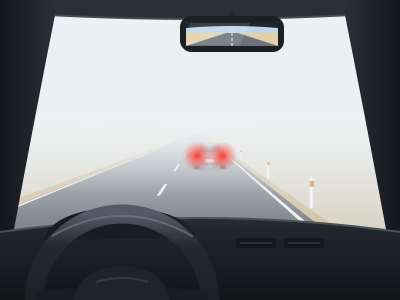
- AAt least 6 to 8 seconds, or more
- BThe standard 2 to 3 seconds is sufficient because you are driving slowly
- C4 seconds is always adequate regardless of visibility
- DFollowing distance is irrelevant in fog because you should stop
Answer and explanation in the bank
- Q12Safe driving
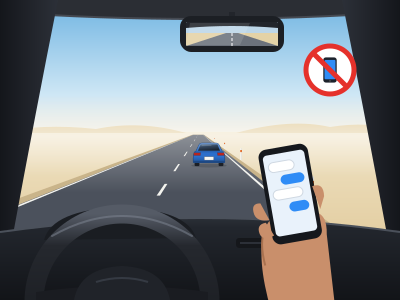
Which of the following factors increases a driver's reaction time?
- AListening to calm music through the vehicle's stereo system
- BWearing prescription glasses while driving
- CFatigue, alcohol, certain medications, and distraction
- DDriving a newer vehicle with electronic stability control
Answer and explanation in the bank
- Q13Safe driving
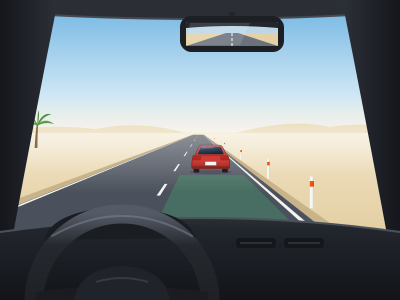
At 60 km/h on a dry road, which figure best approximates total stopping distance for an alert driver?
- ALess than 10 metres
- BApproximately 35 to 45 metres
- CApproximately 100 metres
- DTotal stopping distance depends only on tyre brand, not speed
Answer and explanation in the bank
- Q14Safe driving
Why should you NOT use high-beam (full-beam) headlights when driving in fog?
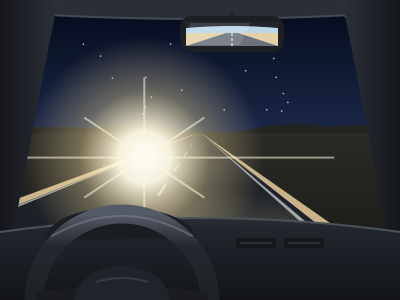
- AHigh beams drain the battery faster than low beams
- BHigh beams are reserved for rural roads and are illegal in city fog
- CHigh beams have the same effect as low beams in foggy conditions
- DThe light reflects off the fog particles and creates glare that reduces your own visibility
Answer and explanation in the bank
- Q15Safe driving
When should rear fog lights be switched off after driving through fog?
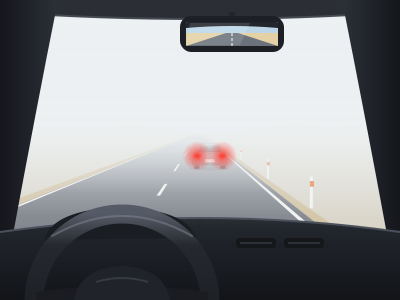
- AOnly when you have completely left the foggy area and reached your destination
- BRear fog lights should remain on whenever headlights are in use
- CThey switch off automatically when visibility improves
- DAs soon as visibility improves sufficiently so the lights no longer dazzle following drivers
Answer and explanation in the bank
- Q16Safe driving
At what age or weight threshold should a child transition from a rear-facing to a forward-facing child seat?
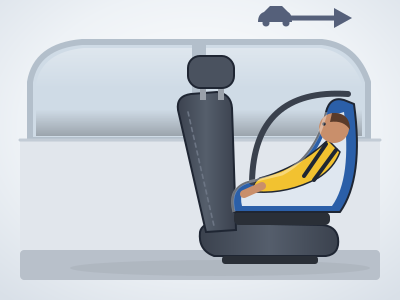
- AWhen the child exceeds the maximum weight or height for the rear-facing seat, as specified by the seat manufacturer
- BAt exactly 12 months of age regardless of the child's size
- CWhen the child can walk unaided
- DRear-facing seats are only needed for newborns and can be removed after leaving hospital
Answer and explanation in the bank
- Q17Safe driving
Why does wearing a seat belt remain essential even in vehicles fitted with airbags?
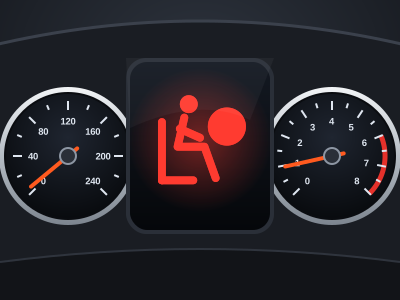
- AAirbags alone provide complete protection; seat belts are a backup for older vehicles
- BSeat belts only matter in rear-end collisions; airbags cover all other crash types
- CModern airbags detect whether a seat belt is worn and do not deploy unless the belt is off
- DAirbags are designed to work alongside seat belts, not as a replacement; an unbelted occupant can be fatally injured by a deploying airbag
Answer and explanation in the bank
- Q18Safe driving
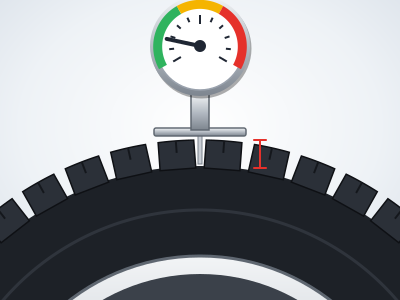
What is the generally recommended minimum tyre tread depth, and why does tread depth matter in wet conditions?
- A5 mm is the minimum; tread is only important in snowy conditions
- BThere is no minimum; modern tyre compounds provide grip even with zero tread
- C1.6 mm is a common minimum; tread channels water away from under the tyre to maintain contact with the road
- D0.5 mm is sufficient; tread depth only affects tyre noise
Answer and explanation in the bank
- Q19Safe driving
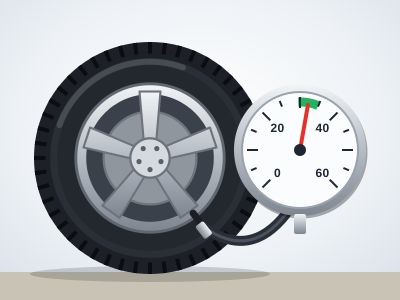
Before a long journey in Bahrain's summer heat, which tyre check is most important?
- AInflate tyres to maximum possible pressure to handle the heat expansion
- BReduce tyre pressure slightly to give a larger contact patch in hot conditions
- CTyres only need checking before motorway journeys, not city driving
- DCheck tyre pressure when cold, inspect tread for wear, and look for sidewall cracks or bulges
Answer and explanation in the bank
- Q20Safe driving
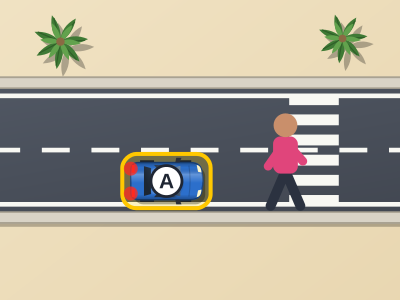
In which of the following locations is overtaking generally forbidden?
- AOnly on two-lane roads outside of cities
- BOnly when the road is wet
- CAt intersections, pedestrian crossings, and where there are solid white centre lines forbidding crossing
- DOvertaking is only forbidden at night
Answer and explanation in the bank
- Q21Safe driving
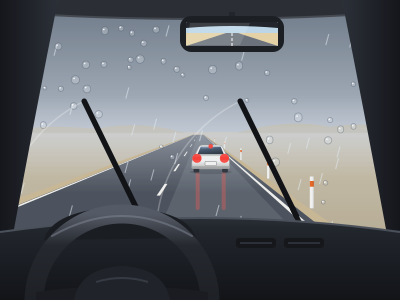
On a Bahrain expressway with a speed limit of 120 km/h, what following distance in time is safest?
- AOne second per 10 km/h of speed (12 seconds at 120 km/h) is required by law
- BA fixed gap of 50 metres regardless of speed
- CThe 2-second rule only applies in cities; there is no rule on expressways
- DAt least 3 seconds in dry conditions, increasing to 6 or more seconds in rain or poor visibility
Answer and explanation in the bank
- Q22Safe driving
A vehicle travelling at 100 km/h has how much more kinetic energy than the same vehicle travelling at 50 km/h?
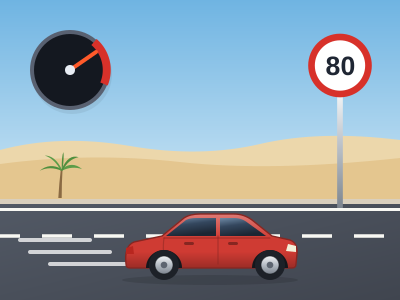
- ATwice as much kinetic energy
- BTen times as much kinetic energy
- CThe same kinetic energy, because it is the same vehicle
- DFour times as much kinetic energy
Answer and explanation in the bank
Every answer above, with the rule it comes from, plus the full 22-question timed test.
Get the Bahrain Driving Test Questions - BHD 3What this test covers
Topics include road signs, traffic signals, right of way, roundabouts, speed limits, seat belts, fines and penalties, and the safe-driving rules specific to your vehicle category. Full question-by-question feedback with explanations is shown immediately after you finish the test above.
Frequently asked questions
How many questions is the Northern General Directorate of Traffic light vehicle theory test?
The official General Directorate of Traffic light vehicle theory test in Northern has 35 questions and you need 26 correct (75%) to pass. This practice test has 22 questions.
Is this the real exam?
These are practice questions to help you revise, written to the published rules and to what candidates report from the real test. They are not the official Bahrain exam and the real question bank, format, fees and pass mark are set by the General Directorate of Traffic (Ministry of Interior), and can change. Always confirm the current requirements with your driving school or the traffic department.
Is this practice test free?
The first 10 questions are free, with no signup, and each shows the answer and the reason. The full 22-question test, timed, is in the Bahrain Driving Test Questions PDF (BHD 3, one payment), with every question in the bank.
What does the Northern light vehicle theory test cover?
Road signs, traffic signals, right of way, roundabouts, speed limits, seat belts, penalties and safe-driving rules, plus the handling and safety topics specific to your vehicle.