

Northern General Directorate of Traffic Motorcycle
Timed mock exam· Full mock examsNorthern General Directorate of Traffic - Bahrain Motorcycle Theory Mock Test 2
Second full motorcycle mock exam with a fresh 35-question selection across road rules, signs and rider-specific topics. Keep practising without repetition.
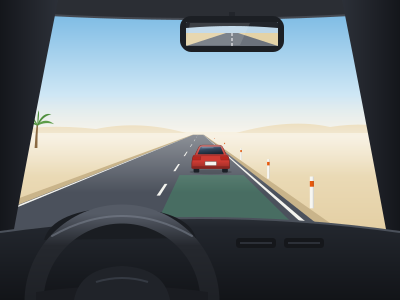
Which two components make up the total stopping distance of a vehicle?
The other 25 questions in this test
Read them all. The answer and the reason for each, and the timed 35-question run, are in the Bahrain Driving Test Questions PDF.
- Q11Road signs and signals
A pedestrian is waiting at a marked crossing where this warning sign is displayed. What must you do?
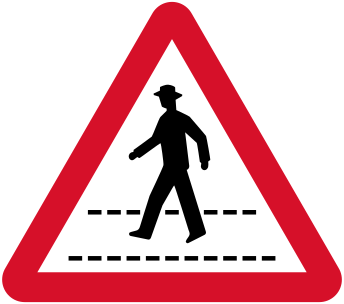
- AFlash your headlights to signal the pedestrian to wait
- BSound your horn and continue if the pedestrian has not stepped onto the road
- CStop and let the pedestrian cross
- DSlow down but only stop if the pedestrian is already on the road
Answer and explanation in the bank
- Q12Traffic rules
When is a U-turn permitted in Bahrain?
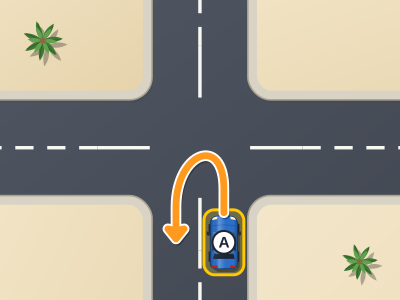
- AOnly where a sign or road marking specifically permits it and it can be completed safely
- BAnywhere on a road provided no other vehicle is visible
- CAt any traffic-light controlled junction
- DU-turns are always prohibited throughout Bahrain
Answer and explanation in the bank
- Q13Right of way
When should you signal right as you go straight ahead through a roundabout?
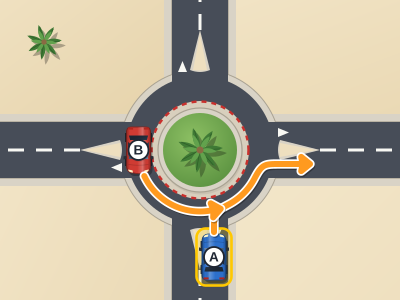
- ABefore entering the roundabout.
- BJust after passing the exit before yours, to signal you are leaving at the next exit.
- COnly if another vehicle is directly behind you.
- DSignalling on roundabouts is not required in Bahrain.
Answer and explanation in the bank
- Q14Safe driving
Which of the following is a recognised early warning sign of driver fatigue?
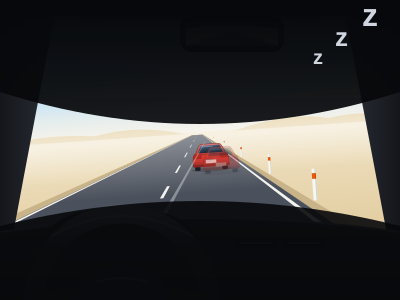
- ADifficulty keeping eyes open and missing exits or road signs
- BAn increase in fuel economy as the engine warms up
- CThe steering feeling heavier than usual
- DThe dashboard temperature gauge reading higher than normal
Answer and explanation in the bank
- Q15Penalties and fines
What document must a driver carry at all times in Bahrain?
- AProof of employment only
- BA valid driving licence
- CA national identity card is sufficient instead of a licence
- DNo documents are required if the driver is on a short trip
Answer and explanation in the bank
- Q16Motorcycle control
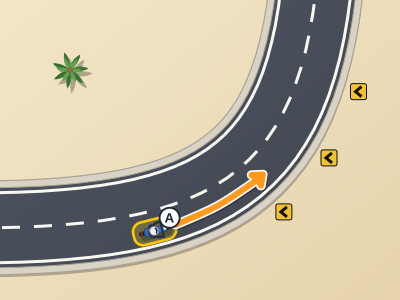
Why does counter-steering work to initiate a turn on a fast-moving motorcycle?
- APushing the bar creates air resistance on one side that pushes the bike around the corner
- BPushing the bar transfers weight to the opposite footpeg, tilting the bike
- CCounter-steering reverses the gyroscopic effect, slowing the spinning wheel and tightening the turn
- DPushing on one bar briefly steers the wheel slightly off-centre, allowing the bike to lean into the turn under gravity
Answer and explanation in the bank
- Q17Motorcycle safety
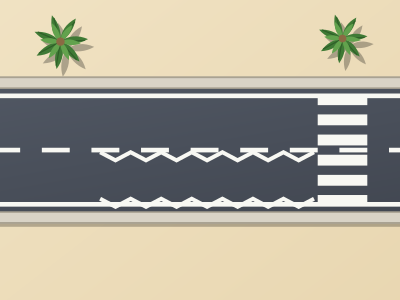
What is the recommended riding formation for a group of motorcyclists on a multi-lane road?
- ASingle file, one directly behind the other, as close together as possible
- BSide by side in pairs, filling the full width of the lane
- CA staggered (zigzag) formation, with each rider offset to one side of the lane, maintaining a gap to the rider directly ahead
- DEach rider in a separate lane to maximise individual safety
Answer and explanation in the bank
- Q18Road signs and signals
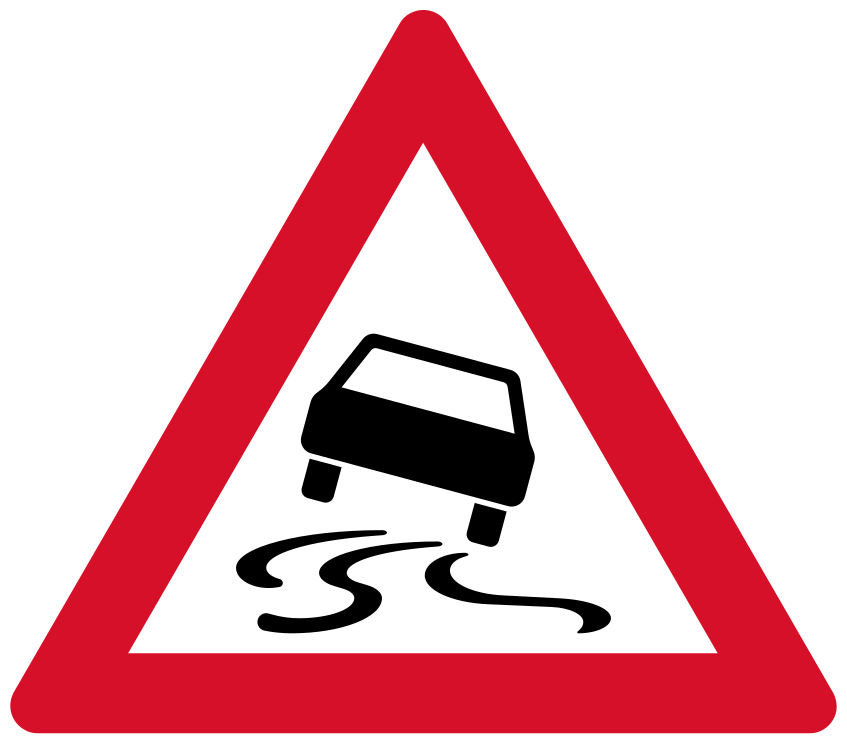
You see this sign after crossing a desert highway section with loose sand on the road. What is the most important action?
- AActivate four-wheel drive and continue at normal speed
- BMove to the left (fast) lane to avoid sand
- CReduce speed and avoid sudden steering or braking inputs
- DIncrease speed so tyres clear the sand quickly
Answer and explanation in the bank
- Q19Traffic rules
Which of the following locations prohibits a U-turn in Bahrain?
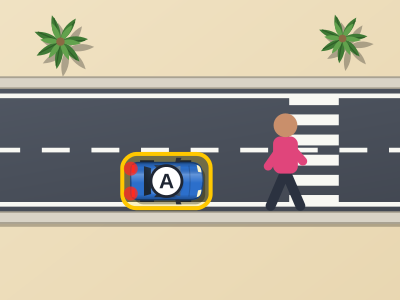
- AAt or near a pedestrian crossing
- BOn a wide divided road with a designated U-turn gap in the median
- CAt a signposted U-turn point on a highway
- DOn a quiet residential road that has a U-turn marking
Answer and explanation in the bank
- Q20Right of way
A police car with flashing lights and siren is approaching fast from behind on a dual carriageway. What should you do?
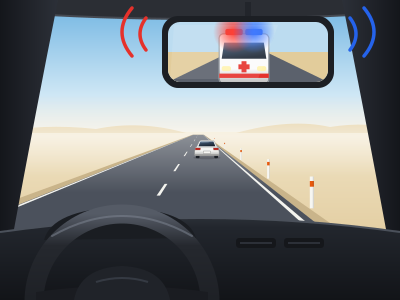
- AMove to the left to let it overtake on the right.
- BMaintain your speed; it is the emergency vehicle's responsibility to pass safely.
- CMove to the right and allow it to pass on your left.
- DStop immediately in your current lane.
Answer and explanation in the bank
- Q21Safe driving
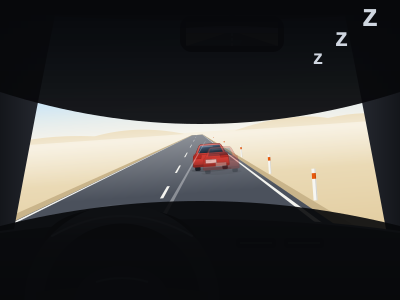
You are driving from Bahrain toward the Saudi border on a long journey and feel drowsy. What is the most effective action?
- ADrink several cups of coffee and keep driving to reach your destination
- BOpen all windows and turn the air conditioning to maximum cold
- CDrive slightly faster so the journey ends sooner
- DPull over safely, take a short nap of 15 to 20 minutes, then continue
Answer and explanation in the bank
- Q22Penalties and fines
What is the penalty for driving in Bahrain without a valid driving licence?
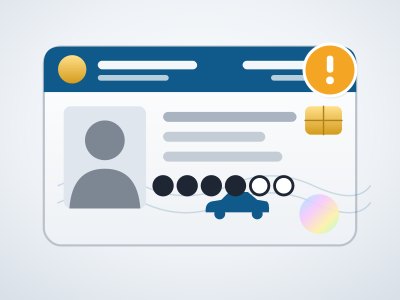
- AA fine, black points, and possible vehicle impoundment
- BA warning and seven-day grace period to obtain a licence
- CNo penalty if the driver holds a licence from another country
- DThe vehicle is confiscated permanently with no option to reclaim it
Answer and explanation in the bank
- Q23Motorcycle control
Slipping the clutch (partially engaging it) is most useful when:
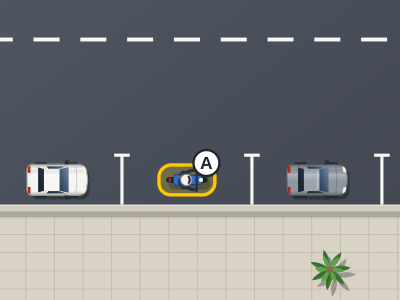
- AOvertaking at high speed on a dual carriageway
- BDescending a steep hill to increase engine braking
- CWarming up the engine from cold before riding
- DManoeuvring at very low speeds such as car-park turns or slow traffic
Answer and explanation in the bank
- Q24Motorcycle safety
Why is fatigue especially dangerous for motorcyclists compared to car drivers?
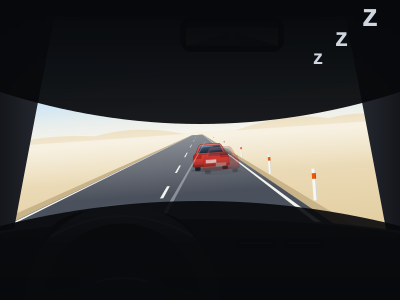
- AMotorcycles are faster than cars, so fatigue affects them proportionally more
- BA motorcycle requires constant active physical balance and input; fatigue reduces reaction time and fine motor control that are critical to staying upright
- CMotorcycles have no seatbelt, so a fatigued rider is immediately ejected if they fall asleep
- DFatigue is equally dangerous for all vehicle types; motorcycles have no specific additional risk
Answer and explanation in the bank
- Q25Road signs and signals
You see a Roundabout Ahead warning sign. Which lane should you be in if you want to take the third exit?
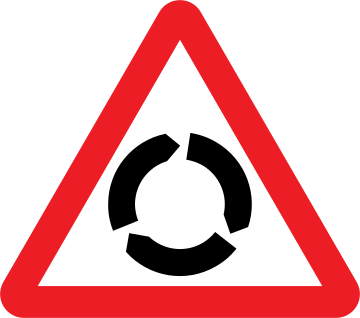
- AThe left (fast) lane throughout
- BThe right lane initially, moving to an appropriate lane inside the roundabout
- CAny lane; lane position at a roundabout does not matter
- DThe right lane and stay in it through the entire roundabout
Answer and explanation in the bank
- Q26Traffic rules
You need to reverse direction on a busy road in Bahrain but no designated U-turn point is nearby. What should you do?
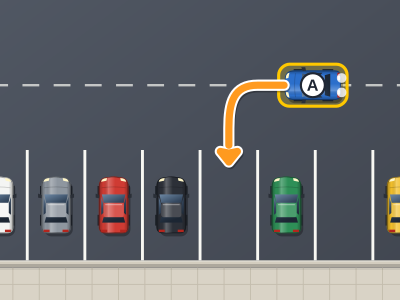
- ADrive on to the next designated U-turn point or find another legal turning opportunity
- BMake the U-turn quickly if you judge it to be safe
- CReverse along the road until you reach your intended direction
- DActivate hazard lights and complete the U-turn in the nearest gap
Answer and explanation in the bank
- Q27Right of way
An ambulance with siren and flashing lights is approaching a controlled junction on a red light. What should other road users do?
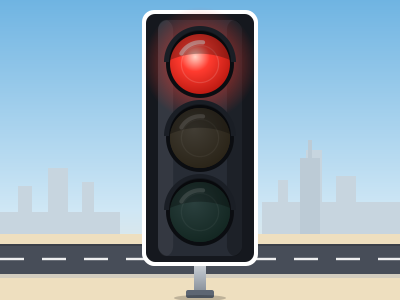
- AClear the path safely and let the ambulance through, even if their own signal is green.
- BMaintain normal movement; traffic lights govern priority.
- COnly give way if the ambulance is directly behind them.
- DSound their horns to alert other drivers to stop.
Answer and explanation in the bank
- Q28Safe driving
You are driving in dense fog near Bahrain International Airport. Which lights should you use?
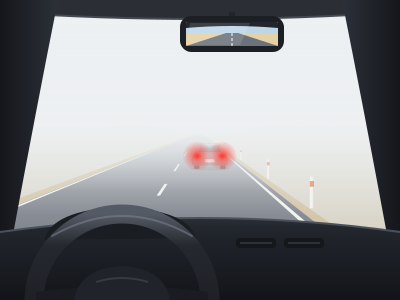
- ADipped (low-beam) headlights and rear fog lights if fitted
- BFull-beam (high-beam) headlights to see as far ahead as possible
- CHazard warning lights instead of headlights
- DSidelights only, to avoid dazzling other drivers
Answer and explanation in the bank
- Q29Penalties and fines
A driver is stopped and found to have an expired vehicle registration. What is the likely outcome?
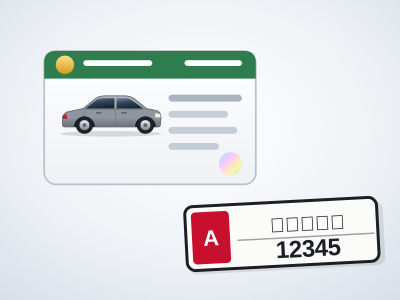
- AA fine and the vehicle may be impounded until the registration is renewed
- BThe driver is given a three-month extension automatically
- COnly a written warning is issued on the first occasion
- DNo action is taken provided the driver can show the previous year's registration
Answer and explanation in the bank
- Q30Motorcycle control
What is the primary role of the rear brake on a motorcycle?
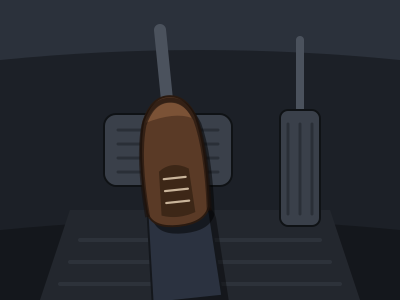
- ATo provide the majority (over 70%) of total stopping power
- BTo lock the rear wheel intentionally for controlled slides
- CTo assist steering by dragging on one side during corners
- DTo provide additional stopping force and help stabilise the bike during braking
Answer and explanation in the bank
- Q31Motorcycle safety
What symptoms of dehydration should a motorcyclist watch for during long summer rides in Bahrain?
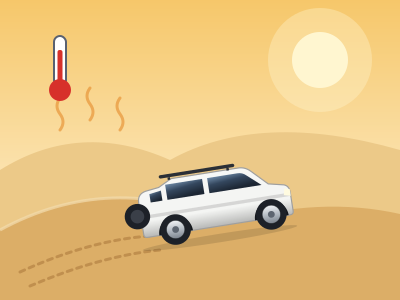
- AHeadache, dizziness, difficulty concentrating, and muscle cramps, which all impair riding ability
- BIncreased alertness and sharper reactions as adrenaline compensates for fluid loss
- CSweating more heavily, which keeps the body cool and does not affect riding performance
- DOnly physical weakness; mental performance and reactions are unaffected by dehydration
Answer and explanation in the bank
- Q32Road signs and signals
In Bahrain, which lane is used for normal driving on a multi-lane highway?
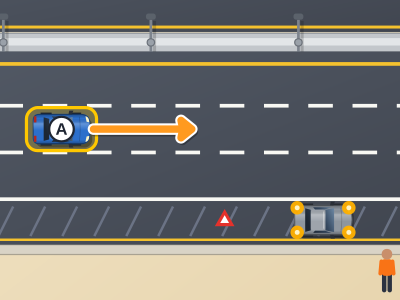
- AThe left lane
- BThe centre lane at all times
- CAny lane at the driver's preference
- DThe right lane
Answer and explanation in the bank
- Q33Traffic rules
Before changing lanes on a Bahraini highway, what must you do with your indicator?
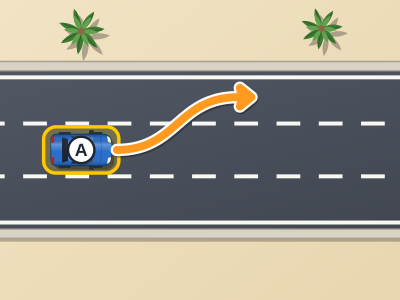
- ASignal before moving, giving other drivers time to react
- BSignal at exactly the same moment you begin moving
- CSignal only if another vehicle is directly behind you
- DNo signal is required on highways
Answer and explanation in the bank
- Q34Right of way
You are in the middle of a roundabout when an emergency vehicle with lights and siren approaches the entry behind you. What is the correct action?
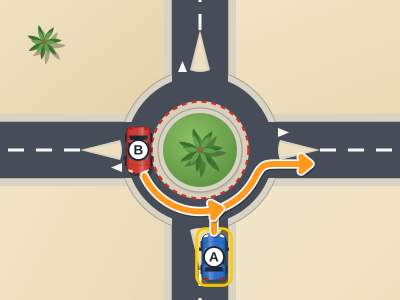
- AComplete your exit from the roundabout, then pull over safely on the exit road.
- BStop immediately on the roundabout.
- CReverse off the roundabout to clear the way.
- DSpeed up sharply to leave the roundabout faster.
Answer and explanation in the bank
- Q35Safe driving
A sudden dust storm reduces visibility to near zero on a Bahrain highway. What should you do?
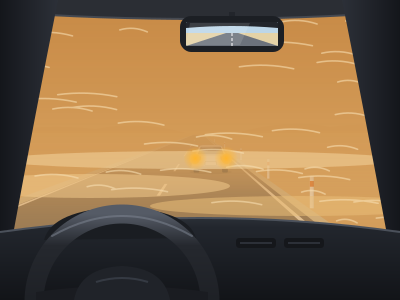
- AContinue driving slowly with hazard lights on to avoid being rear-ended
- BAccelerate to pass through the dust cloud as quickly as possible
- CPull onto the hard shoulder and leave headlights on so others can see you
- DPull well off the road, switch off your headlights, and wait for the storm to pass
Answer and explanation in the bank
Every answer above, with the rule it comes from, plus the full 35-question timed test.
Get the Bahrain Driving Test Questions - BHD 3What this test covers
Topics include road signs, traffic signals, right of way, roundabouts, speed limits, seat belts, fines and penalties, and the safe-driving rules specific to your vehicle category. Full question-by-question feedback with explanations is shown immediately after you finish the test above.
Frequently asked questions
How many questions is the Northern General Directorate of Traffic motorcycle theory test?
The official General Directorate of Traffic motorcycle theory test in Northern has 35 questions and you need 26 correct (75%) to pass. This practice test has 35 questions.
Is this the real exam?
These are practice questions to help you revise, written to the published rules and to what candidates report from the real test. They are not the official Bahrain exam and the real question bank, format, fees and pass mark are set by the General Directorate of Traffic (Ministry of Interior), and can change. Always confirm the current requirements with your driving school or the traffic department.
Is this practice test free?
The first 10 questions are free, with no signup, and each shows the answer and the reason. The full 35-question test, timed, is in the Bahrain Driving Test Questions PDF (BHD 3, one payment), with every question in the bank.
What does the Northern motorcycle theory test cover?
Road signs, traffic signals, right of way, roundabouts, speed limits, seat belts, penalties and safe-driving rules, plus the handling and safety topics specific to your vehicle.