

Southern General Directorate of Traffic Light vehicle
Timed mock exam· Full mock examsSouthern General Directorate of Traffic - Bahrain Theory Mock Test 3
Third full mock exam - another fresh set of 35 questions drawn from all topics. A great way to check your readiness before the real test.
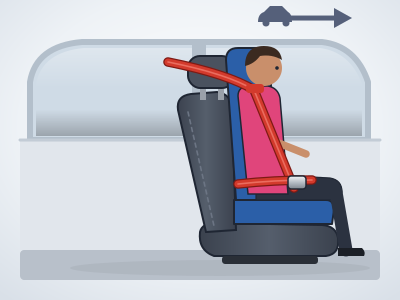
A parent is fined because their seven-year-old was seated in the front passenger seat without a booster seat. Which rule did they break?
The other 25 questions in this test
Read them all. The answer and the reason for each, and the timed 35-question run, are in the Bahrain Driving Test Questions PDF.
- Q11Road signs and signals
A road sign has a red circle with a car and a motorcycle shown side by side, each crossed out with a diagonal bar. What does it mean?
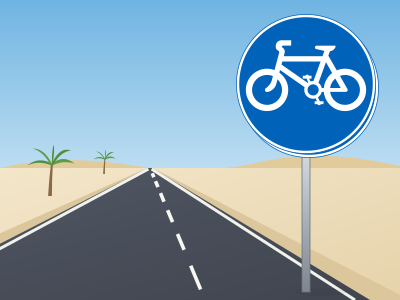
- ABoth cars and motorcycles are prohibited on this road
- BCars and motorcycles must travel side by side
- CNo overtaking between cars and motorcycles
- DCars must stay in the right lane, motorcycles in the left lane
Answer and explanation in the bank
- Q12Traffic rules
Heavy rain is falling on a Bahraini road posted at 80 km/h. What speed should you drive?
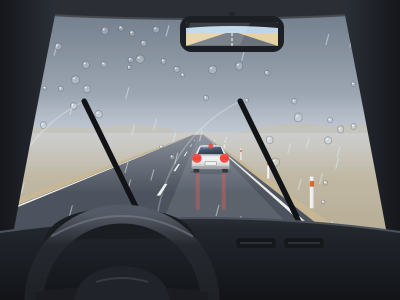
- AMaintain exactly 80 km/h as that is the legal maximum
- BReduce speed below 80 km/h to a level that is safe for the conditions
- CIncrease speed to get through the rain faster
- DStop immediately whenever rain begins
Answer and explanation in the bank
- Q13Right of way
Two lanes of traffic merge into one due to roadworks ahead. What is the recommended approach?
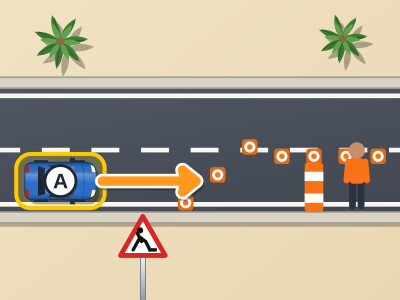
- AMove into the surviving lane as early as possible to avoid blocking it.
- BUse the zip-merge method: advance to the merge point in both lanes and alternate entry.
- CThe lane that is ending must stop and wait for the other lane to clear.
- DThe lane with faster-moving traffic has priority.
Answer and explanation in the bank
- Q14Safe driving
Which combination of factors most increases the risk of aquaplaning?
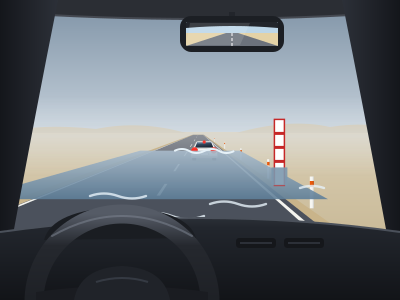
- ALow speed, new tyres, and heavy rain
- BHigh speed, worn tyres, and standing water on the road
- CModerate speed, correct tyre pressure, and light rain
- DHigh speed on a dry road with slightly under-inflated tyres
Answer and explanation in the bank
- Q15Penalties and fines
When a driver accumulates too many violations within a short period, what escalated action can the courts take?
- AThe court can only order the driver to pay double the normal fine
- BNo court involvement is possible for traffic matters in Bahrain
- CThe accumulation of violations automatically resets every calendar year with no judicial action
- DThe court may order a long-term or permanent licence revocation, imprisonment, or both
Answer and explanation in the bank
- Q16Road signs and signals
What does a blue rectangular sign with a white 'H' and an arrow indicate?
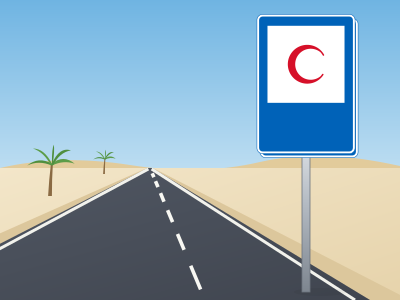
- AA hotel is located ahead
- BThe direction to the nearest hospital
- CA highway interchange begins here
- DHeavy vehicles must use this lane
Answer and explanation in the bank
- Q17Traffic rules
You are driving on a Bahraini highway during a dust storm. What is the most appropriate action?
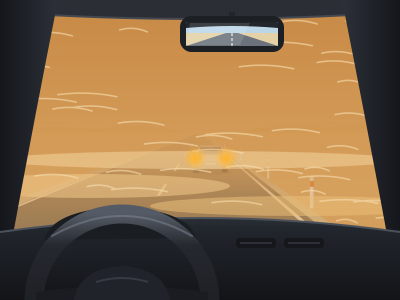
- ASpeed up to leave the storm area as quickly as possible
- BKeep your current speed and switch on hazard lights only
- CSlow down significantly, switch on headlights and fog lights if available, and be ready to pull off the road
- DFollow the vehicle ahead at a very short distance and use their lights as a guide
Answer and explanation in the bank
- Q18Right of way
You are in a lane that is ending at a merge point. Another vehicle in the continuing lane is alongside you. What should you do?
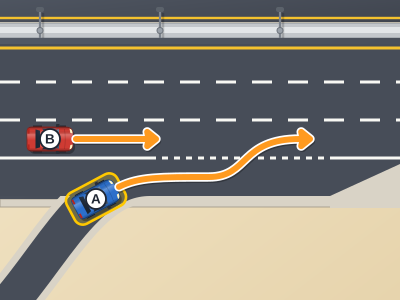
- AMerge behind the vehicle alongside you when you reach the merge point.
- BAccelerate past the vehicle alongside to merge ahead of it.
- CStop and wait for the lane beside you to clear completely.
- DSound your horn to request permission to merge.
Answer and explanation in the bank
- Q19Safe driving
You need to carry a load that sticks out beyond the rear of your vehicle. What must you do?
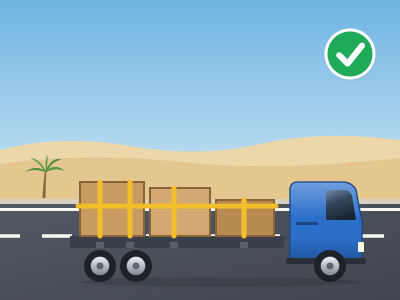
- AAttach a clearly visible red flag or marker to the protruding end of the load
- BNothing is required if the load is secure and does not exceed the vehicle's width
- CDrive on the hard shoulder at reduced speed to warn other drivers
- DUse your hazard warning lights for the entire journey
Answer and explanation in the bank
- Q20Penalties and fines
What should a driver do when directed to stop at a police or traffic checkpoint in Bahrain?
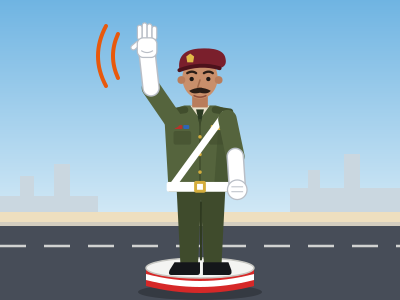
- AFlash the hazard lights and continue driving slowly until a safer stopping point is reached
- BRoll down the window only and refuse to stop if the checkpoint appears unofficial
- CCall the police station to verify the checkpoint is genuine before stopping
- DStop promptly, follow the officer's instructions, and present all requested documents
Answer and explanation in the bank
- Q21Road signs and signals
You are driving at night and see a flashing amber traffic light. What should you do?
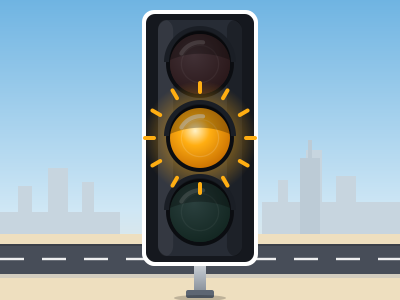
- AProceed with caution, treating the junction as an uncontrolled intersection
- BStop and wait until the lights return to normal operation
- CTreat it the same as a red light and stop indefinitely
- DSound your horn and continue at normal speed
Answer and explanation in the bank
- Q22Traffic rules
A road in Bahrain is posted at 100 km/h but the surface is flooded in patches. What is the correct approach?
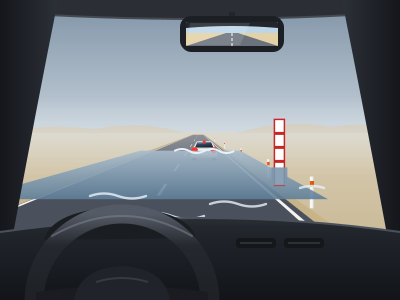
- AMaintain 100 km/h and steer around visible puddles at that speed
- BReduce speed to a level that allows you to stop safely on the wet section, even if well below the posted limit
- CThe posted limit applies regardless of surface conditions
- DIncrease speed to plane over the water surface
Answer and explanation in the bank
- Q23Right of way
You are in the continuing lane at a merge. A vehicle in the ending lane is level with you at the merge point. What is the correct action?
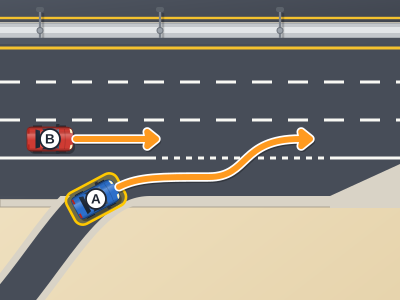
- AAllow the vehicle to merge in alternately, following the zip-merge principle.
- BAccelerate to close the gap so the merging vehicle cannot enter.
- CSound your horn to tell the vehicle to wait.
- DBrake sharply to let all merging vehicles enter at once.
Answer and explanation in the bank
- Q24Safe driving
How does carrying an excessively heavy or unbalanced load affect a vehicle's handling?
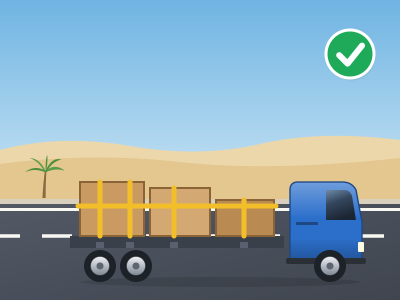
- AIt improves stability by lowering the vehicle's centre of gravity
- BIt has no effect on handling as long as the load is inside the vehicle
- CIt only affects the fuel economy, not safety
- DIt increases stopping distances, reduces steering precision, and raises the risk of rollover
Answer and explanation in the bank
- Q25Penalties and fines
What is the penalty for intentionally evading or failing to stop at a traffic checkpoint in Bahrain?
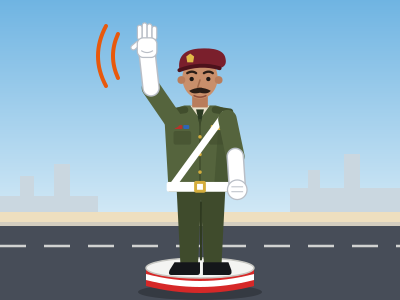
- AA serious offence attracting a heavy fine, black points, possible vehicle impoundment, and referral to the public prosecutor
- BA small administrative fine equivalent to a parking violation
- CNo penalty if the driver later presents their documents at a police station within 24 hours
- DA caution added to the driver's file with no financial consequence
Answer and explanation in the bank
- Q26Road signs and signals
What does a flashing red traffic light mean in Bahrain?
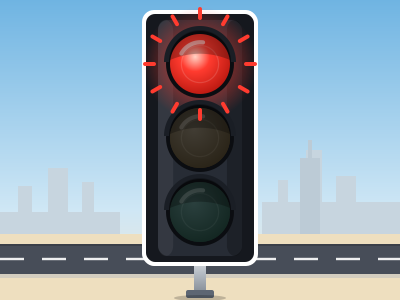
- ASlow down and continue if the road is clear
- BEmergency vehicles are approaching; clear the road immediately
- CRoad works are ahead; no signal in operation
- DStop completely, then proceed only when it is safe, like a STOP sign
Answer and explanation in the bank
- Q27Traffic rules
Why is maintaining a safe following distance important in Bahrain?
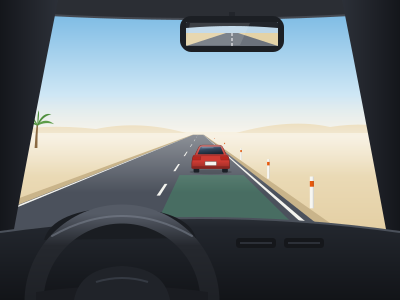
- AIt gives you the time and space to stop if the vehicle ahead brakes suddenly
- BIt is only important at speeds above 120 km/h
- CIt is only required when towing a trailer
- DIt prevents other drivers from cutting in front of you
Answer and explanation in the bank
- Q28Right of way
On an expressway the right lane is ending due to a lane closure. You are in the right lane. When should you move left?
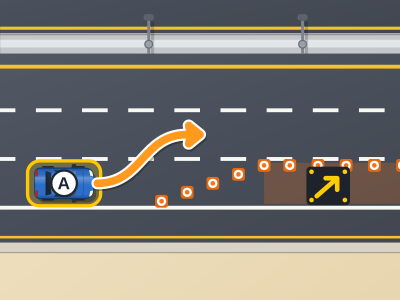
- AImmediately when you see the lane-closed sign, to avoid inconveniencing others.
- BAt the merge point, using the zip-merge method alongside traffic in the left lane.
- COnly if a police officer or road marshal instructs you.
- DYou do not need to move; vehicles in the left lane must give way to you.
Answer and explanation in the bank
- Q29Safe driving
Using a hand-held mobile phone while driving in Bahrain is dangerous primarily because it:
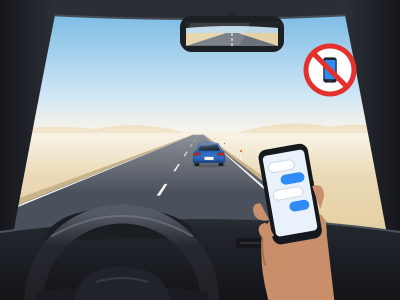
- ACreates electromagnetic interference with the vehicle's electronic systems
- BIs only dangerous at high speeds above 100 km/h
- CReduces visibility by blocking part of the windscreen
- DOccupies one hand and diverts mental attention from the driving task, slowing reaction time
Answer and explanation in the bank
- Q30Penalties and fines
Where can a driver pay traffic fines in Bahrain?
- AOnly by handing cash directly to the officer who issued the fine
- BFines must be paid in person at the Ministry of Finance only
- CPayment is not possible; fines are automatically deducted from the owner's bank account
- DOnline via the General Directorate of Traffic portal, at traffic offices, and through approved payment channels
Answer and explanation in the bank
- Q31Road signs and signals
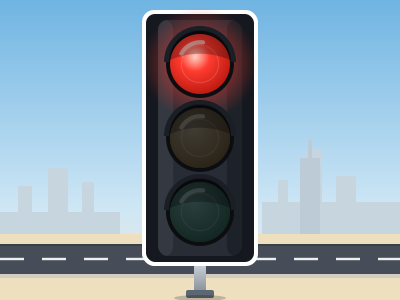
A steady red traffic light is showing. What must you do?
- ASlow down and continue if no one is crossing
- BStop and then proceed if the road is clear
- CSound your horn and proceed carefully
- DStop and wait until the light turns green
Answer and explanation in the bank
- Q32Traffic rules
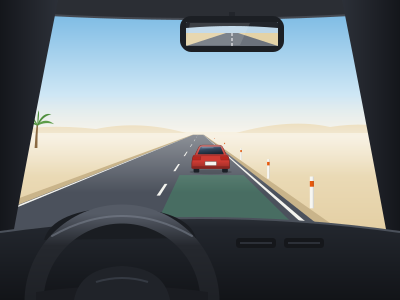
Which method helps you estimate a safe following distance on a Bahraini highway?
- AStay one car length behind for every 10 km/h of speed
- BFollow as closely as possible to reduce aerodynamic drag
- CThe two-second rule - ensure at least two seconds pass between the vehicle ahead and your vehicle reaching the same fixed point
- DMatch your gap to the space the vehicle behind you leaves
Answer and explanation in the bank
- Q33Right of way
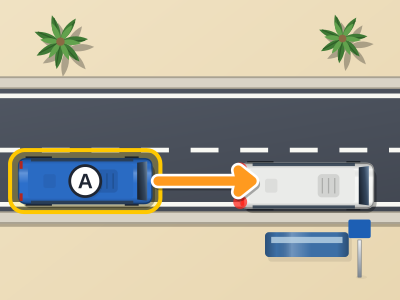
A bus signals to pull out from a bus stop into your lane. What does Bahrain traffic law generally require of you?
- AYou have priority; the bus must wait for a clear gap.
- BOnly give way if the bus is already more than halfway out.
- CGive way to the bus where it is safe to do so, as buses signalling to pull out are given priority.
- DSound your horn as a warning and then proceed.
Answer and explanation in the bank
- Q34Safe driving
Which of the following in-vehicle distractions is widely considered among the most dangerous for drivers?
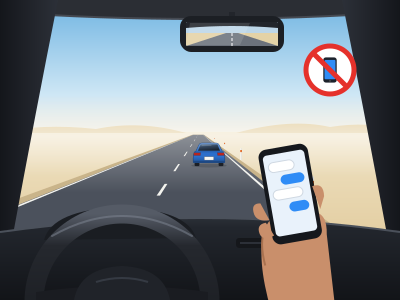
- AReading or sending text messages on a mobile device
- BListening to the radio at a moderate volume
- CUsing the cruise control on a straight highway
- DHaving a passenger sitting in the rear seat
Answer and explanation in the bank
- Q35Penalties and fines
What happens if a driver ignores unpaid traffic fines in Bahrain for an extended period?
- AUnpaid fines are automatically written off after two years
- BThe fines may be escalated, the vehicle cannot be re-registered, and travel restrictions may be imposed
- COnly the original fine amount must eventually be paid with no additional penalties
- DThe driver's employer is billed for any outstanding fines
Answer and explanation in the bank
Every answer above, with the rule it comes from, plus the full 35-question timed test.
Get the Bahrain Driving Test Questions - BHD 1.5What this test covers
Topics include road signs, traffic signals, right of way, roundabouts, speed limits, seat belts, fines and penalties, and the safe-driving rules specific to your vehicle category. Full question-by-question feedback with explanations is shown immediately after you finish the test above.
Frequently asked questions
How many questions is the Southern General Directorate of Traffic light vehicle theory test?
The official General Directorate of Traffic light vehicle theory test in Southern has 35 questions and you need 26 correct (75%) to pass. This practice test has 35 questions.
Is this the real exam?
These are practice questions to help you revise, written to the published rules and to what candidates report from the real test. They are not the official Bahrain exam and the real question bank, format, fees and pass mark are set by the General Directorate of Traffic (Ministry of Interior), and can change. Always confirm the current requirements with your driving school or the traffic department.
Is this practice test free?
The first 10 questions are free, with no signup, and each shows the answer and the reason. The full 35-question test, timed, is in the Bahrain Driving Test Questions PDF (BHD 1.5, one payment), with every question in the bank.
What does the Southern light vehicle theory test cover?
Road signs, traffic signals, right of way, roundabouts, speed limits, seat belts, penalties and safe-driving rules, plus the handling and safety topics specific to your vehicle.