

Southern General Directorate of Traffic Light vehicle
Timed mock exam· Full mock examsSouthern General Directorate of Traffic - Bahrain Theory Mock Test 4
Fourth and final full mock exam. Use this as your last confidence check - if you can pass all four mocks you are well prepared for the real thing.
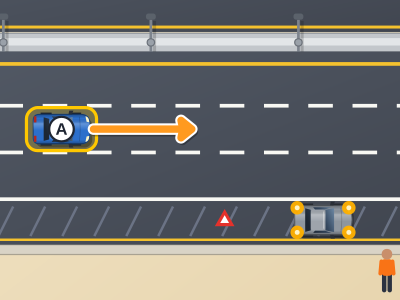
You are driving on a three-lane highway in Bahrain and there is no vehicle ahead of you. Where should you position yourself?
The other 25 questions in this test
Read them all. The answer and the reason for each, and the timed 35-question run, are in the Bahrain Driving Test Questions PDF.
- Q11Road signs and signals
You approach a traffic signal that has failed (all lights off). How should you treat it?
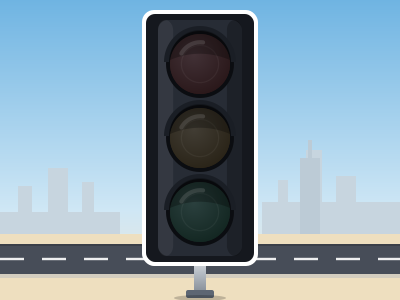
- ATreat it as an uncontrolled junction and give way to the right
- BProceed at normal speed since no signal is active
- CStop and phone the traffic authority before moving
- DThe vehicle on the widest road always has priority
Answer and explanation in the bank
- Q12Traffic rules
Where must a young child be seated when travelling in a vehicle in Bahrain?
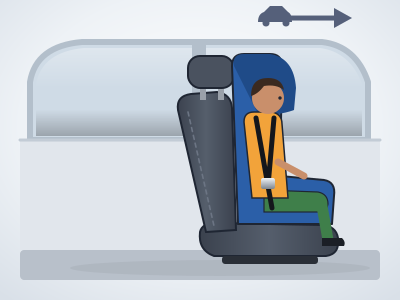
- AIn the rear, in a child seat suited to the child's size; children under 10 must not sit in the front
- BIn the front passenger seat secured with the adult belt
- COn an adult's lap in any seat
- DChildren have no separate restraint requirement in Bahrain
Answer and explanation in the bank
- Q13Right of way
You are on the minor road (the stem) at a T-junction and wish to turn right. Who has priority?
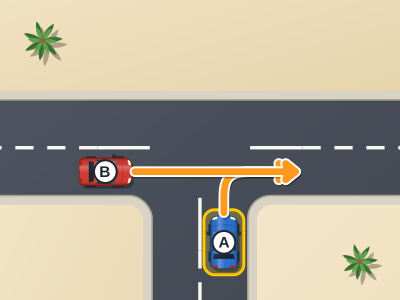
- ATraffic approaching from the left only.
- BTraffic on the through road in both directions.
- CTraffic approaching from the right only.
- DYou, because you are only crossing one lane.
Answer and explanation in the bank
- Q14Safe driving
What is a key safety precaution when crossing the King Fahd Causeway between Bahrain and Saudi Arabia?
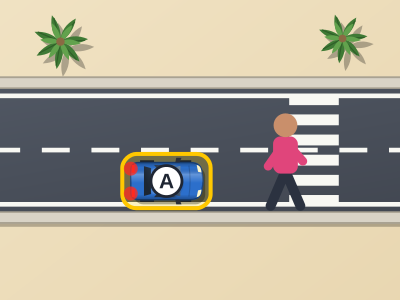
- ASwitch off your engine and coast across to conserve fuel
- BUse only the rightmost lane at all times regardless of traffic conditions
- CEnsure your vehicle has sufficient fuel before starting the crossing and follow variable speed limits on the causeway
- DThere are no special precautions; treat the causeway exactly like a city road
Answer and explanation in the bank
- Q15Penalties and fines
Which vehicle modification relating to exhaust systems is illegal in Bahrain?
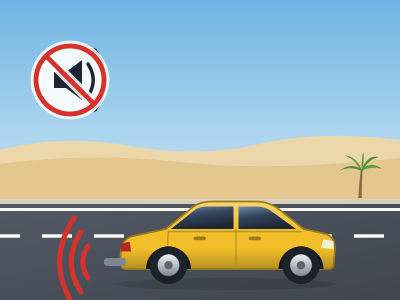
- AReplacing the standard exhaust pipe with a manufacturer-approved equivalent
- BFitting a catalytic converter not specified by the original manufacturer
- CUsing a factory exhaust on a vehicle that is more than ten years old
- DFitting a modified or aftermarket exhaust that produces excessive noise beyond the permitted decibel level
Answer and explanation in the bank
- Q16Road signs and signals
You want to change lanes on a three-lane highway. The left lane is the fastest lane. Which mirror should you check first before moving to the left lane?
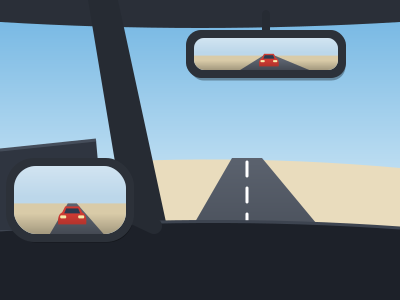
- AThe left door mirror and the rear-view mirror, then the left blind spot
- BThe right door mirror only
- CNo mirrors are needed if you signal first
- DThe rear-view mirror only
Answer and explanation in the bank
- Q17Traffic rules
A passenger tells you they do not want to wear a seat belt on a short journey. What should you do as the driver?
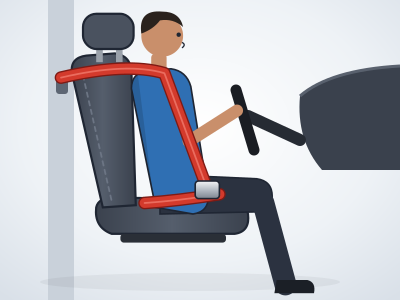
- AAllow it as the journey is brief
- BInsist they belt up before you move off - you can be held responsible and no journey is short enough to justify the risk
- CLet them decide as it is their personal choice
- DOnly the passenger is legally responsible, not the driver
Answer and explanation in the bank
- Q18Right of way
You are on the through road at a T-junction. A vehicle on the minor road is waiting to turn left into your road. Who has priority?
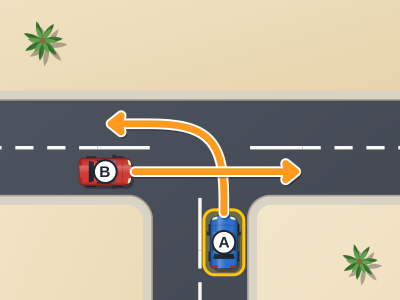
- AThe vehicle on the minor road, because it only needs to cross one lane.
- BYou, on the through road.
- CWhichever vehicle arrived at the junction first.
- DThe larger vehicle.
Answer and explanation in the bank
- Q19Safe driving
Strong crosswinds on the King Fahd Causeway can pose a risk. Which vehicles are most affected?
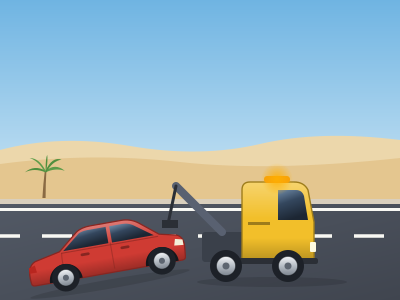
- ALow sports cars because their aerodynamics create lift at high speed
- BElectric vehicles because their battery weight makes them unstable
- CHigh-sided vehicles such as trucks, vans, and vehicles towing large trailers
- DAll vehicles are equally affected regardless of size and shape
Answer and explanation in the bank
- Q20Penalties and fines
A driver revs their engine repeatedly in a residential area late at night, causing noise disturbance. What offence may apply?
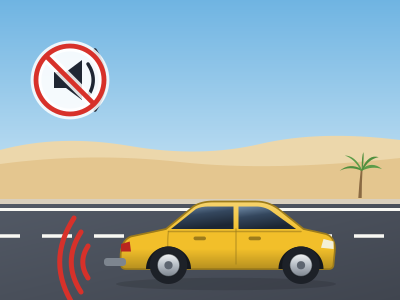
- ANo offence because the driver is on a public road and no physical harm was caused
- BA civil matter only; residents must pursue compensation privately
- CCausing unnecessary vehicle noise, which is a traffic and public-nuisance offence in Bahrain
- DOnly an offence if the vehicle fails the annual noise test
Answer and explanation in the bank
- Q21Road signs and signals
Where should you position your vehicle when you intend to turn right at a junction in Bahrain?

- AAs close to the right-hand kerb as practicable
- BIn the centre of the road
- CAs far left as possible to allow a wide turn
- DStraddle the centre line
Answer and explanation in the bank
- Q22Traffic rules
Your vehicle has a frontal airbag fitted to the front passenger seat. Where should a rear-facing child seat NOT be placed?
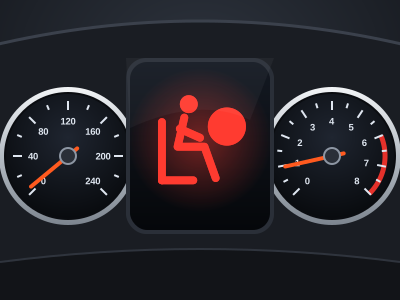
- AIn the rear seat with a headrest
- BIn the right rear seat position
- CIn the left rear seat position
- DIn the front passenger seat when the frontal airbag is active
Answer and explanation in the bank
- Q23Right of way
At an unmarked Y-junction, two roads fork from one road. You are on the left fork and a vehicle is coming from the right fork. Who gives way?
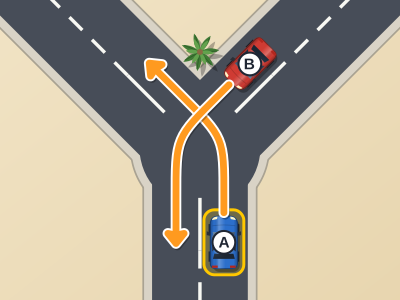
- AThe vehicle from the right gives way to you.
- BThe vehicle making the sharper turn gives way.
- CNeither gives way; both proceed simultaneously without concern.
- DYou give way to the vehicle from the right fork, because it is on your right.
Answer and explanation in the bank
- Q24Safe driving
In dense fog with visibility below 50 metres, you should increase your following distance to at least what time gap?
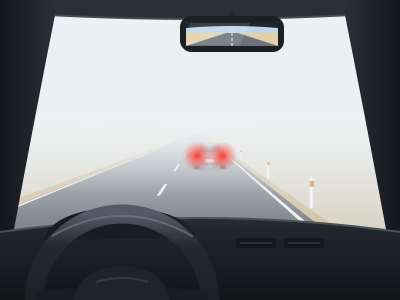
- AAt least 6 to 8 seconds, or more
- BThe standard 2 to 3 seconds is sufficient because you are driving slowly
- C4 seconds is always adequate regardless of visibility
- DFollowing distance is irrelevant in fog because you should stop
Answer and explanation in the bank
- Q25Penalties and fines
What is the penalty for throwing litter from a vehicle while driving in Bahrain?
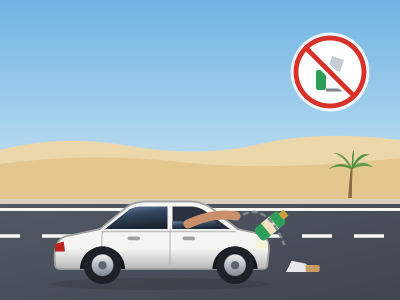
- AA fine for littering from a vehicle
- BNo penalty because litter enforcement only applies to pedestrians
- CThe driver is only penalised if the litter causes a road hazard
- DA community service order to clean the specific road section
Answer and explanation in the bank
- Q26Road signs and signals
You are approaching a junction where you want to turn left. Which lane should you be in before the turn?
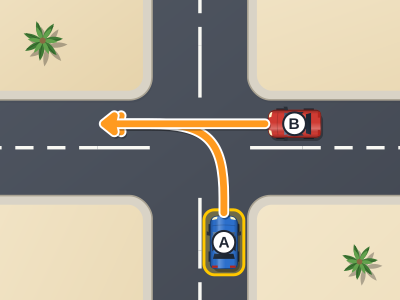
- AThe rightmost lane
- BAny lane; you can cut across from the right
- CThe centre lane and merge left during the turn
- DThe leftmost (innermost) lane designated for left turns
Answer and explanation in the bank
- Q27Traffic rules
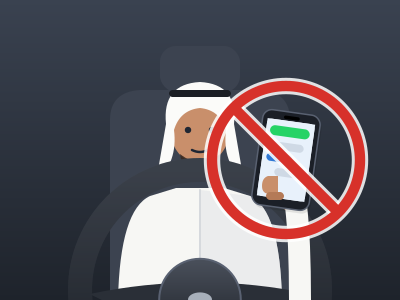
Is it legal to hold and use a mobile phone while driving in Bahrain?
- AYes, as long as you are stationary at a red traffic light
- BYes, for calls lasting under 30 seconds
- CYes, if you drive below 40 km/h
- DNo - using a hand-held phone while driving is prohibited
Answer and explanation in the bank
- Q28Right of way
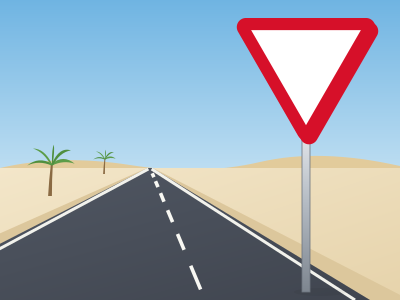
At a T-junction controlled by a GIVE WAY sign, how must you proceed?
- AProceed if no vehicle is within 50 metres.
- BGive way only to traffic approaching from the right.
- CThe sign means slow down only; no yielding is required if the road looks clear.
- DSlow or stop sufficiently to give way to all traffic on the main road before entering.
Answer and explanation in the bank
- Q29Safe driving
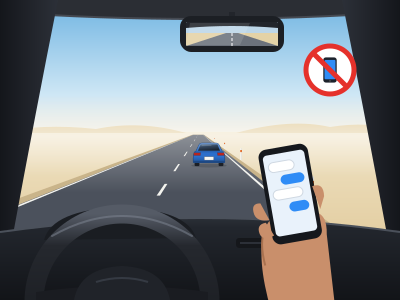
Which of the following factors increases a driver's reaction time?
- AListening to calm music through the vehicle's stereo system
- BWearing prescription glasses while driving
- CFatigue, alcohol, certain medications, and distraction
- DDriving a newer vehicle with electronic stability control
Answer and explanation in the bank
- Q30Penalties and fines
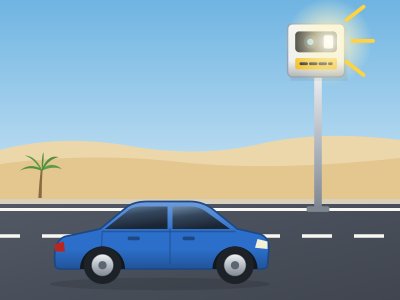
A driver is caught on camera throwing a plastic bottle from their vehicle window on a Bahrain highway. Who is liable?
- ANo one is liable unless a witness comes forward
- BLiability applies only if the bottle causes an accident
- COnly the passenger who physically threw the bottle, not the driver or owner
- DThe registered owner of the vehicle is primarily liable; if the driver is identified, the driver is liable
Answer and explanation in the bank
- Q31Road signs and signals
What is the purpose of a white stop line painted across the road at a junction?
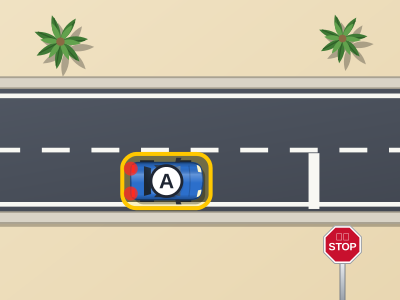
- AYou must stop with the front of your vehicle at or behind this line
- BIt marks the edge of the pedestrian crossing
- CIt shows the boundary between two speed zones
- DParking is permitted up to this line
Answer and explanation in the bank
- Q32Traffic rules
Which device allows legal phone use while driving in Bahrain?
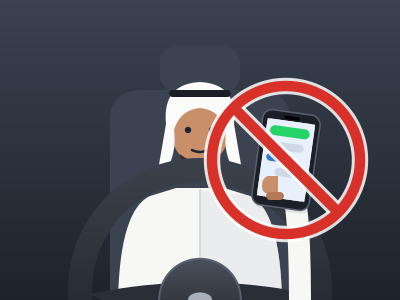
- AHolding the phone against the steering wheel
- BUsing loudspeaker with the phone placed on the dashboard
- CA properly installed Bluetooth or hands-free kit that requires no hand contact with the phone
- DTexting with one hand while steering with the other
Answer and explanation in the bank
- Q33Right of way
You are exiting a side street at a T-junction with a main road. A vehicle on the main road is approaching but is some distance away. When may you proceed?
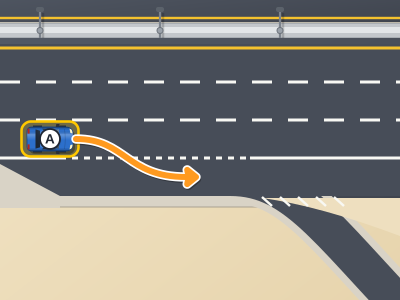
- AAs soon as you see any gap in the main road traffic.
- BWhen the approaching vehicle is more than 100 metres away.
- COnly after making eye contact with the other driver.
- DOnly when you are certain you can complete the manoeuvre without causing the main-road vehicle to brake or swerve.
Answer and explanation in the bank
- Q34Safe driving
At 60 km/h on a dry road, which figure best approximates total stopping distance for an alert driver?
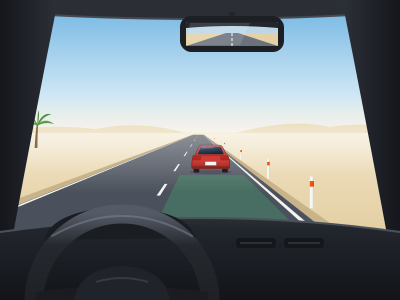
- ALess than 10 metres
- BApproximately 35 to 45 metres
- CApproximately 100 metres
- DTotal stopping distance depends only on tyre brand, not speed
Answer and explanation in the bank
- Q35Penalties and fines
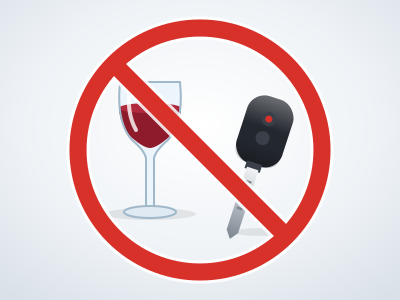
Which of the following best describes Bahrain's approach to alcohol-related driving offences for expatriates?
- ALong-term residents are exempt from deportation if they have a clean driving record before the offence
- BDeportation is only possible if the driver caused a fatal accident while intoxicated
- CExpatriates face a financial fine only, while Bahraini nationals face imprisonment
- DConviction for drink-driving can result in imprisonment followed by deportation, regardless of how long the person has lived in Bahrain
Answer and explanation in the bank
Every answer above, with the rule it comes from, plus the full 35-question timed test.
Get the Bahrain Driving Test Questions - BHD 1.5What this test covers
Topics include road signs, traffic signals, right of way, roundabouts, speed limits, seat belts, fines and penalties, and the safe-driving rules specific to your vehicle category. Full question-by-question feedback with explanations is shown immediately after you finish the test above.
Frequently asked questions
How many questions is the Southern General Directorate of Traffic light vehicle theory test?
The official General Directorate of Traffic light vehicle theory test in Southern has 35 questions and you need 26 correct (75%) to pass. This practice test has 35 questions.
Is this the real exam?
These are practice questions to help you revise, written to the published rules and to what candidates report from the real test. They are not the official Bahrain exam and the real question bank, format, fees and pass mark are set by the General Directorate of Traffic (Ministry of Interior), and can change. Always confirm the current requirements with your driving school or the traffic department.
Is this practice test free?
The first 10 questions are free, with no signup, and each shows the answer and the reason. The full 35-question test, timed, is in the Bahrain Driving Test Questions PDF (BHD 1.5, one payment), with every question in the bank.
What does the Southern light vehicle theory test cover?
Road signs, traffic signals, right of way, roundabouts, speed limits, seat belts, penalties and safe-driving rules, plus the handling and safety topics specific to your vehicle.