

Southern General Directorate of Traffic Light vehicle
Practice mode· Right of way & safetySouthern General Directorate of Traffic - Bahrain Safe Driving Practice Test
Covers defensive driving, following distances, fatigue, visibility, adverse weather and hazard awareness. Safe driving habits save lives and keep your licence clean.
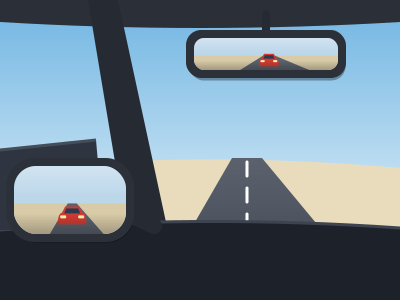
How often should you check your mirrors while driving in normal traffic conditions?
The other 12 questions in this test
Read them all. The answer and the reason for each, and the timed 22-question run, are in the Bahrain Driving Test Questions PDF.
- Q11Safe driving
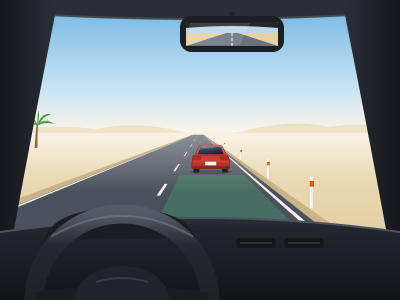
The concept of a 'space cushion' in defensive driving refers to:
- AThe passenger cabin space required for airbag deployment
- BThe minimum seat adjustment distance from the steering wheel to prevent airbag injury
- CMaintaining a buffer of open space on all sides of your vehicle so you have an escape route in any direction
- DThe gap left between parked vehicles and the kerb
Answer and explanation in the bank
- Q12Safe driving
What is the generally applicable speed limit on the King Fahd Causeway between Bahrain and Saudi Arabia?
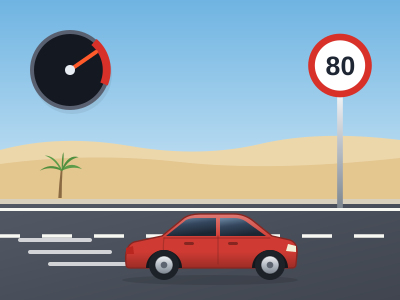
- A120 km/h, though variable speed signs must be obeyed and may show lower limits
- B50 km/h for the entire crossing as it is treated as an urban road
- CThere is no posted speed limit; drivers travel at their own discretion
- D200 km/h in the dedicated fast lane
Answer and explanation in the bank
- Q13Safe driving
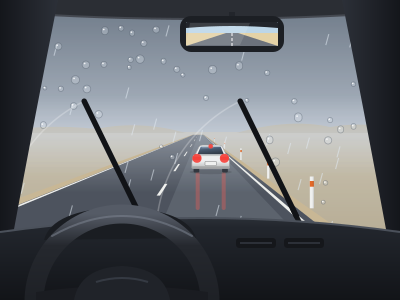
Your vehicle does NOT have ABS and you need to stop quickly on a wet road without skidding. What braking technique should you use?
- AApply maximum continuous brake pressure and hold until stopped
- BCadence braking: repeatedly press and release the brake to prevent wheel lock while retaining some steering
- CUse the handbrake only to avoid locking the front wheels
- DDownshift through the gears rapidly to use engine braking instead of the foot brake
Answer and explanation in the bank
- Q14Safe driving
While driving on a Bahrain highway at 110 km/h, your front-left tyre suddenly blows out. What is the correct immediate response?
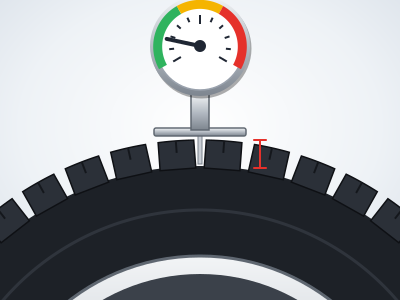
- ASteer sharply to the right and brake hard to stop quickly
- BGrip the steering wheel firmly, ease off the accelerator gradually, and do not apply hard braking
- CAccelerate briefly to regain vehicle stability before braking
- DApply the handbrake smoothly to slow down
Answer and explanation in the bank
- Q15Safe driving
A rear tyre blows out at highway speed. How does this differ from a front blowout in terms of the vehicle's behaviour?
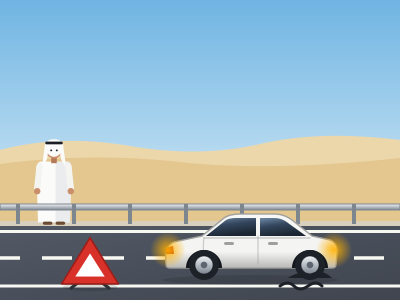
- AThe steering becomes lighter and easier to control than in a front blowout
- BA rear blowout has little effect on vehicle control at highway speed
- CThe vehicle will pull strongly and consistently to the right regardless of which rear tyre burst
- DThe rear of the vehicle will fishtail or sway rather than pulling sharply to one side
Answer and explanation in the bank
- Q16Safe driving
What is the main safety benefit of Anti-lock Braking System (ABS)?
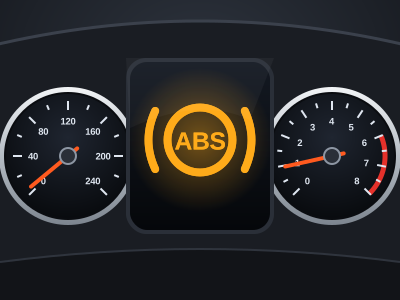
- AIt prevents the wheels from locking so you can steer while braking hard
- BIt automatically applies the brakes when the vehicle gets too close to another car
- CIt shortens stopping distance on all surfaces including ice
- DIt eliminates the need to increase following distance in wet weather
Answer and explanation in the bank
- Q17Safe driving
You have ABS and need to make an emergency stop. What is the correct braking technique?
- APump the brake pedal rapidly to prevent wheel lock
- BPress lightly to avoid triggering the ABS warning light
- CApply gradual increasing pressure and release fully before the vehicle stops
- DPress the brake pedal firmly and hold it down; do not pump the pedal
Answer and explanation in the bank
- Q18Safe driving
You are fitting a rear-facing infant seat. Which seating position should you avoid if the vehicle has an active front passenger airbag?
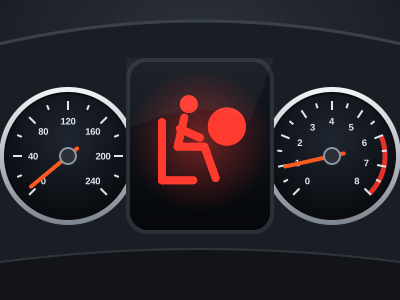
- AThe front passenger seat, unless the airbag is deactivated
- BThe rear centre seat because it lacks side-impact protection
- CAny seat behind the driver because the infant cannot see forward
- DThere is no restriction; airbags are designed to be safe for all child seats
Answer and explanation in the bank
- Q19Safe driving
Which of the following is a recognised early warning sign of driver fatigue?
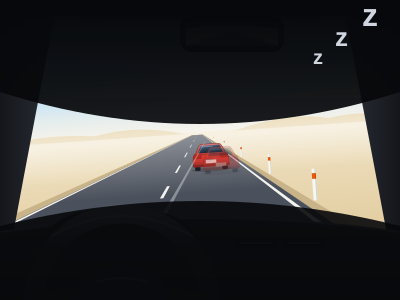
- ADifficulty keeping eyes open and missing exits or road signs
- BAn increase in fuel economy as the engine warms up
- CThe steering feeling heavier than usual
- DThe dashboard temperature gauge reading higher than normal
Answer and explanation in the bank
- Q20Safe driving
You are driving from Bahrain toward the Saudi border on a long journey and feel drowsy. What is the most effective action?
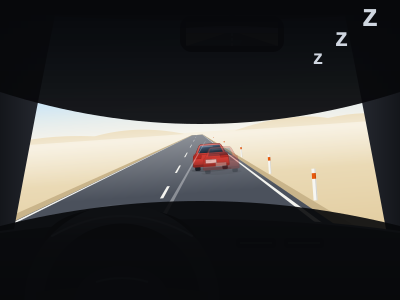
- ADrink several cups of coffee and keep driving to reach your destination
- BOpen all windows and turn the air conditioning to maximum cold
- CDrive slightly faster so the journey ends sooner
- DPull over safely, take a short nap of 15 to 20 minutes, then continue
Answer and explanation in the bank
- Q21Safe driving
You are driving in dense fog near Bahrain International Airport. Which lights should you use?
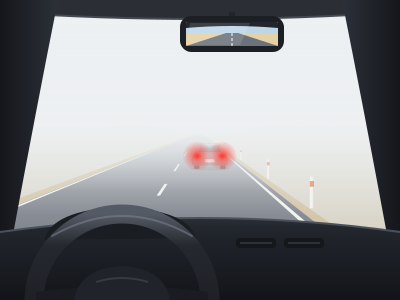
- ADipped (low-beam) headlights and rear fog lights if fitted
- BFull-beam (high-beam) headlights to see as far ahead as possible
- CHazard warning lights instead of headlights
- DSidelights only, to avoid dazzling other drivers
Answer and explanation in the bank
- Q22Safe driving
A sudden dust storm reduces visibility to near zero on a Bahrain highway. What should you do?
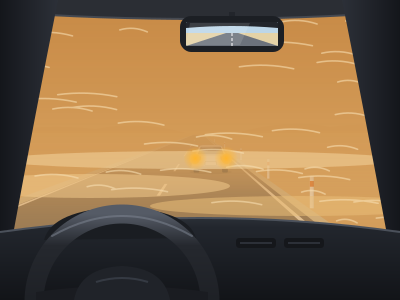
- AContinue driving slowly with hazard lights on to avoid being rear-ended
- BAccelerate to pass through the dust cloud as quickly as possible
- CPull onto the hard shoulder and leave headlights on so others can see you
- DPull well off the road, switch off your headlights, and wait for the storm to pass
Answer and explanation in the bank
Every answer above, with the rule it comes from, plus the full 22-question timed test.
Get the Bahrain Driving Test Questions - BHD 3What this test covers
Topics include road signs, traffic signals, right of way, roundabouts, speed limits, seat belts, fines and penalties, and the safe-driving rules specific to your vehicle category. Full question-by-question feedback with explanations is shown immediately after you finish the test above.
Frequently asked questions
How many questions is the Southern General Directorate of Traffic light vehicle theory test?
The official General Directorate of Traffic light vehicle theory test in Southern has 35 questions and you need 26 correct (75%) to pass. This practice test has 22 questions.
Is this the real exam?
These are practice questions to help you revise, written to the published rules and to what candidates report from the real test. They are not the official Bahrain exam and the real question bank, format, fees and pass mark are set by the General Directorate of Traffic (Ministry of Interior), and can change. Always confirm the current requirements with your driving school or the traffic department.
Is this practice test free?
The first 10 questions are free, with no signup, and each shows the answer and the reason. The full 22-question test, timed, is in the Bahrain Driving Test Questions PDF (BHD 3, one payment), with every question in the bank.
What does the Southern light vehicle theory test cover?
Road signs, traffic signals, right of way, roundabouts, speed limits, seat belts, penalties and safe-driving rules, plus the handling and safety topics specific to your vehicle.