

Southern General Directorate of Traffic Truck & Bus
Timed mock exam· Full mock examsSouthern General Directorate of Traffic - Bahrain Truck & Bus Theory Mock Test 3
Third full heavy-vehicle mock exam and a strong final readiness check before your real truck or bus theory test. Another distinct set of 30 timed questions.
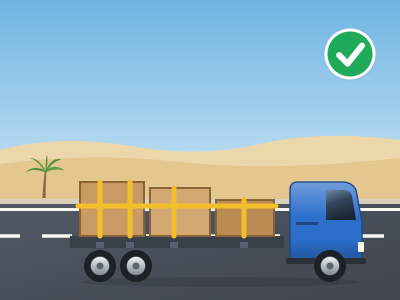
You are driving a loaded articulated truck at 80 km/h on a Bahrain expressway. Why should you leave a much larger following gap than a car driver would?
The other 25 questions in this test
Read them all. The answer and the reason for each, and the timed 35-question run, are in the Bahrain Driving Test Questions PDF.
- Q11Traffic rules
You enter a one-way street in Bahrain. Which lane should you use for normal driving?
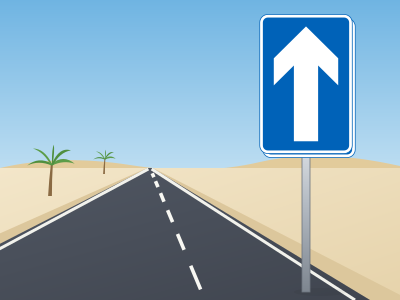
- AThe right lane, with the left lane available for overtaking
- BThe left lane, as one-way streets reverse normal lane rules
- CThe middle lane to stay clear of parked vehicles on both sides
- DAny lane, as one-way streets have no lane discipline requirements
Answer and explanation in the bank
- Q12Right of way
You are waiting to turn right from a side road. A vehicle on the main road is simultaneously turning right into your road. How can both safely complete their turns?
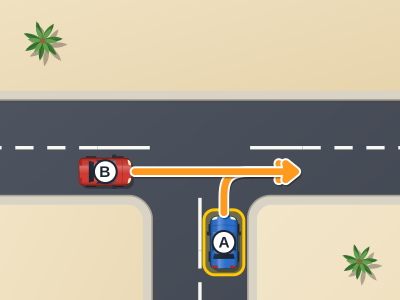
- AWait for the oncoming vehicle to complete its turn fully before you move.
- BFlash headlights to agree who goes first.
- CEach driver keeps the other vehicle on their right and both turn at the same time.
- DThe driver on the main road always has priority and turns first.
Answer and explanation in the bank
- Q13Safe driving
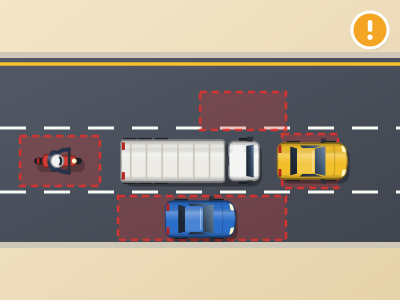
Large trucks and buses in Bahrain have significant blind spots. Where are these blind spots typically located?
- AOnly directly behind the rear of the trailer
- BOnly on the passenger side because the driver sits on the left
- CDirectly behind, directly in front, and alongside both sides of the vehicle
- DLarge vehicles have no blind spots because they are fitted with larger mirrors
Answer and explanation in the bank
- Q14Penalties and fines
What is the maximum legal tint level for the front windscreen of a private vehicle in Bahrain?
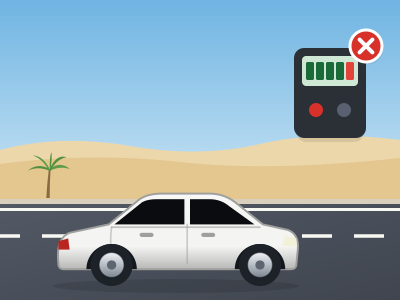
- AVisible Light Transmission of at least 70%, meaning heavily tinted front windscreens are not permitted
- BAny level of tint is permitted provided sunglasses are not also worn
- CThe front windscreen may be blacked out if a special permit is obtained from the traffic authority
- DA maximum of 20% VLT is allowed on the front windscreen to reduce glare
Answer and explanation in the bank
- Q15Heavy vehicle
You are driving an articulated truck and need to make a tight left turn. A motorcyclist is waiting at the junction on your left. What should you do?
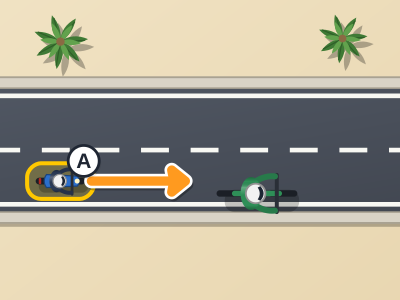
- AComplete the turn quickly so the motorcyclist has minimal time in the danger zone
- BSound the horn and proceed; the motorcyclist should know to stay clear of trucks
- CWait for the motorcyclist to move fully out of your path, then complete the turn slowly while checking mirrors for the trailer's sweep through the turn
- DPull slightly right to signal your intent and proceed at normal turning speed
Answer and explanation in the bank
- Q16Road signs and signals
What does a yellow diamond-shaped sign with a black border in the centre of the road mean?
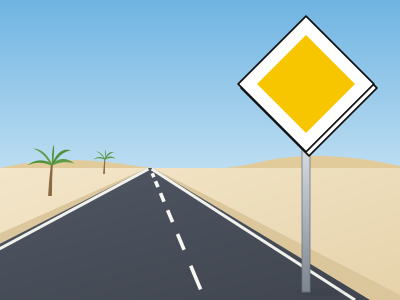
- AYou are on the priority road and have right of way
- BA school zone begins ahead
- CHazardous material transport ahead
- DReduce speed to 20 km/h
Answer and explanation in the bank
- Q17Traffic rules
You have accidentally entered a one-way street in the wrong direction in Bahrain. What should you do?
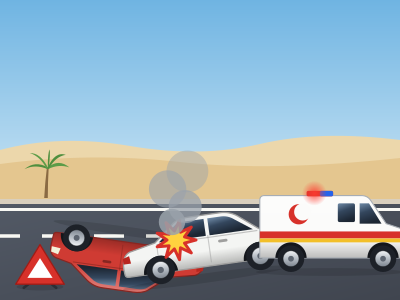
- AContinue driving in the wrong direction as quickly as possible to clear the street
- BStop safely, activate hazard lights, and reverse out carefully when clear, or turn around at the nearest safe point
- CSound your horn continuously and keep going
- DFlash your headlights and drive to the nearest exit at speed
Answer and explanation in the bank
- Q18Right of way
You are turning right and an oncoming vehicle is also turning right, but a central reservation blocks your view of traffic behind the oncoming vehicle. What should you do?
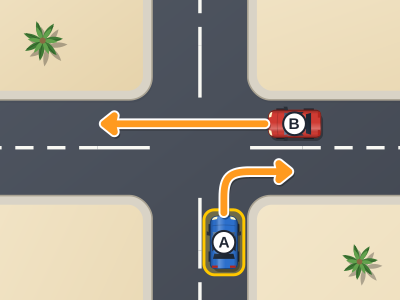
- AProceed normally; the right-turn convention handles simultaneous turning.
- BFlash headlights and proceed quickly.
- CTurn rapidly to reduce the time spent in the oncoming path.
- DStop and check fully before completing the turn; the obstruction increases risk significantly.
Answer and explanation in the bank
- Q19Safe driving
When overtaking a large truck on a Bahrain expressway, why should you complete the manoeuvre quickly and not linger alongside the truck?
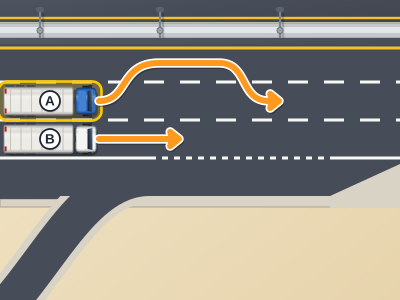
- ABecause the truck creates a vacuum that pulls small cars closer to it
- BBecause you are in the truck's blind spot alongside it and the driver may not be aware of your presence
- CBecause overtaking at exactly the same speed as the truck is illegal
- DThere is no additional risk in lingering alongside a truck
Answer and explanation in the bank
- Q20Penalties and fines
A driver has the rear side windows of their car fitted with extremely dark tint that makes it impossible to see inside. Which action will the traffic authority most likely take?
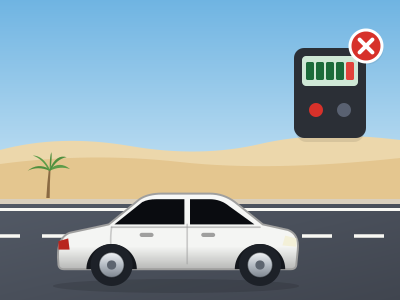
- AAllow the tint because it only affects rear windows, not the driver's forward vision
- BIssue a warning letter and allow six months to comply
- CIssue a fine and require the driver to remove or replace the non-compliant tint before the vehicle can be driven
- DConfiscate the vehicle permanently for the tint violation
Answer and explanation in the bank
- Q21Heavy vehicle
What is meant by a high centre of gravity on a heavy vehicle and why does it matter?
- AIt means the engine is mounted high, which improves fuel economy on flat roads
- BIt refers to the height of the cab above the road surface, which affects driver visibility only
- CIt means the vehicle's mass is concentrated high above the ground, making it more likely to roll over when cornering or changing direction
- DIt describes the ideal suspension setting for carrying heavy loads on motorways
Answer and explanation in the bank
- Q22Road signs and signals
You are about to overtake on a dual carriageway. A No Overtaking sign was posted 500 metres ago and has not been cancelled. What should you do?
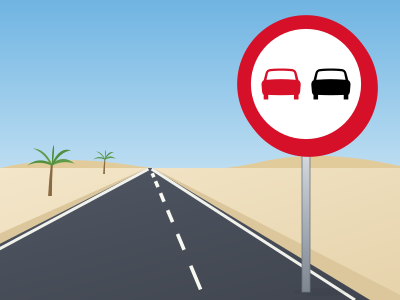
- ADo not overtake; the prohibition is still in force
- BOvertake because you are on a dual carriageway
- COvertake using the left lane only
- DFlash headlights and overtake if the road is clear
Answer and explanation in the bank
- Q23Traffic rules
When joining a Bahraini highway from a slip road, who has priority?
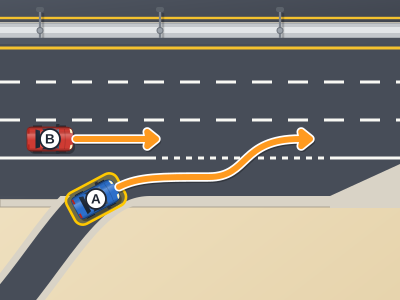
- AThe merging vehicle, because it is accelerating
- BPriority alternates between highway and slip-road traffic
- CWhichever vehicle is travelling faster
- DTraffic already on the highway
Answer and explanation in the bank
- Q24Right of way
On a dual carriageway you want to turn right into a side road. Traffic is using the opposite carriageway. Who has priority?
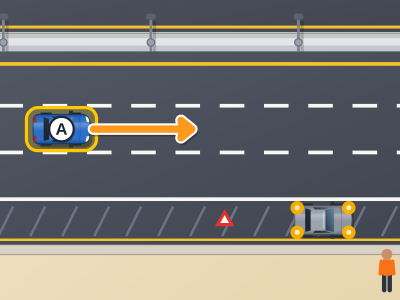
- AYou, because you signalled first.
- BOncoming traffic on the opposite carriageway; you must wait for a safe gap.
- CTraffic joining the dual carriageway from the side road.
- DThe driver behind you who is also waiting to turn.
Answer and explanation in the bank
- Q25Safe driving
Your vehicle breaks down on a Bahrain expressway. What is the first priority?
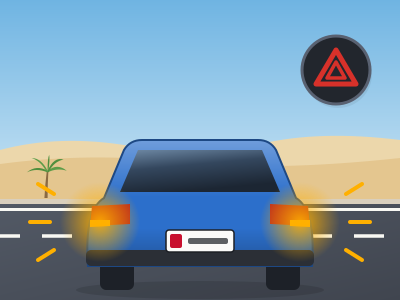
- AGet out immediately and signal to passing drivers for help
- BCall for roadside assistance from the driver's seat while keeping the vehicle on the carriageway
- CTry to restart the vehicle several times before taking any other action
- DMove the vehicle off the carriageway onto the hard shoulder or emergency stopping area and switch on hazard lights
Answer and explanation in the bank
- Q26Penalties and fines
Under what circumstance can traffic police impound a vehicle in Bahrain?
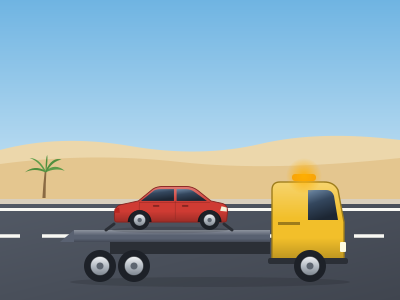
- AOnly if the driver is arrested and physically cannot drive the vehicle away
- BVehicles can never be impounded without a court order
- CFor serious offences such as driving without a licence, no insurance, extreme speeding, or when the vehicle poses an immediate danger
- DOnly vehicles involved in fatal accidents are ever impounded
Answer and explanation in the bank
- Q27Heavy vehicle
A tanker carrying liquid is only half full. Why might this be more dangerous in terms of rollover than a full tanker?
- AA half-full tanker is always lighter so it has better handling in all conditions
- BA half-full tanker sits lower, reducing the centre of gravity and making it harder to see over obstacles
- CThe liquid insulates the tank walls, causing the tanker to overheat, which has no direct effect on rollover
- DThe free liquid surface can surge violently when the driver brakes or steers, creating unpredictable forces that can tip the vehicle
Answer and explanation in the bank
- Q28Road signs and signals
Which sign colour in Bahrain indicates a prohibition that you must not disobey?
- AYellow diamond with black symbol
- BGreen rectangle with white text
- CBrown rectangle with white text
- DRed border on a white or blue circle
Answer and explanation in the bank
- Q29Traffic rules
On a Bahraini highway, on which side of the road are exits located?
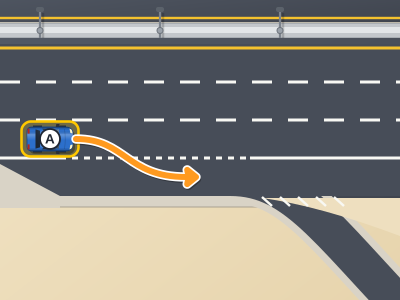
- AOn the left side
- BOn the right side
- CExits are accessed from the middle lane
- DExits can be on either side depending on the road
Answer and explanation in the bank
- Q30Right of way
You are in a left-turn filter lane. Your green filter arrow is showing. Pedestrians are crossing the road you are turning into. What do you do?
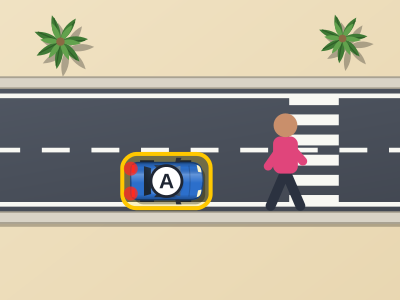
- AWait for the pedestrians to clear the crossing before turning.
- BProceed; the green filter arrow overrides pedestrian priority.
- CSound your horn to alert the pedestrians.
- DMove into the junction and wait with your nose in the crossing.
Answer and explanation in the bank
- Q31Safe driving
After pulling onto the hard shoulder due to a breakdown, where should you place your warning triangle?
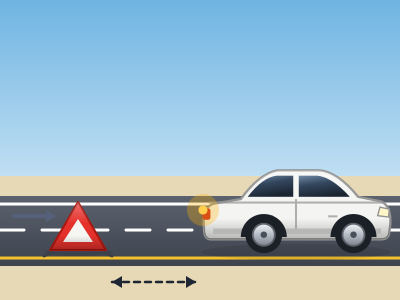
- ADirectly behind the vehicle's rear bumper
- BWarning triangles are optional if your hazard lights are working
- COn top of the vehicle's roof to make it more visible
- DAt least 100 metres behind the vehicle to give approaching drivers adequate warning
Answer and explanation in the bank
- Q32Penalties and fines
How does a driver recover an impounded vehicle in Bahrain?
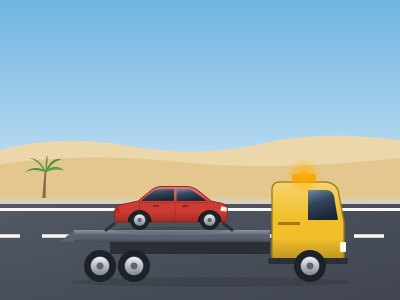
- AThey must pay the outstanding fines and impound fees and rectify any violations before collection is permitted
- BThey can collect the vehicle at any time by showing their driving licence
- CThe vehicle is returned automatically after 48 hours with no further action required
- DA family member can collect the vehicle without any payment if the original driver is unavailable
Answer and explanation in the bank
- Q33Heavy vehicle
You are approaching a roundabout at 50 km/h with a high-sided loaded trailer. What is the main risk?
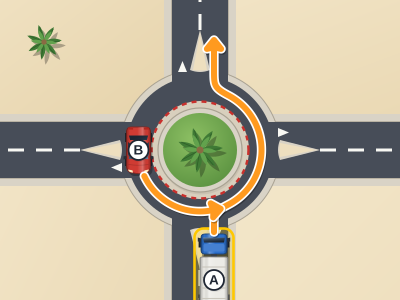
- AThe trailer doors may open on the approach due to centrifugal force
- BThe trailer will jackknife because roundabouts require steering input in both directions
- CThe risk is no greater than for a car; modern truck suspension handles roundabouts safely
- DThe vehicle may roll over if the entry speed is too high, because lateral forces on a high centre of gravity can exceed the tipping limit of the tyres
Answer and explanation in the bank
- Q34Road signs and signals
What are the three main categories of road signs in Bahrain?
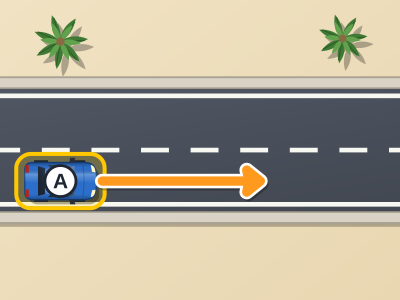
- ARed, blue, and green signs
- BWarning, regulatory (prohibitory/mandatory), and informational
- CSpeed, direction, and distance signs
- DHighway, urban, and rural signs
Answer and explanation in the bank
- Q35Traffic rules
You miss your exit on a Bahraini highway. What is the correct action?
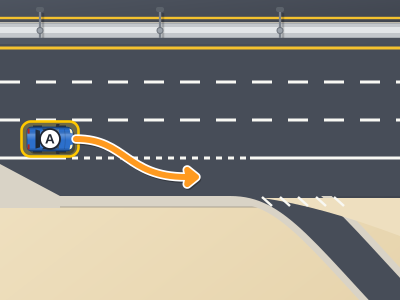
- AReverse along the hard shoulder back to the exit
- BStop immediately and wait for a gap to reverse
- CCross the central reservation to reach the exit road
- DContinue to the next exit and take a legal route back
Answer and explanation in the bank
Every answer above, with the rule it comes from, plus the full 35-question timed test.
Get the Bahrain Driving Test Questions - BHD 3What this test covers
Topics include road signs, traffic signals, right of way, roundabouts, speed limits, seat belts, fines and penalties, and the safe-driving rules specific to your vehicle category. Full question-by-question feedback with explanations is shown immediately after you finish the test above.
Frequently asked questions
How many questions is the Southern General Directorate of Traffic truck & bus theory test?
The official General Directorate of Traffic truck & bus theory test in Southern has 35 questions and you need 26 correct (75%) to pass. This practice test has 35 questions.
Is this the real exam?
These are practice questions to help you revise, written to the published rules and to what candidates report from the real test. They are not the official Bahrain exam and the real question bank, format, fees and pass mark are set by the General Directorate of Traffic (Ministry of Interior), and can change. Always confirm the current requirements with your driving school or the traffic department.
Is this practice test free?
The first 10 questions are free, with no signup, and each shows the answer and the reason. The full 35-question test, timed, is in the Bahrain Driving Test Questions PDF (BHD 3, one payment), with every question in the bank.
What does the Southern truck & bus theory test cover?
Road signs, traffic signals, right of way, roundabouts, speed limits, seat belts, penalties and safe-driving rules, plus the handling and safety topics specific to your vehicle.