

Northern General Directorate of Traffic Truck & Bus
Practice mode· Heavy vehicle skillsNorthern General Directorate of Traffic - Bahrain Heavy Vehicle Skills Test 1
First set of questions on truck and bus operation: braking distances, load stability, blind spots, turning space and vehicle checks. Master the skills unique to heavy vehicles.
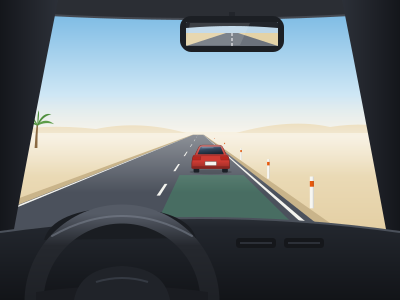
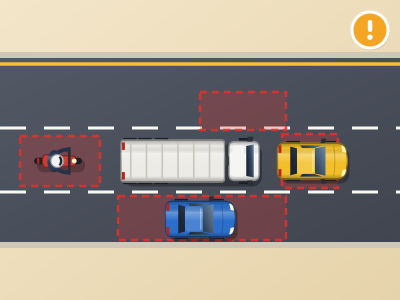
How does a heavy load affect braking distance when driving downhill on a Bahrain road?
The other 12 questions in this test
Read them all. The answer and the reason for each, and the timed 22-question run, are in the Bahrain Driving Test Questions PDF.
- Q11Heavy vehicle
During a pre-trip brake check on an air-brake truck, the driver pumps the brake pedal and notices the air pressure gauge drops faster than normal. What does this indicate?
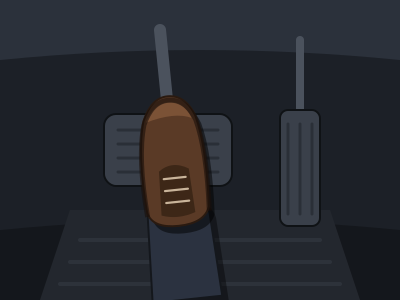
- AThere may be an air leak in the system that will reduce braking performance and must be investigated before driving
- BThe brakes are working correctly; rapid pressure drop confirms the service brakes are responsive
- CThe air compressor is too powerful and should be de-rated before the journey
- DThe pressure drop is normal for cold weather conditions; it will stabilise once the engine warms up
Answer and explanation in the bank
- Q12Heavy vehicle
What pre-trip check should be done on wheel nuts of a heavy vehicle?
- ASpray wheel nuts with lubricant to prevent them from seizing on long journeys
- BWheel nuts never need to be checked between full services; they are safety-locked at the factory
- CCheck visually and with a wheel-nut indicator or torque check that all nuts are present and correctly tightened
- DReplace every wheel nut at each pre-trip inspection as a precaution
Answer and explanation in the bank
- Q13Heavy vehicle
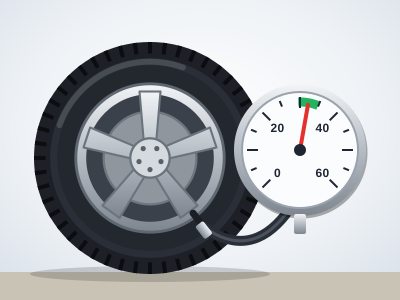
A driver notices during a pre-trip check that one of the rear dual tyres has zero pressure. The adjacent dual tyre appears normal. Is it safe to continue the journey?
- AYes, a dual tyre configuration is designed so one tyre in each pair can go flat without affecting safety
- BYes, if the journey is short and the speed is reduced below 60 km/h
- CYes, as long as the flat tyre is on the inside of the dual pair where it causes less steering effect
- DNo, the flat tyre must be changed or repaired before driving; the loaded tyre beside it will be dangerously overloaded and overheated
Answer and explanation in the bank
- Q14Heavy vehicle
What is the maximum continuous driving time for a heavy vehicle driver before a mandatory rest break must be taken? (Confirm current Bahrain rules with the General Directorate of Traffic.)
- ANo more than 4.5 hours of driving before taking a break of at least 45 minutes
- B8 hours of continuous driving before any rest is required
- C6 hours of driving followed by 30 minutes rest is acceptable under Bahrain rules
- DDriving hours are entirely at the discretion of the driver and employer in Bahrain
Answer and explanation in the bank
- Q15Heavy vehicle
Which of the following is an early warning sign of driver fatigue that a heavy vehicle driver should recognise and act on?
- AFeeling hungry and wanting to stop for a meal
- BFeeling warm due to the cab heater, which is a normal comfort response
- CFrequent blinking, difficulty focusing, missing road signs, and the vehicle drifting slightly within the lane
- DIncreased alertness and faster reaction times after more than 4 hours of driving
Answer and explanation in the bank
- Q16Heavy vehicle
A heavy truck driver has been on duty for 10 hours but only drove for 4 hours, spending the rest of the time loading and doing paperwork. Does duty time (non-driving work) contribute to fatigue that affects safe driving?
- ANo, only actual driving time causes fatigue; other work activities are restful by comparison
- BYes, all duty time, whether driving or other work, contributes to overall fatigue and reduces driving safety
- COnly physical tasks like loading count; administrative tasks are mentally stimulating and counteract fatigue
- DFatigue is only relevant after 6 hours of continuous driving regardless of other work
Answer and explanation in the bank
- Q17Heavy vehicle
A truck driver completing a night shift through Bahrain feels fine and is not sleepy. Research shows this is often misleading. Why?
- ADrivers on night shifts have adapted circadian rhythms that eliminate fatigue risk
- BNight driving is safer because there is less traffic and fatigue risk is lower than during the day
- CFeeling alert does not reliably predict fatigue level; research shows drivers often cannot accurately judge their own impairment and may experience sudden micro-sleeps without prior warning
- DCaffeine consumed at the start of the shift eliminates fatigue for the full night duration
Answer and explanation in the bank
- Q18Heavy vehicle
What is the driver's primary duty regarding passenger safety on a bus before moving off?
- AEnsure all passengers have bought a valid ticket before closing the doors
- BCheck that all passengers are seated or holding a handrail and doors are fully closed before moving
- CDrive slowly until passengers are seated; they are responsible for their own safety once aboard
- DSound the horn to warn standing passengers then move off at the timetabled time regardless
Answer and explanation in the bank
- Q19Heavy vehicle
A passenger on a bus suddenly collapses while the bus is moving. What should the bus driver do?
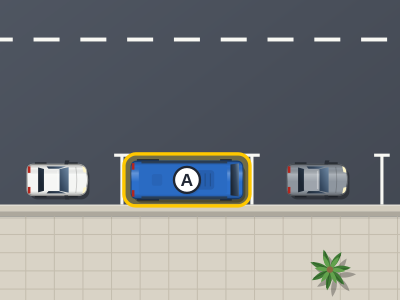
- AStop the bus as soon as it is safe to do so, apply the park brake, and call for emergency services while assisting the passenger
- BContinue to the next stop to avoid disrupting other passengers, then call for help
- CAsk another passenger to help and continue the route so the schedule is maintained
- DAccelerate to the nearest hospital and park on the pavement outside the emergency entrance
Answer and explanation in the bank
- Q20Heavy vehicle
When should a bus driver refuse to allow a passenger to board?
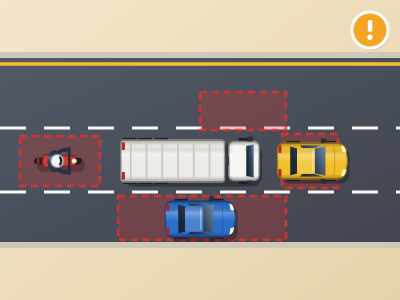
- AWhen the bus is at full standing capacity and allowing more passengers would compromise safety
- BWhen the passenger does not have the exact fare
- CWhen the passenger is carrying luggage that slightly exceeds the baggage policy
- DWhen the driver is running behind schedule and every stop must be minimised
Answer and explanation in the bank
- Q21Heavy vehicle
What does an orange diamond-shaped placard on a heavy vehicle indicate?
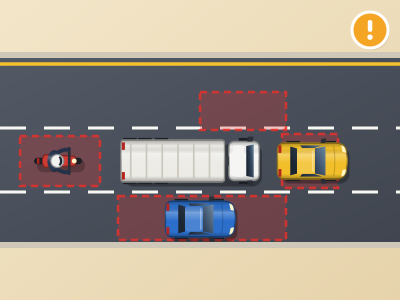
- AThe vehicle is an oversized load and requires a pilot car
- BThe vehicle is owned by a government department and has priority at junctions
- CThe vehicle has failed its most recent roadworthiness inspection and is under caution
- DThe vehicle is carrying dangerous goods and the placard identifies the hazard class
Answer and explanation in the bank
- Q22Heavy vehicle
A truck carrying Class 3 flammable liquids is involved in a minor collision with no spillage. What is the driver's first priority?
- AExchange insurance details with the other driver and continue the journey
- BCheck the load immediately by opening the tanker hatch to inspect for leaks
- CStop at a safe distance from the collision, warn other road users, contact emergency services, and report the incident as required for dangerous goods movements
- DSwitch on the hazard lights and wait in the cab; the incident does not need to be reported because there is no spillage
Answer and explanation in the bank
Every answer above, with the rule it comes from, plus the full 22-question timed test.
Get the Bahrain Driving Test Questions - BHD 3What this test covers
Topics include road signs, traffic signals, right of way, roundabouts, speed limits, seat belts, fines and penalties, and the safe-driving rules specific to your vehicle category. Full question-by-question feedback with explanations is shown immediately after you finish the test above.
Frequently asked questions
How many questions is the Northern General Directorate of Traffic truck & bus theory test?
The official General Directorate of Traffic truck & bus theory test in Northern has 35 questions and you need 26 correct (75%) to pass. This practice test has 22 questions.
Is this the real exam?
These are practice questions to help you revise, written to the published rules and to what candidates report from the real test. They are not the official Bahrain exam and the real question bank, format, fees and pass mark are set by the General Directorate of Traffic (Ministry of Interior), and can change. Always confirm the current requirements with your driving school or the traffic department.
Is this practice test free?
The first 10 questions are free, with no signup, and each shows the answer and the reason. The full 22-question test, timed, is in the Bahrain Driving Test Questions PDF (BHD 3, one payment), with every question in the bank.
What does the Northern truck & bus theory test cover?
Road signs, traffic signals, right of way, roundabouts, speed limits, seat belts, penalties and safe-driving rules, plus the handling and safety topics specific to your vehicle.