

Southern General Directorate of Traffic Motorcycle
Practice mode· Motorcycle skillsSouthern General Directorate of Traffic - Bahrain Motorcycle Control Practice Test
Focused practice on motorcycle handling: balance, braking, cornering, gear use, positioning and low-speed control. Build the machine skills the theory test expects.
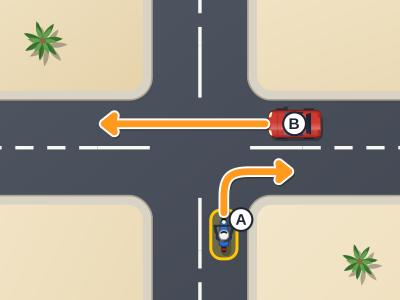
When riding at speed and you want to turn right, which steering input correctly initiates the turn?
The other 10 questions in this test
Read them all. The answer and the reason for each, and the timed 20-question run, are in the Bahrain Driving Test Questions PDF.
- Q11Motorcycle control
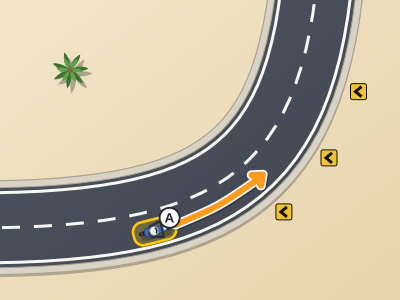
Counter-steering becomes the dominant steering method above approximately which speed?
- AAbove approximately 80 km/h
- BAbove approximately 5 km/h
- CAbove approximately 20 km/h
- DOnly at motorway speeds above 120 km/h
Answer and explanation in the bank
- Q12Motorcycle control
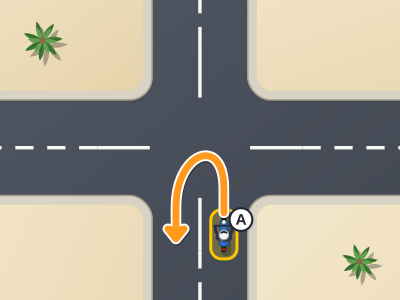
During a slow-speed U-turn, how should you manage the throttle?
- AKeep the throttle fully closed throughout and use momentum alone to complete the turn
- BOpen the throttle wide to spin through the turn quickly
- CApply a small constant throttle and use the rear brake to regulate speed, avoiding cutting the power completely
- DAlternate between full throttle and full rear brake in short bursts
Answer and explanation in the bank
- Q13Motorcycle control
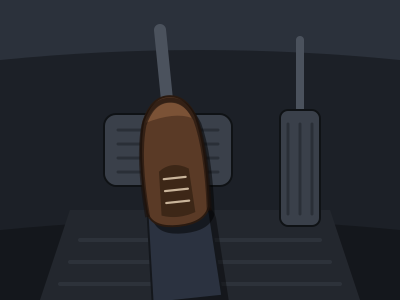
When you brake hard, the front suspension compresses and weight shifts forward. What effect does this have on steering?
- ASteering becomes lighter, making it easier to turn sharply during emergency braking
- BSteering becomes heavier and the bike wants to run wide; releasing the brakes progressively restores normal feel
- CThe rear wheel lifts, which automatically steers the bike to a stop in a straight line
- DThere is no effect on steering because the handlebars are not connected to the suspension
Answer and explanation in the bank
- Q14Motorcycle control
On a hill start, what is the correct sequence of control actions before releasing the rear brake?
- ASelect first gear, release the clutch quickly, then release the rear brake
- BRelease the rear brake first, then bring up the clutch to prevent stalling
- CSelect first gear, squeeze the clutch, bring the clutch to the friction point until drive is felt, then release the rear brake while opening the throttle
- DSelect second gear for a smoother hill start, then release all controls together
Answer and explanation in the bank
- Q15Motorcycle control
What is the effect of riding in a gear that is too low for the current speed on a highway?
- AThe bike becomes more stable at high speed because of higher engine braking
- BThrottle response improves without any negative effect
- CThe speedometer reads incorrectly because the gear ratio changes its calibration
- DEngine revs become excessively high, increasing fuel consumption, noise, and engine wear
Answer and explanation in the bank
- Q16Motorcycle control
A pillion passenger shifts the motorcycle's centre of gravity rearward. How should the rider adjust?
- AShift their own weight forward as far as possible to compensate
- BIncrease tyre pressure above the recommended maximum for better load support
- CNo adjustment is needed; modern motorcycles automatically compensate for passenger weight
- DAdjust the rear suspension pre-load if possible, increase following distance, and allow longer braking distances
Answer and explanation in the bank
- Q17Motorcycle control
When stopping hard in a straight line, roughly what proportion of braking force should come from the front brake?
- AExactly 50 percent front and 50 percent rear
- BApproximately 70 to 80 percent from the rear brake
- C100 percent from the front brake for the shortest stopping distance
- DApproximately 70 to 80 percent, with the remainder from the rear brake
Answer and explanation in the bank
- Q18Motorcycle control
Which is the correct approach to entering a corner safely?
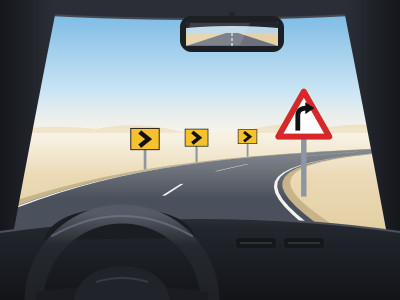
- AReduce speed before the corner, select the appropriate gear, and then accelerate gently through and out of the corner
- BEnter fast and brake progressively while leaning to reduce speed in the corner
- CChoose the highest gear to maximise engine braking through the bend
- DPosition the bike at the inside edge of the lane throughout the entire corner
Answer and explanation in the bank
- Q19Motorcycle control
If you suddenly apply heavy throttle while at or near maximum lean angle, what is the most likely result?
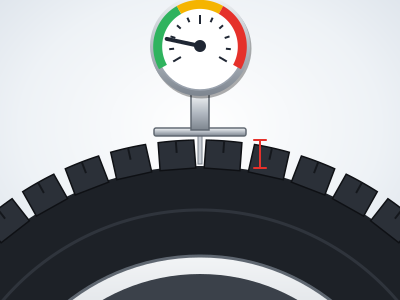
- AThe extra power pulls the bike upright and out of the corner safely
- BThe engine braking increases and the bike slows, widening the corner safely
- CThe rear tyre spins or loses grip, causing a highside or lowside crash
- DThe front wheel lifts and the bike straightens automatically
Answer and explanation in the bank
- Q20Motorcycle control
In which situation is engine braking most helpful for a motorcyclist?
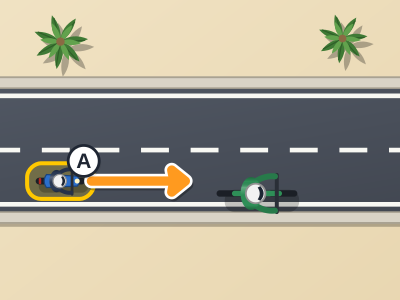
- AAccelerating onto a motorway where maximum engine output is required
- BPerforming a tight U-turn at very low speed
- CApproaching a junction or corner where gradual speed reduction is needed without heavy brake use
- DStopping quickly from high speed in an emergency
Answer and explanation in the bank
Every answer above, with the rule it comes from, plus the full 20-question timed test.
Get the Bahrain Driving Test Questions - BHD 3What this test covers
Topics include road signs, traffic signals, right of way, roundabouts, speed limits, seat belts, fines and penalties, and the safe-driving rules specific to your vehicle category. Full question-by-question feedback with explanations is shown immediately after you finish the test above.
Frequently asked questions
How many questions is the Southern General Directorate of Traffic motorcycle theory test?
The official General Directorate of Traffic motorcycle theory test in Southern has 35 questions and you need 26 correct (75%) to pass. This practice test has 20 questions.
Is this the real exam?
These are practice questions to help you revise, written to the published rules and to what candidates report from the real test. They are not the official Bahrain exam and the real question bank, format, fees and pass mark are set by the General Directorate of Traffic (Ministry of Interior), and can change. Always confirm the current requirements with your driving school or the traffic department.
Is this practice test free?
The first 10 questions are free, with no signup, and each shows the answer and the reason. The full 20-question test, timed, is in the Bahrain Driving Test Questions PDF (BHD 3, one payment), with every question in the bank.
What does the Southern motorcycle theory test cover?
Road signs, traffic signals, right of way, roundabouts, speed limits, seat belts, penalties and safe-driving rules, plus the handling and safety topics specific to your vehicle.