

Al Ahmadi General Traffic Department Light vehicle
Practice mode· Road rulesAl Ahmadi General Traffic Department - Kuwait Road Rules Test 2
Second set of 20 road rules questions covering overtaking, parking, motorway driving, pedestrian crossings and more. Complete both tests for full rules coverage.
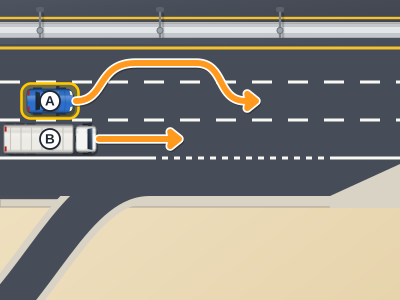
On a three-lane highway in Kuwait, when may a driver legally remain in the middle lane for an extended period?
The other 10 questions in this test
Read them all. The answer and the reason for each, and the timed 20-question run, are in the Kuwait Driving Theory Online Practice Bank.
- Q11Traffic rules
In wet weather or rain in Kuwait, what adjustment should you make to your speed?
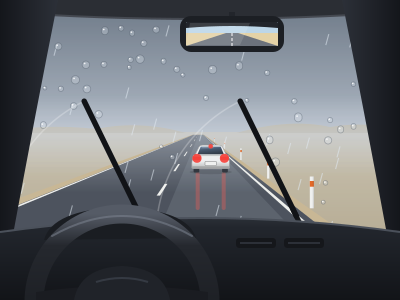
- AReduce speed below the posted limit to account for longer stopping distances and reduced grip
- BMaintain the posted speed limit exactly
- CIncrease speed to clear the wet road faster
- DSpeed does not need adjustment in light rain
Answer and explanation in the bank
- Q12Traffic rules
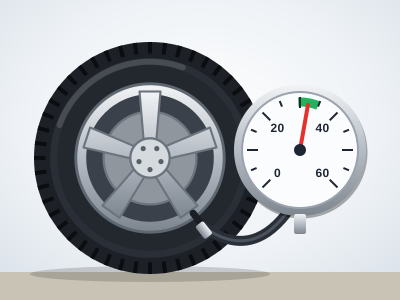
During extremely hot summer conditions in Kuwait, which of the following becomes a greater safety concern that affects driving speed?
- ABrakes becoming more effective in heat, requiring faster driving
- BFuel consumption decreases in heat, so you can drive faster safely
- CTyre blowouts due to heat-expanded air pressure; reducing speed lowers tyre temperature and blowout risk
- DVisibility improves in heat, allowing higher safe speeds
Answer and explanation in the bank
- Q13Traffic rules
On a Kuwait expressway in a sudden dust storm, you can see less than 50 metres ahead. What is the safest course of action?
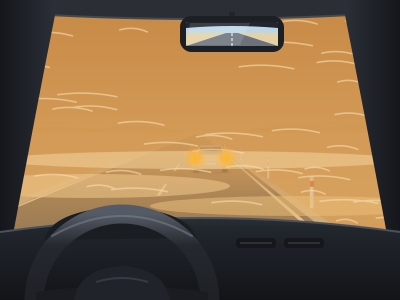
- ASlow down gradually, signal, exit at the nearest opportunity or pull well off the road, switch on dipped headlights and hazard lights, and wait for conditions to improve
- BStop immediately in your lane and turn on hazard lights
- CContinue at 80 km/h using high beam to see further
- DFollow the vehicle directly in front as closely as possible to not lose sight of it
Answer and explanation in the bank
- Q14Traffic rules
What is the recommended minimum following distance on a Kuwait expressway in normal dry conditions?
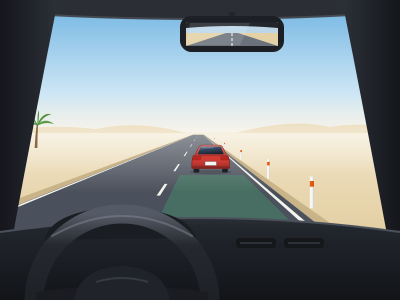
- AA gap of at least 2 seconds between your vehicle and the one ahead
- BOne car length at any speed
- CHalf a metre for every 10 km/h of speed
- DFollowing distance is not regulated in Kuwait
Answer and explanation in the bank
- Q15Traffic rules
In Kuwait, tailgating (following too closely) is considered dangerous because:
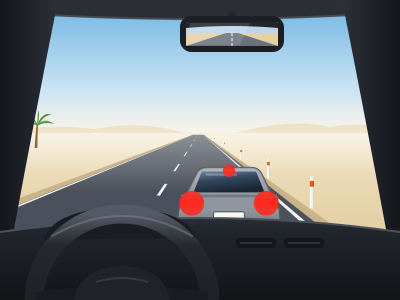
- AIt is only dangerous when overtaking
- BIt leaves insufficient time and distance to stop if the vehicle ahead brakes suddenly
- CIt uses more fuel but is otherwise harmless
- DIt is only prohibited on motorways, not on urban roads
Answer and explanation in the bank
- Q16Traffic rules
A heavy goods vehicle ahead of you on a Kuwait expressway suddenly brakes hard. Your gap was 1 second. What is most likely to happen?
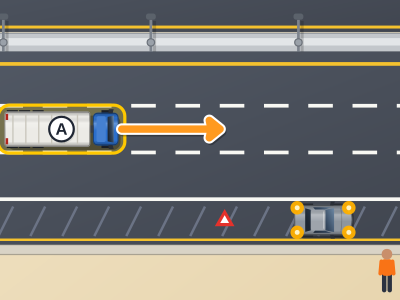
- AYour anti-lock brakes will stop you within 1 second regardless of speed
- BThe heavy vehicle will always stop slower than a car, giving you extra time
- CYou will not be able to stop in time and a collision is likely
- DYou have enough time if you react immediately
Answer and explanation in the bank
- Q17Traffic rules
Are front seat belts compulsory for all occupants in Kuwait?
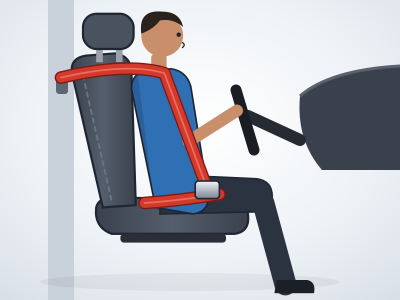
- AOnly the driver must wear a seat belt
- BYes, the driver and all front seat passengers must wear seat belts at all times
- CSeat belts are recommended but not legally required
- DSeat belts are only required on motorways
Answer and explanation in the bank
- Q18Traffic rules
A driver in Kuwait is carrying an adult in the front passenger seat and an 8-year-old child in the back. Which arrangement meets the law?
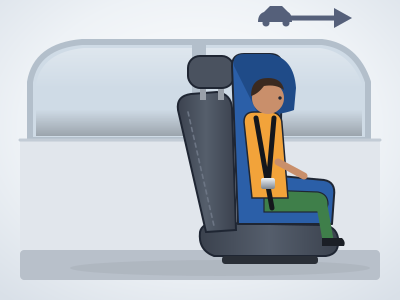
- AThe child may move to the front seat once the adult passenger gets out
- BThe front passenger may leave the seat belt off on short urban journeys
- CThe front passenger wears a seat belt, and the child travels in the back in a child seat or wearing a seat belt
- DThe child may travel unrestrained in the back as long as an adult sits beside them
Answer and explanation in the bank
- Q19Traffic rules
A child aged 4 years is travelling in your car in Kuwait. Where should the child sit?
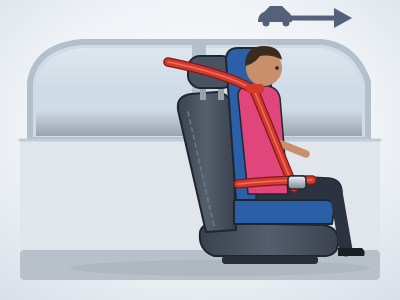
- AOn an adult's lap in the front seat
- BIn the front seat wearing only the adult seat belt
- CChildren under 5 are exempt from restraint requirements in Kuwait
- DIn a suitable child restraint or booster seat in the rear, secured according to the manufacturer's instructions
Answer and explanation in the bank
- Q20Traffic rules
A parent places a forward-facing child seat for a 10 kg infant in the front passenger seat of a car equipped with an active front airbag. What is the risk?
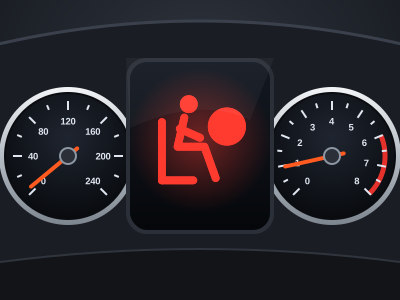
- AThere is no increased risk because airbags are safe for all occupants
- BThe risk only exists if the vehicle is travelling above 60 km/h
- CIn a collision the airbag deploys with lethal force at close range to the child's head, making this extremely dangerous
- DForward-facing seats are safer in the front because of the airbag
Answer and explanation in the bank
Every answer above, with the rule it comes from, plus the full 20-question timed test.
Get the Kuwait Driving Theory Online Practice Bank - KWD 1.5What this test covers
Topics include road signs, traffic signals, right of way, roundabouts, speed limits, seat belts, fines and penalties, and the safe-driving rules specific to your vehicle category. Full question-by-question feedback with explanations is shown immediately after you finish the test above.
Frequently asked questions
How many questions is the Al Ahmadi General Traffic Department light vehicle theory test?
The official General Traffic Department light vehicle theory test in Al Ahmadi has 20 questions and you need 18 correct (90%) to pass. This practice test has 20 questions.
Is this the real exam?
These are practice questions to help you revise, written to the published rules and to what candidates report from the real test. They are not the official Kuwait exam and the real question bank, format, fees and pass mark are set by the General Traffic Department (Ministry of Interior), and can change. Always confirm the current requirements with your driving school or the traffic department.
Is this practice test free?
The first 10 questions are free, with no signup, and each shows the answer and the reason. The full 20-question test, timed, is in the Kuwait Driving Theory Online Practice Bank (KWD 1.5, one payment), with every question in the bank.
What does the Al Ahmadi light vehicle theory test cover?
Road signs, traffic signals, right of way, roundabouts, speed limits, seat belts, penalties and safe-driving rules, plus the handling and safety topics specific to your vehicle.