

Al Ahmadi General Traffic Department Light vehicle
Practice mode· Right of way & safetyAl Ahmadi General Traffic Department - Kuwait Safe Driving Practice Test
Covers defensive driving, following distances, fatigue, visibility, adverse weather and hazard awareness. Safe driving habits save lives and keep your licence clean.
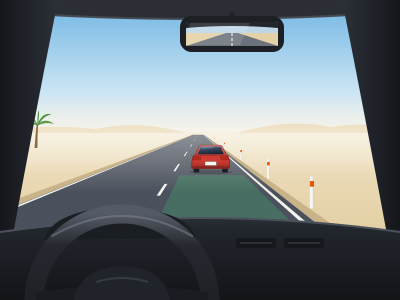
You are driving on a Kuwait highway at 120 km/h when light rain begins to fall. Compared to dry conditions, how does your overall stopping distance change?
The other 12 questions in this test
Read them all. The answer and the reason for each, and the timed 22-question run, are in the Kuwait Driving Theory Online Practice Bank.
- Q11Safe driving
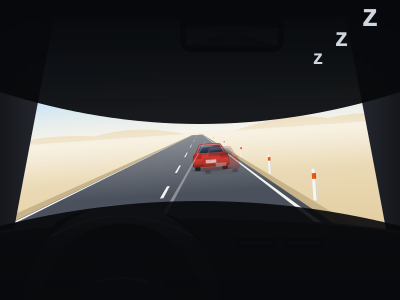
Which of the following is a recognised warning sign that you are becoming too fatigued to drive safely?
- AFeeling alert and focused
- BYour following distance naturally increasing
- CMissing road signs or exits you would normally notice
- DDriving faster than your intended speed
Answer and explanation in the bank
- Q12Safe driving
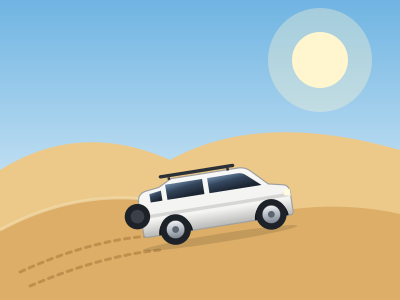
You have been driving on a long desert highway for over two hours and feel drowsy. What is the most effective action?
- AOpen the windows and turn the air conditioning to full cold
- BDrink a large amount of coffee and continue without stopping
- CPull over safely, switch off the engine, and take a short sleep of 15-20 minutes
- DTurn on the radio loudly and keep driving, as drowsiness passes on its own
Answer and explanation in the bank
- Q13Safe driving
During Ramadan night driving, what specific hazard is particularly common on Kuwaiti roads?
- ARoads are significantly wetter due to additional water tankers
- BRoadworks increase sharply during Ramadan nights
- CSpeed limits are raised by 20 km/h during Ramadan
- DIncreased pedestrian activity late at night and drivers who may be fatigued from disrupted sleep patterns
Answer and explanation in the bank
- Q14Safe driving
You are driving in dense fog on the Fifth Ring Road in Kuwait. Which lights should you use?
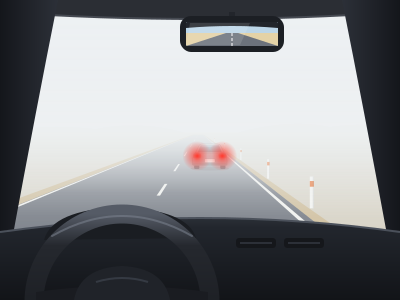
- AFull-beam (high) headlights only
- BDipped (low) headlights and rear fog lights if fitted
- CHazard warning lights while driving slowly
- DNo lights are needed in fog as they reduce forward visibility
Answer and explanation in the bank
- Q15Safe driving
During a serious sandstorm (haboob) that reduces visibility to near zero, what should you do if you cannot safely exit the road?

- AContinue driving slowly with full-beam headlights on
- BStop in your current lane with hazard lights and remain inside the car
- CExit the car and stand at least 50 metres behind your vehicle
- DMove as far right as possible, switch off headlights, and turn on hazard lights while stationary
Answer and explanation in the bank
- Q16Safe driving
It is raining hard and your windscreen wipers are on maximum. At what point should you seriously consider stopping?
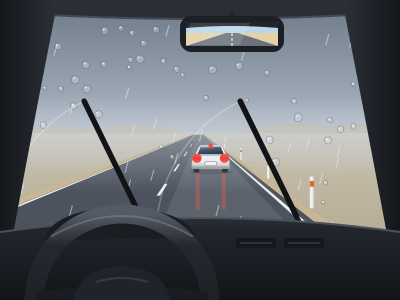
- ANever, as modern cars are designed to drive in any rain
- BWhen visibility drops to the point where you cannot see clearly despite wipers on maximum
- COnly if the road becomes completely flooded
- DAfter 30 minutes of continuous rain regardless of visibility
Answer and explanation in the bank
- Q17Safe driving
When driving at night on an unlit road, what is the most common hazard that catches drivers off guard?
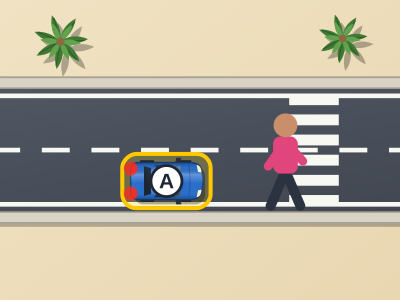
- ARoad signs that become brighter at night
- BThe road surface becoming more slippery due to cooling temperatures
- CPedestrians wearing dark clothing walking on the road
- DAnimals that are only active during daylight
Answer and explanation in the bank
- Q18Safe driving
An oncoming driver leaves their full-beam headlights on and temporarily blinds you. What is the correct action?

- AFlash your full beam repeatedly until they dip
- BSteer toward the centre of the road where the glare is less intense
- CLook toward the right edge of your lane and slow down until the vehicle passes
- DClose your eyes briefly until the glare passes
Answer and explanation in the bank
- Q19Safe driving
What is the core principle of defensive driving?
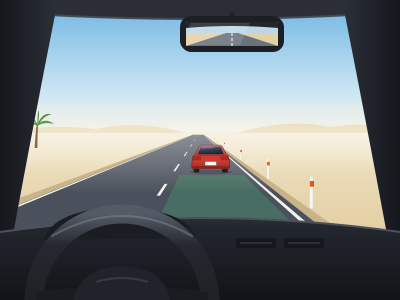
- ADriving as slowly as possible at all times
- BStaying in the right-hand lane and never overtaking
- CLetting other drivers go first in every situation
- DAnticipating hazards and adjusting your driving to leave a margin of safety even when others make mistakes
Answer and explanation in the bank
- Q20Safe driving
Which of the following best describes tailgating and why is it dangerous?

- AFollowing the vehicle in front with less than the safe time gap; it leaves no room to react if they brake suddenly
- BDriving with your rear fog lights on in clear weather
- CTowing a trailer without the correct lights
- DReversing without checking your mirrors first
Answer and explanation in the bank
- Q21Safe driving
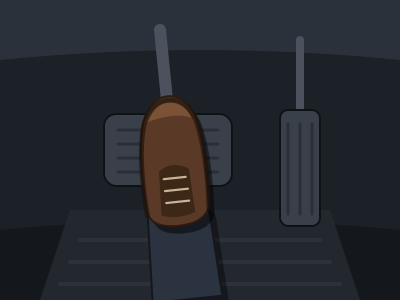
You are travelling at 120 km/h on Sheikh Jaber Causeway and the driver ahead brakes suddenly. Assuming a 1-second reaction time, approximately how far do you travel before your brakes even start to slow the car?
- AAbout 10 metres
- BAbout 5 metres
- CAbout 33 metres
- DAbout 60 metres
Answer and explanation in the bank
- Q22Safe driving
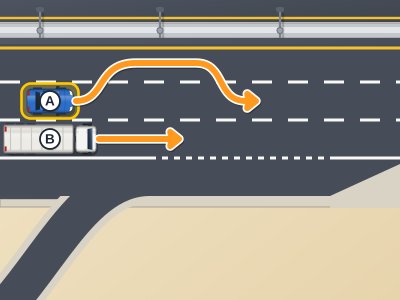
Before overtaking a vehicle on a two-lane highway in Kuwait, what gap ahead of the vehicle in front must be clear before you commit to the manoeuvre?
- AAny gap where you can pull alongside the vehicle
- BA gap large enough to complete the whole overtake and return to the lane safely, with a margin for any oncoming traffic
- CA gap of at least 50 metres regardless of speed
- DOvertaking is only permitted if you can complete it within 5 seconds
Answer and explanation in the bank
Every answer above, with the rule it comes from, plus the full 22-question timed test.
Get the Kuwait Driving Theory Online Practice Bank - KWD 3.5What this test covers
Topics include road signs, traffic signals, right of way, roundabouts, speed limits, seat belts, fines and penalties, and the safe-driving rules specific to your vehicle category. Full question-by-question feedback with explanations is shown immediately after you finish the test above.
Frequently asked questions
How many questions is the Al Ahmadi General Traffic Department light vehicle theory test?
The official General Traffic Department light vehicle theory test in Al Ahmadi has 20 questions and you need 18 correct (90%) to pass. This practice test has 22 questions.
Is this the real exam?
These are practice questions to help you revise, written to the published rules and to what candidates report from the real test. They are not the official Kuwait exam and the real question bank, format, fees and pass mark are set by the General Traffic Department (Ministry of Interior), and can change. Always confirm the current requirements with your driving school or the traffic department.
Is this practice test free?
The first 10 questions are free, with no signup, and each shows the answer and the reason. The full 22-question test, timed, is in the Kuwait Driving Theory Online Practice Bank (KWD 3.5, one payment), with every question in the bank.
What does the Al Ahmadi light vehicle theory test cover?
Road signs, traffic signals, right of way, roundabouts, speed limits, seat belts, penalties and safe-driving rules, plus the handling and safety topics specific to your vehicle.