

Al Asimah (Capital) General Traffic Department Light vehicle
Practice mode· Right of way & safetyAl Asimah (Capital) General Traffic Department - Kuwait Safe Driving Practice Test
Covers defensive driving, following distances, fatigue, visibility, adverse weather and hazard awareness. Safe driving habits save lives and keep your licence clean.
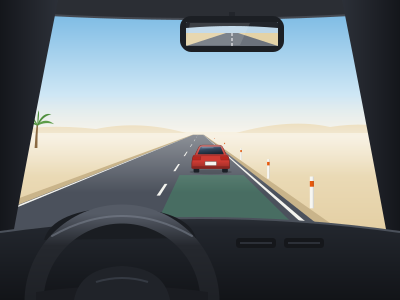
What is the recommended minimum following distance behind the vehicle in front under normal dry conditions on a Kuwaiti highway?
The other 12 questions in this test
Read them all. The answer and the reason for each, and the timed 22-question run, are in the Kuwait Driving Theory Online Practice Bank.
- Q11Safe driving
How often should you check your mirrors while driving on a Kuwaiti urban road?
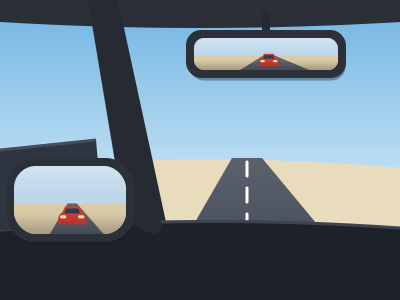
- AEvery 5 to 8 seconds, or before any change of speed or direction
- BOnly when you intend to turn
- COnly when reversing
- DEvery 30 seconds is sufficient
Answer and explanation in the bank
- Q12Safe driving
You are about to change lanes to the left. Which blind spot check should you perform in a standard left-hand-drive vehicle driving on the right in Kuwait?
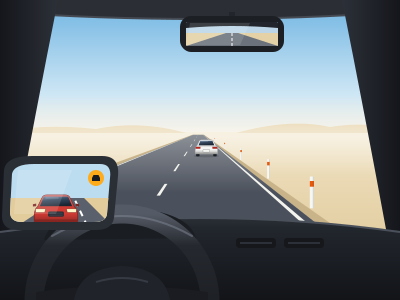
- AA quick glance over your right shoulder before moving left
- BCheck only the left door mirror; no shoulder check is needed
- CSound the horn twice and then move
- DA quick glance over your left shoulder before moving left
Answer and explanation in the bank
- Q13Safe driving
Which of the following correctly describes an area that your door mirrors typically cannot show?
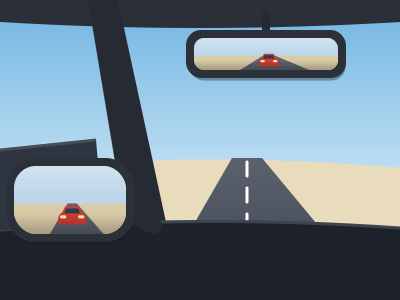
- AThe area directly alongside your rear quarters, sometimes called the blind zone
- BVehicles directly behind you
- CVehicles more than 100 metres ahead in the same lane
- DOnly motorcycles, not cars, fall in the blind zone
Answer and explanation in the bank
- Q14Safe driving
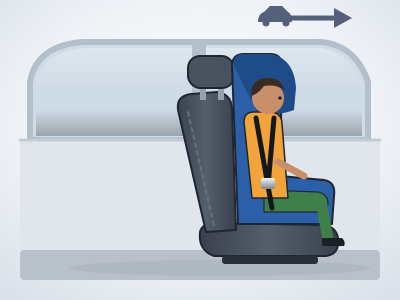
Under Kuwait traffic law, who must wear a seat belt?
- AOnly the driver
- BOnly passengers, because the driver needs freedom to move
- CNobody; seat belts are recommended but not legally required
- DThe driver and the front-seat passenger, with children in the back in a child seat or belted
Answer and explanation in the bank
- Q15Safe driving
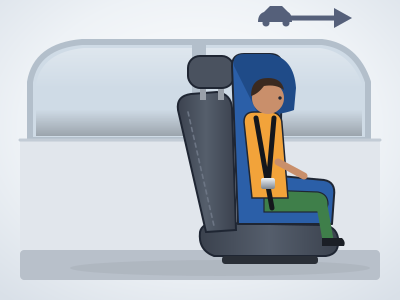
How should a 6-year-old child travel in a private car in Kuwait?
- AIn the front passenger seat, with the adult belt held away from the neck
- BUnrestrained in the back, as long as an adult sits next to the child
- COn an adult's lap in the back seat
- DIn the back, in a child seat suited to the child's size, because children under 10 must not sit in the front
Answer and explanation in the bank
- Q16Safe driving
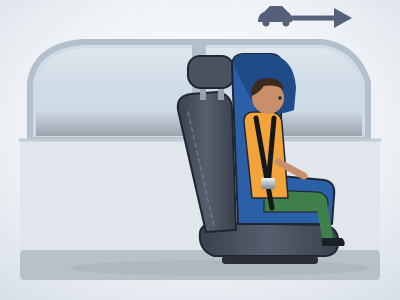
Where is the safest seating position for a young child who still requires a child seat?
- AIn the front passenger seat facing forward
- BIn the front passenger seat facing rearward with the airbag enabled
- COn an adult's lap in the rear seat
- DIn the rear seat with the child seat correctly installed according to the seat manufacturer's instructions
Answer and explanation in the bank
- Q17Safe driving
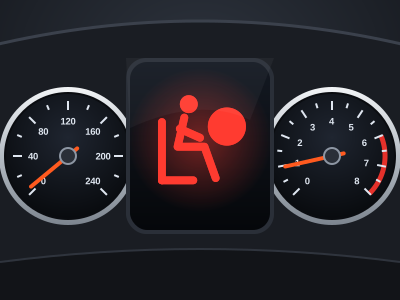
In a crash, at what speed does the driver-side front airbag typically begin to deploy?
- AAny impact above 5 km/h
- BOnly in rollovers, not frontal impacts
- CAbove 80 km/h only
- DUsually in a severe frontal impact equivalent to hitting a solid wall at approximately 20-30 km/h
Answer and explanation in the bank
- Q18Safe driving
What is the recommended minimum distance between the driver's chest and the centre of the steering wheel in a vehicle equipped with a front airbag?
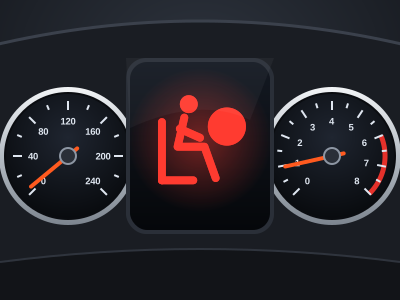
- AAt least 5 centimetres
- BNo minimum distance; airbags are safe at any distance
- CAt least 60 centimetres
- DAt least 25 centimetres (about 10 inches)
Answer and explanation in the bank
- Q19Safe driving
Which of the following is a recognised warning sign that you are becoming too fatigued to drive safely?
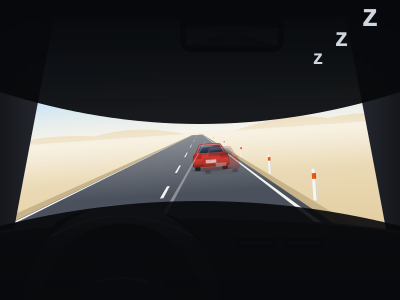
- AFeeling alert and focused
- BYour following distance naturally increasing
- CMissing road signs or exits you would normally notice
- DDriving faster than your intended speed
Answer and explanation in the bank
- Q20Safe driving
You have been driving on a long desert highway for over two hours and feel drowsy. What is the most effective action?
- AOpen the windows and turn the air conditioning to full cold
- BDrink a large amount of coffee and continue without stopping
- CPull over safely, switch off the engine, and take a short sleep of 15-20 minutes
- DTurn on the radio loudly and keep driving, as drowsiness passes on its own
Answer and explanation in the bank
- Q21Safe driving
During Ramadan night driving, what specific hazard is particularly common on Kuwaiti roads?
- ARoads are significantly wetter due to additional water tankers
- BRoadworks increase sharply during Ramadan nights
- CSpeed limits are raised by 20 km/h during Ramadan
- DIncreased pedestrian activity late at night and drivers who may be fatigued from disrupted sleep patterns
Answer and explanation in the bank
- Q22Safe driving
You are driving in dense fog on the Fifth Ring Road in Kuwait. Which lights should you use?
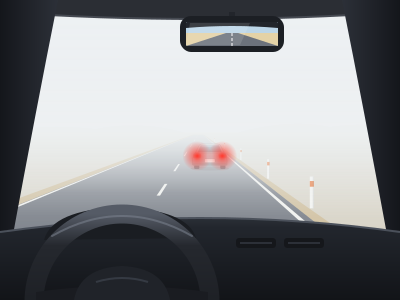
- AFull-beam (high) headlights only
- BDipped (low) headlights and rear fog lights if fitted
- CHazard warning lights while driving slowly
- DNo lights are needed in fog as they reduce forward visibility
Answer and explanation in the bank
Every answer above, with the rule it comes from, plus the full 22-question timed test.
Get the Kuwait Driving Theory Online Practice Bank - KWD 1.5What this test covers
Topics include road signs, traffic signals, right of way, roundabouts, speed limits, seat belts, fines and penalties, and the safe-driving rules specific to your vehicle category. Full question-by-question feedback with explanations is shown immediately after you finish the test above.
Frequently asked questions
How many questions is the Al Asimah (Capital) General Traffic Department light vehicle theory test?
The official General Traffic Department light vehicle theory test in Al Asimah (Capital) has 20 questions and you need 18 correct (90%) to pass. This practice test has 22 questions.
Is this the real exam?
These are practice questions to help you revise, written to the published rules and to what candidates report from the real test. They are not the official Kuwait exam and the real question bank, format, fees and pass mark are set by the General Traffic Department (Ministry of Interior), and can change. Always confirm the current requirements with your driving school or the traffic department.
Is this practice test free?
The first 10 questions are free, with no signup, and each shows the answer and the reason. The full 22-question test, timed, is in the Kuwait Driving Theory Online Practice Bank (KWD 1.5, one payment), with every question in the bank.
What does the Al Asimah (Capital) light vehicle theory test cover?
Road signs, traffic signals, right of way, roundabouts, speed limits, seat belts, penalties and safe-driving rules, plus the handling and safety topics specific to your vehicle.