

Al Farwaniyah General Traffic Department Light vehicle
Practice mode· Right of way & safetyAl Farwaniyah General Traffic Department - Kuwait Safe Driving Practice Test
Covers defensive driving, following distances, fatigue, visibility, adverse weather and hazard awareness. Safe driving habits save lives and keep your licence clean.
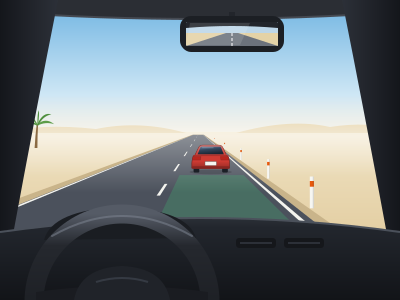
Braking distance is the distance the vehicle travels after you press the brake pedal until the car stops. What is the single biggest factor that increases braking distance?
The other 12 questions in this test
Read them all. The answer and the reason for each, and the timed 22-question run, are in the Kuwait Driving Theory Online Practice Bank.
- Q11Safe driving
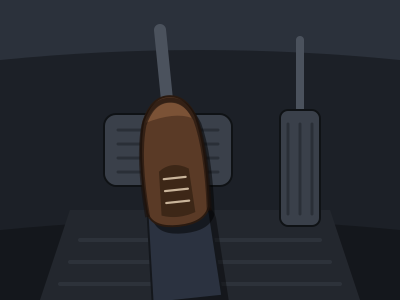
What does eco-driving mean in terms of throttle and speed management?
- ADriving at the lowest possible speed regardless of traffic flow
- BSwitching off the engine at every red light regardless of duration
- CAccelerating smoothly and gradually, anticipating stops early to coast, and maintaining a steady speed rather than repeated acceleration and braking
- DUsing only the lowest gear to keep engine revs high and fuel consumption low
Answer and explanation in the bank
- Q12Safe driving
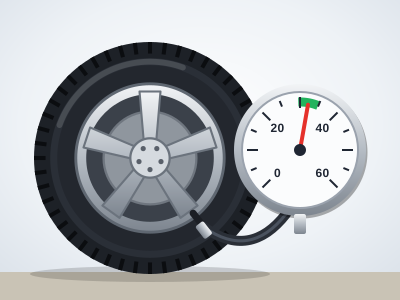
How does correct tyre inflation affect both safety and fuel economy?
- ALower tyre pressure always improves grip on all surfaces and should be used for better handling
- BTyre pressure has no effect on fuel economy
- CUnder-inflation increases rolling resistance, raises fuel consumption, causes uneven tyre wear and can lead to overheating and blowouts
- DOver-inflating tyres by 10 PSI always improves fuel economy with no safety drawback
Answer and explanation in the bank
- Q13Safe driving
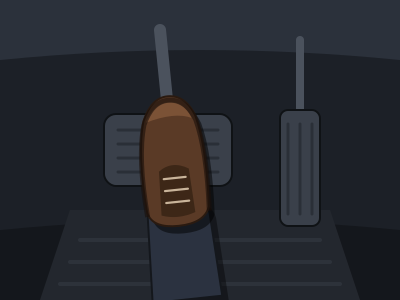
You are approaching a large pothole in the road. What is the safest way to deal with it if changing lane is not possible?
- AAccelerate through the pothole to spend less time in it
- BBrake before reaching the pothole to reduce speed, release the brakes just before impact, and hold the steering wheel firmly
- CBrake hard with wheels locked until you reach the pothole
- DSteer sharply at the last moment to miss it
Answer and explanation in the bank
- Q14Safe driving
At what tread depth should you replace your tyres to maintain safe braking performance on wet roads?
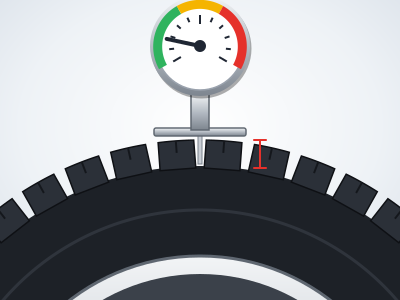
- AWhen the tread is completely worn flat
- BOnly when the tyre starts to lose pressure
- CMost safety guidance recommends replacing tyres when tread depth reaches 3 mm or below, before the legal minimum of 1.6 mm
- DTread depth is irrelevant in hot, dry Kuwait conditions
Answer and explanation in the bank
- Q15Safe driving
Why is driving into a flooded underpass or dip road in Kuwait especially dangerous?
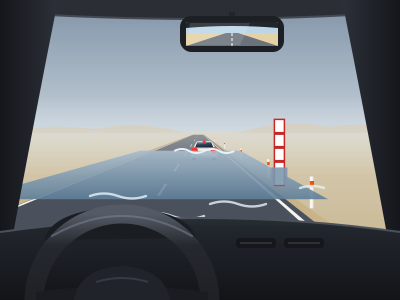
- AUnderpasses are always deeper than open roads so tyre damage is the main risk
- BThe depth of water is impossible to judge from the car, and even 30 cm of fast-moving water can float a car and stall the engine
- CWater in underpasses is always contaminated and damages paintwork
- DIt is only dangerous if the water is above door-handle height
Answer and explanation in the bank
- Q16Safe driving
What effect does running the air conditioning at maximum on a long Kuwait desert drive have, and how should you manage it?
- AMaximum AC cools the engine and should always be used in summer to prevent overheating
- BAC does not significantly affect fuel economy in modern cars
- CMaximum AC increases fuel consumption; set a comfortable temperature (around 22-24 degrees Celsius) rather than the coldest setting to balance comfort and economy
- DTurn the AC off completely to save fuel; open windows instead at all speeds
Answer and explanation in the bank
- Q17Safe driving
What does the dashboard low fuel warning light mean you should do in Kuwait, especially on a desert route?
- AThe light indicates you have at least 100 km remaining, so continue to a preferred station
- BReduce speed to 40 km/h and activate hazard lights to warn other drivers
- CPull over immediately and call for emergency fuel
- DRefuel at the very next available petrol station; do not assume another station will be close
Answer and explanation in the bank
- Q18Safe driving
You notice a motorcyclist filtering between lanes of slow-moving traffic on your left. What should you do?
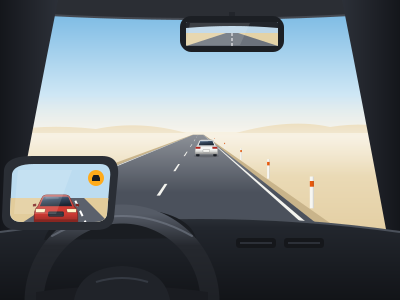
- AAccelerate to close the gap so the motorcyclist cannot pass unsafely
- BSound the horn to warn the motorcyclist that filtering is not permitted
- CMove left slightly to block the filtering path for safety
- DCheck your left mirror and blind spot before any lane change and allow the motorcyclist to pass safely
Answer and explanation in the bank
- Q19Safe driving
You are driving at night and a vehicle is flashing its lights repeatedly behind you. What is the safest response?
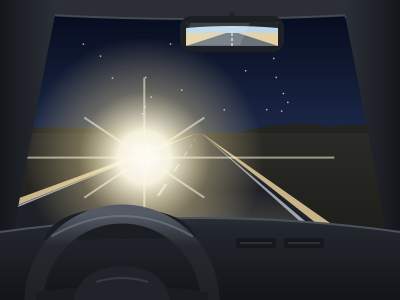
- ABrake firmly to slow down and penalise the tailgating driver
- BMaintain your position and ignore the flashing; the driver must wait
- CAccelerate to create more gap before the driver reaches you
- DCheck your mirror, maintain a safe speed, signal and move to the right when it is safe to do so, then let the vehicle pass
Answer and explanation in the bank
- Q20Safe driving
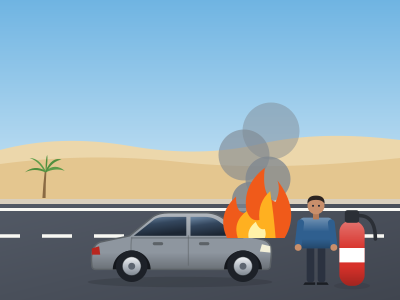
Why is driving with a very low engine coolant level especially dangerous in Kuwait summers?
- ALow coolant makes the air conditioning more powerful
- BThe engine can overheat rapidly, leading to engine seizure, fire risk, or forced stop in a dangerous location
- CLow coolant only matters in cold climates where freezing is a risk
- DThe engine warning light always gives you at least 50 km of warning before damage occurs
Answer and explanation in the bank
- Q21Safe driving
What is the recommended minimum tyre tread depth required by law in Kuwait for your tyres to be considered roadworthy?
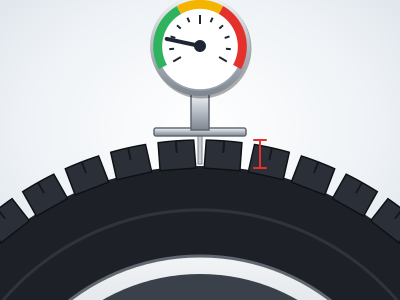
- A1.6 mm across the central three-quarters of the tread
- B0.5 mm; tyres are legal as long as there is some tread remaining
- C5 mm to account for Kuwait's heat
- DThere is no legal minimum; it is the driver's choice
Answer and explanation in the bank
- Q22Safe driving
You are about to overtake on a rural two-lane road in Kuwait and you see a sign showing a solid white centre line. What does this mean for overtaking?
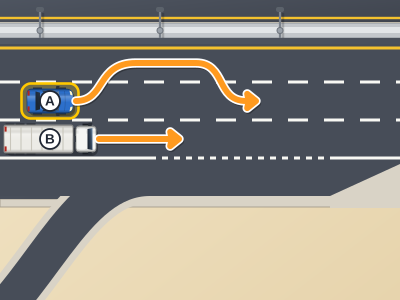
- AOvertaking is permitted if no vehicle is coming the other way
- BThe line means give way to oncoming traffic before overtaking
- COvertaking is prohibited; you must not cross the solid line
- DSolid lines are only advisory on rural roads
Answer and explanation in the bank
Every answer above, with the rule it comes from, plus the full 22-question timed test.
Get the Kuwait Driving Theory Online Practice Bank - KWD 1.5What this test covers
Topics include road signs, traffic signals, right of way, roundabouts, speed limits, seat belts, fines and penalties, and the safe-driving rules specific to your vehicle category. Full question-by-question feedback with explanations is shown immediately after you finish the test above.
Frequently asked questions
How many questions is the Al Farwaniyah General Traffic Department light vehicle theory test?
The official General Traffic Department light vehicle theory test in Al Farwaniyah has 20 questions and you need 18 correct (90%) to pass. This practice test has 22 questions.
Is this the real exam?
These are practice questions to help you revise, written to the published rules and to what candidates report from the real test. They are not the official Kuwait exam and the real question bank, format, fees and pass mark are set by the General Traffic Department (Ministry of Interior), and can change. Always confirm the current requirements with your driving school or the traffic department.
Is this practice test free?
The first 10 questions are free, with no signup, and each shows the answer and the reason. The full 22-question test, timed, is in the Kuwait Driving Theory Online Practice Bank (KWD 1.5, one payment), with every question in the bank.
What does the Al Farwaniyah light vehicle theory test cover?
Road signs, traffic signals, right of way, roundabouts, speed limits, seat belts, penalties and safe-driving rules, plus the handling and safety topics specific to your vehicle.