

Doha General Directorate of Traffic Light vehicle
Practice mode· Right of way & safetyDoha General Directorate of Traffic - Qatar Safe Driving Practice Test
Covers defensive driving, following distances, fatigue, visibility, adverse weather and hazard awareness. Safe driving habits save lives and keep your licence clean.
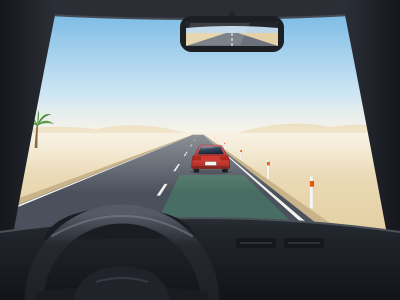
What is the recommended minimum following distance behind the vehicle ahead on a dry road in Qatar?
The other 12 questions in this test
Read them all. The answer and the reason for each, and the timed 22-question run, are in the Qatar Driving Theory Online Practice Bank.
- Q11Safe driving
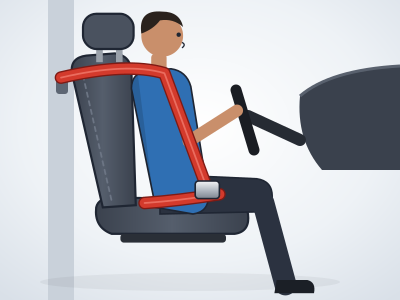
Who in a car should wear a seatbelt on Qatar roads?
- AOnly the driver and front passenger; rear passengers are safer without one
- BOnly the driver
- CEveryone: the law requires the driver and front-seat passenger to, and rear passengers are far safer belted too
- DNobody on short urban journeys
Answer and explanation in the bank
- Q12Safe driving
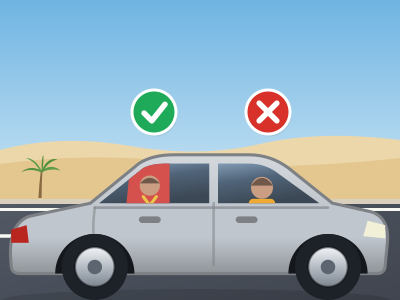
Under Qatar's Traffic Law, children below what age may not ride in the front seat?
- AUnder 5 years old
- BUnder 10 years old
- CUnder 16 years old
- DThere is no age rule; any child may sit in front if belted
Answer and explanation in the bank
- Q13Safe driving
Where must a rear-facing infant car seat NOT be placed in a vehicle equipped with an active front passenger airbag?
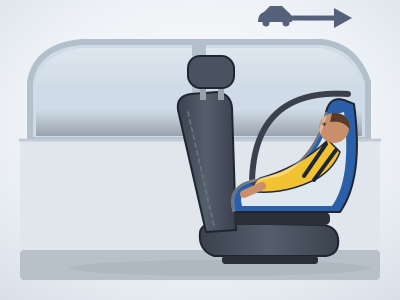
- AIn the front passenger seat
- BIn the centre rear seat
- CBehind the driver's seat
- DBehind the front passenger seat
Answer and explanation in the bank
- Q14Safe driving
What is the primary purpose of a front airbag in a crash?
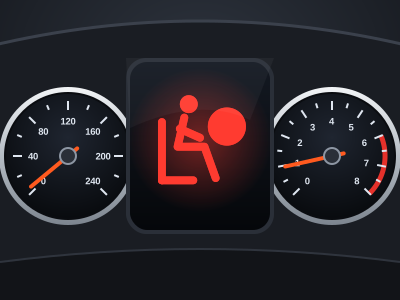
- ATo replace the seatbelt in low-speed collisions
- BTo cushion the occupant from hitting the steering wheel or dashboard
- CTo protect the engine from impact damage
- DTo automatically apply the brakes during a frontal crash
Answer and explanation in the bank
- Q15Safe driving
What is the minimum recommended distance you should sit from the steering wheel to allow an airbag to deploy safely?
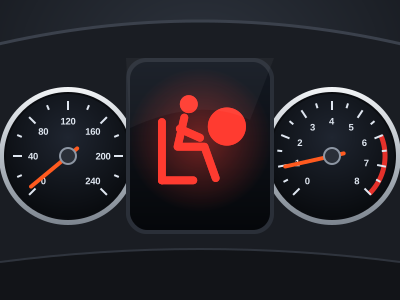
- AAbout 25 cm (10 inches) between the chest and the steering wheel hub
- BAs close as possible for maximum steering control
- CAt least 60 cm so the airbag has room to expand fully
- DDistance does not matter if the seatbelt is worn
Answer and explanation in the bank
- Q16Safe driving
How should you correctly adjust your driving mirrors before starting a journey?
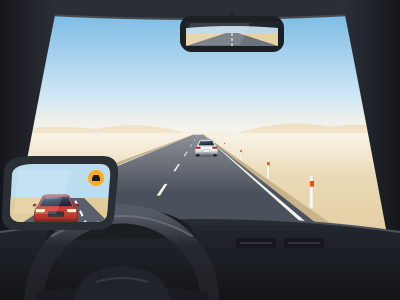
- AAdjust all mirrors so blind spots are minimised and you have a clear rear and side view
- BPoint the interior mirror upward to reduce glare from headlights at all times
- CAdjust only the interior mirror; exterior mirrors are set at the factory
- DSet the mirrors after reaching the first traffic signal
Answer and explanation in the bank
- Q17Safe driving
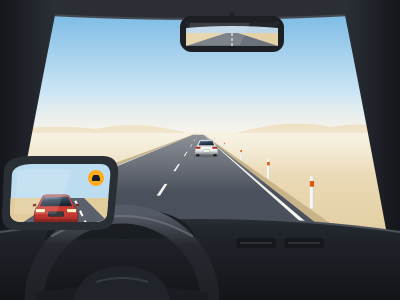
Which area around your vehicle represents the most dangerous blind spot when changing lanes on a motorway?
- ADirectly in front of the vehicle beyond the bonnet
- BDirectly behind the vehicle as seen in the interior mirror
- CThe zone diagonally behind each shoulder, not visible in door mirrors
- DThe area visible only when reversing
Answer and explanation in the bank
- Q18Safe driving
You are driving in a sandstorm and visibility on the expressway drops to almost nothing. What should you do?
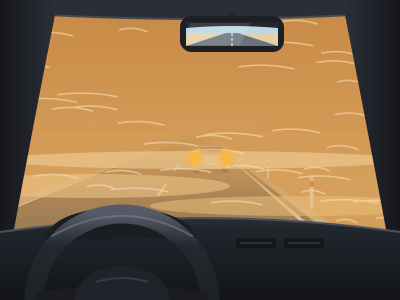
- ASlow to 40 km/h and keep going with the hazard lights on
- BFollow the tail lights of the vehicle immediately ahead closely
- CLeave the carriageway, stop well clear of the traffic, and then switch on the hazard lights
- DUse high-beam headlights so other drivers can see you from further away
Answer and explanation in the bank
- Q19Safe driving
Which lights should you use when driving in fog or a sandstorm with reduced visibility?
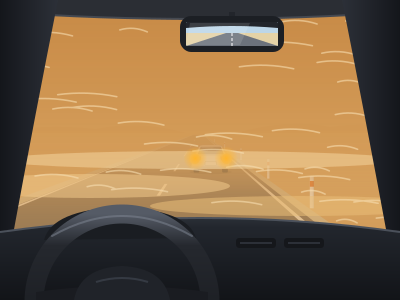
- ADipped headlights and front fog lights if fitted
- BHigh-beam (full-beam) headlights to see further ahead
- CParking lights only to avoid dazzling other drivers
- DHazard warning lights alone are sufficient
Answer and explanation in the bank
- Q20Safe driving
When driving at night, why should you reduce your speed compared to daytime?
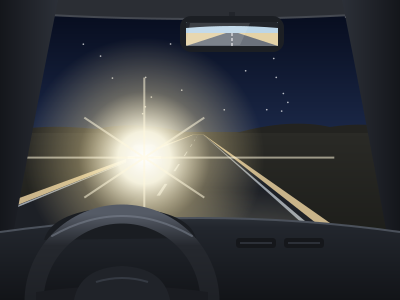
- ARoad rules require a lower speed limit between sunset and sunrise regardless of conditions
- BYour headlights illuminate only a short distance, reducing the time you have to react to hazards
- CYour engine operates less efficiently in cooler night air
- DOther drivers expect you to be slower at night so lane discipline is less important
Answer and explanation in the bank
- Q21Safe driving
An oncoming vehicle is using high-beam headlights and dazzling you at night. What is the safest response?
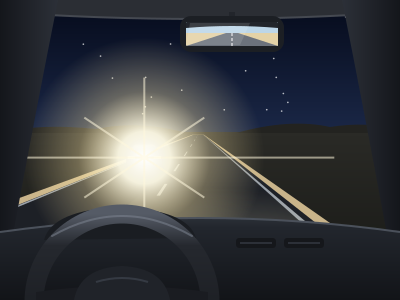
- AFlash your high beams repeatedly until the driver dips their lights
- BClose your eyes briefly to protect your night vision
- CAccelerate quickly to pass the oncoming vehicle faster
- DLook toward the left edge of your lane and reduce speed until the vehicle passes
Answer and explanation in the bank
- Q22Safe driving
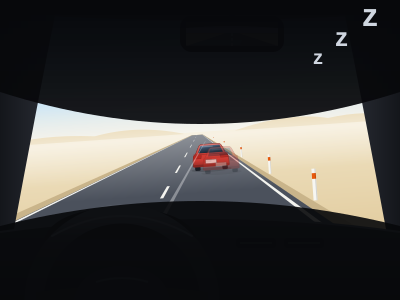
What is the main danger of driving when fatigued on Qatar's long desert expressways?
- AFatigue only affects the driver's mood, not their reaction time
- BMicrosleeps can cause a driver to leave the road or collide with vehicles without any awareness
- CFatigued driving is dangerous only at night, not during daylight hours
- DFatigue increases fuel consumption but does not impair control
Answer and explanation in the bank
Every answer above, with the rule it comes from, plus the full 22-question timed test.
Get the Qatar Driving Theory Online Practice Bank - QAR 19What this test covers
Topics include road signs, traffic signals, right of way, roundabouts, speed limits, seat belts, fines and penalties, and the safe-driving rules specific to your vehicle category. Full question-by-question feedback with explanations is shown immediately after you finish the test above.
Frequently asked questions
How many questions is the Doha General Directorate of Traffic light vehicle theory test?
The official General Directorate of Traffic light vehicle theory test in Doha has 40 questions and you need 37 correct (92.5%) to pass. This practice test has 22 questions.
Is this the real exam?
These are practice questions to help you revise, written to the published rules and to what candidates report from the real test. They are not the official Qatar exam and the real question bank, format, fees and pass mark are set by the General Directorate of Traffic (Ministry of Interior) and the driving schools, and can change. Always confirm the current requirements with your driving school or the traffic department (for example via the Metrash service).
Is this practice test free?
The first 10 questions are free, with no signup, and each shows the answer and the reason. The full 22-question test, timed, is in the Qatar Driving Theory Online Practice Bank (QAR 19, one payment), with every question in the bank.
What does the Doha light vehicle theory test cover?
Road signs, traffic signals, right of way, roundabouts, speed limits, seat belts, penalties and safe-driving rules, plus the handling and safety topics specific to your vehicle.