

Qatar traffic signs and meanings: the short answer
Qatar uses the standard GCC road sign system, so the shape and colour of a sign tell you its type before you read the symbol. A red triangle warns, a red circle forbids, a blue circle orders, and green or blue rectangles give direction and information. Stop and give way have their own shapes. Qatar also has a few quirks worth learning: signs with time plates, school zone limits, and yellow kerbs.
This page is the sign by sign chart. It lists every family, what each sign means and what you must do. It is a different page from our guide to the Qatar signal test itself, which covers the exam format, booking and the parking test that follows it. Use that page to understand the test and this one to learn what is on the screen.
Chart first, then the signs test
Read a section, then check yourself. The free Qatar signs test 1 has 22 picture questions with an explanation after each answer, and signs test 2 adds 22 more. Those two pages are where most people searching for a Qatar signs test land, so treat them as your main practice. Our line on a signs topic test is 21 of 22.
Related guides
The score you need is on the Qatar theory test pass mark page. If you already failed, use what to do after failing the Qatar signal test. The whole set of free tests is on the Qatar driving test hub.
How signs appear in the Qatar signal test
The Qatar signal test is the computer theory test taken at your driving school. It is reported as 40 questions with 37 correct to pass, which allows three mistakes. The Ministry of Interior does not publish the figure, and one prep site says 36, so the table separates what is reported from what is not. Every question carries a picture, and that is what makes sign knowledge worth so much here.
| Item | What is reported | How sure we are |
|---|---|---|
| Questions | 40, each with a picture | Reported by several Qatar guides |
| Pass mark | 37 correct (92.5%), so three mistakes | Reported by marhaba.qa and dohaguides.com, one site says 36. Not published by the Ministry |
| Time limit | Unpublished. Our mocks use 35 minutes | Unconfirmed |
| Languages | Arabic and English confirmed | Others may be offered, ask your school |
| Pictures | A sign, a road scene or a marking on every question | Reported by candidates |
| After you pass | The parking test and road test follow | Reported by schools |
| Our practice format | 22 questions per signs topic test, 21 to pass. 40 questions per mock, 37 to pass | Our own standard |
Why the picture matters
Because every question has an image, you are not only recalling a sign, you are reading a scene. A road photo with a small sign inside it is worse than a clean sign, because you may name the road and miss the sign. A palm tree can hide half of one, and a sign at a border crossing may be unfamiliar. Our topic tests include scenes of both kinds, such as an illustration of a sign half hidden by a palm tree on the sign pages of the bank.
Signs are not the whole paper
The signal test also covers road rules, right of way, safe driving and fines. Pair this chart with the road rules test and the right of way test. The first full mock shows how all of it mixes together on the real 40 question shape.
Every Qatar sign family at a glance
Start with this table. If you can rebuild it from memory, you already know the structure of the signs part of the test. The shape and colour columns matter most.
| Family | Shape and colour | What it tells you | Examples |
|---|---|---|---|
| Warning | Triangle, red border, white face | A hazard ahead. Slow down | Pedestrian crossing, speed bump, level crossing, school bus stop |
| Prohibition | Red circle, white face, black symbol | You must not | No entry, no overtaking, no U-turn, no horn, speed limit |
| Mandatory | Blue circle, white symbol | You must | Keep right, roundabout, ahead only |
| Priority | Red octagon, inverted triangle, yellow diamond | Who goes first | Stop, give way, priority road |
| Information | Blue squares and rectangles | A fact or a facility | Parking, hospital, U-turn permitted |
| Direction | Green rectangles, Arabic and English | Where a road goes | Destination and exit boards |
| Temporary and roadworks | Often orange or yellow | A short term change | Road works, lane closed, variable message signs |
| Road markings and kerbs | White and yellow lines, zigzags, yellow kerb | Where you may cross, stop or park | Solid line, broken line, zigzag, yellow kerb |
| Traffic lights | Red, amber, green | When to stop and go | Steady, flashing, or a dark light |
| Police signals | An officer's arm and hand positions | Direct instruction | Stop, proceed, turn |
The order of authority
When instructions clash, an officer beats a light, a temporary sign beats a permanent one, and a sign beats a marking. A question that says "the light is green but an officer raises a hand" is testing exactly this. You can practise junction decisions in the Qatar right of way practice test.
Warning signs: the red triangles
A warning sign does not order you to do anything. It tells you what is coming so you can slow down and look. The border is red and the symbol black. In the signal test you are normally asked what the hazard is and what a careful driver does about it, not for a number.
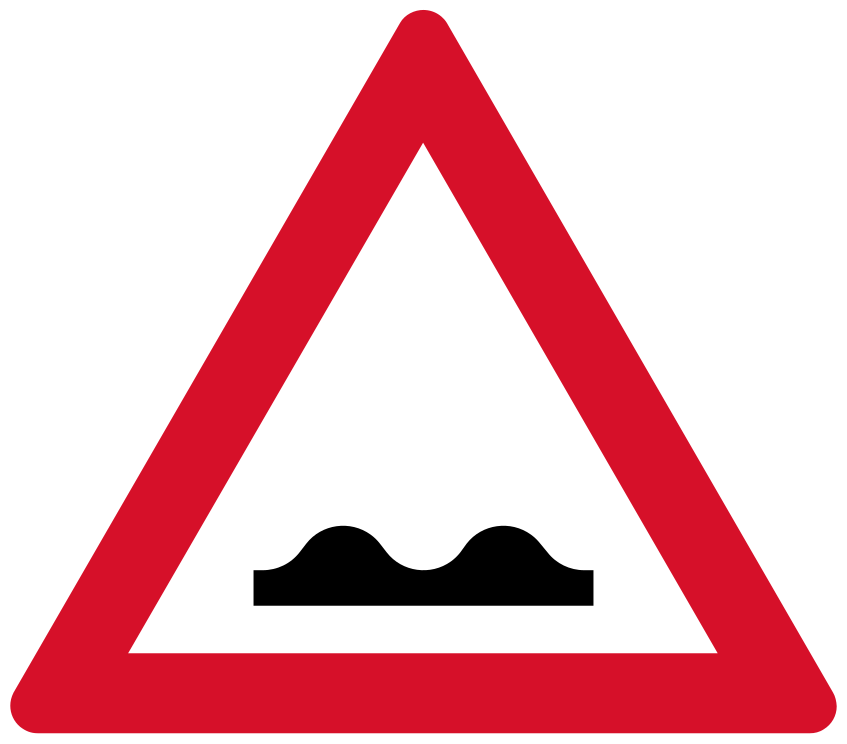
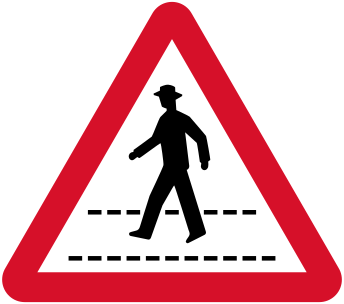
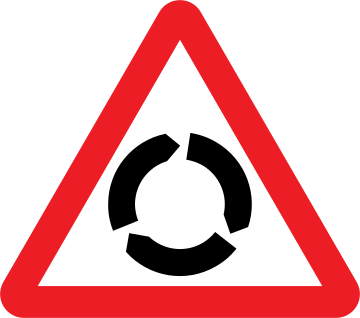
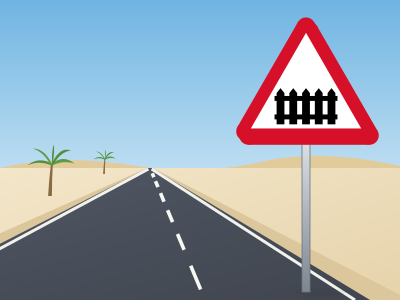
| Sign | Picture | What you do |
|---|---|---|
| Pedestrian crossing | Walking figure | Slow down, stop for anyone on the crossing |
| Speed bump | A hump on a road | Slow before the bump |
| Roundabout ahead | Circle of arrows | Prepare to give way to traffic on the roundabout |
| Level crossing, with barriers | Barrier symbol | Stop when the barriers move or lights flash |
| Level crossing, no barriers | Cross symbol | Slow down, look both ways, do not stop on the tracks |
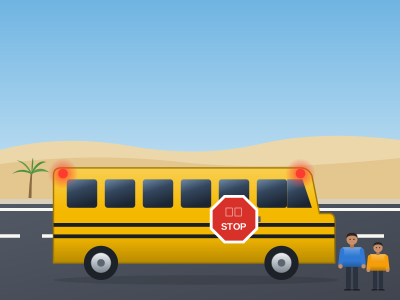
| School bus stop | Bus and children | Slow down and be ready to stop |
| Other danger | Exclamation mark | Read any plate beneath it for the hazard |
Warning signs and the safe answer
The wrong options are the confident ones, such as "maintain your speed". A warning sign never makes the hazard less likely, so the safe answer almost always involves slowing down. The first signs test mixes all of these with a picture for each.
Prohibition and speed signs: red circles and time plates
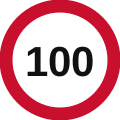
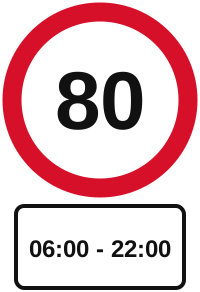
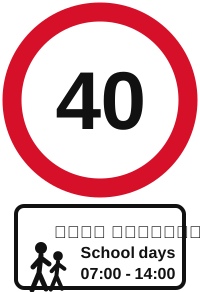
A red circle takes something away from you. This is where the signal test is strictest, because the answer is a rule. Speed signs show a number in a red circle, and Qatar adds plates that limit when or where the sign applies.
| Sign | Meaning | The usual wrong answer |
|---|---|---|
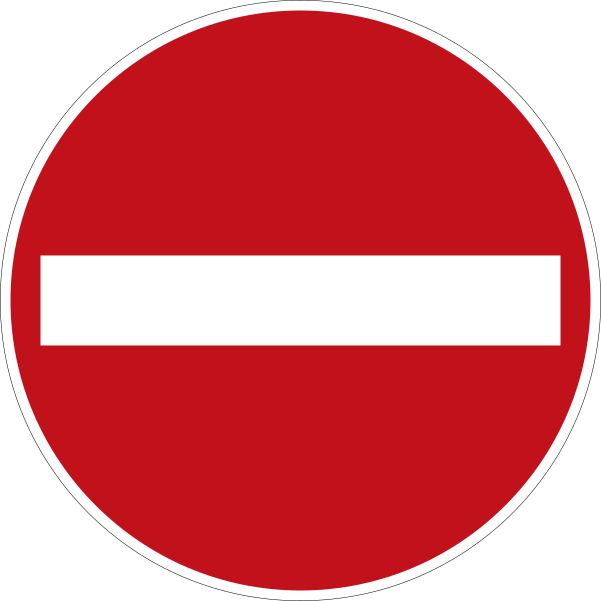
| Bar across a red circle | No entry | "You may enter if the road is empty" |
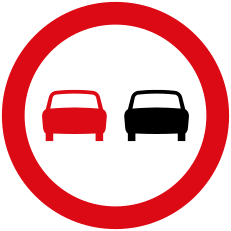
| Two cars side by side | No overtaking | "You may pass slow vehicles" |
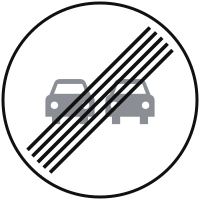
| Grey circle with diagonal lines | End of the restriction | "A new limit starts" |
| Number in a red circle | Maximum speed in km/h | "The speed you must drive" |
| Number with a time plate | Limit applies at the stated times | "The limit always applies" |
| Crossed U-turn arrow | No U-turn | "You may if the road is clear" |
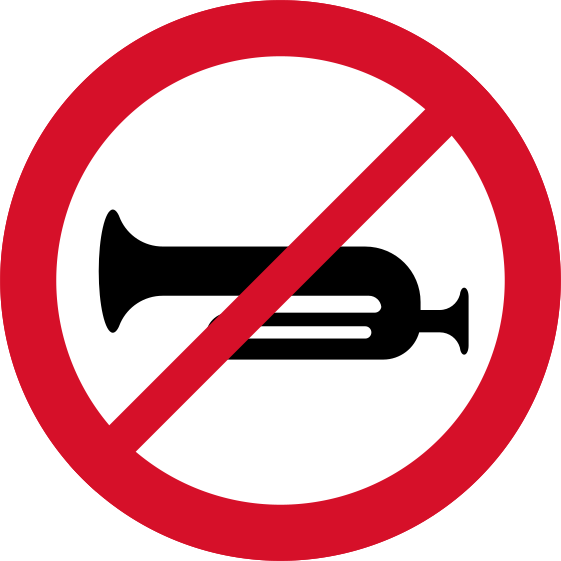
| Horn in a red circle | No horn | "A short horn is allowed" |
Speed signs, end signs and plates
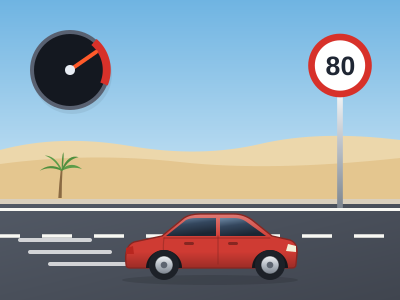
A limit stays in force until another sign changes it, and an end of restriction sign cancels it. It does not start a new limit. Read the plate: a limit with a time or day plate applies only then. The bank has speed signs of several values, and each is a maximum.
Priority and mandatory signs
Priority signs tell you who goes first. They have their own shapes so you can recognise them from far away or from behind. Mandatory signs are blue circles that order you to do something, such as follow a direction or keep right.
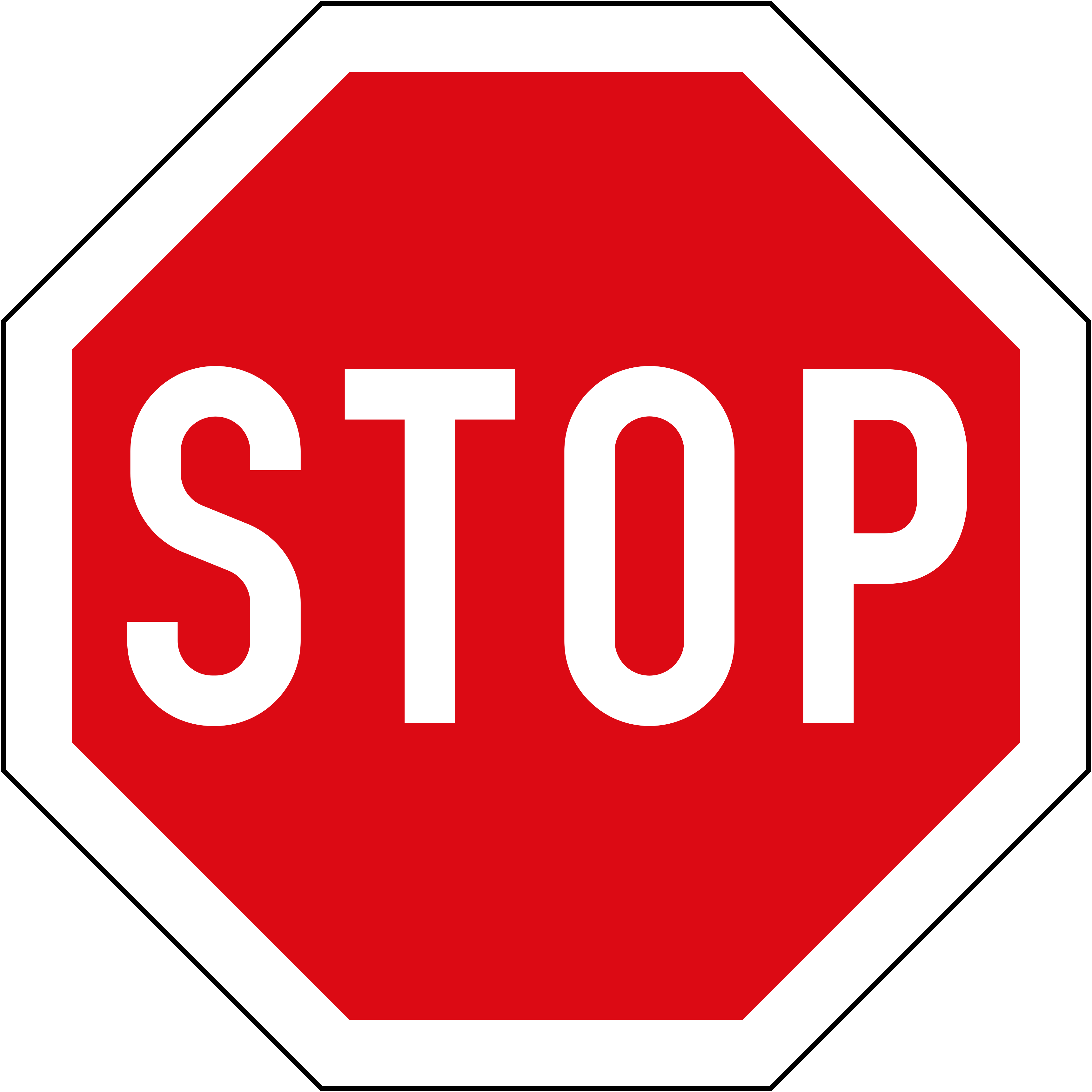
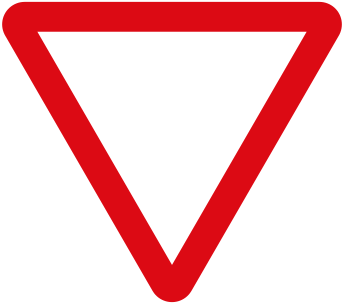
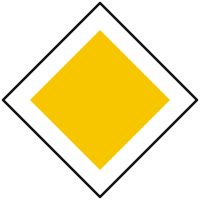
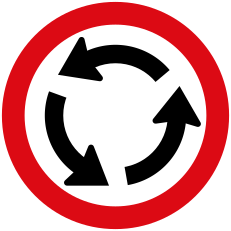
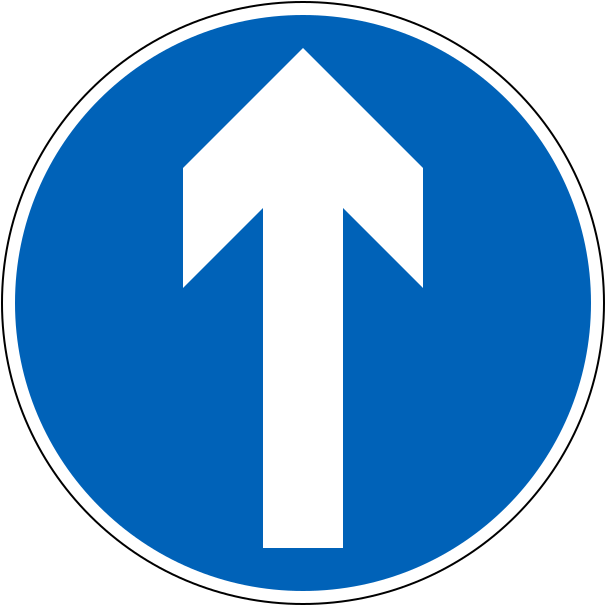
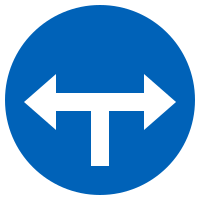
| Sign | Shape and colour | What you must do |
|---|---|---|
| Stop | Red octagon | Full stop at the line, then give way |
| Give way | Inverted triangle, red border | Yield, stop only if needed |
| Priority road | Yellow diamond | You have priority over joining roads |
| Roundabout | Blue circle, three arrows | Give way to traffic on the roundabout |
| Keep right | Blue circle, arrow | Pass on the side shown |
| Ahead only | Blue circle, straight arrow | Go straight, no turns |
| Turn left or right | Blue circle, two arrows | Turn, you may not go straight |
| One way | Arrow sign | Traffic flows one direction only |
Stop is not give way
"You may roll through a stop sign if it is empty" is always wrong. A stop sign needs a complete halt. A give way sign needs enough slowing to yield, and you stop only if traffic requires it. Qatar's roundabouts make give way the most practised priority rule, so run the second road rules test if roundabouts feel shaky.
Blue shows what you must do
If an option says a blue circle is a recommendation, it is wrong. Blue circles are orders, the same as red circles are bans. Learn the colour split and you answer half the family questions without reading the symbol.
Qatar question bank + printable papers
757 questions with the answer and the rule, 3 full papers at the real length. One payment, no account.
Fail on the day
QAR 50
Pass first time
QAR 19
- 3
- Full papers
- 757
- Questions
- 40
- question timed mocks
That's 2.5 dirham a question, every answer explained.
Direction, information, roadworks and variable message signs
These signs give you facts and short term instructions rather than permanent rules. Fewer exam questions use them than use warning or prohibition signs, but the ones that appear are often easy marks if you know the colour code.
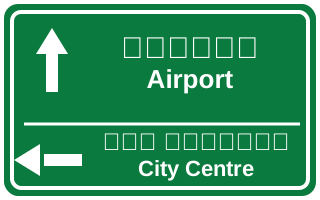
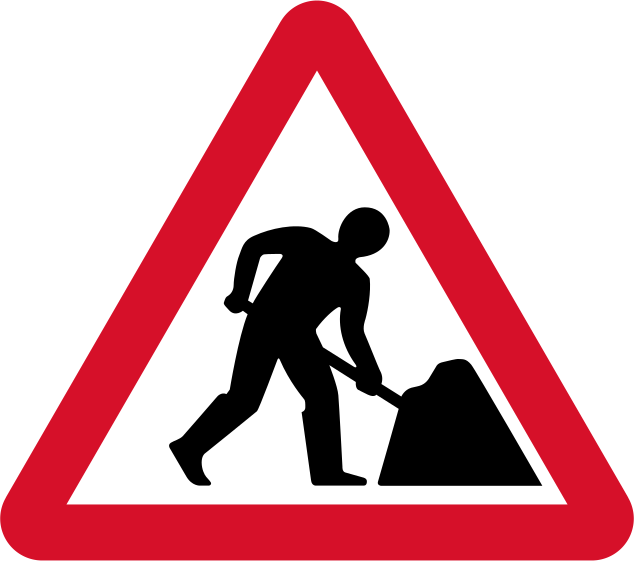
| Type | Usual look | Used for |
|---|---|---|
| Direction | Green rectangle, Arabic and English | Destinations, exits, distances |
| Route information | Blue rectangle | Expressway or route details |
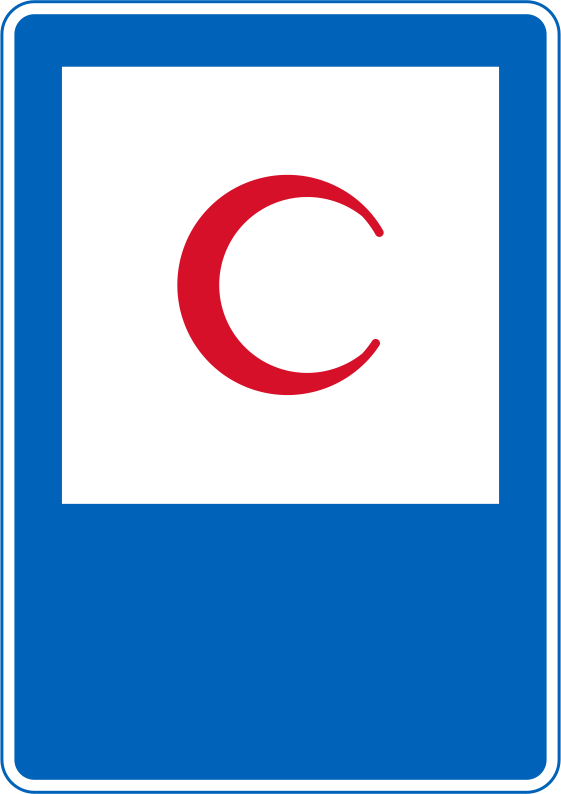
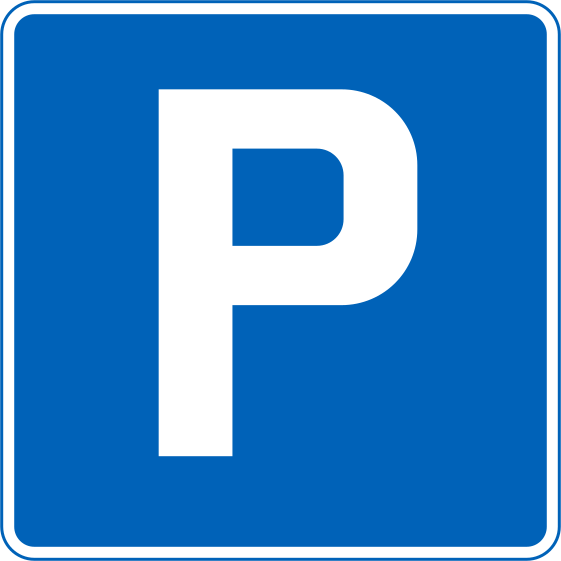
| Facilities | Blue square with a symbol | Parking, hospital, fuel |
| Roadworks | Orange or yellow, on stands | Works, lane closures, diversions |
| Variable message | Overhead electronic board | A temporary limit or warning |
Temporary beats permanent
If a variable message board shows a lower speed than the fixed sign, you follow the board. The same applies to cones and roadworks signs, which replace the normal layout for as long as they are there. A question that says "a temporary sign contradicts a permanent one" has one right answer.
Unfamiliar signs near borders
Some pictures in the bank show a sign beside a border crossing that you may not have seen before. Do not panic. Place it by shape and colour, decide the family, and the meaning usually follows. The second signs test includes some of these.
Road markings, zigzags and yellow kerbs
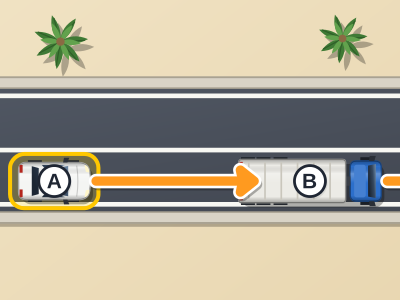
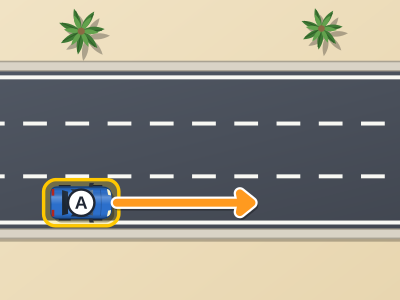
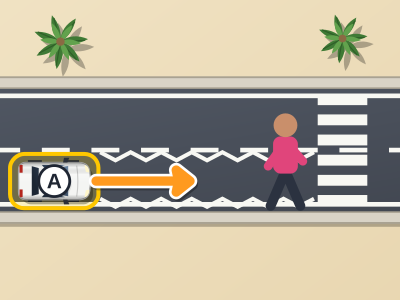
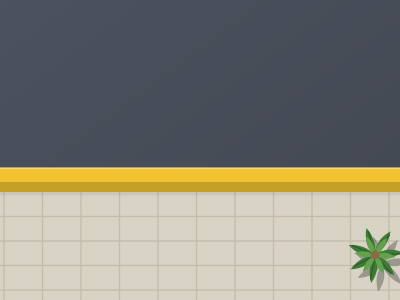
Markings are signs painted on the road, and candidates forget that they count. Many tricky questions are really about lines. A solid line is a wall, a broken line is a permission, zigzags mean no stopping, and yellow at the edge usually means a parking restriction.
| Marking | Meaning | Common wrong answer |
|---|---|---|
| Solid centre line | Do not cross or straddle | "Cross briefly to overtake" |
| Broken line | Cross or change lanes when safe | "A lane you must stay on" |
| Zigzag lines | No stopping or parking, no overtaking near a crossing | "Park if you stay in the car" |
| Yellow kerb | A stopping or parking restriction | "Free parking after dark" |
| Stop line | Halt behind it | "Stop with wheels on the line" |
| Arrows in a lane | The movement allowed from that lane | "Optional guidance" |
The yellow kerb question
Qatar tests kerb parking because it is a daily fine for residents. Treat a yellow kerb as a restriction and read the sign or plate before you assume parking is allowed. The safe driving test and the fines and black points test show how those restrictions cost money.
Traffic lights and police hand signals
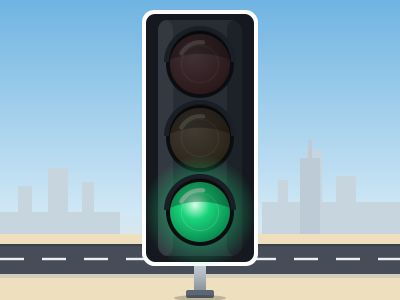
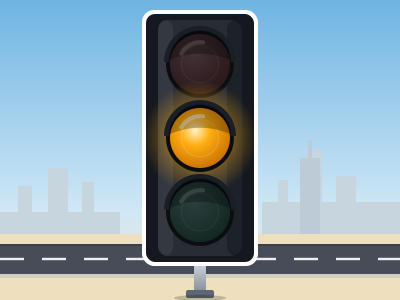
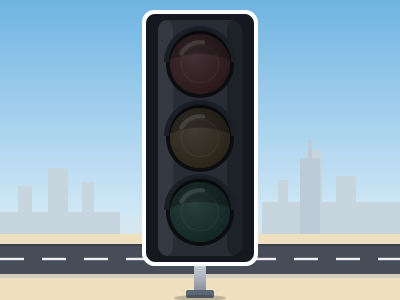
Lights and officers change while you watch, which is why exams like them. Red means stop behind the line. Amber on its own means the light is about to turn red, so stop if you can do it safely. Green means go if the way is clear. Dark lights and officers are where marks are lost.
| Signal | What you do |
|---|---|
| Steady red | Stop behind the line and wait |
| Steady amber | Stop if safe. Do not accelerate to beat it |
| Steady green | Go when the way is clear |
| Flashing red | Stop, give way, go when safe |
| Flashing amber | Proceed with care, give way to pedestrians |
| Light not working | Treat as an uncontrolled junction unless an officer directs you |
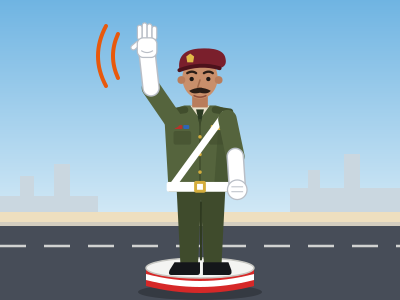
| Officer facing you, arm raised | Stop, do not wait for the light |
The officer wins
Candidates who know the lights perfectly still choose "stay stopped" when the officer waves them through. The officer overrides every light and sign. The test shows the figure and asks what it means, so study the picture in your school booklet.
Check yourself on the lights
Use the second signs test straight after this section, while the table is fresh.
Look-alike pairs people confuse
Most lost marks on a signs test do not come from signs the candidate has never seen. They come from two signs the candidate has seen many times and swaps. Treat this table as a checklist and say what separates each pair out loud.
| Pair | How to tell them apart |
|---|---|
| Red circle number against blue circle number | Red is a maximum, blue is a minimum |
| Stop against give way | Octagon is a full stop. Inverted triangle is yield |
| Roundabout ahead against roundabout | Red triangle warns. Blue circle orders |
| No entry against no parking | Bar across a red circle against a crossed P |
| Speed limit against end of speed limit | A diagonal bar cancels the limit. It is not a new limit |
| No overtaking against end of no overtaking | The grey sign with diagonal lines lifts the ban |
| Ahead only against turn left or right | One straight arrow against two turning arrows |
| Speed limit with a plate against plain speed limit | A plate limits when the sign applies |
| Flashing red against steady red | Flashing means stop then go when clear |
| Solid line against broken line | Solid is a wall. Broken is a permission |
How to drill the pairs
Take one pair a day. Write the row on a card with the picture on one side and the rule on the other. Then take a short test: signs test 1 puts similar signs side by side in its options.
A clock trick
The real paper is 40 questions. Our mocks use a 35 minute timer, which is under a minute a question. Place the family in one second, then read the question. If the family and the question agree, take the first option that fits.
Qatar traffic signs PDF and printable sheets
Many people search for this chart as a PDF so they can print it or study on the way to a lesson. There are two sensible sources, and they do different jobs.
The official reference
The Ministry of Interior and your driving school supply the official material, and Karwa and other schools publish free practice on their sites and apps. Treat the Ministry or school booklet as the final word on how a sign looks. Ask your school which version of the signs it uses, because some schools hand out printed copies at enrolment.
Printable practice with pictures
Reading a chart does not tell you whether you can recall it under a clock. Our Qatar printable papers give you question sheets with the pictures that you can print and mark yourself. They are written to the published rules and to what candidates report from the real test, and they are practice, not the official exam.
How to use a printed sheet
- Print a paper and set a 35 minute timer.
- Answer without this chart open.
- Mark it and write the sign family beside every wrong answer.
- Return to that family on this page and read it again.
For a screen based option with a score at once, the online Qatar bank gives you far more variety than the two free signs tests.
Mistakes that fail people on signs, and a seven day plan
These come from what candidates report and from the wrong answers our own tests catch most. None needs a better memory. They need a better habit.
Reading the picture and not the question
Every question has an image, and the image can pull you toward the wrong answer. A road photo with a small sign in it makes you name the road. Read the question first, then look for the sign.
Missing the plate
A speed or school zone sign with a time or day plate is a different question from the plain sign. Candidates see the number and skip the plate.
Treating a prohibition as advice
Options that begin "you may" or "only if" are usually wrong for a prohibition. A no horn sign does not allow a short blast.
Forgetting the officer and the dark light
An officer overrides lights. A dead light is not a green one.
A seven day plan
| Day | Work | Check |
|---|---|---|
| 1 | Shape and colour table. Warning triangles | Cover the table and rebuild it |
| 2 | Prohibition circles, speed signs and plates | Signs test 1 |
| 3 | Priority and mandatory signs, roundabouts | Right of way test |
| 4 | Markings, zigzags, yellow kerbs | Redo wrong answers from days 2 and 3 |
| 5 | Lights, police signals, roadworks and variable message signs | Signs test 2 |
| 6 | Look-alike pairs, one at a time | Mock test 1, timed |
| 7 | Weak points, then a second timed paper | Mock test 3, aim for 38 or more of 40 |
Practise in any municipality. The signs are national, so a candidate in Al Rayyan, Al Wakrah or Al Khor sees the same pictures as one in Doha.
What a fail costs and how to practise first
Marhaba reports a QAR 50 charge for a failure and retest, though a Peninsula handbook entry says a failed test can be retaken within a set time, and sources do not agree on which stage the fee covers, so ask your school. The fee is the smaller cost. Until you pass the signal test you cannot start the parking test, so a fail pauses your lessons, can push booked parking and road tests back, and may mean rebooking lesson hours if your package has fixed dates.
With 37 of 40 reported as the line, three mistakes are all you have. A signs section you half know can use them all before you reach the rules questions.
The practice route
- Take the free signs test 1 and test 2. Our line is 21 of 22.
- Take a free mock such as mock test 4. The line is 37 of 40 in 35 minutes. Aim for 38 or more.
- When the same questions keep coming up, move to the full online bank and the printable papers, which give far more variety.
- Check the Doha light vehicle test list for the topic that matches your weak area.
If you have already failed
Read the Qatar failed signal test guide for the retest steps, then return to the families where you lost marks. Passing with margin is cheaper than passing by one mark and carrying the stress into the parking test.
Free Doha mock tests and topic tests
Every test opens on ten free questions. Pick a full mock at the real length, or drill one topic.
- Qatar Theory Mock Test 1Mock · 40 questions
- Qatar Theory Mock Test 2Mock · 40 questions
- Qatar Theory Mock Test 3Mock · 40 questions
- Qatar Theory Mock Test 4Mock · 40 questions
- Qatar Road Signs Practice Test 1Topic · 22 questions
- Qatar Road Signs Practice Test 2Topic · 22 questions
- Qatar Road Rules Test 1Topic · 20 questions
- Qatar Road Rules Test 2Topic · 20 questions
- Qatar Right of Way Practice TestTopic · 22 questions
- Qatar Safe Driving Practice TestTopic · 22 questions
- Qatar Fines & Black Points Test 1Topic · 20 questions
- Qatar Fines & Black Points Test 2Topic · 20 questions
Practise for your municipality
The rules are national, but the test centre, booking and fees can differ by area.
Frequently asked questions
Qatar uses the standard GCC sign system. Warning signs are red triangles, prohibitions are red circles, commands are blue circles, and direction signs are green rectangles with Arabic and English. Stop, give way and priority signs have their own shapes. Markings, traffic lights and police signals complete the set.
The signal test shows a picture on each question, a sign, a marking, a light or a road scene, and asks what it means or what you should do. Learn the family by shape and colour, then the specific meaning. Our signs test 1 and 2 mirror that picture based style with explanations.
Qatar guides report 40 questions with 37 correct needed to pass, which allows three mistakes. The Ministry does not publish the figure and one prep site says 36. Each question carries a picture. Aim to score 38 or more on timed practice so one unlucky question does not fail you.
This page is the sign by sign chart: every family, shape, colour and what to do. The signal test guide explains the exam itself, including the format, booking, fees and what comes after, such as the parking test. Read the guide for the process and use this chart to learn the signs.
A yellow kerb marks a stopping or parking restriction. Check any sign or plate before you park, because the rule may depend on time or place. The signal test shows kerb parking as a picture, so expect a question on it. Never assume a quiet road makes a yellow kerb safe.
A plate under a sign limits when or where the sign applies, for example a school zone limit that applies on school days. Outside those times the normal limit applies. Read the plate before the number. Candidates who skip the plate give the wrong answer on otherwise easy questions.
Treat the junction as uncontrolled and slow down. Give way as the rules require at a junction with no signals, and follow an officer if one is directing traffic. A dark light is not a green light. The signal test includes a picture of a light that is off.
Your driving school and the Ministry of Interior supply the official material. For printable practice with pictures and answers, use our Qatar printable papers and mark them yourself against a timer. They are practice sheets written to the published rules, not the official exam.
Learn the families by shape and colour first, then test yourself in short daily sessions. Take the free signs tests 1 and 2, drill one look-alike pair a day, and finish with a timed 40 question mock. A seven day plan of 30 to 40 minutes a day is enough for most people.
Qatar question bank + printable papers
757 questions with the answer and the rule, 3 full papers at the real length. One payment, no account.
Fail on the day
QAR 50
Pass first time
QAR 19
- 3
- Full papers
- 757
- Questions
- 40
- question timed mocks
That's 2.5 dirham a question, every answer explained.