

Umm Salal General Directorate of Traffic Light vehicle
Practice mode· Road rulesUmm Salal General Directorate of Traffic - Qatar Road Rules Test 1
First 20 questions on Qatar traffic rules: lane discipline, roundabouts, seat belts, mobile phone use, speed limits and more. Essential knowledge for any driver in Qatar.
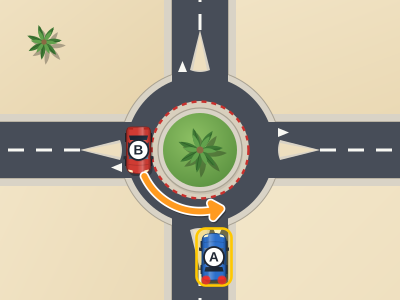
When approaching a roundabout in Qatar, who has priority?
The other 10 questions in this test
Read them all. The answer and the reason for each, and the timed 20-question run, are in the Qatar Driving Theory Online Practice Bank.
- Q11Traffic rules
Is it legal to hold and use a mobile phone while driving in Qatar?
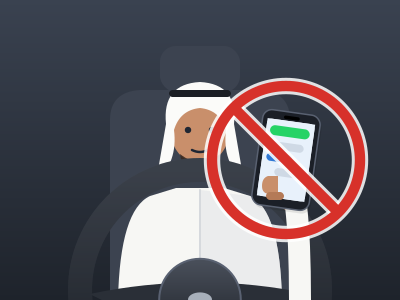
- ANo, it is prohibited to hold and use a mobile phone while driving
- BYes, if you are stopped at a red light
- CYes, if the call lasts less than 30 seconds
- DYes, if you keep one hand on the steering wheel
Answer and explanation in the bank
- Q12Traffic rules
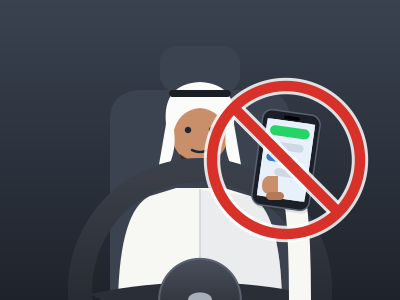
Which method of using a mobile phone is legally permitted while driving in Qatar?
- AHolding the phone to your ear with your shoulder
- BUsing a properly mounted hands-free device that does not require you to hold the phone
- CReading a text message while stopped in traffic
- DUsing the phone on loudspeaker while holding it on the dashboard
Answer and explanation in the bank
- Q13Traffic rules
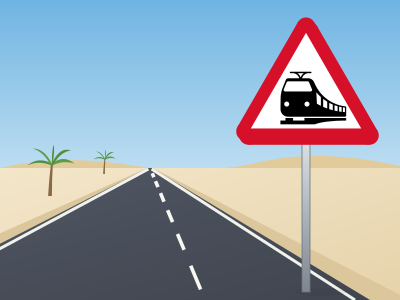
When approaching a railway (level) crossing in Qatar with no barriers, what must you do?
- AContinue at the same speed as trains always stop for road traffic
- BSound your horn to warn any train driver before crossing
- CSlow down, look and listen for trains in both directions, and only cross when safe
- DCross quickly without stopping to minimise time on the tracks
Answer and explanation in the bank
- Q14Traffic rules
The barrier at a level crossing is down and the warning lights are flashing in Qatar. What must you do?
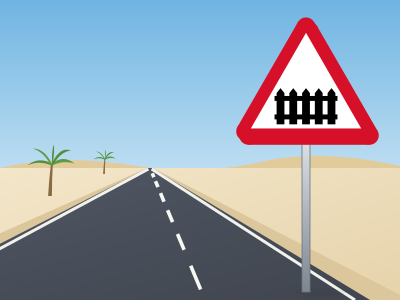
- AProceed slowly as the lights may be malfunctioning
- BStop and wait until the barriers fully rise and lights stop flashing before proceeding
- CWeave around the barrier if no train is visible
- DSound your horn and advance to check if the way is clear
Answer and explanation in the bank
- Q15Traffic rules
What is the first thing you must do when entering a road tunnel in Qatar?
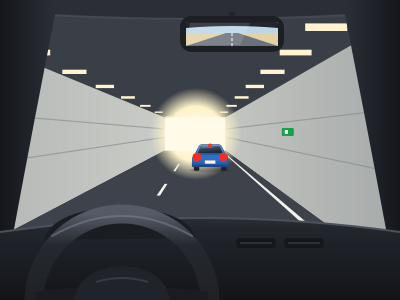
- AIncrease speed to minimise time spent inside
- BTurn off your air conditioning to reduce engine load
- CSwitch to high beam for maximum visibility
- DSwitch on your headlights if they are not already on
Answer and explanation in the bank
- Q16Traffic rules
Your vehicle breaks down inside a tunnel in Qatar. What should you do?
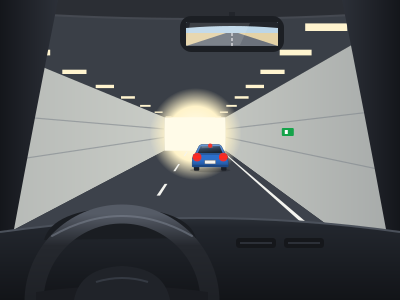
- AStay in the vehicle with the doors locked until help arrives
- BSwitch on hazard lights, exit the vehicle carefully, and use emergency phones or exits
- COpen the bonnet and attempt repairs inside the tunnel
- DWalk back through the tunnel in the direction of traffic to find help
Answer and explanation in the bank
- Q17Traffic rules
What speed should you observe when driving through a school zone in Qatar during active school hours?
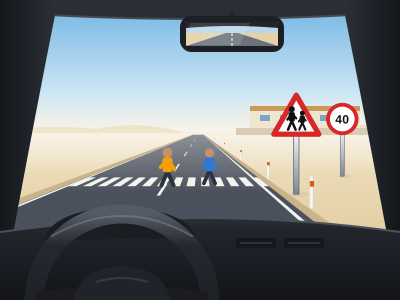
- AThe same as the surrounding area, as school signs are advisory only
- BNo more than 100 km/h regardless of the sign
- CSchool zones only apply to buses and minivans
- DThe reduced limit shown on the school zone sign, typically lower than the surrounding road
Answer and explanation in the bank
- Q18Traffic rules
A school bus has stopped with its warning lights flashing and its stop sign arm extended in Qatar. What must approaching drivers do?
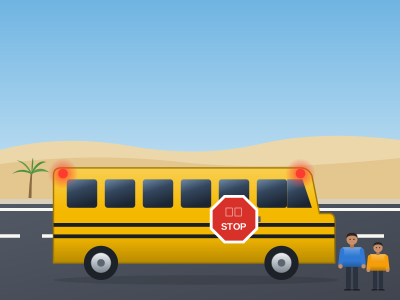
- AKeep to the speed limit, because the bus has stopped off the road
- BSound the horn so the children know you are coming
- CSlow right down, be ready to stop, and do not pass while children are getting on or off
- DOvertake quickly before the children start to cross
Answer and explanation in the bank
- Q19Traffic rules
A pedestrian is waiting at a marked crossing in Qatar. What must you do?
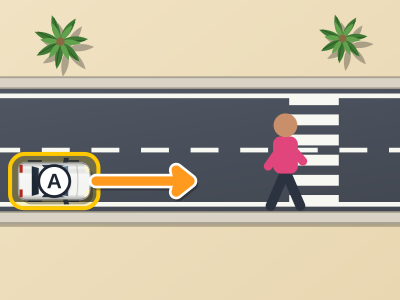
- AFlash your lights to indicate it is safe for them to cross
- BGive way to the pedestrian before proceeding through the crossing
- CProceed quickly so the pedestrian can cross behind you
- DSound your horn to warn them and then continue
Answer and explanation in the bank
- Q20Traffic rules
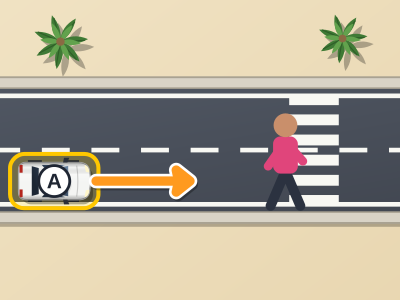
A visually impaired pedestrian using a white cane or guide dog is crossing a road in Qatar. What extra care must you take?
- ANo additional care is required beyond standard pedestrian rules
- BStop well before the crossing and wait until the person has completely cleared the road
- CPass slowly and use your horn to help them hear you
- DProceed at walking pace alongside them
Answer and explanation in the bank
Every answer above, with the rule it comes from, plus the full 20-question timed test.
Get the Qatar Driving Theory Online Practice Bank - QAR 19What this test covers
Topics include road signs, traffic signals, right of way, roundabouts, speed limits, seat belts, fines and penalties, and the safe-driving rules specific to your vehicle category. Full question-by-question feedback with explanations is shown immediately after you finish the test above.
Frequently asked questions
How many questions is the Umm Salal General Directorate of Traffic light vehicle theory test?
The official General Directorate of Traffic light vehicle theory test in Umm Salal has 40 questions and you need 37 correct (92.5%) to pass. This practice test has 20 questions.
Is this the real exam?
These are practice questions to help you revise, written to the published rules and to what candidates report from the real test. They are not the official Qatar exam and the real question bank, format, fees and pass mark are set by the General Directorate of Traffic (Ministry of Interior) and the driving schools, and can change. Always confirm the current requirements with your driving school or the traffic department (for example via the Metrash service).
Is this practice test free?
The first 10 questions are free, with no signup, and each shows the answer and the reason. The full 20-question test, timed, is in the Qatar Driving Theory Online Practice Bank (QAR 19, one payment), with every question in the bank.
What does the Umm Salal light vehicle theory test cover?
Road signs, traffic signals, right of way, roundabouts, speed limits, seat belts, penalties and safe-driving rules, plus the handling and safety topics specific to your vehicle.