

Umm Salal General Directorate of Traffic Light vehicle
Practice mode· Road rulesUmm Salal General Directorate of Traffic - Qatar Road Rules Test 2
Second set of 20 road rules questions covering overtaking, parking, motorway driving, pedestrian crossings and more. Complete both tests for full rules coverage.
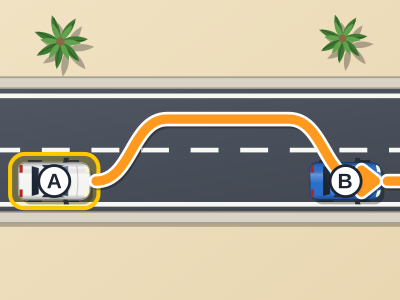
Before overtaking on a Qatar road, which check is essential?
The other 10 questions in this test
Read them all. The answer and the reason for each, and the timed 20-question run, are in the Qatar Driving Theory Online Practice Bank.
- Q11Traffic rules
During a sandstorm in Qatar, which lights should be used if you must continue driving at very low speed?
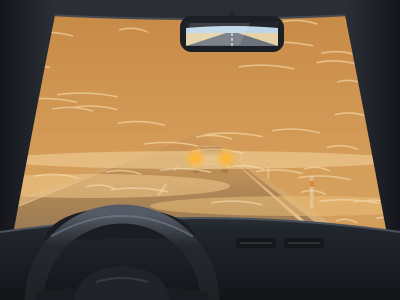
- AHigh-beam headlights, as they penetrate dust better
- BHazard lights only, to signal distress to other drivers
- CNo lights, to avoid blinding others in the dust cloud
- DLow-beam headlights and front fog lights, if fitted
Answer and explanation in the bank
- Q12Traffic rules
How does wet road surface affect your braking distance in Qatar compared to a dry road?
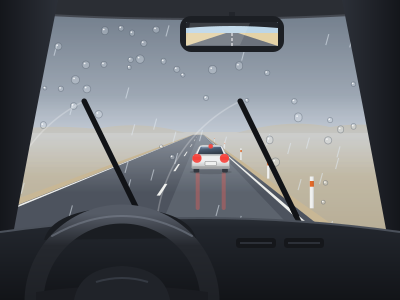
- ABraking distance increases significantly and you must leave a much larger gap
- BIt has no significant effect if your tyres are inflated correctly
- CBraking distance decreases because wet tyres grip grooves better
- DOnly vehicles without ABS are affected by wet roads
Answer and explanation in the bank
- Q13Traffic rules
What does a speed limit sign show in Qatar?
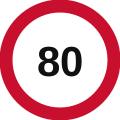
- AThe minimum speed you must travel at all times
- BThe recommended speed for the type of road, which you may exceed if safe
- CThe maximum speed permitted under ideal conditions; you must go slower if conditions require it
- DThe average speed measured by cameras along that road
Answer and explanation in the bank
- Q14Traffic rules
When is it unsafe to change lanes on a Qatar expressway?
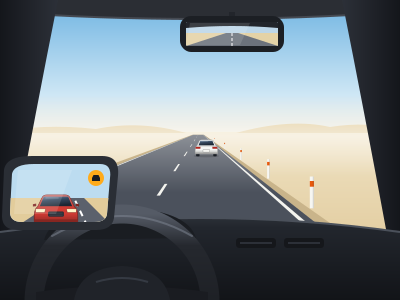
- AWhen travelling at exactly the speed limit
- BOnly when a continuous white line is present
- CWhen a vehicle is in your blind spot, when gaps are insufficient, or when approaching an exit
- DLane changes on an expressway are always safe at night
Answer and explanation in the bank
- Q15Traffic rules
An emergency vehicle with lights and sirens activated is approaching from behind in Qatar. What must you do?
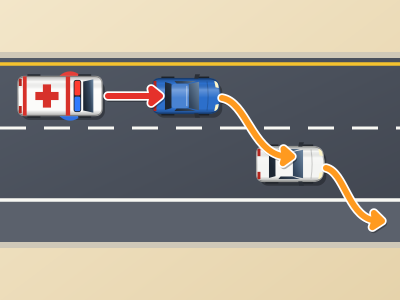
- AMaintain your speed so you do not obstruct traffic flow
- BMove to the left lane and slow down slightly
- CFollow the emergency vehicle through traffic to take advantage of the gap
- DPull to the right and stop safely to let the vehicle pass
Answer and explanation in the bank
- Q16Traffic rules
You are stopped at a red light in Qatar when an ambulance approaches from behind with sirens sounding. What should you do?
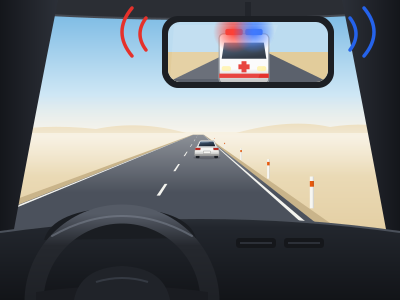
- AMove forward carefully if there is space, or to the side, to create a gap without entering the intersection unsafely
- BRun the red light immediately to clear the way
- CStay where you are; the ambulance will find another route
- DSwitch on hazard lights but do not move until the light turns green
Answer and explanation in the bank
- Q17Traffic rules
What does a solid red traffic light mean in Qatar?
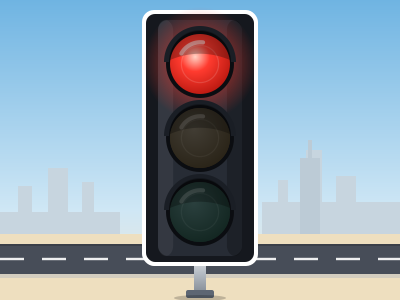
- ASlow down and be prepared to stop
- BStop completely before the stop line and do not proceed until the light changes
- CYou may proceed with caution if no crossing traffic is visible
- DStop only if pedestrians are crossing
Answer and explanation in the bank
- Q18Traffic rules
What should you do when a traffic light in Qatar shows an amber (yellow) signal?
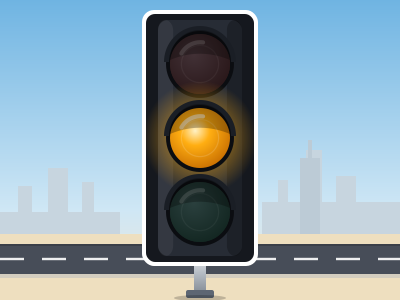
- AAccelerate to clear the junction before it turns red
- BStop if it is safe to do so; only continue if stopping would be dangerous
- CAmber means the same as green; continue at speed
- DNo answer is correct
Answer and explanation in the bank
- Q19Traffic rules
What is a zebra crossing in Qatar and what are your obligations at one?
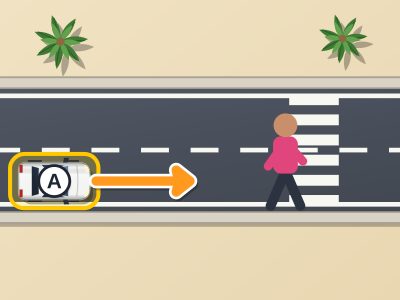
- AA painted crossing where pedestrians have priority and you must give way to them
- BA crossing for animals; you need not slow down
- CA crossing controlled by traffic lights where pedestrians must wait for a green signal
- DAn advisory crossing; pedestrians should wait for vehicles to pass first
Answer and explanation in the bank
- Q20Traffic rules
You approach a zebra crossing in Qatar and a pedestrian is standing on the pavement appearing to want to cross. What should you do?
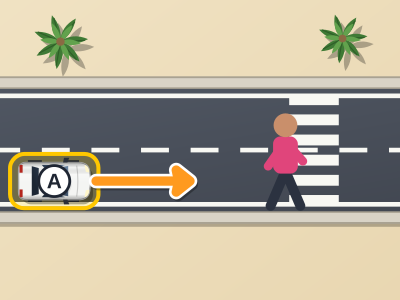
- ASlow down and be prepared to stop, giving way if they step onto the crossing
- BContinue at normal speed; they are not yet on the crossing
- CSound your horn so they know you are approaching
- DFlash your headlights to signal it is safe for them to cross
Answer and explanation in the bank
Every answer above, with the rule it comes from, plus the full 20-question timed test.
Get the Qatar Driving Theory Online Practice Bank - QAR 19What this test covers
Topics include road signs, traffic signals, right of way, roundabouts, speed limits, seat belts, fines and penalties, and the safe-driving rules specific to your vehicle category. Full question-by-question feedback with explanations is shown immediately after you finish the test above.
Frequently asked questions
How many questions is the Umm Salal General Directorate of Traffic light vehicle theory test?
The official General Directorate of Traffic light vehicle theory test in Umm Salal has 40 questions and you need 37 correct (92.5%) to pass. This practice test has 20 questions.
Is this the real exam?
These are practice questions to help you revise, written to the published rules and to what candidates report from the real test. They are not the official Qatar exam and the real question bank, format, fees and pass mark are set by the General Directorate of Traffic (Ministry of Interior) and the driving schools, and can change. Always confirm the current requirements with your driving school or the traffic department (for example via the Metrash service).
Is this practice test free?
The first 10 questions are free, with no signup, and each shows the answer and the reason. The full 20-question test, timed, is in the Qatar Driving Theory Online Practice Bank (QAR 19, one payment), with every question in the bank.
What does the Umm Salal light vehicle theory test cover?
Road signs, traffic signals, right of way, roundabouts, speed limits, seat belts, penalties and safe-driving rules, plus the handling and safety topics specific to your vehicle.