

Al Ahmadi General Traffic Department Motorcycle
Practice mode· Motorcycle skillsAl Ahmadi General Traffic Department - Kuwait Motorcycle Safety Practice Test
Rider safety essentials: protective gear, visibility, safe following distances, hazard awareness, lane position and sharing the road with larger vehicles.
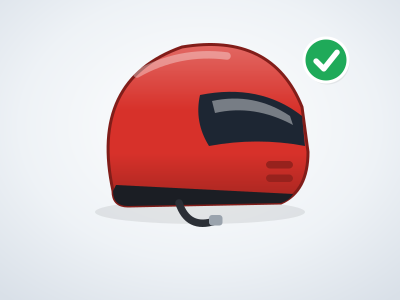
Before every ride in Kuwait, what must you do with your motorcycle helmet chin strap?
The other 10 questions in this test
Read them all. The answer and the reason for each, and the timed 20-question run, are in the Kuwait Driving Theory Online Practice Bank.
- Q11Motorcycle safety
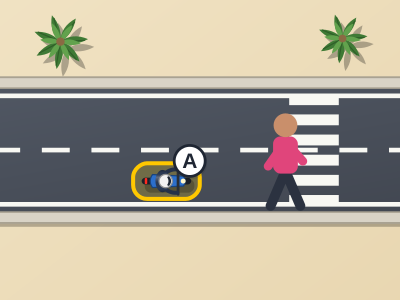
You notice a rainbow-coloured film on the road surface near a petrol station. What does this indicate and how should you respond?
- AA freshly painted road marking that dries quickly and is harmless
- BReflective paint used by Kuwait roads authority to improve night visibility
- CEvaporated water leaving harmless mineral deposits on the surface
- DA diesel or fuel spill that severely reduces grip; slow down, avoid the area if possible, and do not brake hard while crossing it
Answer and explanation in the bank
- Q12Motorcycle safety
Gravel has spread across a road after construction work in Kuwait and you cannot avoid it. What is the safest technique?
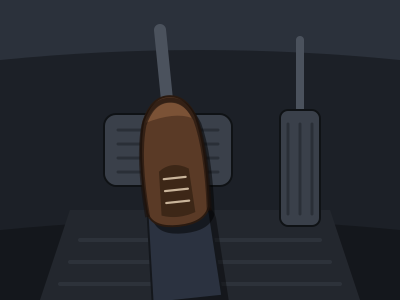
- AReduce speed before entering the gravel, sit upright, keep the throttle steady, and avoid braking or sharp steering on the gravel
- BBrake hard as soon as you see the gravel to minimise speed on impact
- CAccelerate through the gravel to pass over it before the tyres can slide
- DLean deeply to one side to keep at least one tyre on a cleaner part of the road
Answer and explanation in the bank
- Q13Motorcycle safety
As you ride past a large lorry or bus on a Kuwait highway, what wind hazard should you anticipate?
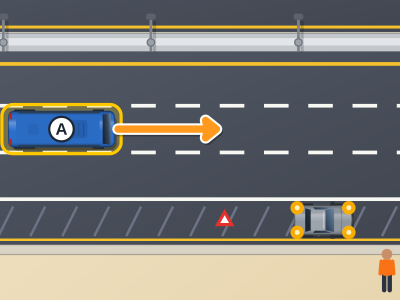
- AA sudden sideways gust as you clear the front of the vehicle, where its wind shadow ends
- BA strong headwind that slows you significantly
- CA tailwind that pushes you to an uncontrollable speed
- DNo wind effect -- only motorcycles create significant turbulence, not large vehicles
Answer and explanation in the bank
- Q14Motorcycle safety
When riding at night in Kuwait, what is the primary limitation of your motorcycle's headlight?

- AIt dazzles oncoming drivers and should be switched to parking light on unlit roads
- BIt only operates effectively on roads with a speed limit below 80 km/h
- CNight riding on main roads is prohibited in Kuwait for motorcycles
- DIt only illuminates as far as you can stop at your current speed; hazards beyond that distance cannot be seen in time
Answer and explanation in the bank
- Q15Motorcycle safety
How does rain affect tyre grip on a Kuwait road that has been dry for a long period?
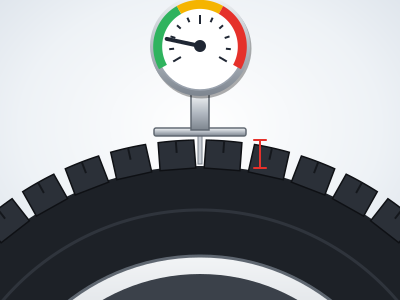
- ARain always improves grip by washing debris off the road and cooling the tyres
- BRain only reduces grip on unpaved desert tracks, not on tarmac roads
- CThe effect of rain on grip is negligible if tyres are at the correct inflation pressure
- DThe first rain after a long dry spell is most dangerous because it lifts accumulated oil, dust, and rubber into a highly slippery surface film
Answer and explanation in the bank
- Q16Motorcycle safety
What is the minimum recommended following distance behind a car when riding a motorcycle in normal dry conditions?
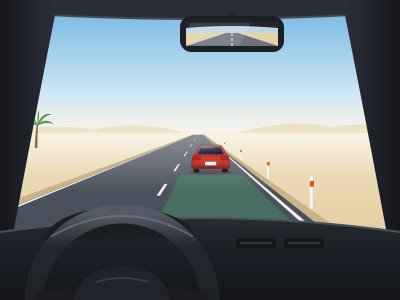
- AHalf a second is sufficient at highway speeds because motorcycles brake faster than cars
- BA minimum two-second gap, increased to four seconds or more in poor conditions
- COne metre of distance for every km/h of speed
- DExactly three car lengths at any speed
Answer and explanation in the bank
- Q17Motorcycle safety
When riding in a group of motorcycles in Kuwait, what is the standard safe formation?
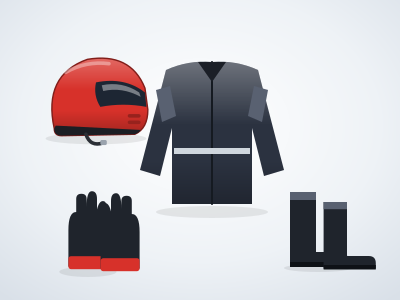
- AA staggered formation where each rider occupies the opposite side of the lane from the rider directly ahead
- BSingle file along the centre line of the lane throughout
- CSide by side, two abreast, occupying the full lane
- DEach rider selects their own lane independently with no formation
Answer and explanation in the bank
- Q18Motorcycle safety
Which of the following is a reliable early warning sign that a rider is becoming fatigued?
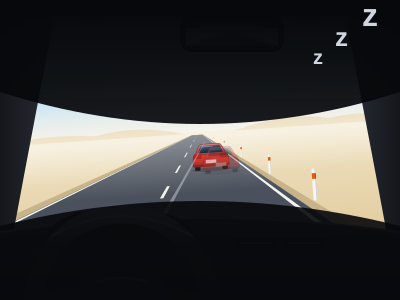
- ADifficulty concentrating, missing road signs or junctions, and slower reactions to hazards
- BIncreased grip strength and faster-than-normal reaction times
- CThe motorcycle drifting left due to a crosswind
- DDiscomfort from the riding position after the first hour
Answer and explanation in the bank
- Q19Motorcycle safety
Why is dehydration a particularly serious risk for motorcyclists in Kuwait?
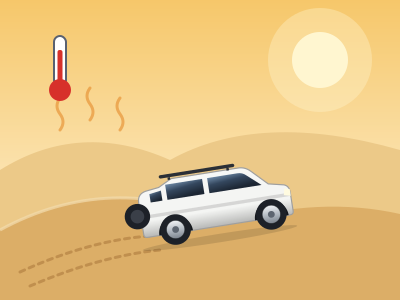
- ADehydration only affects performance after several days of minimal fluid intake
- BExtreme heat and riding airflow cause rapid, unnoticed fluid loss; even mild dehydration impairs concentration, reaction time, and coordination
- CWearing a helmet prevents dehydration by trapping moisture inside
- DEating a full meal before riding prevents dehydration for at least eight hours
Answer and explanation in the bank
- Q20Motorcycle safety
On a Kuwait dual carriageway you are following a car. How do you measure a safe minimum following gap using the two-second rule?
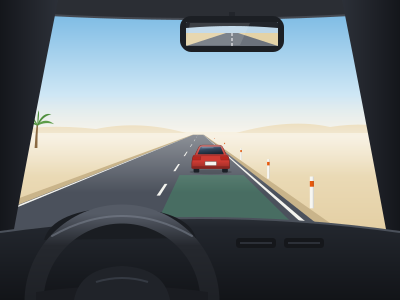
- AChoose a fixed point ahead; count two seconds from when the car passes it until you reach the same point
- BKeep exactly ten metres of space regardless of speed
- CFollow at half a second gap at any speed because motorcycles have shorter stopping distances than cars
- DKeep three car lengths at all times, even at high speed
Answer and explanation in the bank
Every answer above, with the rule it comes from, plus the full 20-question timed test.
Get the Kuwait Driving Theory Online Practice Bank - KWD 3.5What this test covers
Topics include road signs, traffic signals, right of way, roundabouts, speed limits, seat belts, fines and penalties, and the safe-driving rules specific to your vehicle category. Full question-by-question feedback with explanations is shown immediately after you finish the test above.
Frequently asked questions
How many questions is the Al Ahmadi General Traffic Department motorcycle theory test?
The official General Traffic Department motorcycle theory test in Al Ahmadi has 20 questions and you need 18 correct (90%) to pass. This practice test has 20 questions.
Is this the real exam?
These are practice questions to help you revise, written to the published rules and to what candidates report from the real test. They are not the official Kuwait exam and the real question bank, format, fees and pass mark are set by the General Traffic Department (Ministry of Interior), and can change. Always confirm the current requirements with your driving school or the traffic department.
Is this practice test free?
The first 10 questions are free, with no signup, and each shows the answer and the reason. The full 20-question test, timed, is in the Kuwait Driving Theory Online Practice Bank (KWD 3.5, one payment), with every question in the bank.
What does the Al Ahmadi motorcycle theory test cover?
Road signs, traffic signals, right of way, roundabouts, speed limits, seat belts, penalties and safe-driving rules, plus the handling and safety topics specific to your vehicle.