

Al Asimah (Capital) General Traffic Department Light vehicle
Practice mode· Right of way & safetyAl Asimah (Capital) General Traffic Department - Kuwait Right of Way Practice Test
Tests your understanding of priority rules: unmarked junctions, roundabouts, emergency vehicles, merging lanes and more. Getting right of way right can prevent serious accidents.
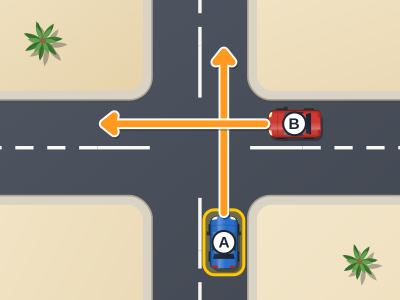
You arrive at an unmarked crossroads at the same time as a vehicle approaching from your right. Who has priority?
The other 12 questions in this test
Read them all. The answer and the reason for each, and the timed 22-question run, are in the Kuwait Driving Theory Online Practice Bank.
- Q11Right of way
Traffic lights at a junction have failed and no police officer is directing traffic. How should you treat the junction?
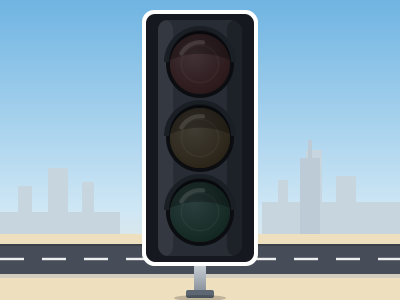
- ATreat it as an unmarked junction: give way to traffic on your right and proceed with caution
- BTreat it as a STOP sign: stop for at least 30 seconds before proceeding
- CYou have priority because signals are not working
- DOnly vehicles travelling straight ahead have priority; turning vehicles must stop
Answer and explanation in the bank
- Q12Right of way
A school bus has stopped with its warning lights flashing and is dropping off children. What must you do?
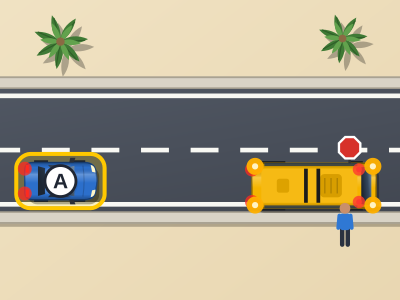
- APass slowly on the right side of the bus
- BStop and wait until the bus moves off or the warning lights are extinguished
- CSound your horn to alert the children and pass with care
- DOnly stop if you are behind the bus; vehicles facing the bus may proceed
Answer and explanation in the bank
- Q13Right of way
You are driving in a school zone during school hours. You see children near the kerb. What is your priority obligation?
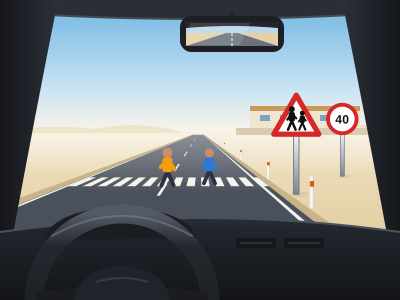
- AReduce speed immediately and be prepared to stop if any child moves towards the road
- BSound your horn to warn children and maintain your speed
- CYour speed limit obligation ends at the school gate; normal rules apply on the road
- DFlash your headlights and slow slightly to acknowledge the children
Answer and explanation in the bank
- Q14Right of way
A public bus has signalled to pull away from a bus stop into your lane. What should you do?
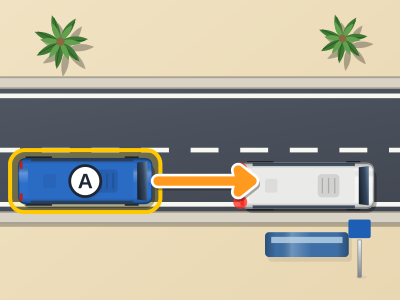
- AMaintain your speed; the bus must wait until all traffic has cleared
- BSound your horn to warn the bus driver and accelerate past
- COnly give way if there is a sign requiring you to do so
- DGive way to the bus where it is safe and lawful to do so
Answer and explanation in the bank
- Q15Right of way
You are on a narrow road and an oncoming vehicle is approaching. Neither of you can pass. Who should give way?
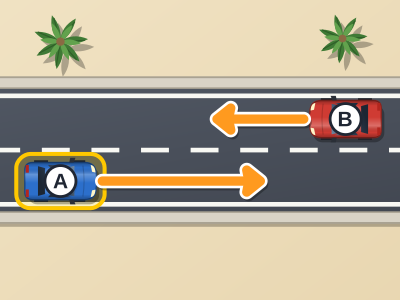
- AThe driver going uphill always has priority
- BThe larger vehicle always has priority on narrow roads
- CThe driver travelling in the direction of heavier traffic flow has priority
- DThe driver who has a passing place or wider section closer to them should reverse or pull in
Answer and explanation in the bank
- Q16Right of way
You are on a one-way street and want to turn left at the junction ahead. Which lane should you be in?
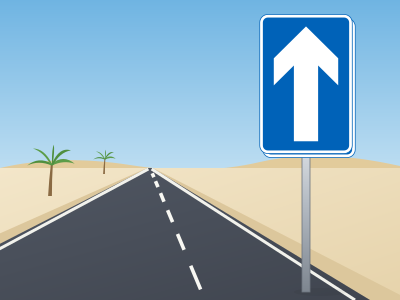
- AAny lane, since it is a one-way street and all lanes are equivalent
- BThe rightmost lane, to allow others to pass on the left
- CThe leftmost lane, as you are turning left
- DThe centre lane, for maximum visibility
Answer and explanation in the bank
- Q17Right of way
Two vehicles approach an unmarked Y-junction from different branches. Vehicle A comes from the left branch and Vehicle B from the right branch. Both want to take the main road ahead. Who gives way?
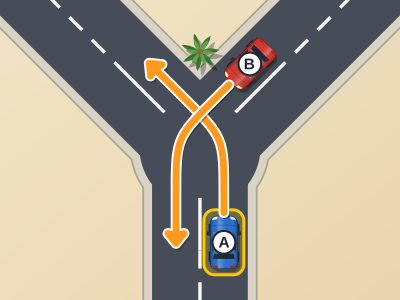
- AVehicle A gives way because Vehicle B is on its right
- BVehicle B gives way because Vehicle A is on a wider road
- CBoth vehicles have equal priority and should flash their lights to negotiate
- DVehicle B gives way because it is on the right branch
Answer and explanation in the bank
- Q18Right of way
A cyclist is travelling ahead of you in the same lane. You want to turn right at the junction ahead. What must you do?
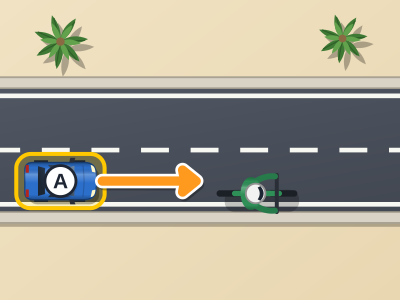
- AGive way to the cyclist before turning, since they have priority over turning traffic
- BSound your horn and turn right; the cyclist must move to the left
- COvertake the cyclist quickly before the junction and then turn
- DFlash your headlights to signal your intention and turn behind the cyclist
Answer and explanation in the bank
- Q19Right of way
You are leaving a private driveway or car park onto a public road. Who has priority?
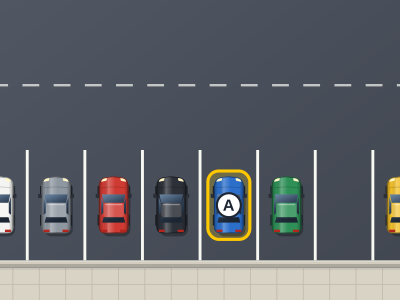
- AYou have priority because you were there first
- BAll traffic on the public road has priority over you
- CTraffic from your left has priority but not traffic from your right
- DPriority depends on whether there is a kerb or a dropped kerb at the exit
Answer and explanation in the bank
- Q20Right of way
Traffic lights are showing a flashing amber signal. What does this mean?
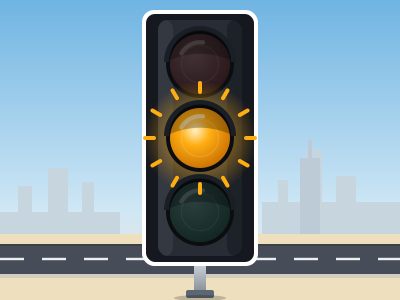
- AStop and wait for the lights to change to green
- BYou have priority; other traffic must stop for you
- CTreat it as a green light and proceed at normal speed
- DProceed with caution, giving way to any traffic or pedestrians in the junction
Answer and explanation in the bank
- Q21Right of way
You are in the right lane of a dual carriageway approaching a filter slip lane that exits to the right. A vehicle in the filter lane wants to re-enter the carriageway. Who has priority?
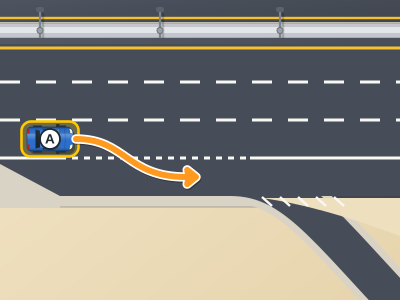
- AThe filter lane vehicle has priority because it is on your right
- BYou on the main carriageway have priority; the vehicle in the filter lane must give way
- CPriority is shared; both vehicles must slow down equally
- DThe larger of the two vehicles has priority in this situation
Answer and explanation in the bank
- Q22Right of way
On a motorway two lanes merge into one (zip-merge zone). How should drivers handle this?
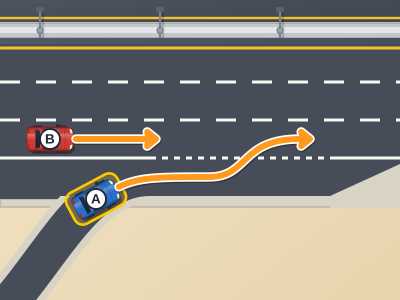
- AEach lane takes turns alternately, one vehicle at a time, like a zip fastener
- BThe lane that is ending must stop and wait for all traffic in the continuing lane to clear
- CThe vehicle travelling faster has priority in the merge zone
- DDrivers should merge as early as possible, well before the merge point
Answer and explanation in the bank
Every answer above, with the rule it comes from, plus the full 22-question timed test.
Get the Kuwait Driving Theory Online Practice Bank - KWD 3.5What this test covers
Topics include road signs, traffic signals, right of way, roundabouts, speed limits, seat belts, fines and penalties, and the safe-driving rules specific to your vehicle category. Full question-by-question feedback with explanations is shown immediately after you finish the test above.
Frequently asked questions
How many questions is the Al Asimah (Capital) General Traffic Department light vehicle theory test?
The official General Traffic Department light vehicle theory test in Al Asimah (Capital) has 20 questions and you need 18 correct (90%) to pass. This practice test has 22 questions.
Is this the real exam?
These are practice questions to help you revise, written to the published rules and to what candidates report from the real test. They are not the official Kuwait exam and the real question bank, format, fees and pass mark are set by the General Traffic Department (Ministry of Interior), and can change. Always confirm the current requirements with your driving school or the traffic department.
Is this practice test free?
The first 10 questions are free, with no signup, and each shows the answer and the reason. The full 22-question test, timed, is in the Kuwait Driving Theory Online Practice Bank (KWD 3.5, one payment), with every question in the bank.
What does the Al Asimah (Capital) light vehicle theory test cover?
Road signs, traffic signals, right of way, roundabouts, speed limits, seat belts, penalties and safe-driving rules, plus the handling and safety topics specific to your vehicle.