

Al Asimah (Capital) General Traffic Department Light vehicle
Practice mode· Road rulesAl Asimah (Capital) General Traffic Department - Kuwait Road Rules Test 1
First 20 questions on Kuwait traffic rules: lane discipline, roundabouts, seat belts, mobile phone use, speed limits and more. Essential knowledge for any driver in Kuwait.
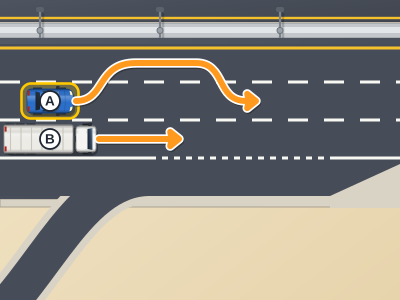
On a multi-lane road in Kuwait, which lane should you normally drive in when not overtaking?
The other 10 questions in this test
Read them all. The answer and the reason for each, and the timed 20-question run, are in the Kuwait Driving Theory Online Practice Bank.
- Q11Traffic rules
A driver in Kuwait overtakes on the right side of a vehicle that is indicating and moving left. Which rule applies?
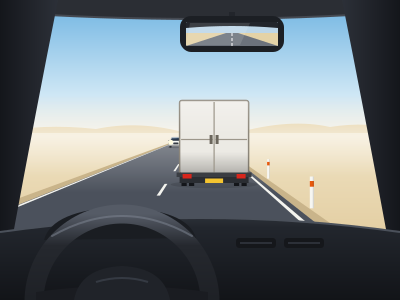
- AThe overtaking driver is at fault for passing on the wrong side
- BThe turning driver is solely at fault for failing to check mirrors
- CBoth drivers share equal fault regardless of circumstances
- DOvertaking on the right is permitted when the other vehicle is turning left
Answer and explanation in the bank
- Q12Traffic rules
Where are U-turns generally prohibited in Kuwait?
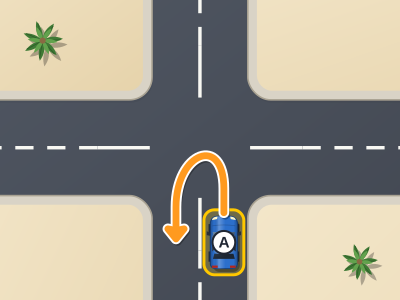
- AOnly on roads with a speed limit above 100 km/h
- BU-turns are always permitted if the road is clear
- COnly in residential areas
- DAt intersections with a no-U-turn sign, on motorways, near bends, and on bridges
Answer and explanation in the bank
- Q13Traffic rules
You wish to make a U-turn at an intersection in Kuwait where no sign prohibits it. What must you do before turning?
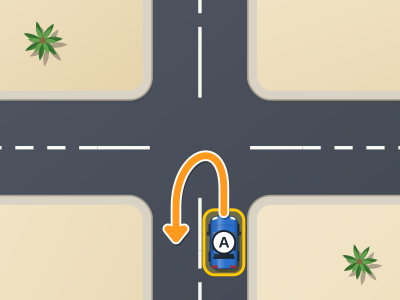
- ASound the horn to warn oncoming vehicles and then turn
- BFlash your hazard lights and proceed immediately
- CU-turns at intersections are always illegal in Kuwait
- DCheck that the road is clear in both directions, signal, and ensure you do not cut across oncoming traffic unsafely
Answer and explanation in the bank
- Q14Traffic rules
A driver makes a U-turn on a dual carriageway in Kuwait by crossing the central reservation gap. Which statement is correct?
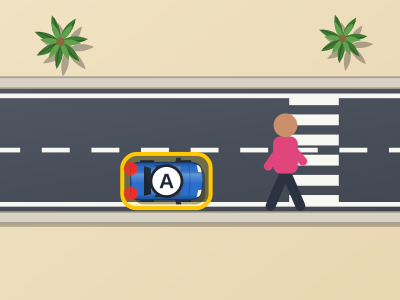
- AIt is always permitted at any gap in the central reservation
- BIt is only permitted when traffic is absent
- CIt is never permitted on any dual carriageway in Kuwait
- DIt is only permitted at a clearly signed and marked U-turn point on that road
Answer and explanation in the bank
- Q15Traffic rules
How far in advance should you signal before turning or changing lanes in Kuwait?
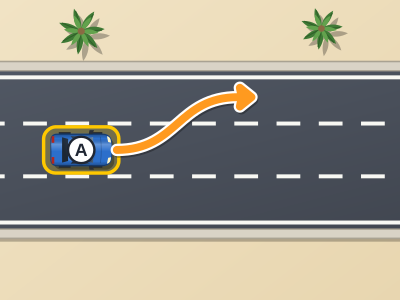
- AEarly enough to give other road users sufficient warning, typically at least 30 metres before the manoeuvre
- BExactly at the point of turning
- COnly after you begin to move into the new lane
- DOnly if another vehicle is directly behind you
Answer and explanation in the bank
- Q16Traffic rules
You are leaving a parking space on the right side of a road. In which order should you act?
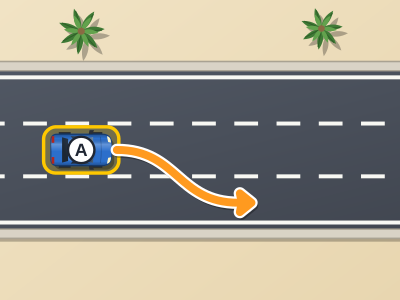
- ACheck mirrors, signal left, check blind spot, then pull out when safe
- BSignal right, check mirrors, then pull out
- CPull out first, then signal to alert others
- DNo signal is required when leaving a parking spot
Answer and explanation in the bank
- Q17Traffic rules
Your vehicle's indicator is not working. What must you do in Kuwait?
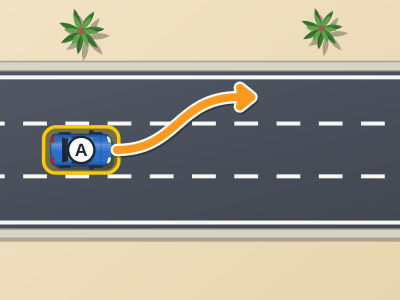
- AUse the horn instead of the indicator
- BNot drive the vehicle until the indicator is repaired, or use an approved hand signal where permitted
- CContinue driving normally as long as you drive slowly
- DOnly drive on roads with no other traffic
Answer and explanation in the bank
- Q18Traffic rules
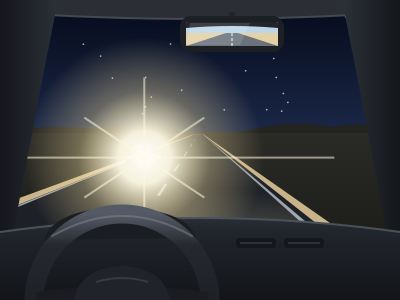
When must you switch on your vehicle's headlights in Kuwait?
- AOnly between midnight and 5 am
- BFrom sunset to sunrise and whenever visibility is poor, including heavy rain, fog, or sandstorms
- COnly when using a motorway
- DOnly when other vehicles have their lights on
Answer and explanation in the bank
- Q19Traffic rules
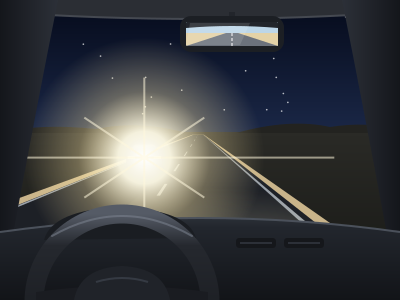
When should you switch from high beam (full beam) to low beam (dipped headlights) in Kuwait?
- AOnly when a police officer signals you to do so
- BWhen an oncoming vehicle appears or when following another vehicle closely
- CHigh beam may be kept on at all times on unlit roads
- DOnly when travelling below 60 km/h
Answer and explanation in the bank
- Q20Traffic rules
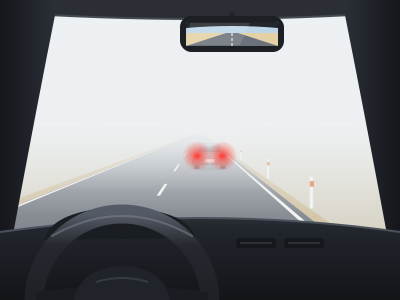
In Kuwait, when is it correct to use front fog lights?
- AAt all times when driving at night
- BOnly in conditions of dense fog, heavy sandstorm, or severe rain where visibility is significantly reduced
- CWhenever you feel it looks good or provides extra comfort
- DOnly when reversing
Answer and explanation in the bank
Every answer above, with the rule it comes from, plus the full 20-question timed test.
Get the Kuwait Driving Theory Online Practice Bank - KWD 3.5What this test covers
Topics include road signs, traffic signals, right of way, roundabouts, speed limits, seat belts, fines and penalties, and the safe-driving rules specific to your vehicle category. Full question-by-question feedback with explanations is shown immediately after you finish the test above.
Frequently asked questions
How many questions is the Al Asimah (Capital) General Traffic Department light vehicle theory test?
The official General Traffic Department light vehicle theory test in Al Asimah (Capital) has 20 questions and you need 18 correct (90%) to pass. This practice test has 20 questions.
Is this the real exam?
These are practice questions to help you revise, written to the published rules and to what candidates report from the real test. They are not the official Kuwait exam and the real question bank, format, fees and pass mark are set by the General Traffic Department (Ministry of Interior), and can change. Always confirm the current requirements with your driving school or the traffic department.
Is this practice test free?
The first 10 questions are free, with no signup, and each shows the answer and the reason. The full 20-question test, timed, is in the Kuwait Driving Theory Online Practice Bank (KWD 3.5, one payment), with every question in the bank.
What does the Al Asimah (Capital) light vehicle theory test cover?
Road signs, traffic signals, right of way, roundabouts, speed limits, seat belts, penalties and safe-driving rules, plus the handling and safety topics specific to your vehicle.