

Al Asimah (Capital) General Traffic Department Motorcycle
Timed mock exam· Full mock examsAl Asimah (Capital) General Traffic Department - Kuwait Motorcycle Theory Mock Test 2
Second full motorcycle mock exam with a fresh 20-question selection across road rules, signs and rider-specific topics. Keep practising without repetition.
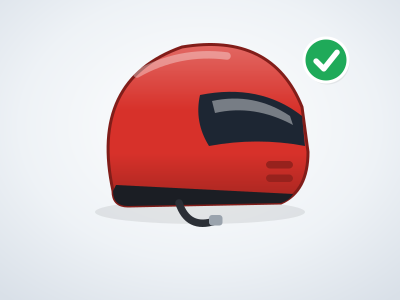
Why does a full-face helmet offer more protection than an open-face (three-quarter) helmet?
The other 10 questions in this test
Read them all. The answer and the reason for each, and the timed 20-question run, are in the Kuwait Driving Theory Online Practice Bank.
- Q11Right of way
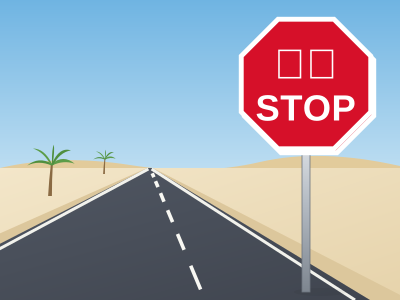
You approach a STOP sign at a junction. What must you do?
- ASlow down to a safe speed and proceed if the road appears clear
- BStop only if traffic is approaching; otherwise proceed normally
- CStop completely at the line, then give way to all traffic on the major road before moving off
- DFlash your hazard lights and proceed with caution
Answer and explanation in the bank
- Q12Safe driving
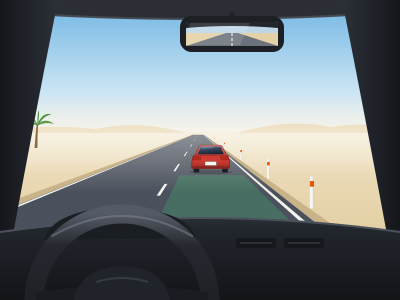
You are driving on a Kuwait highway at 120 km/h when light rain begins to fall. Compared to dry conditions, how does your overall stopping distance change?
- AIt stays the same if you brake smoothly
- BIt only increases if the rain is heavy enough to reduce visibility to below 50 metres
- CIt decreases slightly because the water cools the brake discs
- DIt can increase by 50 percent or more because wet asphalt reduces tyre grip
Answer and explanation in the bank
- Q13Penalties and fines
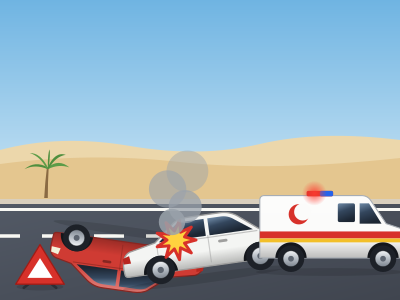
A driver in Kuwait is involved in a road accident and is found to have consumed any amount of alcohol. How does this affect their legal situation?
- AThey face criminal liability and lose any insurance protection, as zero-tolerance makes any alcohol illegal
- BAlcohol is only relevant if the BAC exceeds 0.05%, otherwise it has no legal impact
- CThey receive a small fine but insurance still covers the accident
- DThe alcohol finding is noted but does not affect liability
Answer and explanation in the bank
- Q14Motorcycle control
In which gear should you normally ride at very low speeds, such as when moving through slow traffic?
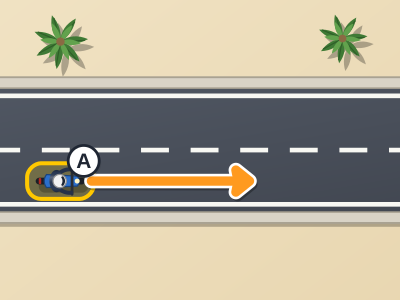
- AThird gear
- BFourth gear
- CFirst gear
- DNeutral
Answer and explanation in the bank
- Q15Motorcycle safety
Why is wearing motorcycle gloves important even in Kuwait's hot climate?
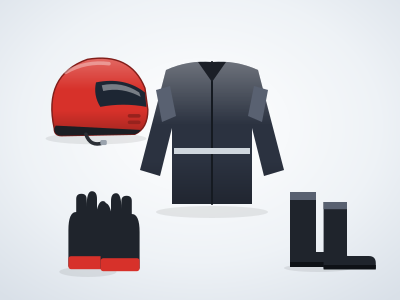
- AGloves improve throttle feel and therefore increase top speed
- BGloves are required by Kuwait law for all riders at all times on all roads
- CHands are instinctively extended in a fall, making them highly vulnerable to abrasion and fracture; gloves protect against both
- DGloves prevent sunburn but have no crash-protection value
Answer and explanation in the bank
- Q16Road signs and signals
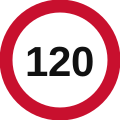
On which type of road would you most likely encounter this sign in Kuwait?
- AA city centre road
- BA road through a school zone
- CA road through a built-up residential area
- DA motorway or major expressway
Answer and explanation in the bank
- Q17Traffic rules
How should you signal when leaving a roundabout in Kuwait?
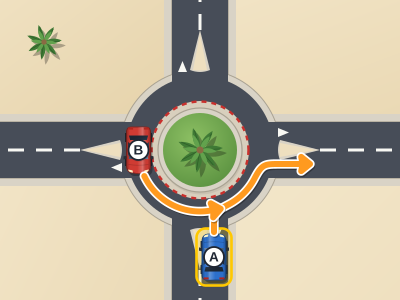
- AIndicate left before your exit
- BNo signal is needed when leaving a roundabout
- CIndicate right before your exit
- DSound the horn to warn other drivers
Answer and explanation in the bank
- Q18Right of way
You see a GIVE WAY (inverted triangle) sign at a junction. How does this differ from a STOP sign?
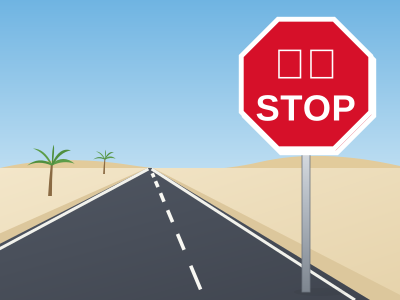
- AYou must yield to traffic on the main road but are not required to stop if the road is clearly safe
- BBoth signs require a full stop; there is no practical difference
- CA Give Way sign means you have priority over the main road
- DYou must stop and wait for at least five seconds before proceeding
Answer and explanation in the bank
- Q19Safe driving
How does driving on a loose, sandy road surface affect your braking?
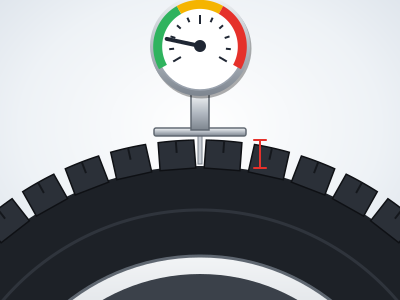
- ABraking distance decreases because sand is a natural friction material
- BBraking distance increases because the sand reduces tyre grip and can cause the wheels to lock
- CBraking distance is unaffected as long as the tyres are fully inflated
- DOnly rear-wheel-drive vehicles are affected by sandy surfaces
Answer and explanation in the bank
- Q20Penalties and fines
Under Kuwait's amended Traffic Law, in force since 22 April 2025, what is the settlement fine for using a handheld mobile phone while driving?
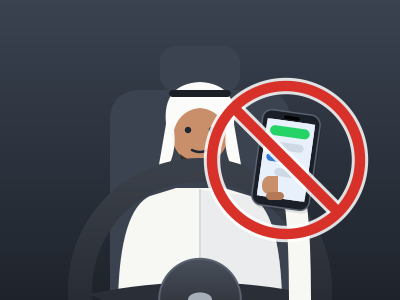
- ANo penalty if stopped at a red light
- BKD 5, the same as before the 2025 amendments
- COnly a penalty if an accident results from the phone use
- DKD 75; if the case goes to court instead, up to 3 months in prison and/or a fine of KD 150 to 300
Answer and explanation in the bank
Every answer above, with the rule it comes from, plus the full 20-question timed test.
Get the Kuwait Driving Theory Online Practice Bank - KWD 3.5What this test covers
Topics include road signs, traffic signals, right of way, roundabouts, speed limits, seat belts, fines and penalties, and the safe-driving rules specific to your vehicle category. Full question-by-question feedback with explanations is shown immediately after you finish the test above.
Frequently asked questions
How many questions is the Al Asimah (Capital) General Traffic Department motorcycle theory test?
The official General Traffic Department motorcycle theory test in Al Asimah (Capital) has 20 questions and you need 18 correct (90%) to pass. This practice test has 20 questions.
Is this the real exam?
These are practice questions to help you revise, written to the published rules and to what candidates report from the real test. They are not the official Kuwait exam and the real question bank, format, fees and pass mark are set by the General Traffic Department (Ministry of Interior), and can change. Always confirm the current requirements with your driving school or the traffic department.
Is this practice test free?
The first 10 questions are free, with no signup, and each shows the answer and the reason. The full 20-question test, timed, is in the Kuwait Driving Theory Online Practice Bank (KWD 3.5, one payment), with every question in the bank.
What does the Al Asimah (Capital) motorcycle theory test cover?
Road signs, traffic signals, right of way, roundabouts, speed limits, seat belts, penalties and safe-driving rules, plus the handling and safety topics specific to your vehicle.