

Al Asimah (Capital) General Traffic Department Truck & Bus
Timed mock exam· Full mock examsAl Asimah (Capital) General Traffic Department - Kuwait Truck & Bus Theory Mock Test 3
Third full heavy-vehicle mock exam and a strong final readiness check before your real truck or bus theory test. Another distinct set of 20 timed questions.
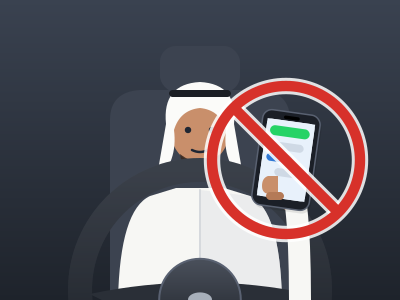
A driver in Kuwait is texting while stopped at a red light. Is this permitted?
The other 10 questions in this test
Read them all. The answer and the reason for each, and the timed 20-question run, are in the Kuwait Driving Theory Online Practice Bank.
- Q11Right of way
You are on a T-junction side road and wish to join the main road. There is no sign. Who has priority?
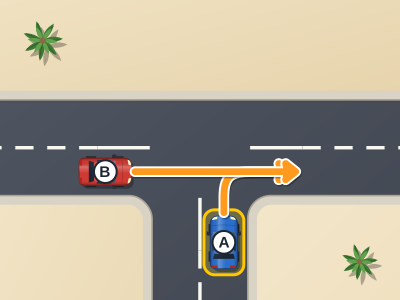
- AYou have priority because you arrived at the junction first
- BThe vehicle to your right on the main road has priority, but not the vehicle to your left
- CPriority is shared equally and both must slow down
- DTraffic already on the main road has priority over you
Answer and explanation in the bank
- Q12Safe driving
What does an Anti-lock Braking System (ABS) do when you brake sharply?
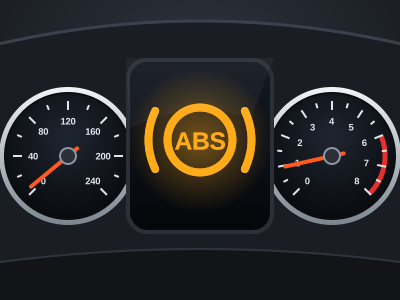
- AIt automatically increases engine braking to stop the car faster
- BIt applies the handbrake on the rear wheels only
- CIt reduces brake pressure to protect the brake pads from overheating
- DIt rapidly pulses brake pressure to prevent the wheels from locking, allowing you to steer while braking
Answer and explanation in the bank
- Q13Penalties and fines
A driver in Kuwait is caught using a mobile phone and simultaneously commits another traffic violation. What is the likely outcome?
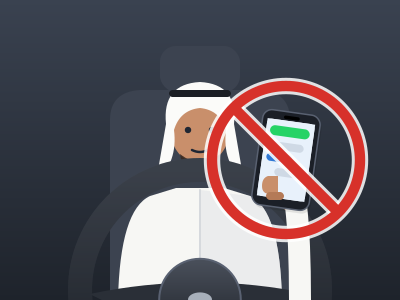
- AEach violation is recorded and fined separately, leading to multiple penalties
- BOnly the more serious of the two violations is penalised
- CThe driver receives a single combined fine
- DViolations are only combined if caused by the same act
Answer and explanation in the bank
- Q14Heavy vehicle
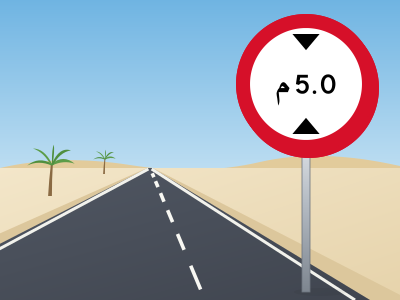
A road sign shows a maximum height restriction of 4.0 m. Your truck and load have a combined height of 4.2 m. What must you do?
- AProceed slowly because the 20 cm difference is usually within tolerance
- BFind an alternative route that can accommodate your vehicle height
- CDeflate the tyres slightly to reduce the vehicle height and pass through
- DSound the horn and proceed, relying on the bridge to flex
Answer and explanation in the bank
- Q15Road signs and signals
What does this sign warn you about?
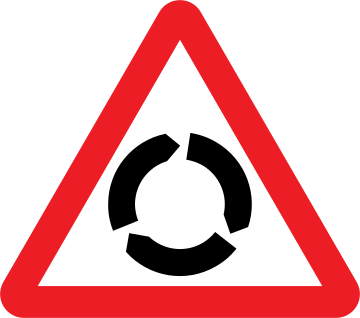
- AA roundabout is ahead; prepare to give way
- BA road loops back on itself ahead
- CA U-turn is permitted at the next junction
- DA circular one-way street begins ahead
Answer and explanation in the bank
- Q16Traffic rules
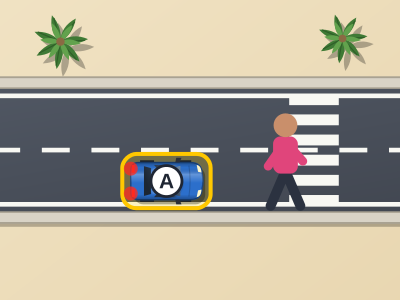
Where is overtaking prohibited in Kuwait?
- AOnly on roads with a speed limit below 60 km/h
- BOnly when a no-overtaking sign is displayed
- COvertaking is always permitted if you can do so quickly
- DNear the crest of a hill, on a bend with limited visibility, near pedestrian crossings, and at intersections
Answer and explanation in the bank
- Q17Right of way
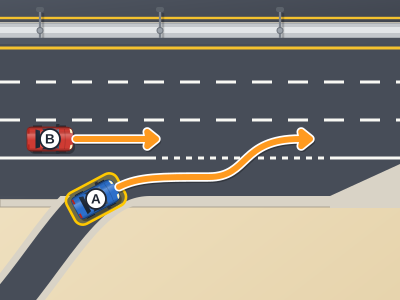
You are merging onto a highway using an acceleration lane. Who has priority?
- AYou have priority because you are in the acceleration lane and must merge quickly
- BPriority alternates between the highway and the acceleration lane in a zip pattern
- CThe vehicle behind you on the acceleration lane has priority over you
- DTraffic already on the highway has priority; you must adjust your speed to merge safely
Answer and explanation in the bank
- Q18Safe driving
A driver with ABS brakes hard on sand. Compared to a vehicle without ABS, what happens?
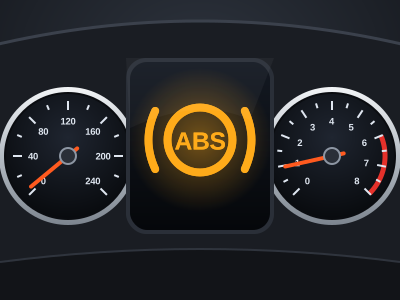
- AABS guarantees a shorter stopping distance on all surfaces
- BABS has no effect on sand surfaces
- CABS switches off automatically on sand
- DABS still prevents wheel lock-up, but stopping distances on loose sand or gravel may be longer than with locked wheels in a non-ABS vehicle
Answer and explanation in the bank
- Q19Penalties and fines
Is wearing a seatbelt compulsory for the driver in Kuwait?
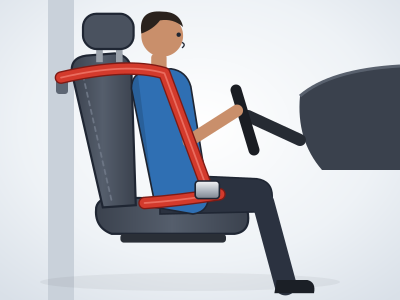
- AYes, the driver must always wear a seatbelt on all public roads
- BOnly on expressways and outside city limits
- COnly at speeds above 80 km/h
- DNo, it is recommended but not legally required
Answer and explanation in the bank
- Q20Heavy vehicle
What does a bridge weight limit sign indicate for a heavy vehicle driver?
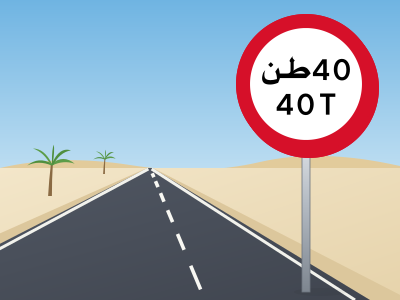
- AThe recommended speed to cross the bridge safely
- BThe maximum load that can be carried in the truck body only, not the trailer
- CThe maximum gross weight of any vehicle that may cross the bridge
- DAn advisory limit that applies only to vehicles over 10 axles
Answer and explanation in the bank
Every answer above, with the rule it comes from, plus the full 20-question timed test.
Get the Kuwait Driving Theory Online Practice Bank - KWD 3.5What this test covers
Topics include road signs, traffic signals, right of way, roundabouts, speed limits, seat belts, fines and penalties, and the safe-driving rules specific to your vehicle category. Full question-by-question feedback with explanations is shown immediately after you finish the test above.
Frequently asked questions
How many questions is the Al Asimah (Capital) General Traffic Department truck & bus theory test?
The official General Traffic Department truck & bus theory test in Al Asimah (Capital) has 20 questions and you need 18 correct (90%) to pass. This practice test has 20 questions.
Is this the real exam?
These are practice questions to help you revise, written to the published rules and to what candidates report from the real test. They are not the official Kuwait exam and the real question bank, format, fees and pass mark are set by the General Traffic Department (Ministry of Interior), and can change. Always confirm the current requirements with your driving school or the traffic department.
Is this practice test free?
The first 10 questions are free, with no signup, and each shows the answer and the reason. The full 20-question test, timed, is in the Kuwait Driving Theory Online Practice Bank (KWD 3.5, one payment), with every question in the bank.
What does the Al Asimah (Capital) truck & bus theory test cover?
Road signs, traffic signals, right of way, roundabouts, speed limits, seat belts, penalties and safe-driving rules, plus the handling and safety topics specific to your vehicle.