

Al Farwaniyah General Traffic Department Motorcycle
Timed mock exam· Full mock examsAl Farwaniyah General Traffic Department - Kuwait Motorcycle Theory Mock Test 1
A full 20-question timed practice exam for the Kuwait motorcycle (bike) theory test, set at the reported 18/20 (90%) pass mark. Covers shared road rules and signs plus motorcycle-specific control and safety.
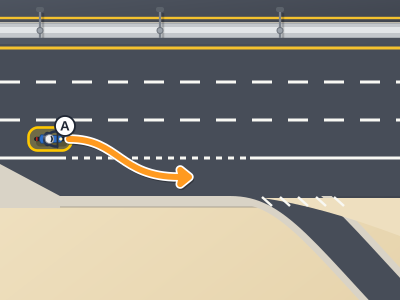
When cornering on a motorcycle, where should you direct your eyes?
The other 10 questions in this test
Read them all. The answer and the reason for each, and the timed 20-question run, are in the Kuwait Driving Theory Online Practice Bank.
- Q11Traffic rules
On which side of the road should you overtake another vehicle in Kuwait?
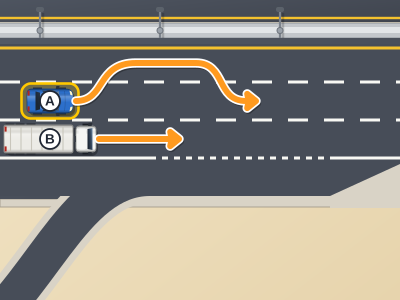
- AOn the left (passing the vehicle on its left side, using the left lane)
- BOn the right (passing the vehicle on its right side)
- CEither side, whichever is clearer
- DOnly on the hard shoulder
Answer and explanation in the bank
- Q12Right of way
You want to exit a roundabout. Which signal should you use and on which side is the exit?
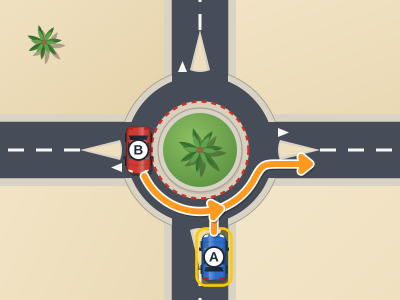
- ASignal left and take the exit on the left side of the road
- BNo signal is needed; simply steer into the exit
- CSignal left and take the exit on the right side of the road
- DSignal right and take the exit on the right side of the road
Answer and explanation in the bank
- Q13Safe driving
You are driving at highway speed when you experience a sudden tyre blowout on the front right. What is the correct initial response?
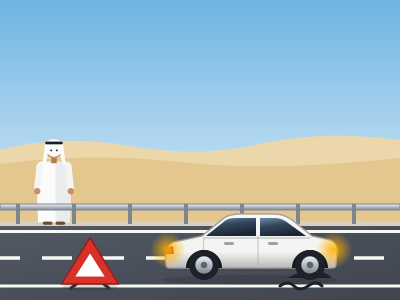
- ABrake immediately and as hard as possible
- BTurn the wheel sharply toward the blown tyre side to counteract the pull
- CSwitch off the engine immediately to reduce speed
- DGrip the steering wheel firmly, ease off the accelerator gradually, and steer straight without braking hard
Answer and explanation in the bank
- Q14Penalties and fines
Which device is a driver in Kuwait legally permitted to use while driving?
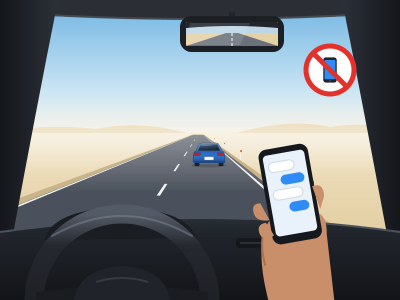
- AA Bluetooth hands-free headset or a car's built-in hands-free system
- BA handheld phone held between the shoulder and ear
- CA tablet mounted on the steering wheel
- DA smartwatch used to read messages at traffic lights
Answer and explanation in the bank
- Q15Motorcycle control
How does a loose gravel surface affect tyre grip compared with dry tarmac?
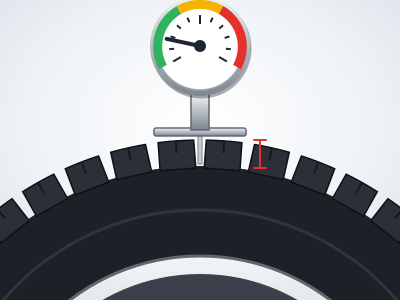
- AIt improves grip because gravel fills the tyre grooves
- BIt significantly reduces grip because the gravel acts like ball bearings under the tyres
- CIt has no effect on grip at normal riding speeds
- DIt only affects grip at speeds above 100 km/h
Answer and explanation in the bank
- Q16Motorcycle safety
Is lane-filtering (moving between stationary or slow-moving vehicles) legal in Kuwait?
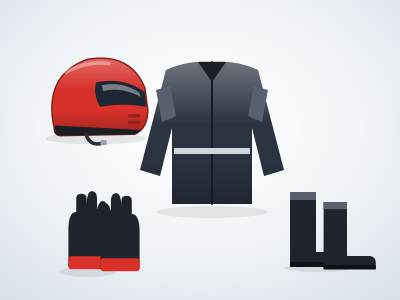
- AIt is fully legal at any speed and on any road in Kuwait
- BIt is not permitted; riders must queue within their lane
- CIt is legal only on roads with a speed limit below 60 km/h
- DIt is legal only for motorcycles with an engine capacity below 125 cc
Answer and explanation in the bank
- Q17Road signs and signals
What does this sign indicate, and which direction must you travel around it in Kuwait?
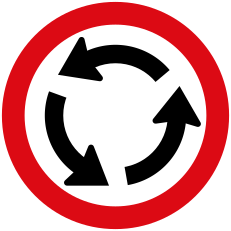
- AA roundabout ahead; traffic travels counter-clockwise
- BA roundabout ahead; traffic travels clockwise
- CA turnaround point; U-turns are permitted here
- DA circular one-way road; direction depends on local signs
Answer and explanation in the bank
- Q18Traffic rules
Before overtaking on a two-lane road in Kuwait, which of the following must you confirm?
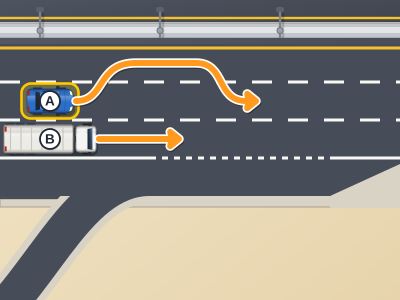
- AYour vehicle speed is above 80 km/h before pulling out
- BThe vehicle in front is travelling below 50 km/h
- CYour headlights are on full beam
- DThe road ahead is clear for a sufficient distance, no vehicle behind you is also overtaking, and it is legal to overtake at that point
Answer and explanation in the bank
- Q19Right of way
You are on a T-junction side road and wish to join the main road. There is no sign. Who has priority?
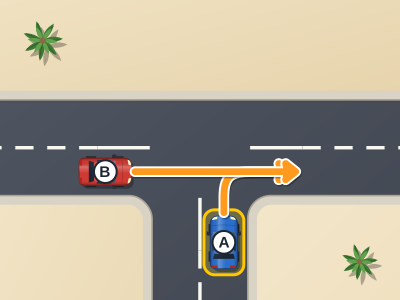
- AYou have priority because you arrived at the junction first
- BThe vehicle to your right on the main road has priority, but not the vehicle to your left
- CPriority is shared equally and both must slow down
- DTraffic already on the main road has priority over you
Answer and explanation in the bank
- Q20Safe driving
What does an Anti-lock Braking System (ABS) do when you brake sharply?
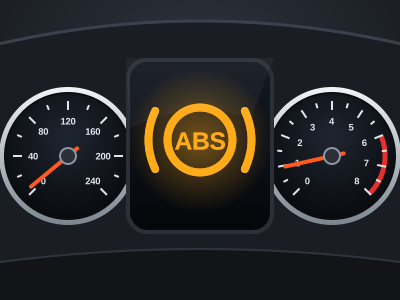
- AIt automatically increases engine braking to stop the car faster
- BIt applies the handbrake on the rear wheels only
- CIt reduces brake pressure to protect the brake pads from overheating
- DIt rapidly pulses brake pressure to prevent the wheels from locking, allowing you to steer while braking
Answer and explanation in the bank
Every answer above, with the rule it comes from, plus the full 20-question timed test.
Get the Kuwait Driving Theory Online Practice Bank - KWD 3.5What this test covers
Topics include road signs, traffic signals, right of way, roundabouts, speed limits, seat belts, fines and penalties, and the safe-driving rules specific to your vehicle category. Full question-by-question feedback with explanations is shown immediately after you finish the test above.
Frequently asked questions
How many questions is the Al Farwaniyah General Traffic Department motorcycle theory test?
The official General Traffic Department motorcycle theory test in Al Farwaniyah has 20 questions and you need 18 correct (90%) to pass. This practice test has 20 questions.
Is this the real exam?
These are practice questions to help you revise, written to the published rules and to what candidates report from the real test. They are not the official Kuwait exam and the real question bank, format, fees and pass mark are set by the General Traffic Department (Ministry of Interior), and can change. Always confirm the current requirements with your driving school or the traffic department.
Is this practice test free?
The first 10 questions are free, with no signup, and each shows the answer and the reason. The full 20-question test, timed, is in the Kuwait Driving Theory Online Practice Bank (KWD 3.5, one payment), with every question in the bank.
What does the Al Farwaniyah motorcycle theory test cover?
Road signs, traffic signals, right of way, roundabouts, speed limits, seat belts, penalties and safe-driving rules, plus the handling and safety topics specific to your vehicle.