

Al Jahra General Traffic Department Light vehicle
Timed mock exam· Full mock examsAl Jahra General Traffic Department - Kuwait Theory Mock Test 3
Third full mock exam: another fresh set of 20 questions drawn from all topics. A great way to check your readiness before the real test.
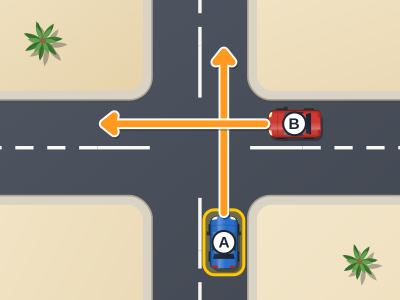
You arrive at an unmarked crossroads at the same time as a vehicle approaching from your right. Who has priority?
The other 10 questions in this test
Read them all. The answer and the reason for each, and the timed 20-question run, are in the Kuwait Driving Theory Online Practice Bank.
- Q11Road signs and signals
What does a flashing amber traffic light mean?
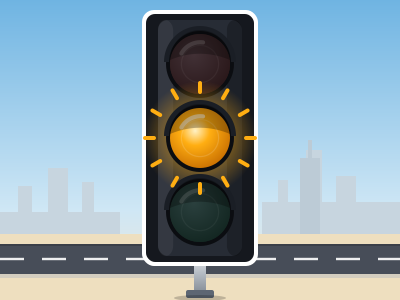
- AProceed with caution; treat the junction with extra care
- BStop and wait for a full green signal before proceeding
- CThe traffic lights are broken; turn around
- DPedestrian crossing is active; stop for pedestrians only
Answer and explanation in the bank
- Q12Traffic rules
Exits on Kuwait motorways and expressways are generally found on which side?
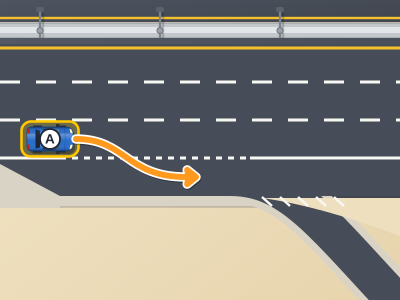
- AThe left side
- BAlternating left and right depending on the road
- CThe right side
- DExits are always found at the centre of a dual carriageway
Answer and explanation in the bank
- Q13Right of way
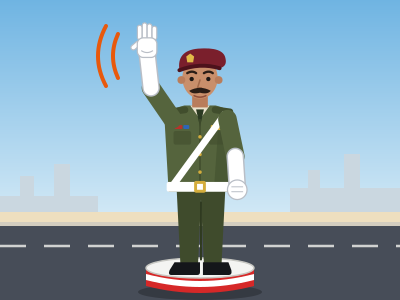
At a junction controlled by a police officer directing traffic, whose instructions must you follow?
- AThe traffic signals take priority over the police officer
- BYou may choose to follow either the signal or the officer's instruction
- CThe police officer's instructions override all traffic signals and signs
- DRoad markings take priority when a police officer is present
Answer and explanation in the bank
- Q14Safe driving
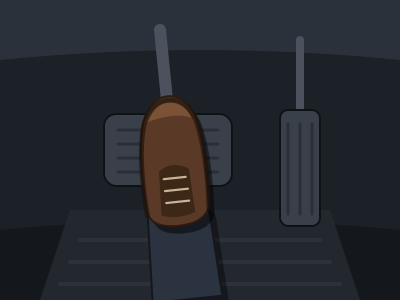
You are travelling at 120 km/h on Sheikh Jaber Causeway and the driver ahead brakes suddenly. Assuming a 1-second reaction time, approximately how far do you travel before your brakes even start to slow the car?
- AAbout 10 metres
- BAbout 5 metres
- CAbout 33 metres
- DAbout 60 metres
Answer and explanation in the bank
- Q15Penalties and fines
What penalty can a driver face in Kuwait if convicted of dangerous driving that results in a fatality?
- AOnly a traffic fine, as vehicle accidents are civil matters only
- BMandatory driving lessons and a temporary licence suspension
- CNo criminal penalty if the driver cooperates with police
- DCriminal prosecution under the Penal Code, which can result in imprisonment, in addition to traffic fines and civil compensation
Answer and explanation in the bank
- Q16Road signs and signals
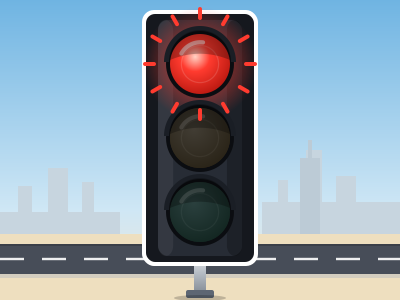
What is the correct action when you see a flashing red traffic light?
- ASlow to 20 km/h and proceed without stopping
- BStop and wait until the light changes to green
- CSound your horn and proceed with caution
- DStop completely, then proceed when safe, treating it like a Stop sign
Answer and explanation in the bank
- Q17Traffic rules
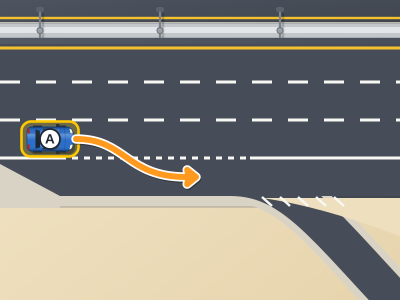
You missed your exit on a Kuwait expressway. What is the correct action?
- AReverse along the hard shoulder to reach your exit
- BContinue to the next exit and double back using authorised routes
- CPerform a U-turn on the expressway
- DStop on the carriageway and wait for a break in traffic
Answer and explanation in the bank
- Q18Right of way
You are driving on a highway and wish to leave via an exit ramp. When should you begin slowing down?
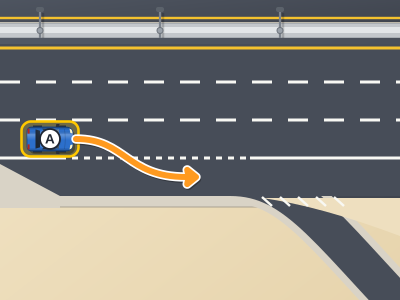
- AAfter moving into the exit lane, use the deceleration lane to slow to an appropriate speed
- BBrake sharply on the main highway just before the exit
- CBegin braking on the main highway so you are at exit speed before the deceleration lane starts
- DThere is no need to slow down; match speed with the traffic at the bottom of the ramp
Answer and explanation in the bank
- Q19Safe driving
Before overtaking a vehicle on a two-lane highway in Kuwait, what gap ahead of the vehicle in front must be clear before you commit to the manoeuvre?
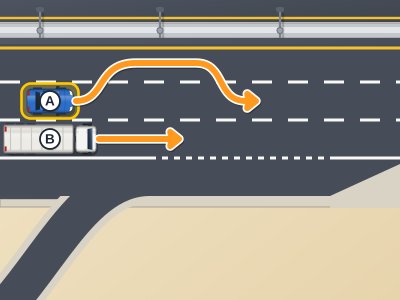
- AAny gap where you can pull alongside the vehicle
- BA gap large enough to complete the whole overtake and return to the lane safely, with a margin for any oncoming traffic
- CA gap of at least 50 metres regardless of speed
- DOvertaking is only permitted if you can complete it within 5 seconds
Answer and explanation in the bank
- Q20Penalties and fines
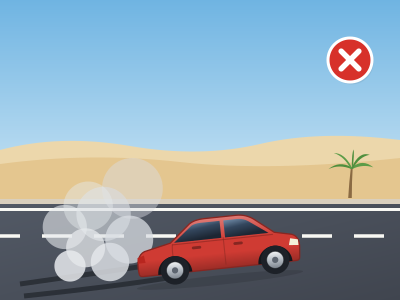
How does Kuwait classify 'drifting' (performing intentional skids or slides) on a public road?
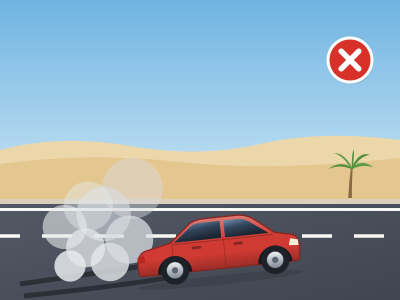
- AAs a serious criminal offence of dangerous driving, not merely a traffic violation, carrying possible imprisonment
- BAs a minor traffic violation punishable only by a small fine
- CAs a legal activity if done on a quiet road after midnight
- DAs a civil matter only, with no criminal consequences
Answer and explanation in the bank
Every answer above, with the rule it comes from, plus the full 20-question timed test.
Get the Kuwait Driving Theory Online Practice Bank - KWD 3.5What this test covers
Topics include road signs, traffic signals, right of way, roundabouts, speed limits, seat belts, fines and penalties, and the safe-driving rules specific to your vehicle category. Full question-by-question feedback with explanations is shown immediately after you finish the test above.
Frequently asked questions
How many questions is the Al Jahra General Traffic Department light vehicle theory test?
The official General Traffic Department light vehicle theory test in Al Jahra has 20 questions and you need 18 correct (90%) to pass. This practice test has 20 questions.
Is this the real exam?
These are practice questions to help you revise, written to the published rules and to what candidates report from the real test. They are not the official Kuwait exam and the real question bank, format, fees and pass mark are set by the General Traffic Department (Ministry of Interior), and can change. Always confirm the current requirements with your driving school or the traffic department.
Is this practice test free?
The first 10 questions are free, with no signup, and each shows the answer and the reason. The full 20-question test, timed, is in the Kuwait Driving Theory Online Practice Bank (KWD 3.5, one payment), with every question in the bank.
What does the Al Jahra light vehicle theory test cover?
Road signs, traffic signals, right of way, roundabouts, speed limits, seat belts, penalties and safe-driving rules, plus the handling and safety topics specific to your vehicle.