

Mubarak Al-Kabeer General Traffic Department Light vehicle
Timed mock exam· Full mock examsMubarak Al-Kabeer General Traffic Department - Kuwait Theory Mock Test 1
A full 20-question timed practice exam in the format reported for the Kuwait light-vehicle theory test run by the General Traffic Department. Questions span road signs, traffic rules, right of way, safety and penalties. Aim for 18/20 (90%) to pass.
You are approaching a Stop sign but the road appears completely clear in both directions. What must you do?

The other 10 questions in this test
Read them all. The answer and the reason for each, and the timed 20-question run, are in the Kuwait Driving Theory Online Practice Bank.
- Q11Road signs and signals
When does a No Overtaking restriction end if no cancellation sign is posted?
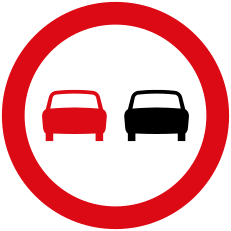
- AAt the next junction, Give Way sign, or Stop sign
- BAfter you have driven 500 metres
- CWhen the road becomes wider
- DIt never ends; you must overtake nowhere on that road
Answer and explanation in the bank
- Q12Road signs and signals
You see a No Parking sign. Which of these actions is still permitted?

- ABriefly stopping to drop off a passenger, then driving away immediately
- BLeaving your car for five minutes to collect a takeaway order
- CParking for up to 30 minutes with hazard lights on
- DParking is completely forbidden; even stopping briefly is illegal here
Answer and explanation in the bank
- Q13Traffic rules
How far in advance should you signal before turning or changing lanes in Kuwait?
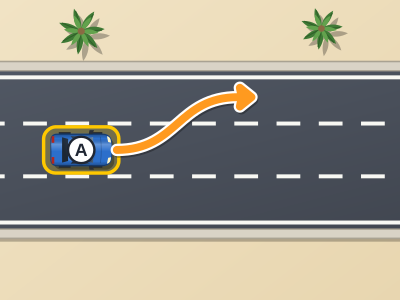
- AEarly enough to give other road users sufficient warning, typically at least 30 metres before the manoeuvre
- BExactly at the point of turning
- COnly after you begin to move into the new lane
- DOnly if another vehicle is directly behind you
Answer and explanation in the bank
- Q14Right of way
You are on a narrow road and an oncoming vehicle is approaching. Neither of you can pass. Who should give way?
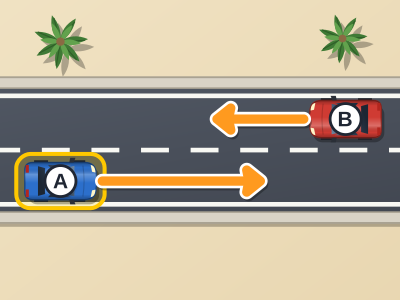
- AThe driver going uphill always has priority
- BThe larger vehicle always has priority on narrow roads
- CThe driver travelling in the direction of heavier traffic flow has priority
- DThe driver who has a passing place or wider section closer to them should reverse or pull in
Answer and explanation in the bank
- Q15Safe driving
How should a 6-year-old child travel in a private car in Kuwait?
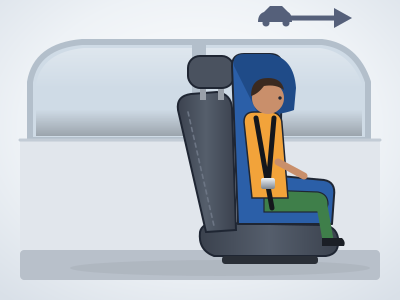
- AIn the front passenger seat, with the adult belt held away from the neck
- BUnrestrained in the back, as long as an adult sits next to the child
- COn an adult's lap in the back seat
- DIn the back, in a child seat suited to the child's size, because children under 10 must not sit in the front
Answer and explanation in the bank
- Q16Penalties and fines
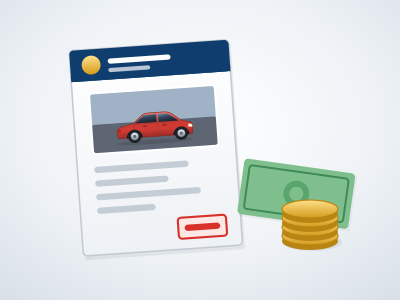
Under the 2025 amendments to Kuwait's Traffic Law, what settlement fine applies to speeding?
- AA flat KD 20, whatever the speed
- BBetween KD 70 and KD 150, depending on how far over the limit the driver was
- CA verbal warning from a traffic officer only
- DNo penalty unless an accident results
Answer and explanation in the bank
- Q17Road signs and signals
A pedestrian is waiting at this crossing. What must you do?
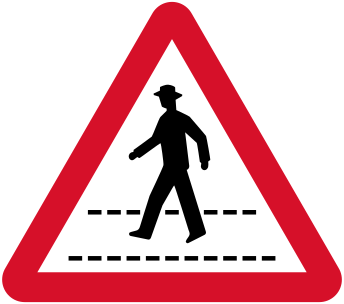
- AStop and give way to the pedestrian before proceeding
- BSound your horn to warn the pedestrian and continue
- CFlash your lights and slow to 30 km/h
- DContinue if the pedestrian has not stepped onto the crossing yet
Answer and explanation in the bank
- Q18Traffic rules
You are leaving a parking space on the right side of a road. In which order should you act?
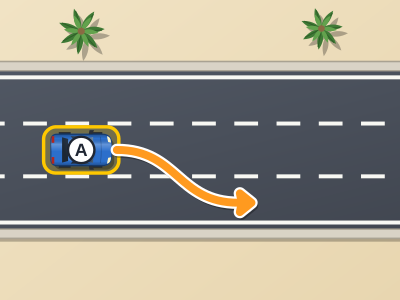
- ACheck mirrors, signal left, check blind spot, then pull out when safe
- BSignal right, check mirrors, then pull out
- CPull out first, then signal to alert others
- DNo signal is required when leaving a parking spot
Answer and explanation in the bank
- Q19Right of way
You are on a one-way street and want to turn left at the junction ahead. Which lane should you be in?
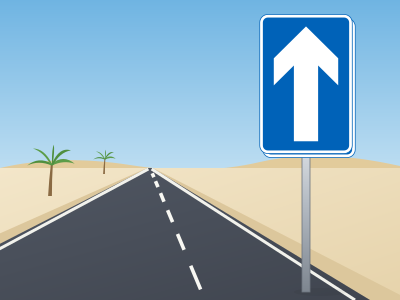
- AAny lane, since it is a one-way street and all lanes are equivalent
- BThe rightmost lane, to allow others to pass on the left
- CThe leftmost lane, as you are turning left
- DThe centre lane, for maximum visibility
Answer and explanation in the bank
- Q20Safe driving
Where is the safest seating position for a young child who still requires a child seat?
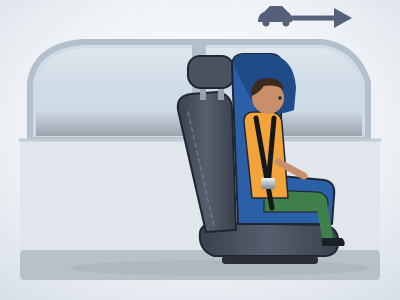
- AIn the front passenger seat facing forward
- BIn the front passenger seat facing rearward with the airbag enabled
- COn an adult's lap in the rear seat
- DIn the rear seat with the child seat correctly installed according to the seat manufacturer's instructions
Answer and explanation in the bank
Every answer above, with the rule it comes from, plus the full 20-question timed test.
Get the Kuwait Driving Theory Online Practice Bank - KWD 3.5What this test covers
Topics include road signs, traffic signals, right of way, roundabouts, speed limits, seat belts, fines and penalties, and the safe-driving rules specific to your vehicle category. Full question-by-question feedback with explanations is shown immediately after you finish the test above.
Frequently asked questions
How many questions is the Mubarak Al-Kabeer General Traffic Department light vehicle theory test?
The official General Traffic Department light vehicle theory test in Mubarak Al-Kabeer has 20 questions and you need 18 correct (90%) to pass. This practice test has 20 questions.
Is this the real exam?
These are practice questions to help you revise, written to the published rules and to what candidates report from the real test. They are not the official Kuwait exam and the real question bank, format, fees and pass mark are set by the General Traffic Department (Ministry of Interior), and can change. Always confirm the current requirements with your driving school or the traffic department.
Is this practice test free?
The first 10 questions are free, with no signup, and each shows the answer and the reason. The full 20-question test, timed, is in the Kuwait Driving Theory Online Practice Bank (KWD 3.5, one payment), with every question in the bank.
What does the Mubarak Al-Kabeer light vehicle theory test cover?
Road signs, traffic signals, right of way, roundabouts, speed limits, seat belts, penalties and safe-driving rules, plus the handling and safety topics specific to your vehicle.