

Mubarak Al-Kabeer General Traffic Department Light vehicle
Timed mock exam· Full mock examsMubarak Al-Kabeer General Traffic Department - Kuwait Theory Mock Test 2
Second full mock exam covering all Kuwait theory topics. A different question selection to Mock Test 1 so you can keep practising without repetition.
On a three-lane highway in Kuwait, when may a driver legally remain in the middle lane for an extended period?
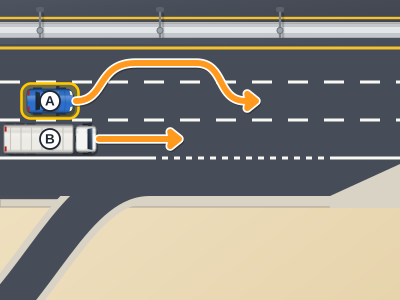
The other 10 questions in this test
Read them all. The answer and the reason for each, and the timed 20-question run, are in the Kuwait Driving Theory Online Practice Bank.
- Q11Road signs and signals
You are entering a roundabout in Kuwait. Traffic is already circulating inside. Who has priority?
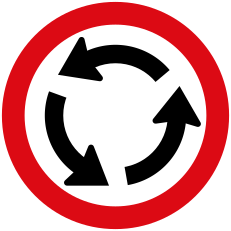
- AVehicles entering the roundabout have priority
- BThe vehicle on the right always has priority at a roundabout
- CPriority depends on which lane you are in
- DVehicles already on the roundabout have priority
Answer and explanation in the bank
- Q12Traffic rules
Your vehicle's indicator is not working. What must you do in Kuwait?
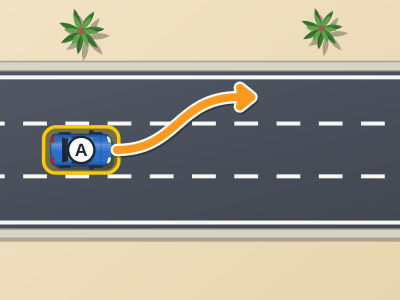
- AUse the horn instead of the indicator
- BNot drive the vehicle until the indicator is repaired, or use an approved hand signal where permitted
- CContinue driving normally as long as you drive slowly
- DOnly drive on roads with no other traffic
Answer and explanation in the bank
- Q13Right of way
Two vehicles approach an unmarked Y-junction from different branches. Vehicle A comes from the left branch and Vehicle B from the right branch. Both want to take the main road ahead. Who gives way?
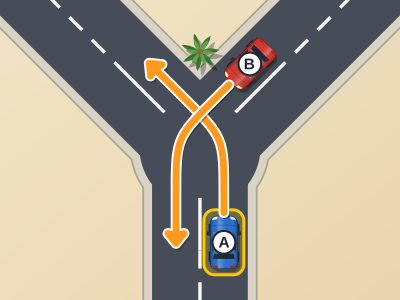
- AVehicle A gives way because Vehicle B is on its right
- BVehicle B gives way because Vehicle A is on a wider road
- CBoth vehicles have equal priority and should flash their lights to negotiate
- DVehicle B gives way because it is on the right branch
Answer and explanation in the bank
- Q14Safe driving
In a crash, at what speed does the driver-side front airbag typically begin to deploy?
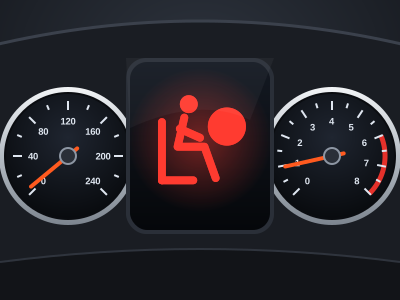
- AAny impact above 5 km/h
- BOnly in rollovers, not frontal impacts
- CAbove 80 km/h only
- DUsually in a severe frontal impact equivalent to hitting a solid wall at approximately 20-30 km/h
Answer and explanation in the bank
- Q15Penalties and fines
Which of the following is true about speed tolerance margins on Kuwait's radar cameras?
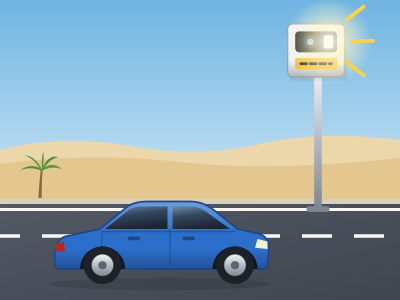
- ADrivers may legally travel 20 km/h above any posted speed limit
- BRadar cameras only activate when a vehicle exceeds the limit by more than 30 km/h
- CThere is a legally guaranteed 10 km/h tolerance on all roads
- DA small calibration tolerance may exist technically, but drivers should never rely on any margin above the posted limit as a right
Answer and explanation in the bank
- Q16Road signs and signals
Which signal must you give when leaving a roundabout in Kuwait?
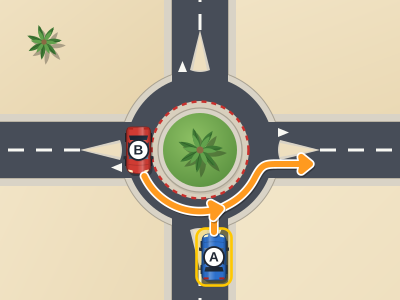
- ALeft indicator
- BRight indicator
- CNo signal is required at a roundabout
- DHazard lights to warn following traffic
Answer and explanation in the bank
- Q17Traffic rules
When must you switch on your vehicle's headlights in Kuwait?
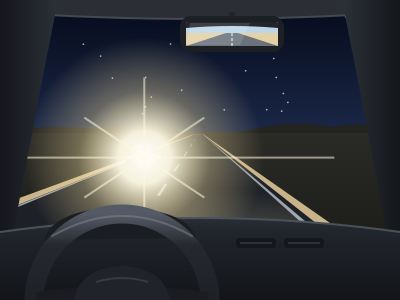
- AOnly between midnight and 5 am
- BFrom sunset to sunrise and whenever visibility is poor, including heavy rain, fog, or sandstorms
- COnly when using a motorway
- DOnly when other vehicles have their lights on
Answer and explanation in the bank
- Q18Right of way
A cyclist is travelling ahead of you in the same lane. You want to turn right at the junction ahead. What must you do?
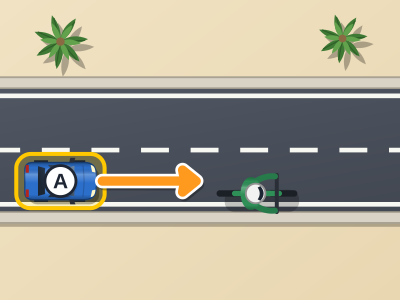
- AGive way to the cyclist before turning, since they have priority over turning traffic
- BSound your horn and turn right; the cyclist must move to the left
- COvertake the cyclist quickly before the junction and then turn
- DFlash your headlights to signal your intention and turn behind the cyclist
Answer and explanation in the bank
- Q19Safe driving
What is the recommended minimum distance between the driver's chest and the centre of the steering wheel in a vehicle equipped with a front airbag?
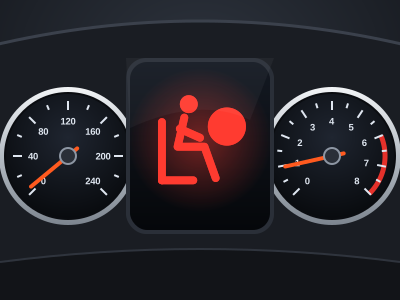
- AAt least 5 centimetres
- BNo minimum distance; airbags are safe at any distance
- CAt least 60 centimetres
- DAt least 25 centimetres (about 10 inches)
Answer and explanation in the bank
- Q20Penalties and fines
What is the penalty for running a red light in Kuwait under the 2025 amendments to the Traffic Law?
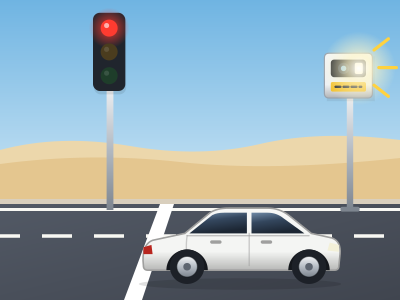
- AA KD 150 settlement fine; on the court route it is a felony carrying up to 3 years in prison and a fine of up to KD 1,000
- BA verbal warning for a first offence
- CNo penalty if no other vehicle was in the junction
- DOnly penalised at junctions with a camera present
Answer and explanation in the bank
Every answer above, with the rule it comes from, plus the full 20-question timed test.
Get the Kuwait Driving Theory Online Practice Bank - KWD 3.5What this test covers
Topics include road signs, traffic signals, right of way, roundabouts, speed limits, seat belts, fines and penalties, and the safe-driving rules specific to your vehicle category. Full question-by-question feedback with explanations is shown immediately after you finish the test above.
Frequently asked questions
How many questions is the Mubarak Al-Kabeer General Traffic Department light vehicle theory test?
The official General Traffic Department light vehicle theory test in Mubarak Al-Kabeer has 20 questions and you need 18 correct (90%) to pass. This practice test has 20 questions.
Is this the real exam?
These are practice questions to help you revise, written to the published rules and to what candidates report from the real test. They are not the official Kuwait exam and the real question bank, format, fees and pass mark are set by the General Traffic Department (Ministry of Interior), and can change. Always confirm the current requirements with your driving school or the traffic department.
Is this practice test free?
The first 10 questions are free, with no signup, and each shows the answer and the reason. The full 20-question test, timed, is in the Kuwait Driving Theory Online Practice Bank (KWD 3.5, one payment), with every question in the bank.
What does the Mubarak Al-Kabeer light vehicle theory test cover?
Road signs, traffic signals, right of way, roundabouts, speed limits, seat belts, penalties and safe-driving rules, plus the handling and safety topics specific to your vehicle.