

Mubarak Al-Kabeer General Traffic Department Light vehicle
Practice mode· Road rulesMubarak Al-Kabeer General Traffic Department - Kuwait Road Rules Test 1
First 20 questions on Kuwait traffic rules: lane discipline, roundabouts, seat belts, mobile phone use, speed limits and more. Essential knowledge for any driver in Kuwait.
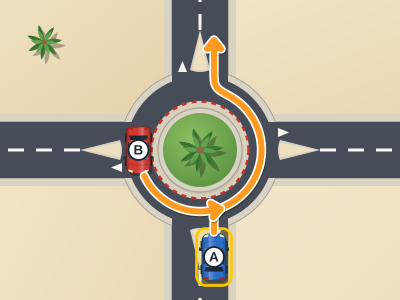
In which direction do vehicles travel around a roundabout in Kuwait?
The other 10 questions in this test
Read them all. The answer and the reason for each, and the timed 20-question run, are in the Kuwait Driving Theory Online Practice Bank.
- Q11Traffic rules
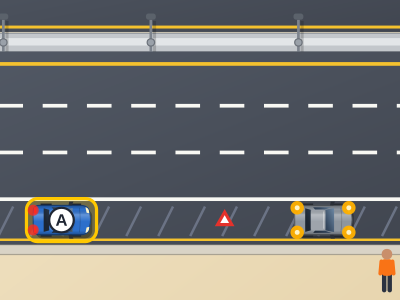
For what purpose is the hard shoulder on a Kuwait motorway intended?
- AOvertaking slower vehicles
- BDriving on when lanes are congested
- CEmergency stopping only, for broken-down vehicles or genuine emergencies
- DParking during long journeys for rest breaks
Answer and explanation in the bank
- Q12Traffic rules
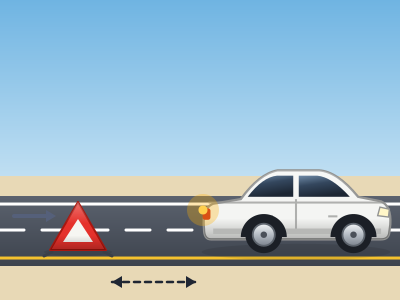
Your vehicle breaks down and you are forced to stop on the hard shoulder of a Kuwait motorway. What should you do?
- AStand next to the vehicle on the traffic side to wave down passing drivers for help
- BAttempt repairs in the right-hand lane where you have more room
- CSwitch on hazard lights, place warning triangles behind the vehicle at a safe distance, and stay behind the barrier away from the carriageway while calling for assistance
- DLeave the vehicle and walk along the hard shoulder to the nearest exit
Answer and explanation in the bank
- Q13Traffic rules
A driver uses the hard shoulder on a Kuwait motorway to bypass a traffic queue, then re-joins the carriageway further ahead. Which of the following is correct?
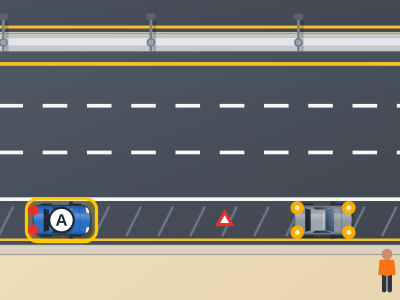
- AThis is illegal and dangerous; the hard shoulder may contain debris, broken-down vehicles, or emergency workers
- BIt is acceptable if the driver does not exceed 40 km/h on the shoulder
- CIt is permitted during peak hours when congestion is severe
- DIt is legal if the driver switches on hazard lights while on the shoulder
Answer and explanation in the bank
- Q14Traffic rules
What should you do when driving in Kuwait and a dust storm or sandstorm begins to reduce visibility?
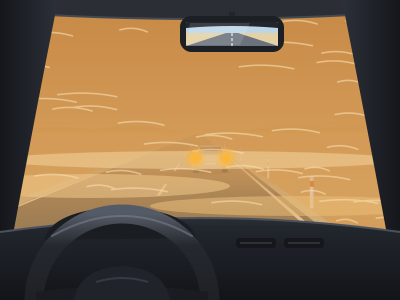
- AIncrease speed to exit the storm area as quickly as possible
- BSwitch on high beam headlights to see further through the dust
- CReduce speed, switch on dipped headlights, increase following distance, and consider pulling safely off the road if visibility becomes dangerously low
- DContinue at normal speed with no changes
Answer and explanation in the bank
- Q15Traffic rules
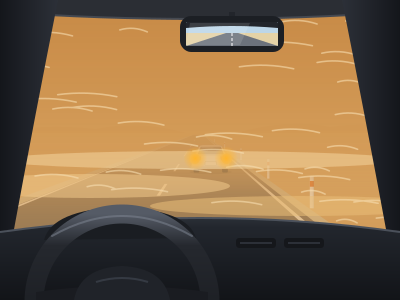
You have pulled off the road to wait out a sandstorm in Kuwait. Your vehicle is stationary. What lights should be on?
- AHeadlights on full beam to maximise visibility
- BNo lights; your vehicle is off the road and lights are not necessary
- COnly the interior courtesy light
- DHazard warning lights, so that other drivers can see your stationary vehicle
Answer and explanation in the bank
- Q16Traffic rules
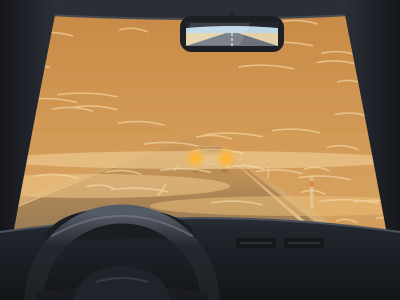
After a sandstorm passes in Kuwait, a layer of sand covers the road surface. How should you adjust your driving?
- AResume normal speed immediately as the storm has cleared
- BDrive faster to blow the sand off the road surface
- CSand on asphalt has no effect on vehicle handling
- DTreat the sand layer like a wet or loose surface: reduce speed, brake gently and earlier than usual, and avoid sharp steering inputs
Answer and explanation in the bank
- Q17Traffic rules
During extremely hot weather in Kuwait, which vehicle maintenance check is most critical before a long journey?
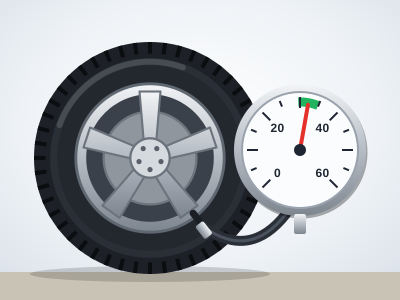
- ATyre pressure and tread depth, as heat causes pressure to rise and under-inflated or worn tyres are at high risk of blowout
- BWindscreen wiper condition, as wipers wear faster in heat
- CRadio and air conditioning settings
- DSeat adjustment, as seats expand in heat
Answer and explanation in the bank
- Q18Traffic rules
A tyre blowout occurs at motorway speed in Kuwait. Which sequence of actions is correct?
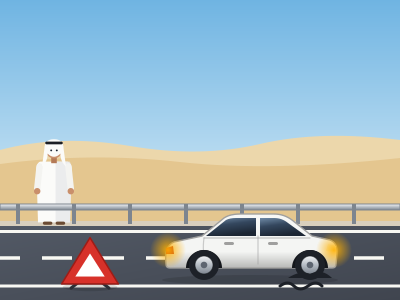
- ABrake hard immediately to stop as quickly as possible
- BAccelerate briefly to keep the vehicle stable, then brake
- CTurn the steering wheel sharply toward the blowout side to compensate
- DHold the wheel firmly, ease off the accelerator gradually, steer gently to maintain direction, allow the vehicle to slow naturally, and then carefully move to the hard shoulder
Answer and explanation in the bank
- Q19Traffic rules
You are approaching a green traffic light in Kuwait when an ambulance with its siren and lights active appears behind you. What must you do?
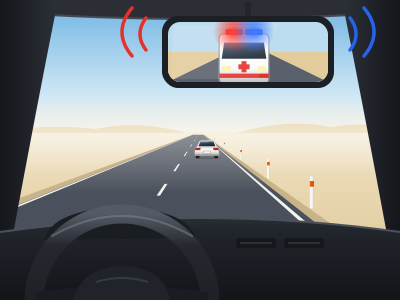
- AStop immediately wherever you are to let the ambulance pass
- BIgnore the ambulance and continue normally; traffic lights take priority
- CSpeed up to clear the intersection faster and then stop
- DMove to the right to create a clear path, even if that means pulling through the intersection carefully
Answer and explanation in the bank
- Q20Traffic rules
In Kuwait, what is the legal position on driving while fatigued or drowsy on a highway?
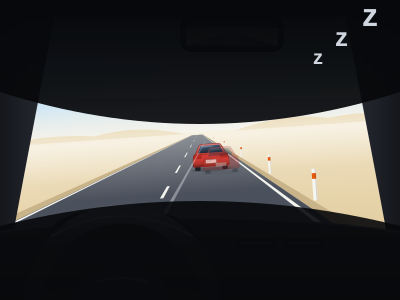
- ADrowsy driving is treated as a serious hazard; drivers have a duty to stop and rest when fatigued and may be held liable for any collision caused while driving in an impaired state
- BFatigue is a medical condition and drivers cannot be held legally responsible for accidents caused by it
- CDrowsy driving is only regulated between midnight and 4 am
- DOpening a window and turning up the radio is a legally recognised solution for drowsy driving
Answer and explanation in the bank
Every answer above, with the rule it comes from, plus the full 20-question timed test.
Get the Kuwait Driving Theory Online Practice Bank - KWD 3.5What this test covers
Topics include road signs, traffic signals, right of way, roundabouts, speed limits, seat belts, fines and penalties, and the safe-driving rules specific to your vehicle category. Full question-by-question feedback with explanations is shown immediately after you finish the test above.
Frequently asked questions
How many questions is the Mubarak Al-Kabeer General Traffic Department light vehicle theory test?
The official General Traffic Department light vehicle theory test in Mubarak Al-Kabeer has 20 questions and you need 18 correct (90%) to pass. This practice test has 20 questions.
Is this the real exam?
These are practice questions to help you revise, written to the published rules and to what candidates report from the real test. They are not the official Kuwait exam and the real question bank, format, fees and pass mark are set by the General Traffic Department (Ministry of Interior), and can change. Always confirm the current requirements with your driving school or the traffic department.
Is this practice test free?
The first 10 questions are free, with no signup, and each shows the answer and the reason. The full 20-question test, timed, is in the Kuwait Driving Theory Online Practice Bank (KWD 3.5, one payment), with every question in the bank.
What does the Mubarak Al-Kabeer light vehicle theory test cover?
Road signs, traffic signals, right of way, roundabouts, speed limits, seat belts, penalties and safe-driving rules, plus the handling and safety topics specific to your vehicle.