

Mubarak Al-Kabeer General Traffic Department Motorcycle
Practice mode· Motorcycle skillsMubarak Al-Kabeer General Traffic Department - Kuwait Motorcycle Safety Practice Test
Rider safety essentials: protective gear, visibility, safe following distances, hazard awareness, lane position and sharing the road with larger vehicles.
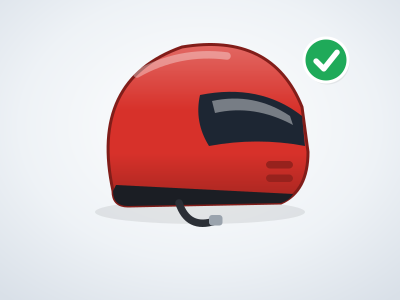
Before every ride in Kuwait, what must you do with your motorcycle helmet chin strap?
The other 10 questions in this test
Read them all. The answer and the reason for each, and the timed 20-question run, are in the Kuwait Driving Theory Online Practice Bank.
- Q11Motorcycle safety
What is the main safety advantage of a motorcycle fitted with Anti-lock Braking System (ABS) over one without it?
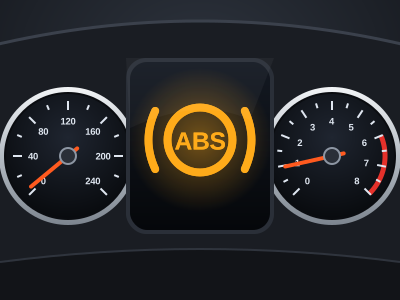
- AABS prevents wheels from locking during hard braking, maintaining steering control and generally reducing stopping distance on most surfaces
- BABS automatically applies the brakes for the rider when it detects a hazard ahead
- CABS eliminates the need to use both front and rear brakes simultaneously
- DABS improves cornering grip by automatically adjusting suspension stiffness
Answer and explanation in the bank
- Q12Motorcycle safety
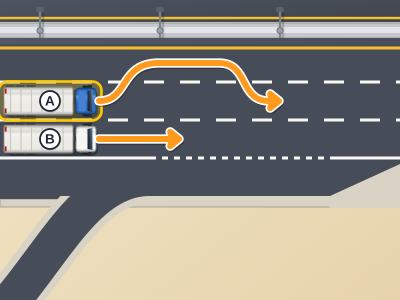
When overtaking a large lorry on a Kuwait highway, why should you complete the manoeuvre quickly rather than lingering alongside the lorry?
- AThe lorry will speed up to prevent you from completing the overtake
- BKuwait law prohibits spending more than five seconds alongside any lorry
- CYou are in the lorry driver's blind spot alongside the cab and cannot be seen; staying there increases the risk of being hit if the lorry changes lanes
- DLorry tyre turbulence creates suction that pulls a motorcycle off balance
Answer and explanation in the bank
- Q13Motorcycle safety
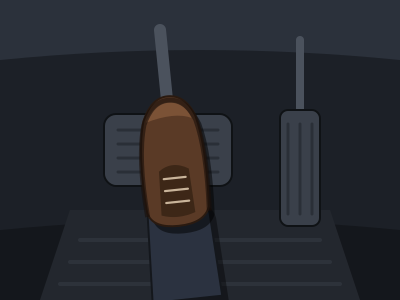
When you need to stop quickly in an emergency, what is the most important action to avoid?
- AApplying both brakes progressively and simultaneously
- BLooking ahead toward where you want to stop
- CLocking either wheel by applying a single brake too sharply
- DKeeping your eyes open and your upper body upright
Answer and explanation in the bank
- Q14Motorcycle safety
Why are painted road markings, manhole covers, and metal road plates particularly hazardous for motorcyclists when wet?
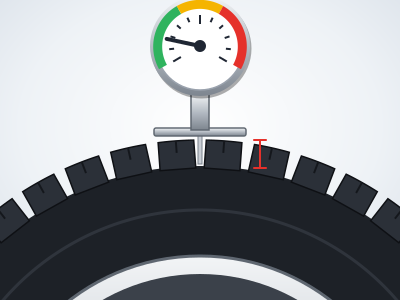
- AThey reflect headlights at an angle that temporarily blinds the rider
- BThey are raised above the road surface and cause the tyre to bounce
- CThese surfaces become extremely slippery when wet because they offer very low tyre friction compared with tarmac
- DThey are completely harmless at speeds above 50 km/h
Answer and explanation in the bank
- Q15Motorcycle safety
If a motorcycle's speed doubles from 60 km/h to 120 km/h, what happens to its stopping distance?
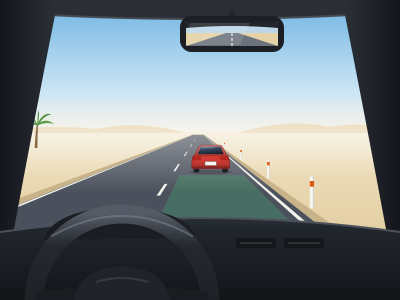
- AStopping distance doubles in direct proportion to the speed increase
- BStopping distance is unchanged because modern brakes automatically compensate
- CStopping distance approximately quadruples because kinetic energy increases with the square of speed
- DStopping distance increases by 50 percent
Answer and explanation in the bank
- Q16Motorcycle safety
How does alcohol affect a motorcyclist's ability to ride safely?
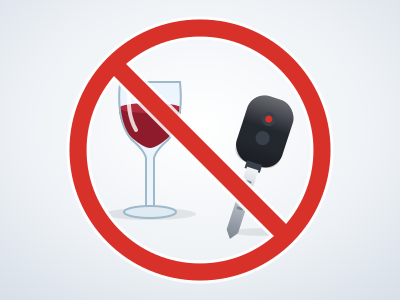
- AIt improves confidence and reduces fatigue, making short journeys safer
- BThe effect is identical to that on car drivers and therefore no more dangerous
- CSmall amounts of alcohol improve fine motor control of the clutch and throttle
- DIt impairs balance, slows reaction time, reduces hazard perception, and creates false confidence -- all of which are especially dangerous on a motorcycle
Answer and explanation in the bank
- Q17Motorcycle safety
Is it legal to use a handheld mobile phone while riding a motorcycle in Kuwait?
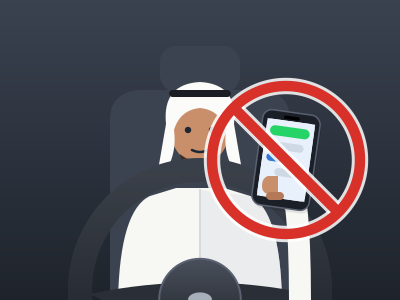
- AYes, but only when stationary at a red traffic light
- BYes, if the rider is travelling below 30 km/h
- CNo; handheld phone use while riding is prohibited and dangerous
- DOnly voice calls are permitted; reading or sending messages is prohibited
Answer and explanation in the bank
- Q18Motorcycle safety
How often should a motorcyclist check their mirrors during normal riding?
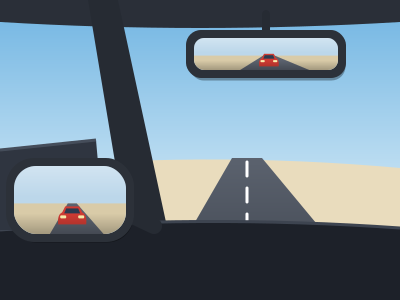
- AOnly when a vehicle appears to be following too closely
- BOnce every minute on highways; more often only in city traffic
- CEvery five to eight seconds, and always before changing speed or direction
- DMirrors are optional for motorcycles; shoulder checks alone are sufficient
Answer and explanation in the bank
- Q19Motorcycle safety
When merging onto a Kuwait expressway from an on-ramp, what is the correct motorcycle technique?
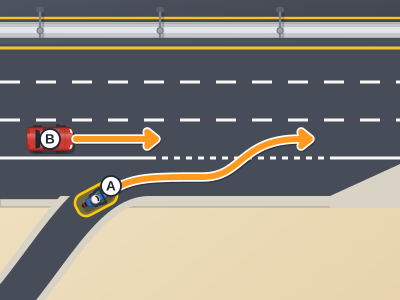
- AStop at the end of the ramp and wait for a very large gap before accelerating onto the expressway
- BAccelerate to match expressway traffic speed, check mirrors and right blind spot, then merge smoothly into an available gap -- do not stop on the ramp
- CMerge at the lowest speed possible to be cautious
- DFlash your headlight repeatedly to signal other drivers to move over and create space
Answer and explanation in the bank
- Q20Motorcycle safety
Why should a tinted visor not be worn when riding at night?
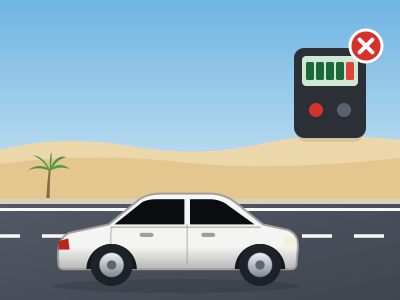
- ATinted visors reduce the amount of light reaching the rider's eyes, impairing the ability to see hazards in low-light conditions
- BTinted visors are only prohibited on highways, not on urban roads at night
- CTinted visors cause severe glare from oncoming headlights
- DTinted visors are heavier than clear visors and increase neck fatigue on night rides
Answer and explanation in the bank
Every answer above, with the rule it comes from, plus the full 20-question timed test.
Get the Kuwait Driving Theory Online Practice Bank - KWD 3.5What this test covers
Topics include road signs, traffic signals, right of way, roundabouts, speed limits, seat belts, fines and penalties, and the safe-driving rules specific to your vehicle category. Full question-by-question feedback with explanations is shown immediately after you finish the test above.
Frequently asked questions
How many questions is the Mubarak Al-Kabeer General Traffic Department motorcycle theory test?
The official General Traffic Department motorcycle theory test in Mubarak Al-Kabeer has 20 questions and you need 18 correct (90%) to pass. This practice test has 20 questions.
Is this the real exam?
These are practice questions to help you revise, written to the published rules and to what candidates report from the real test. They are not the official Kuwait exam and the real question bank, format, fees and pass mark are set by the General Traffic Department (Ministry of Interior), and can change. Always confirm the current requirements with your driving school or the traffic department.
Is this practice test free?
The first 10 questions are free, with no signup, and each shows the answer and the reason. The full 20-question test, timed, is in the Kuwait Driving Theory Online Practice Bank (KWD 3.5, one payment), with every question in the bank.
What does the Mubarak Al-Kabeer motorcycle theory test cover?
Road signs, traffic signals, right of way, roundabouts, speed limits, seat belts, penalties and safe-driving rules, plus the handling and safety topics specific to your vehicle.