

Mubarak Al-Kabeer General Traffic Department Truck & Bus
Practice mode· Heavy vehicle skillsMubarak Al-Kabeer General Traffic Department - Kuwait Heavy Vehicle Skills Test 1
First set of questions on truck and bus operation: braking distances, load stability, blind spots, turning space and vehicle checks. Master the skills unique to heavy vehicles.
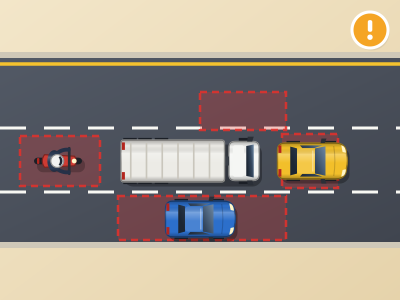
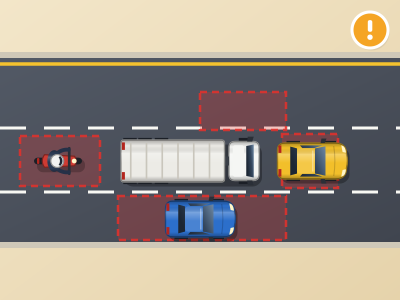
You are driving a left-hand-drive truck in Kuwait (right-hand traffic). On which side is your largest blind spot?
The other 12 questions in this test
Read them all. The answer and the reason for each, and the timed 22-question run, are in the Kuwait Driving Theory Online Practice Bank.
- Q11Heavy vehicle
On a long motorway grade with a descending gradient, a truck's speed has crept up to 20 km/h above the intended speed despite closed throttle. The driver applies the service brakes. They feel effective initially but then fade after 90 seconds of continuous application. What should the driver do next?
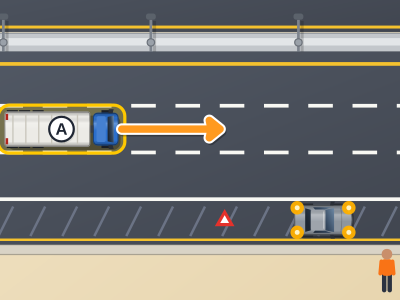
- AContinue to hold the brake pedal down as the brakes will recover when the vehicle slows
- BApply the trailer hand brake to compensate for the faded service brakes
- CSwitch off the engine to stop all driven movement
- DDownshift immediately to a lower gear to use engine braking and allow the service brakes to cool before using them again for short, firm applications only
Answer and explanation in the bank
- Q12Heavy vehicle
A driver notices the kingpin is visibly worn and has excessive lateral play before coupling the trailer. What is the correct action?
- ACouple the trailer but drive slowly on back roads only
- BDo not couple the trailer. Report the worn kingpin and arrange for it to be inspected and replaced before the vehicle is used
- CPack grease around the kingpin to fill the gap, then couple as normal
- DProceed normally; slight kingpin wear is acceptable on short journeys
Answer and explanation in the bank
- Q13Heavy vehicle
A heavy vehicle must cross a bridge with a signed weight limit of 30 tonnes. The tractor alone weighs 18 tonnes and the loaded trailer weighs 16 tonnes. What should the driver do?
- ADecouple the trailer and cross separately in two trips
- BCross at very low speed because the dynamic impact is reduced at slow speeds making the limit effectively higher
- CCross immediately because 34 tonnes is close enough to 30 tonnes to be acceptable
- DNot cross the bridge; find an alternative route because the combined weight of 34 tonnes exceeds the 30-tonne limit
Answer and explanation in the bank
- Q14Heavy vehicle
A driver completing a thorough pre-trip walk-around checks the air brake chambers. One chamber has a push-rod stroke that is visibly longer than the others when the brakes are applied. What does this indicate?
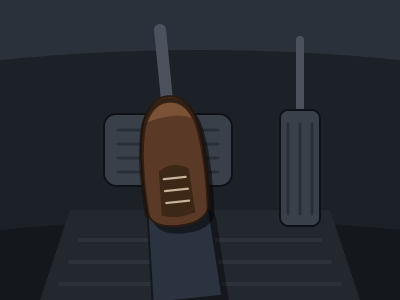
- AThat brake is working harder and is actually more effective than the others
- BA long push-rod stroke is normal on the drive axle
- CThe chamber needs to be replaced with a larger one
- DThat brake is out of adjustment and is less effective than properly adjusted brakes; it must be adjusted or the vehicle must not be driven
Answer and explanation in the bank
- Q15Heavy vehicle
You are about to drive a truck and suspect the gross vehicle weight (GVW) may exceed the legal limit. What should you do?
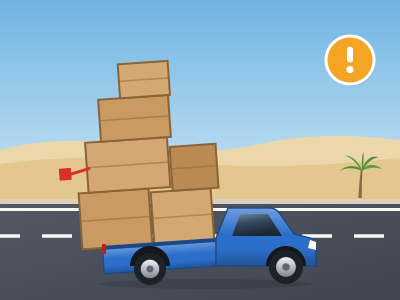
- ADrive slowly to the destination since the police rarely stop trucks
- BEstimate the weight visually and continue if it looks acceptable
- CTransfer all the excess load to the trailer to balance it
- DFind an authorised weighbridge and have the vehicle weighed before proceeding
Answer and explanation in the bank
- Q16Heavy vehicle
Which axle weight is most commonly exceeded when a truck is unevenly loaded from side to side?
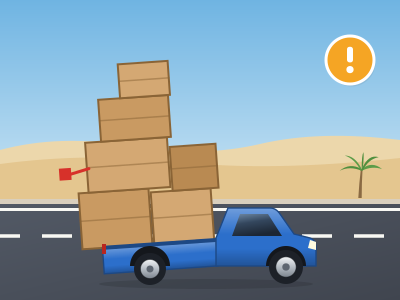
- AOnly the front axle is affected by side-to-side imbalance
- BSide-to-side imbalance has no effect on individual axle weights
- CThe axle on the side carrying more weight can exceed its individual wheel or axle rating
- DThe fifth-wheel axle always absorbs the excess
Answer and explanation in the bank
- Q17Heavy vehicle
A road sign shows a maximum height restriction of 4.0 m. Your truck and load have a combined height of 4.2 m. What must you do?
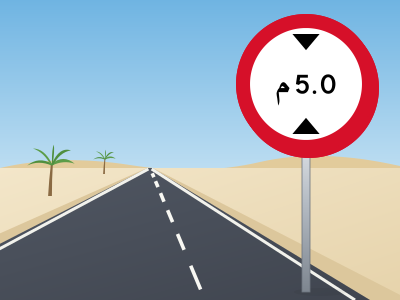
- AProceed slowly because the 20 cm difference is usually within tolerance
- BFind an alternative route that can accommodate your vehicle height
- CDeflate the tyres slightly to reduce the vehicle height and pass through
- DSound the horn and proceed, relying on the bridge to flex
Answer and explanation in the bank
- Q18Heavy vehicle
What does a bridge weight limit sign indicate for a heavy vehicle driver?
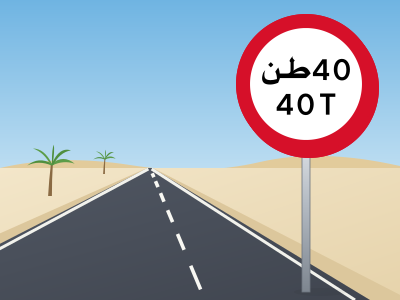
- AThe recommended speed to cross the bridge safely
- BThe maximum load that can be carried in the truck body only, not the trailer
- CThe maximum gross weight of any vehicle that may cross the bridge
- DAn advisory limit that applies only to vehicles over 10 axles
Answer and explanation in the bank
- Q19Heavy vehicle
Which combination of factors most significantly increases rollover risk for a heavy vehicle?
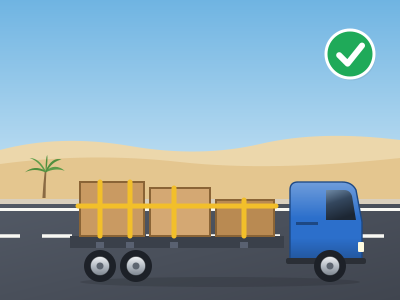
- ALow tyre pressure combined with a very low load
- BDriving on a straight road with a heavy load concentrated at the bottom
- CUsing engine braking on a flat road at low speed
- DHigh centre of gravity combined with cornering at speed, especially with a liquid or shifting load
Answer and explanation in the bank
- Q20Heavy vehicle
You approach a roundabout in a loaded tanker truck. Which action best reduces rollover risk?
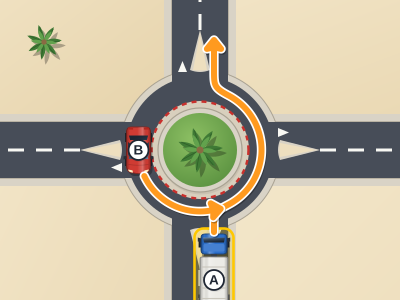
- AAccelerate through the roundabout to finish the turn quickly
- BSlow down significantly before entering the roundabout and maintain a low constant speed through it
- CBrake firmly in the middle of the roundabout if you feel the vehicle lean
- DKeep the steering wheel straight and let the vehicle naturally track through
Answer and explanation in the bank
- Q21Heavy vehicle
When coupling a semi-trailer to a tractor unit, after the kingpin has engaged with the fifth wheel, what is the next essential check?
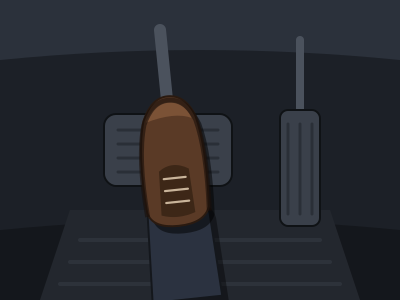
- ATug test: drive forward slightly against the trailer brakes to confirm the kingpin is fully locked in the fifth wheel
- BRelease the trailer handbrake and drive away immediately
- CCheck that the trailer number matches the delivery paperwork
- DInflate all trailer tyres to maximum pressure before moving
Answer and explanation in the bank
- Q22Heavy vehicle
What is the function of the fifth wheel on an articulated truck?
- AIt is an extra road wheel fitted to the rear of the trailer for added stability
- BIt is a spare wheel mounted under the tractor cab
- CIt is a wheel fitted to the front axle for tight turning
- DIt is the coupling plate on the tractor unit that accepts and locks the trailer kingpin, supporting the trailer's front weight
Answer and explanation in the bank
Every answer above, with the rule it comes from, plus the full 22-question timed test.
Get the Kuwait Driving Theory Online Practice Bank - KWD 3.5What this test covers
Topics include road signs, traffic signals, right of way, roundabouts, speed limits, seat belts, fines and penalties, and the safe-driving rules specific to your vehicle category. Full question-by-question feedback with explanations is shown immediately after you finish the test above.
Frequently asked questions
How many questions is the Mubarak Al-Kabeer General Traffic Department truck & bus theory test?
The official General Traffic Department truck & bus theory test in Mubarak Al-Kabeer has 20 questions and you need 18 correct (90%) to pass. This practice test has 22 questions.
Is this the real exam?
These are practice questions to help you revise, written to the published rules and to what candidates report from the real test. They are not the official Kuwait exam and the real question bank, format, fees and pass mark are set by the General Traffic Department (Ministry of Interior), and can change. Always confirm the current requirements with your driving school or the traffic department.
Is this practice test free?
The first 10 questions are free, with no signup, and each shows the answer and the reason. The full 22-question test, timed, is in the Kuwait Driving Theory Online Practice Bank (KWD 3.5, one payment), with every question in the bank.
What does the Mubarak Al-Kabeer truck & bus theory test cover?
Road signs, traffic signals, right of way, roundabouts, speed limits, seat belts, penalties and safe-driving rules, plus the handling and safety topics specific to your vehicle.