

Mubarak Al-Kabeer General Traffic Department Truck & Bus
Practice mode· Heavy vehicle skillsMubarak Al-Kabeer General Traffic Department - Kuwait Heavy Vehicle Skills Test 2
Second set of heavy-vehicle questions covering coupling, tunnels and bridges, passenger safety, hill starts and managing long or wide loads. Complete both tests for full coverage.
Before driving a loaded flatbed truck, you must secure the load using approved straps or chains. When is the load considered properly secured?

The other 12 questions in this test
Read them all. The answer and the reason for each, and the timed 22-question run, are in the Kuwait Driving Theory Online Practice Bank.
- Q11Heavy vehicle
Before uncoupling a semi-trailer from the tractor, which action must be completed first?
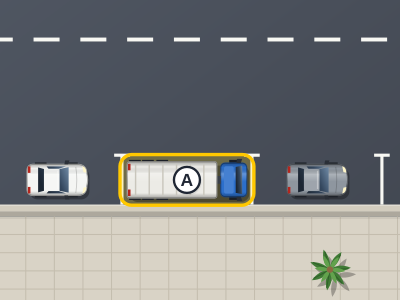
- ADisconnect all air and electrical lines first, then open the fifth wheel latch
- BApply the trailer parking brake and place wheel chocks to prevent the trailer moving when the tractor is removed
- CReverse the tractor sharply to release the kingpin
- DJack up the trailer landing legs fully before applying any brakes
Answer and explanation in the bank
- Q12Heavy vehicle
When reversing a large truck in a confined area such as a loading bay, a banksman (guide) is standing behind the vehicle. What is the driver's responsibility?
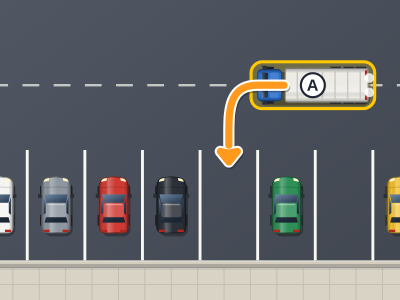
- AContinue reversing as long as the banksman was visible moments earlier
- BStop immediately if the banksman's signals stop or become unclear, and do not move until communication is re-established
- CIgnore the banksman and rely entirely on the reversing camera
- DIncrease reversing speed to reduce the time the banksman must stand behind the vehicle
Answer and explanation in the bank
- Q13Heavy vehicle
What is the agreed hand signal a banksman should use to instruct the driver to stop immediately?
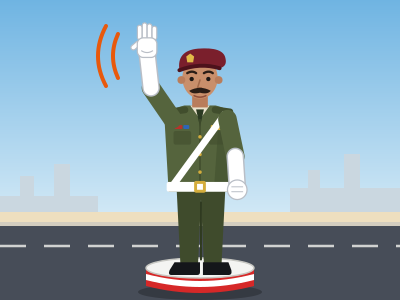
- ABoth arms raised with palms facing the driver
- BOne arm pointing to the left
- CWaving the arms rapidly from side to side at waist level
- DPointing both thumbs downward
Answer and explanation in the bank
- Q14Heavy vehicle
How does the speed limit for heavy trucks on Kuwaiti motorways (expressways) compare with the limit for passenger cars?
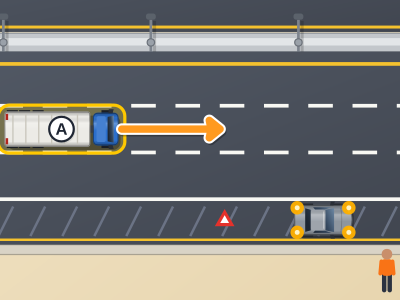
- AIt is always the same as the limit for passenger cars
- BThere is no limit on expressways provided the road is clear
- C50 km/h on all roads regardless of type
- DIt is generally lower than the car limit; follow the limit signed for heavy vehicles
Answer and explanation in the bank
- Q15Heavy vehicle
A heavy truck driver approaches a school zone with a posted limit of 40 km/h. Does this limit apply to the truck?
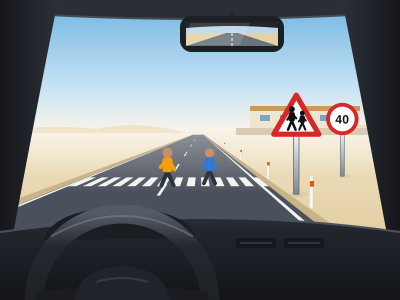
- ANo. Speed limits for schools apply only to cars and minibuses
- BYes. All speed limits apply to heavy vehicles, and the truck must not exceed 40 km/h in that zone
- COnly if school is in session at the time of passing
- DOnly if the truck is carrying passengers
Answer and explanation in the bank
- Q16Heavy vehicle
During a pre-trip inspection, you press the brake pedal and the air pressure gauge drops rapidly and does not recover. What does this indicate?
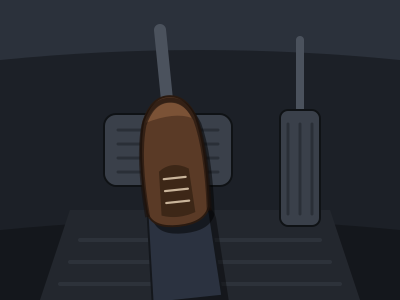
- ANormal behaviour; air pressure always drops when the brakes are applied
- BThe air dryer needs to be recharged with refrigerant
- CA significant air leak in the braking system that must be repaired before the vehicle is driven
- DThe spring brakes need to be manually reset
Answer and explanation in the bank
- Q17Heavy vehicle
What is the minimum air pressure a truck's air brake system should show before driving away? (Confirm the exact specification with the manufacturer and the General Traffic Department.)
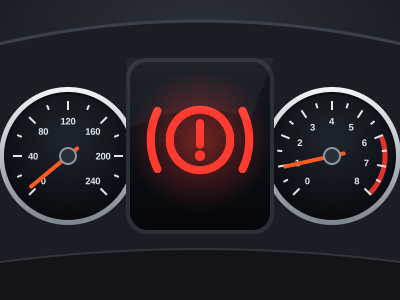
- AAny positive reading on the gauge is acceptable
- BExactly 2 bar; higher pressure causes brake fade
- CTypically at least 6 to 7 bar (approximately 90 psi) before the low-pressure warning light extinguishes and the vehicle is safe to move
- DThe gauge does not matter as long as the spring brakes release
Answer and explanation in the bank
- Q18Heavy vehicle
In hot Kuwaiti desert conditions, why should a truck driver check tyre pressures more frequently than in temperate climates?
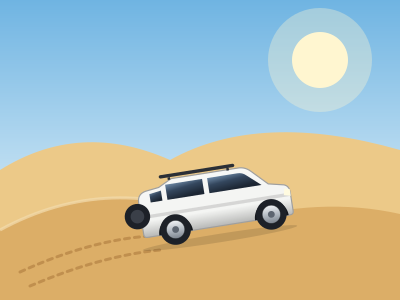
- ADesert sand enters the valve stems and reduces pressure over time
- BLow humidity dries out the rubber and makes it contract, reducing pressure
- CHot weather has no significant effect on tyre pressure
- DHeat causes the air inside tyres to expand, increasing pressure, and pavement heat can accelerate casing breakdown leading to blowout
Answer and explanation in the bank
- Q19Heavy vehicle
During a desert crossing in summer, a driver notices a rear tyre is visibly bulging. What is the correct action?
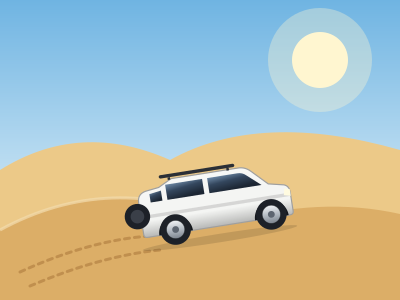
- ARelease air from the tyre to reduce pressure, then continue to the destination
- BStop safely off the road, do not deflate the tyre, and arrange for a tyre technician to inspect and change it
- CDrive slowly to the nearest workshop, as the tyre will hold for short distances
- DIncrease speed briefly so air movement cools the tyre
Answer and explanation in the bank
- Q20Heavy vehicle
A truck driver has been driving continuously for many hours. Which of the following is an early warning sign of fatigue that should prompt an immediate rest stop?
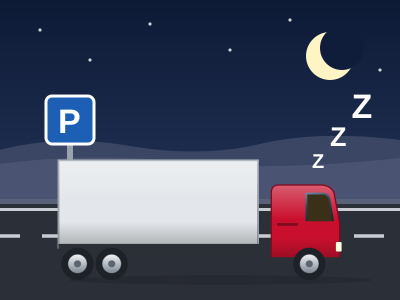
- AFeeling slightly hungry and thinking about the next meal
- BNoticing oncoming headlights on a dark road
- CDifficulty keeping eyes open, missing road signs, and micro-sleeps of a few seconds
- DReduced cabin temperature from the air conditioning
Answer and explanation in the bank
- Q21Heavy vehicle
What is the maximum number of continuous driving hours recommended before a heavy vehicle driver must take a rest break? (Confirm current Kuwait regulations with the General Traffic Department.)
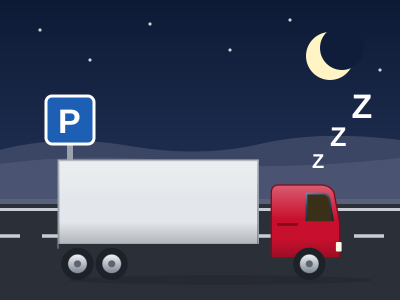
- AGenerally no more than 4 to 4.5 hours, after which a break of at least 30 to 45 minutes is required
- B10 hours continuous driving is permitted as long as the driver feels alert
- CThere is no legal limit; the driver decides when to rest
- DA 5-minute break every 3 hours is sufficient
Answer and explanation in the bank
- Q22Heavy vehicle
A bus driver must ensure passenger safety before moving away from a stop. Which action is most important?
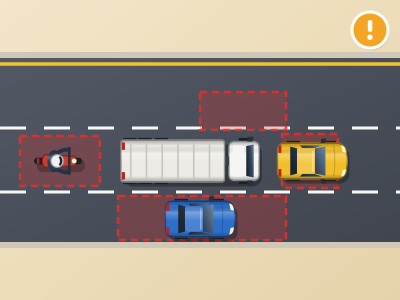
- ASound the horn twice to warn passengers to sit down
- BConfirm all doors are fully closed and no passenger is still boarding or alighting
- CCheck the right-side mirror only, as passengers always board from the right
- DMove off slowly and rely on passengers to hold the handrails
Answer and explanation in the bank
Every answer above, with the rule it comes from, plus the full 22-question timed test.
Get the Kuwait Driving Theory Online Practice Bank - KWD 3.5What this test covers
Topics include road signs, traffic signals, right of way, roundabouts, speed limits, seat belts, fines and penalties, and the safe-driving rules specific to your vehicle category. Full question-by-question feedback with explanations is shown immediately after you finish the test above.
Frequently asked questions
How many questions is the Mubarak Al-Kabeer General Traffic Department truck & bus theory test?
The official General Traffic Department truck & bus theory test in Mubarak Al-Kabeer has 20 questions and you need 18 correct (90%) to pass. This practice test has 22 questions.
Is this the real exam?
These are practice questions to help you revise, written to the published rules and to what candidates report from the real test. They are not the official Kuwait exam and the real question bank, format, fees and pass mark are set by the General Traffic Department (Ministry of Interior), and can change. Always confirm the current requirements with your driving school or the traffic department.
Is this practice test free?
The first 10 questions are free, with no signup, and each shows the answer and the reason. The full 22-question test, timed, is in the Kuwait Driving Theory Online Practice Bank (KWD 3.5, one payment), with every question in the bank.
What does the Mubarak Al-Kabeer truck & bus theory test cover?
Road signs, traffic signals, right of way, roundabouts, speed limits, seat belts, penalties and safe-driving rules, plus the handling and safety topics specific to your vehicle.