

Al Daayen General Directorate of Traffic Motorcycle
Practice mode· Motorcycle skillsAl Daayen General Directorate of Traffic - Qatar Motorcycle Control Practice Test
Focused practice on motorcycle handling: balance, braking, cornering, gear use, positioning and low-speed control. Build the machine skills the theory test expects.
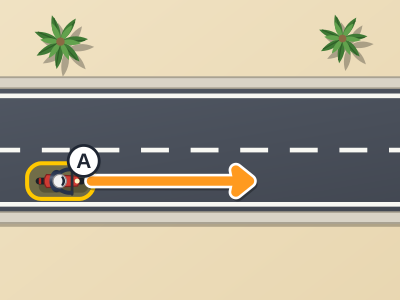
When riding very slowly in a car park, which technique best helps you maintain balance?
The other 10 questions in this test
Read them all. The answer and the reason for each, and the timed 20-question run, are in the Qatar Driving Theory Online Practice Bank.
- Q11Motorcycle control
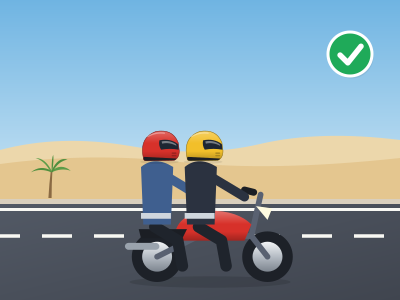
How does carrying a pillion passenger affect the motorcycle's braking distance?
- AIt reduces braking distance because extra weight improves tyre grip
- BIt has no effect on braking distance
- CIt increases braking distance because the total weight is greater, requiring more force and distance to stop
- DIt reduces braking distance only when the pillion also applies the rear brake
Answer and explanation in the bank
- Q12Motorcycle control
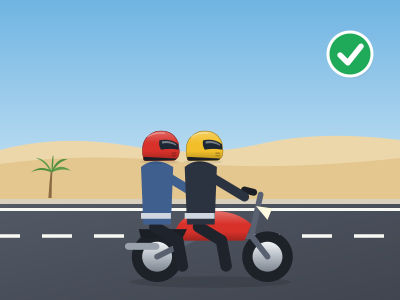
How does a pillion passenger's unexpected movement affect a motorcycle in a corner?
- AIt can suddenly shift the combined centre of gravity and upset the lean angle, causing the rider to fight for control
- BIt has no effect because the rider's weight is dominant
- CIt makes the motorcycle more stable by lowering the centre of gravity
- DIt only affects acceleration, not cornering
Answer and explanation in the bank
- Q13Motorcycle control
When performing a hill start on a motorcycle, what is the correct sequence to prevent rolling backward?
- ARelease all brakes, open throttle fully, then engage clutch
- BUse only the front brake, then engage first gear and release the clutch quickly
- CPush the motorcycle forward manually before starting the engine
- DApply rear brake, bring clutch to friction zone, add throttle until the bike pulls, then release the rear brake progressively
Answer and explanation in the bank
- Q14Motorcycle control
What happens to available tyre grip when a motorcycle is leaned over in a corner?
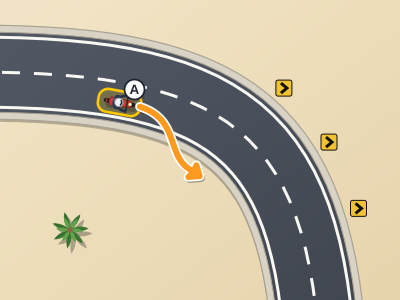
- ALean angle increases the contact patch size and therefore increases total available grip
- BThe grip budget is shared between cornering forces and braking/acceleration forces, leaving less reserve for any sudden additional input
- CGrip is unaffected by lean angle
- DGrip increases on the inside tyre and decreases on the outside tyre
Answer and explanation in the bank
- Q15Motorcycle control
You are mid-corner and need to brake urgently. What is the safest approach?
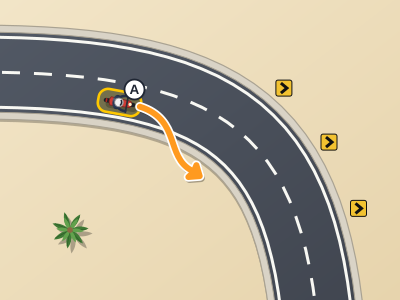
- AApply maximum front brake immediately while maintaining full lean
- BPull in the clutch and stamp on the rear brake hard
- CAccelerate to straighten the bike then brake after the corner
- DEase the throttle smoothly, progressively squeeze both brakes gently, and try to straighten the bike slightly before harder braking
Answer and explanation in the bank
- Q16Motorcycle control
Why should you select a lower gear before overtaking on a fast road?
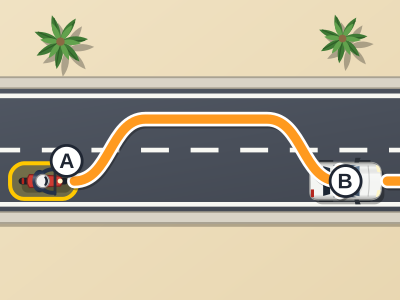
- AA lower gear puts the engine in a higher-revving, more responsive range so the throttle delivers strong acceleration immediately
- BA lower gear limits your top speed so you do not exceed the speed limit
- CA lower gear reduces fuel consumption during overtaking
- DA lower gear engages the rear brake automatically
Answer and explanation in the bank
- Q17Motorcycle control
What is the purpose of 'blipping' the throttle when downshifting?
- ATo signal other road users that you are slowing down
- BTo disengage the front brake during deceleration
- CTo raise engine revs briefly so the lower gear engages smoothly without causing an abrupt jerk or rear-wheel skip
- DTo warm the tyres before a corner
Answer and explanation in the bank
- Q18Motorcycle control
As you approach a corner, your speed is too high. You roll the throttle off but still need more deceleration. What should you do next?
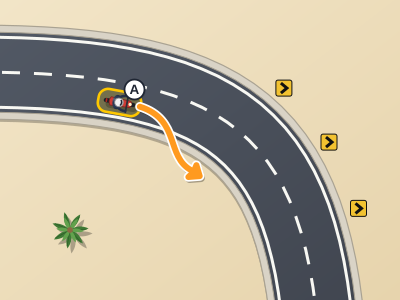
- AWait until you are mid-corner, then apply the front brake hard
- BShift to neutral and coast through
- CApply both front and rear brakes progressively before you reach the corner, while the bike is still upright
- DOpen the throttle wide to push through the corner with power
Answer and explanation in the bank
- Q19Motorcycle control
When braking in a straight line at speed, what is the recommended use of front and rear brakes?
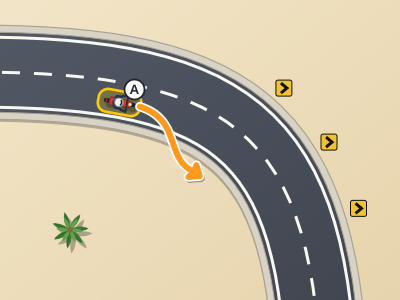
- AApply both brakes together with more emphasis on the front, increasing pressure progressively
- BApply only the rear brake to prevent the front wheel from lifting
- CApply only the front brake because the rear brake is only for slow riding
- DApply both brakes at full force immediately
Answer and explanation in the bank
- Q20Motorcycle control
At which speed does a motorcycle typically become self-balancing, reducing the need for active balance input?
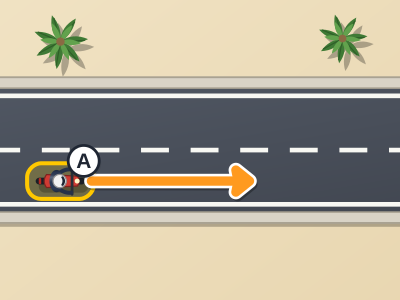
- AAbove approximately 15 to 20 km/h, gyroscopic and trail forces provide inherent stability
- BOnly above 80 km/h when aerodynamic forces act on the fairing
- CMotorcycles are never self-balancing and always require constant active correction
- DAbove 5 km/h the bike is fully stable with no rider input needed
Answer and explanation in the bank
Every answer above, with the rule it comes from, plus the full 20-question timed test.
Get the Qatar Driving Theory Online Practice Bank - QAR 39What this test covers
Topics include road signs, traffic signals, right of way, roundabouts, speed limits, seat belts, fines and penalties, and the safe-driving rules specific to your vehicle category. Full question-by-question feedback with explanations is shown immediately after you finish the test above.
Frequently asked questions
How many questions is the Al Daayen General Directorate of Traffic motorcycle theory test?
The official General Directorate of Traffic motorcycle theory test in Al Daayen has 40 questions and you need 37 correct (92.5%) to pass. This practice test has 20 questions.
Is this the real exam?
These are practice questions to help you revise, written to the published rules and to what candidates report from the real test. They are not the official Qatar exam and the real question bank, format, fees and pass mark are set by the General Directorate of Traffic (Ministry of Interior) and the driving schools, and can change. Always confirm the current requirements with your driving school or the traffic department (for example via the Metrash service).
Is this practice test free?
The first 10 questions are free, with no signup, and each shows the answer and the reason. The full 20-question test, timed, is in the Qatar Driving Theory Online Practice Bank (QAR 39, one payment), with every question in the bank.
What does the Al Daayen motorcycle theory test cover?
Road signs, traffic signals, right of way, roundabouts, speed limits, seat belts, penalties and safe-driving rules, plus the handling and safety topics specific to your vehicle.