

Al Daayen General Directorate of Traffic Truck & Bus
Timed mock exam· Full mock examsAl Daayen General Directorate of Traffic - Qatar Truck & Bus Theory Mock Test 1
A full 40-question timed practice exam for the Qatar heavy-vehicle (truck and bus) theory test, set at the reported 37/40 (92.5%) pass mark. Covers shared road rules and signs plus heavy-vehicle handling and safety.
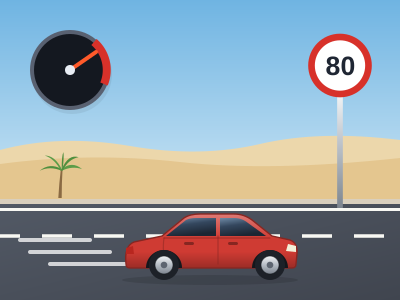
How does the severity of a speeding penalty in Qatar relate to how far above the limit you are travelling?
The other 30 questions in this test
Read them all. The answer and the reason for each, and the timed 40-question run, are in the Qatar Driving Theory Online Practice Bank.
- Q11Penalties and fines
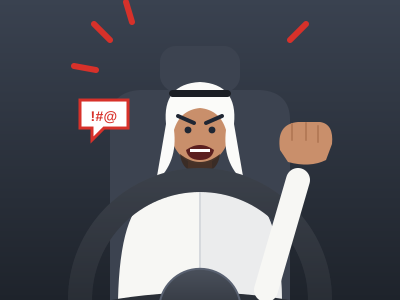
What does 'reckless driving' mean under Qatar's traffic law?
- ADriving above 100 km/h on any road.
- BOperating a vehicle in a way that puts other road users at risk, showing disregard for safety rules.
- CChanging lanes without signalling once.
- DDriving with a tyre pressure 5% below the manufacturer's recommendation.
Answer and explanation in the bank
- Q12Heavy vehicle
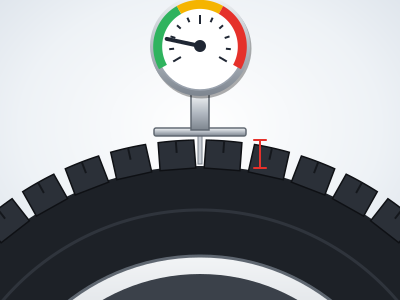
How does Qatar's intense summer heat affect heavy vehicle tyres, and what precaution should drivers take?
- AHeat softens the rubber and improves grip, so higher pressures can be used safely
- BHeat increases tyre pressure and accelerates degradation of the rubber; drivers should check pressure when cold and avoid over-inflation
- CDesert heat has no significant effect on tyres designed for commercial use
- DOver-inflated tyres perform better in summer because the sidewalls are stiffer
Answer and explanation in the bank
- Q13Road signs and signals
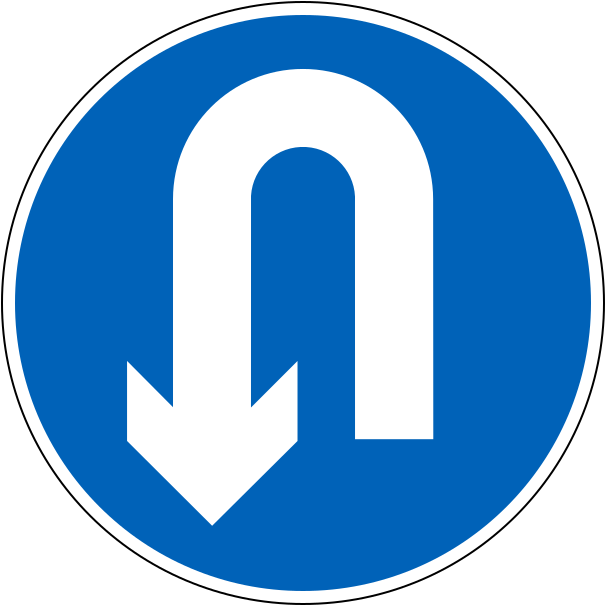
Is it permitted to make a U-turn at a green traffic light in Qatar?
- AYes, a green light always permits a U-turn
- BNo, U-turns are banned at all traffic lights in Qatar
- COnly where a U-turn is not prohibited by a sign and it can be done safely
- DOnly if no other vehicles are present
Answer and explanation in the bank
- Q14Traffic rules
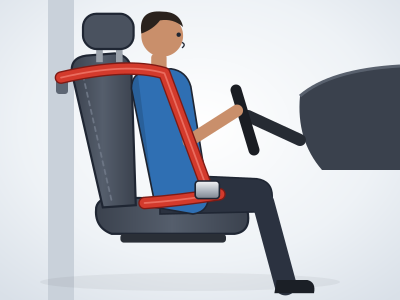
Which occupants of a car does Article 54 of Qatar's Traffic Law require to wear a seat belt?
- AOnly the driver
- BThe driver and the front-seat passenger
- COnly passengers, not the driver
- DAdults only; children of any age are exempt
Answer and explanation in the bank
- Q15Right of way
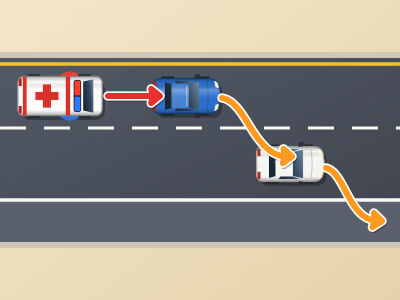
On a one-way street, an emergency vehicle comes from behind with lights and sirens. What should you do?
- ASpeed up and turn off the one-way street at the next junction
- BDrive in reverse to create space
- CContinue at the same speed; emergency vehicles must follow traffic rules on one-way streets
- DMove as far to one side as possible and stop to allow the emergency vehicle to pass
Answer and explanation in the bank
- Q16Safe driving
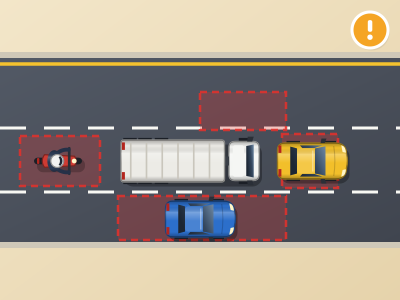
What is a key characteristic of large trucks and buses that drivers of cars need to be aware of on Qatar roads?
- AThey can stop in a shorter distance than cars due to multiple axle brakes
- BThey have much larger blind spots on all four sides than a car
- CTheir wide turning radius means they always indicate before turning
- DTheir elevated cab position means they can see all vehicles around them
Answer and explanation in the bank
- Q17Penalties and fines
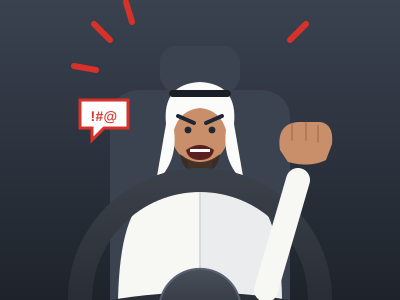
What penalties can be imposed on a driver convicted of reckless or dangerous driving in Qatar?
- AOnly a fine equivalent to a speeding ticket.
- BA compulsory driving refresher course with no other penalty.
- CReckless driving carries a fixed three-day licence suspension only.
- DHeavy fines, black points, possible imprisonment and vehicle confiscation, depending on the severity.
Answer and explanation in the bank
- Q18Heavy vehicle
A heavy vehicle driver notices the tread on the inside shoulder of both rear tyres is wearing much faster than the outside. What is the most likely cause?
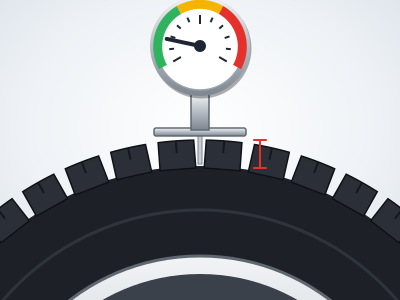
- AThe vehicle is consistently under-loaded on the rear axle
- BThe tyres are running at too high a pressure for the road surface
- CInside shoulder wear is normal for dual rear tyres and requires no action
- DIncorrect wheel alignment or the axle is out of square, causing the tyres to scrub inward
Answer and explanation in the bank
- Q19Road signs and signals
Where must you not park near a pedestrian crossing in Qatar?
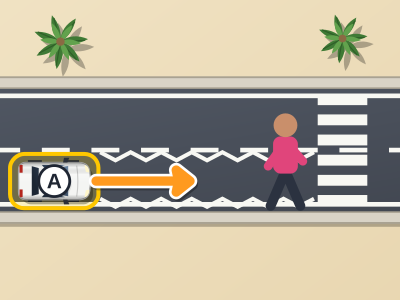
- AWithin the zigzag markings or restricted zone on the approach to the crossing
- BAnywhere within 500 metres of a crossing
- CParking is always permitted near crossings if the car is half on the pavement
- DOnly on the far side of the crossing
Answer and explanation in the bank
- Q20Traffic rules
At what age are children in Qatar generally required to use an appropriate child restraint seat rather than just a seat belt?
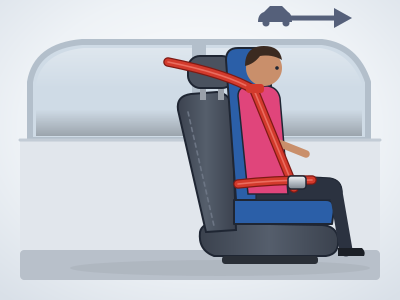
- AChildren who have not yet reached the height and weight thresholds for adult belts
- BOnly children under 1 year old
- CUnder 4 years old only
- DChildren are never required to use a child seat if they can buckle themselves in
Answer and explanation in the bank
- Q21Right of way
Two vehicles reach a STOP-controlled intersection at exactly the same time from different roads. Both have come to a full stop. What happens next?
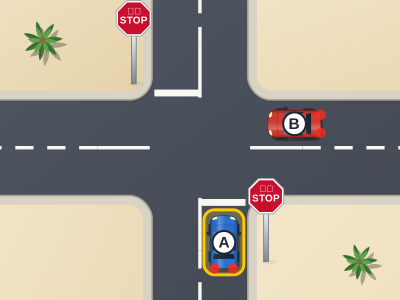
- AThe vehicle with more passengers goes first
- BThe vehicle turning right goes first
- CThe vehicle that stopped first has priority
- DThe vehicle on the right has priority to proceed first
Answer and explanation in the bank
- Q22Safe driving
You are passing a large truck on a multi-lane expressway. Which action best keeps you safe?
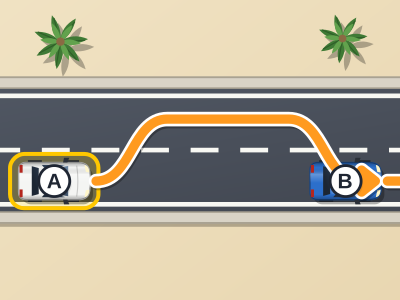
- AMatch the truck's speed and drive alongside it to reduce wind buffeting
- BCut in front of the truck as soon as any part of it is behind you
- CPass quickly and completely, then signal and move back to your lane leaving ample space
- DStay slightly behind the truck's cab to benefit from its slipstream
Answer and explanation in the bank
- Q23Penalties and fines
A driver in Qatar repeatedly cuts between lanes at high speed on a busy expressway. Which category of offence does this most likely constitute?
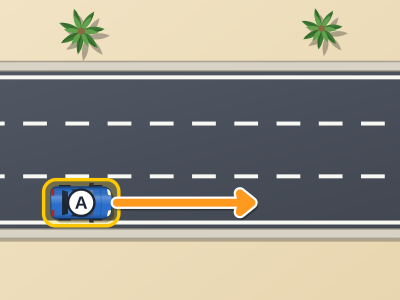
- AOnly a lane-discipline infraction with a very small fine.
- BNo offence as long as indicators were used.
- CReckless or dangerous driving, which carries serious penalties beyond a simple lane-change fine.
- DAn offence only if it causes another driver to brake sharply.
Answer and explanation in the bank
- Q24Heavy vehicle
On a long run, how often does the MOI driver curriculum advise a driver to stop and rest?
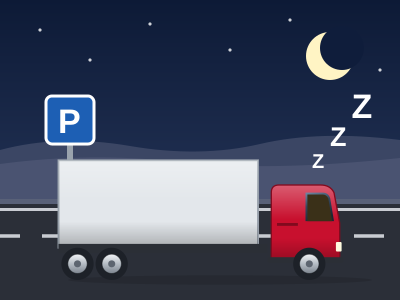
- AOnly at the destination, if the driver feels alert
- BAbout every two hours, for around 15 minutes, or sooner if tired
- CEvery eight hours
- DRest breaks are only needed at night
Answer and explanation in the bank
- Q25Road signs and signals
On a multi-lane expressway in Qatar, which lane should you normally use?
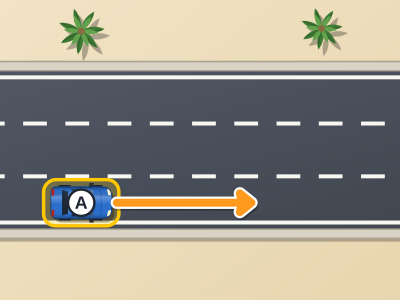
- AThe left lane at all times as it is the fastest
- BAny lane with equal frequency to distribute tyre wear
- CThe right lane, moving to the left only to overtake
- DThe centre lane to allow faster vehicles to pass on both sides
Answer and explanation in the bank
- Q26Traffic rules
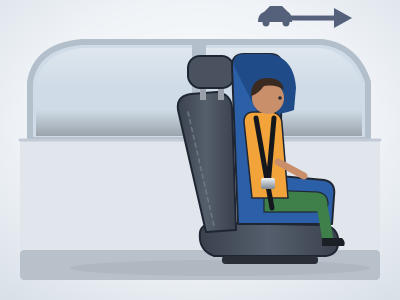
Where must a child restraint seat be installed in a vehicle in Qatar?
- AIn the front passenger seat facing forward
- BIn any seat, as long as the child is buckled in
- CIn the front seat if the vehicle has no rear seat
- DIn the rear seat, properly secured according to the manufacturer's instructions
Answer and explanation in the bank
- Q27Right of way
You are travelling uphill on a narrow mountain road and meet a vehicle coming downhill. Who should reverse or give way?
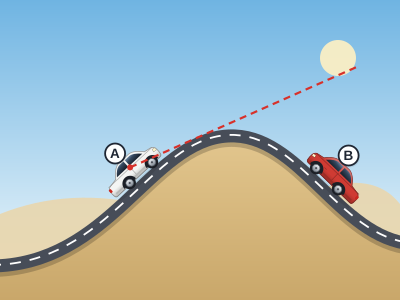
- AThe vehicle travelling downhill should give way, as it is easier to reverse downhill and the uphill vehicle has momentum
- BThe vehicle travelling uphill should give way because it can stop more easily
- CThe smaller vehicle must always give way
- DBoth vehicles stop and wait for a third party to direct them
Answer and explanation in the bank
- Q28Safe driving
What should you do immediately after a breakdown on a Qatar expressway?
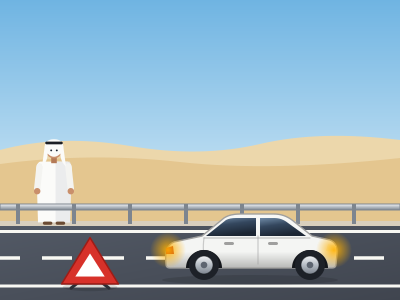
- AMove to the hard shoulder, switch on hazard lights, and place a warning triangle behind the vehicle
- BStop in the driving lane and wait for other drivers to go around you
- CAttempt repairs in the fast lane as quickly as possible
- DExit the vehicle on the traffic side to flag down help
Answer and explanation in the bank
- Q29Penalties and fines
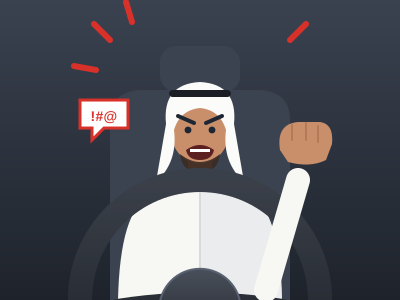
Under Qatar law, which combination of actions by a driver would most strongly support a charge of dangerous driving?
- ABriefly exceeding the speed limit by 5 km/h on an empty road.
- BTravelling at twice the speed limit while using a handheld phone and overtaking on the hard shoulder.
- CMaking an unplanned right turn while signalling late.
- DParking slightly over a yellow line outside peak hours.
Answer and explanation in the bank
- Q30Heavy vehicle
What is the most effective way for a heavy vehicle driver to manage fatigue on a long overnight run?
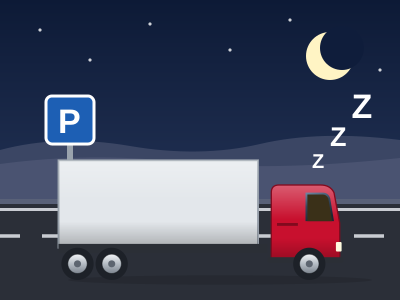
- APlan adequate sleep before the journey, take scheduled rest breaks, and stop to sleep if feeling drowsy
- BDrink extra coffee and energy drinks throughout the drive to stay alert
- COpen the cab window and turn up the radio to stimulate alertness
- DDrive faster to reach the destination sooner and reduce overall time on the road
Answer and explanation in the bank
- Q31Road signs and signals
You are driving on an expressway and see a Variable Message Sign (VMS) showing a lower speed limit than the posted permanent sign. Which limit applies?
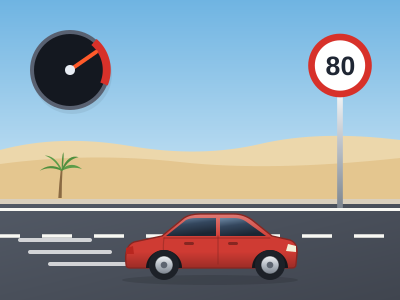
- AThe permanent sign, as it is legally binding
- BThe higher of the two limits
- CThe lower VMS limit; it overrides the permanent sign
- DNeither applies; VMS signs are advisory only in Qatar
Answer and explanation in the bank
- Q32Traffic rules
Is it legal to hold and use a mobile phone while driving in Qatar?
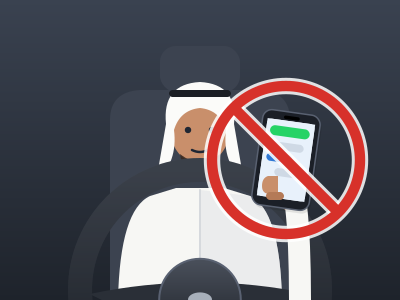
- ANo, it is prohibited to hold and use a mobile phone while driving
- BYes, if you are stopped at a red light
- CYes, if the call lasts less than 30 seconds
- DYes, if you keep one hand on the steering wheel
Answer and explanation in the bank
- Q33Right of way
A pedestrian has already stepped onto an unmarked crossing at an ordinary road junction. What should you do?
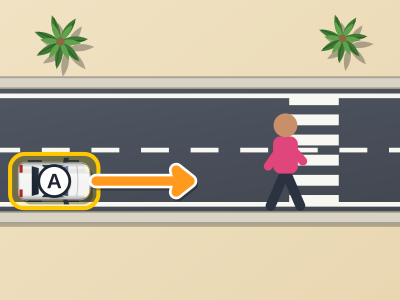
- ASound your horn and proceed slowly
- BContinue; pedestrians at unmarked crossings have no right of way
- CFlash your headlights and continue
- DStop and allow the pedestrian to finish crossing
Answer and explanation in the bank
- Q34Safe driving
After a breakdown on a high-speed expressway, where should occupants wait?
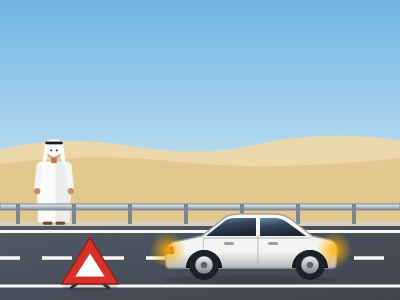
- ABehind a crash barrier away from the vehicle, if one is available
- BInside the vehicle with seatbelts fastened
- COn the shoulder directly behind the broken-down vehicle
- DIn the lane next to the broken-down vehicle to direct traffic
Answer and explanation in the bank
- Q35Penalties and fines
Is car drifting (deliberately spinning or sliding a vehicle's rear tyres) legal on public roads in Qatar?
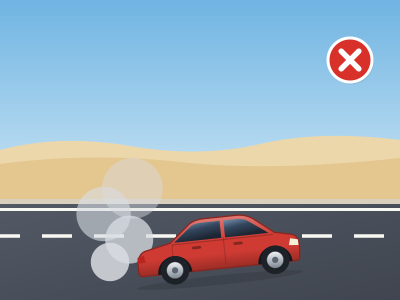
- AYes, provided it is done in a marked area and no pedestrians are present.
- BNo. Drifting on public roads is illegal and carries severe penalties.
- CIt is only illegal if spectators gather nearby.
- DDrifting is legal for vehicles with a specially endorsed licence plate.
Answer and explanation in the bank
- Q36Heavy vehicle
What must a bus driver do before allowing passengers to board at a stop?
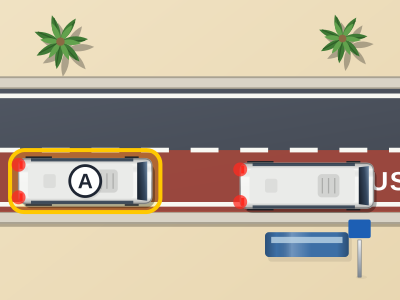
- ASlow to below 10 km/h and open the doors while still rolling to save time
- BBring the bus to a complete stop at the designated stop, apply the park brake, and open the doors only when stationary
- CSound the horn twice to alert boarding passengers and then open the doors
- DWait for passengers to wave before stopping, then open doors immediately without applying the park brake
Answer and explanation in the bank
- Q37Road signs and signals
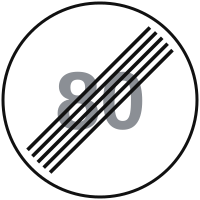
What does an end-of-speed-restriction sign look like?
- AA green circle with the word END
- BThe same speed-limit sign repeated with a red X
- CA white triangle pointing downwards
- DA grey or white circle with a diagonal black line through a speed number or crossed diagonal lines
Answer and explanation in the bank
- Q38Traffic rules
Which method of using a mobile phone is legally permitted while driving in Qatar?
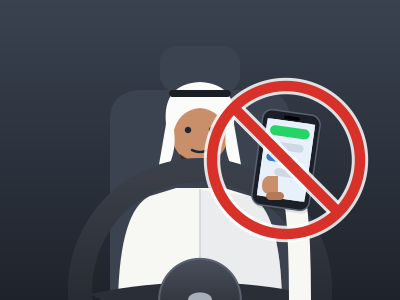
- AHolding the phone to your ear with your shoulder
- BUsing a properly mounted hands-free device that does not require you to hold the phone
- CReading a text message while stopped in traffic
- DUsing the phone on loudspeaker while holding it on the dashboard
Answer and explanation in the bank
- Q39Right of way
You are in a queue to enter a roundabout and the traffic signals at the roundabout entry show green. Who has priority?
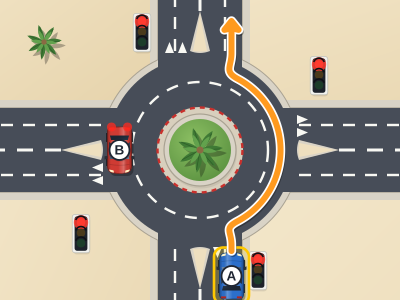
- ACirculating traffic still has priority even on a green signal
- BPedestrians on the crossing always have priority over the signal
- CYou must still stop and yield regardless of the signal
- DYou may enter because the traffic signal overrides the normal yield-to-circulating-traffic rule
Answer and explanation in the bank
- Q40Safe driving
You arrive at a road crash scene. What are the first two actions to take before assisting any casualties?
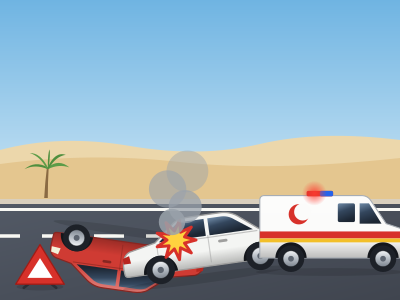
- AEnsure your own safety and call emergency services (999)
- BMove all casualties away from the vehicles immediately
- CTake photographs for insurance and then assist
- DSwitch off the ignition of all involved vehicles yourself first
Answer and explanation in the bank
Every answer above, with the rule it comes from, plus the full 40-question timed test.
Get the Qatar Driving Theory Online Practice Bank - QAR 39What this test covers
Topics include road signs, traffic signals, right of way, roundabouts, speed limits, seat belts, fines and penalties, and the safe-driving rules specific to your vehicle category. Full question-by-question feedback with explanations is shown immediately after you finish the test above.
Frequently asked questions
How many questions is the Al Daayen General Directorate of Traffic truck & bus theory test?
The official General Directorate of Traffic truck & bus theory test in Al Daayen has 40 questions and you need 37 correct (92.5%) to pass. This practice test has 40 questions.
Is this the real exam?
These are practice questions to help you revise, written to the published rules and to what candidates report from the real test. They are not the official Qatar exam and the real question bank, format, fees and pass mark are set by the General Directorate of Traffic (Ministry of Interior) and the driving schools, and can change. Always confirm the current requirements with your driving school or the traffic department (for example via the Metrash service).
Is this practice test free?
The first 10 questions are free, with no signup, and each shows the answer and the reason. The full 40-question test, timed, is in the Qatar Driving Theory Online Practice Bank (QAR 39, one payment), with every question in the bank.
What does the Al Daayen truck & bus theory test cover?
Road signs, traffic signals, right of way, roundabouts, speed limits, seat belts, penalties and safe-driving rules, plus the handling and safety topics specific to your vehicle.