

Al Rayyan General Directorate of Traffic Light vehicle
Practice mode· Road rulesAl Rayyan General Directorate of Traffic - Qatar Road Rules Test 1
First 20 questions on Qatar traffic rules: lane discipline, roundabouts, seat belts, mobile phone use, speed limits and more. Essential knowledge for any driver in Qatar.
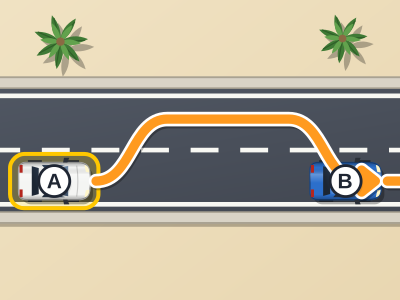
In which of the following locations is overtaking strictly prohibited in Qatar?
The other 10 questions in this test
Read them all. The answer and the reason for each, and the timed 20-question run, are in the Qatar Driving Theory Online Practice Bank.
- Q11Traffic rules
On a one-way street in Qatar, in which lane must you position yourself to turn right at the end?
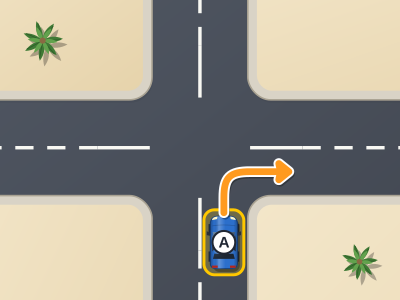
- AThe rightmost lane, as close to the right kerb as practicable
- BThe leftmost lane, to cut across the least traffic
- CAny lane, since one-way streets have no turning-lane rules
- DThe centre lane to allow other vehicles to pass on both sides
Answer and explanation in the bank
- Q12Traffic rules
When joining a highway (expressway) in Qatar from an on-ramp, what must you do?
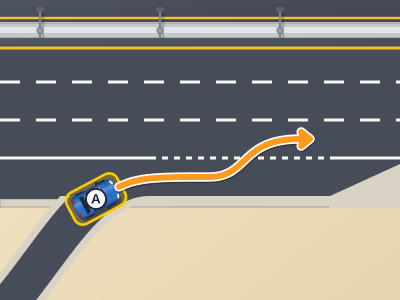
- AStop at the end of the ramp and wait for a clear gap
- BSwitch on your hazard lights and merge slowly
- CUse the acceleration lane to match the speed of highway traffic before merging
- DEnter at any speed and expect highway traffic to make room
Answer and explanation in the bank
- Q13Traffic rules
You have missed your highway exit in Qatar. What should you do?
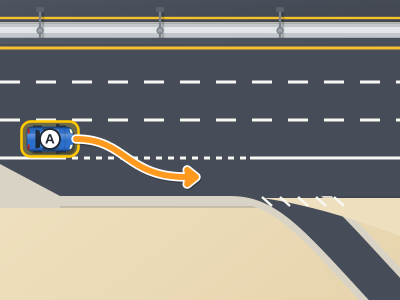
- AReverse along the hard shoulder back to the exit
- BContinue to the next exit and use it instead
- CStop in the deceleration lane and wait for traffic to clear
- DMake a U-turn on the highway at the earliest opportunity
Answer and explanation in the bank
- Q14Traffic rules
When leaving a highway in Qatar using an off-ramp, when should you begin to reduce your speed?
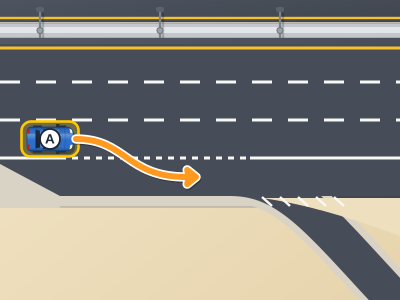
- AWhile still on the main carriageway, well before the deceleration lane
- BOnce you have moved into the deceleration lane, not on the main carriageway
- COnly after you have fully stopped at the end of the ramp
- DAs soon as you see the exit sign, wherever you are on the road
Answer and explanation in the bank
- Q15Traffic rules
Heavy rain is reducing visibility on a Qatar expressway. What should you do with your speed?
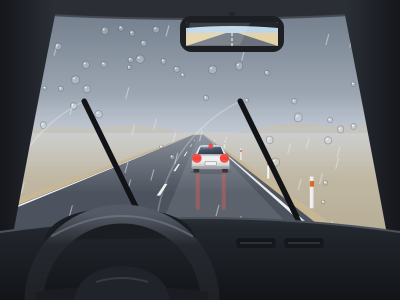
- AMaintain the posted speed limit as it is always safe
- BReduce speed to a level appropriate for the reduced visibility and road grip
- CIncrease speed to clear the wet zone faster
- DStop on the hard shoulder until the rain stops
Answer and explanation in the bank
- Q16Traffic rules
What is the general rule for following distance between your vehicle and the one in front on a Qatar road?
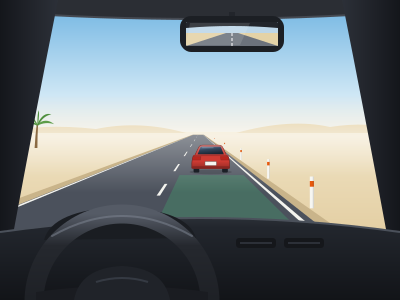
- AKeep at least one car length for every 10 km/h of speed
- BStay within two metres so other drivers cannot cut in
- CFollowing distance only matters on motorways, not urban roads
- DMaintain a safe gap that allows you to stop if the vehicle ahead brakes suddenly
Answer and explanation in the bank
- Q17Traffic rules
The two-second rule for following distance means that after the vehicle ahead passes a fixed point, you should reach that point in no less than how many seconds?
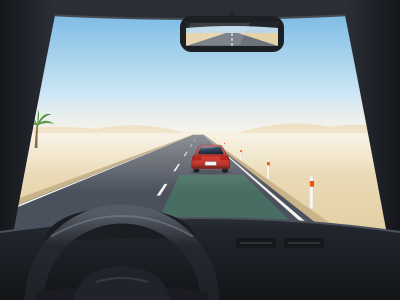
- AOne second
- BFive seconds at all times
- CTen seconds on motorways only
- DTwo seconds under dry conditions, more in adverse conditions
Answer and explanation in the bank
- Q18Traffic rules
Which occupants of a car does Article 54 of Qatar's Traffic Law require to wear a seat belt?
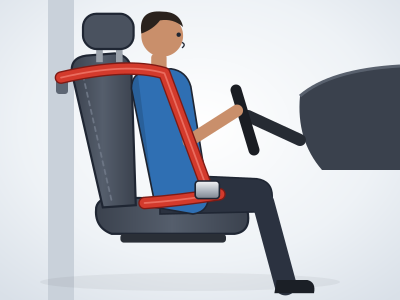
- AOnly the driver
- BThe driver and the front-seat passenger
- COnly passengers, not the driver
- DAdults only; children of any age are exempt
Answer and explanation in the bank
- Q19Traffic rules
At what age are children in Qatar generally required to use an appropriate child restraint seat rather than just a seat belt?
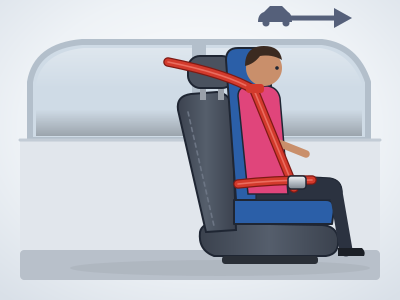
- AChildren who have not yet reached the height and weight thresholds for adult belts
- BOnly children under 1 year old
- CUnder 4 years old only
- DChildren are never required to use a child seat if they can buckle themselves in
Answer and explanation in the bank
- Q20Traffic rules
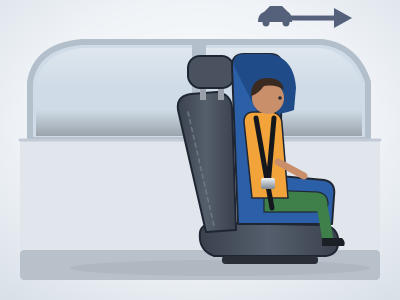
Where must a child restraint seat be installed in a vehicle in Qatar?
- AIn the front passenger seat facing forward
- BIn any seat, as long as the child is buckled in
- CIn the front seat if the vehicle has no rear seat
- DIn the rear seat, properly secured according to the manufacturer's instructions
Answer and explanation in the bank
Every answer above, with the rule it comes from, plus the full 20-question timed test.
Get the Qatar Driving Theory Online Practice Bank - QAR 39What this test covers
Topics include road signs, traffic signals, right of way, roundabouts, speed limits, seat belts, fines and penalties, and the safe-driving rules specific to your vehicle category. Full question-by-question feedback with explanations is shown immediately after you finish the test above.
Frequently asked questions
How many questions is the Al Rayyan General Directorate of Traffic light vehicle theory test?
The official General Directorate of Traffic light vehicle theory test in Al Rayyan has 40 questions and you need 37 correct (92.5%) to pass. This practice test has 20 questions.
Is this the real exam?
These are practice questions to help you revise, written to the published rules and to what candidates report from the real test. They are not the official Qatar exam and the real question bank, format, fees and pass mark are set by the General Directorate of Traffic (Ministry of Interior) and the driving schools, and can change. Always confirm the current requirements with your driving school or the traffic department (for example via the Metrash service).
Is this practice test free?
The first 10 questions are free, with no signup, and each shows the answer and the reason. The full 20-question test, timed, is in the Qatar Driving Theory Online Practice Bank (QAR 39, one payment), with every question in the bank.
What does the Al Rayyan light vehicle theory test cover?
Road signs, traffic signals, right of way, roundabouts, speed limits, seat belts, penalties and safe-driving rules, plus the handling and safety topics specific to your vehicle.