

Al Shamal General Directorate of Traffic Light vehicle
Timed mock exam· Full mock examsAl Shamal General Directorate of Traffic - Qatar Theory Mock Test 1
A full 40-question timed practice exam in the format reported for the Qatar light-vehicle theory test run by the General Directorate of Traffic. Questions span road signs, traffic rules, right of way, safety and penalties. Aim for 37/40 (92.5%) to pass.
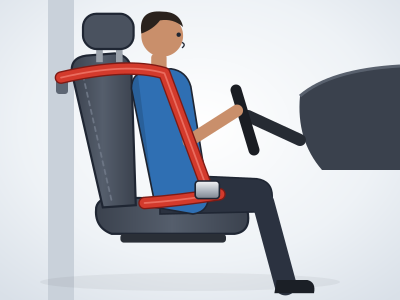
What is the penalty in Qatar when the driver or front-seat passenger is caught not wearing a seatbelt?
The other 30 questions in this test
Read them all. The answer and the reason for each, and the timed 40-question run, are in the Qatar Driving Theory Online Practice Bank.
- Q11Road signs and signals
A driver entering Qatar from another GCC country sees a sign they do not recognise. What is the best action?
- AIgnore unknown signs as they are likely the same as your home country
- BStop your car immediately until you can identify the sign
- CFamiliarise yourself with Qatar's road signs before driving, and when uncertain, slow down and drive cautiously
- DFollow other drivers regardless of what the sign says
Answer and explanation in the bank
- Q12Traffic rules
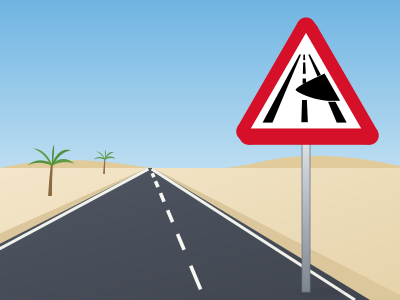
What precaution should you take when driving on a desert road in Qatar where visibility is good but sand may be drifting across the road?
- ASpeed up to pass through the sand quickly before it deepens
- BSwerve sharply around each sand drift to avoid it
- CSlow down and cross sand drifts steadily to maintain traction and control
- DSand on the road poses no real hazard and no adjustment is needed
Answer and explanation in the bank
- Q13Right of way
Three vehicles arrive simultaneously at a four-way STOP sign. Vehicle A faces north, Vehicle B faces east, Vehicle C faces south. All have stopped. In what order do they proceed, applying the give-way-to-the-right rule?
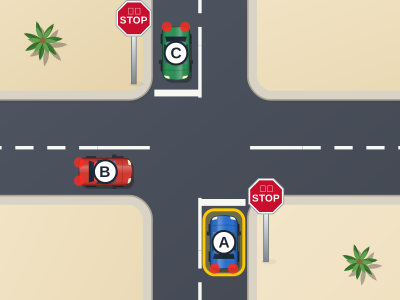
- AB (east) goes first as it has no vehicle to its right, then A or C next in sequence
- BC (south) goes first because A is to its right, then A (north), then B (east)
- CA (north) goes first because B is to its right, then B (east), then C (south)
- DAll three proceed together with caution
Answer and explanation in the bank
- Q14Safe driving
At 120 km/h on a dry expressway, approximately how much does doubling your speed from 60 km/h affect braking distance?
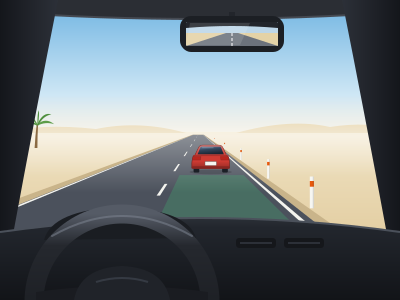
- ABraking distance exactly doubles
- BBraking distance roughly quadruples compared to 60 km/h
- CBraking distance increases by about 50%
- DBraking distance at high speed is similar because modern ABS compensates
Answer and explanation in the bank
- Q15Penalties and fines
What is the black points system in Qatar?

- AA system that records penalty points on a driver's licence for traffic violations. Accumulating too many points leads to licence suspension.
- BA loyalty reward programme offering discounts on vehicle registration fees.
- CA colour coding on speed cameras to indicate camera type.
- DA scoring system used only during the driving licence test.
Answer and explanation in the bank
- Q16Road signs and signals
What do zigzag white road markings on the approach to a pedestrian crossing indicate?
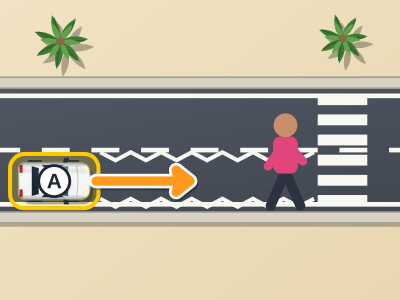
- AThe road surface is uneven ahead
- BA speed bump follows the zigzag markings
- CCyclists may cross here
- DNo parking or overtaking in this area; extra care required as a crossing is ahead
Answer and explanation in the bank
- Q17Traffic rules
A severe sandstorm suddenly reduces visibility to nearly zero while you are driving. What is the safest action?
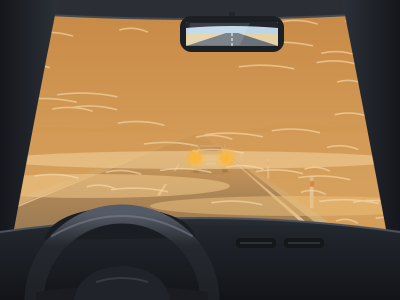
- AContinue at reduced speed with the hazard lights flashing
- BPull right off the road, away from the carriageway, stop, then switch on the hazard lights
- CFollow the tail lights of the vehicle ahead as closely as possible
- DStop in your lane and wait for the dust to clear
Answer and explanation in the bank
- Q18Right of way
You are driving on a main road past a school zone sign that shows reduced speed. A child near the pavement appears to be about to cross. What should you do?
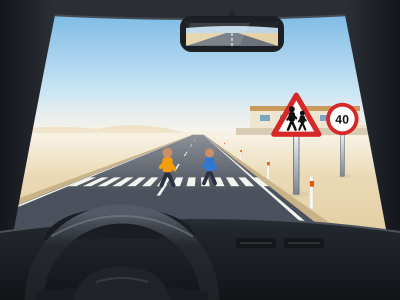
- ASound your horn and continue at the speed limit
- BSlow to the school zone speed limit and be ready to stop if the child steps out
- CFlash your lights to warn the child and proceed
- DMaintain speed; the child has not yet stepped into the road
Answer and explanation in the bank
- Q19Safe driving
Why should you avoid sudden harsh braking on a sand-covered desert road?
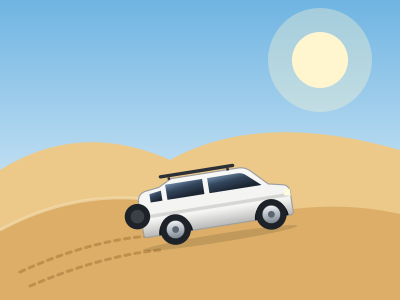
- ASand greatly reduces tyre grip, making it easy for the wheels to lock up and the vehicle to skid uncontrollably
- BHarsh braking is safe on sand because the loose surface absorbs the stopping force
- CBraking on sand damages the tyre sidewalls but does not affect stopping distance
- DABS compensates fully for sand and makes braking distance the same as on tarmac
Answer and explanation in the bank
- Q20Penalties and fines
A driver in Qatar reaches 14 black points for the first time. What happens?

- AThe driver receives a warning letter but keeps their licence.
- BThe driver must pay a fee to clear the points and the licence is unaffected.
- CThe driving licence is suspended for 3 months.
- DThe licence is cancelled permanently.
Answer and explanation in the bank
- Q21Road signs and signals
A traffic police officer, a traffic light and a road sign at the same junction give you different instructions. Which do you follow?
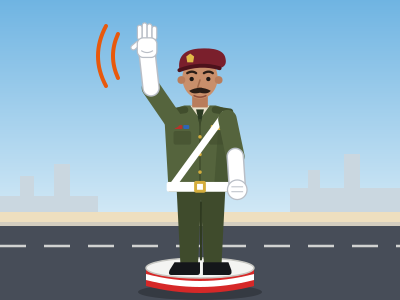
- AThe police officer's signal
- BThe traffic light, because it is automatic
- CThe road sign, because it is permanent
- DWhichever instruction is least restrictive
Answer and explanation in the bank
- Q22Traffic rules
During a sandstorm in Qatar, which lights should be used if you must continue driving at very low speed?
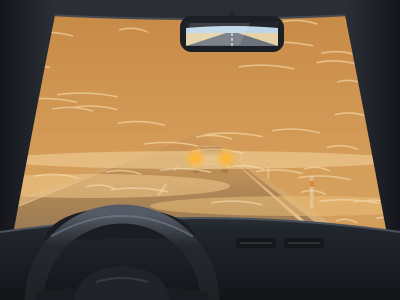
- AHigh-beam headlights, as they penetrate dust better
- BHazard lights only, to signal distress to other drivers
- CNo lights, to avoid blinding others in the dust cloud
- DLow-beam headlights and front fog lights, if fitted
Answer and explanation in the bank
- Q23Right of way
You are turning left at a junction. An oncoming vehicle is turning right from the opposite direction. Who must give way?
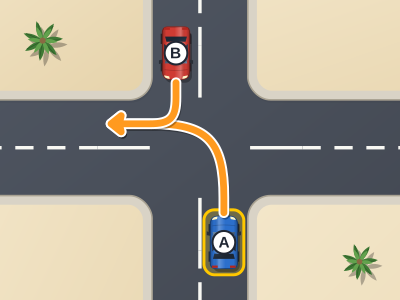
- AYou, because your left turn crosses the path of oncoming traffic
- BThe vehicle turning right, because it is turning across your lane
- CWhichever vehicle reached the junction second
- DThe smaller of the two vehicles
Answer and explanation in the bank
- Q24Safe driving
What warning sign indicates you may be about to experience a tyre blowout?
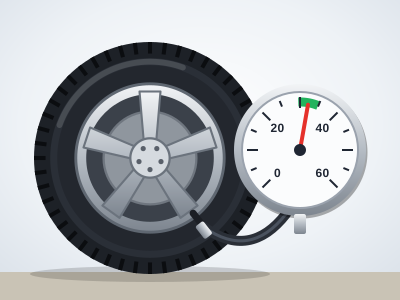
- AThe temperature gauge rising above normal
- BThe engine note rising unexpectedly
- CAll dashboard warning lights illuminating together
- DSudden vibration, a loud bang, and the vehicle pulling strongly to one side
Answer and explanation in the bank
- Q25Penalties and fines
Which driving strategy best protects a driver in Qatar from reaching the black-point suspension threshold?

- AConsistently obeying traffic laws so that no points are awarded in the first place.
- BPaying fines quickly, which resets all accumulated points to zero.
- CTransferring the vehicle's registration to another family member to split the points.
- DPaying a premium to have points removed after each violation.
Answer and explanation in the bank
- Q26Road signs and signals
A plate under a school-zone sign limits speed to 40 km/h from 07:00 to 14:00 on school days. It is a public holiday and the time is 08:30. What limit applies?
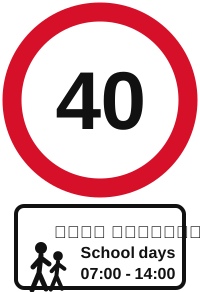
- AThe road's normal posted limit, because the plate limits the 40 km/h to school days
- B40 km/h, because the time falls between 07:00 and 14:00
- C80 km/h on every road during public holidays
- DNo limit applies while the school is closed
Answer and explanation in the bank
- Q27Traffic rules
How does wet road surface affect your braking distance in Qatar compared to a dry road?
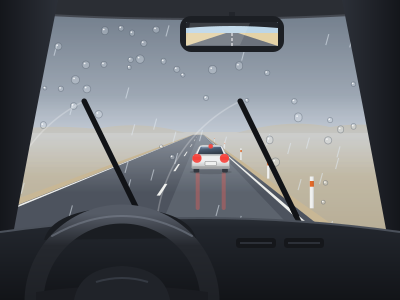
- ABraking distance increases significantly and you must leave a much larger gap
- BIt has no significant effect if your tyres are inflated correctly
- CBraking distance decreases because wet tyres grip grooves better
- DOnly vehicles without ABS are affected by wet roads
Answer and explanation in the bank
- Q28Right of way
A flashing red signal at a level crossing has been installed alongside a STOP sign. What must you do?
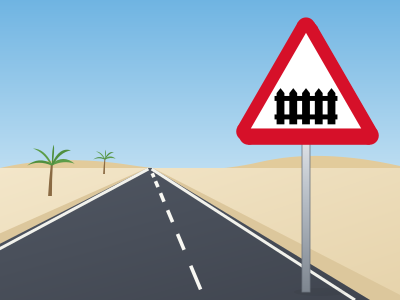
- ASlow to 20 km/h and cross quickly
- BStop only if you see a train
- CCross if no warning sound is heard
- DStop at the stop line and only proceed when the crossing is confirmed safe
Answer and explanation in the bank
- Q29Safe driving
How do Tyre Pressure Monitoring Systems (TPMS) help drivers in Qatar?
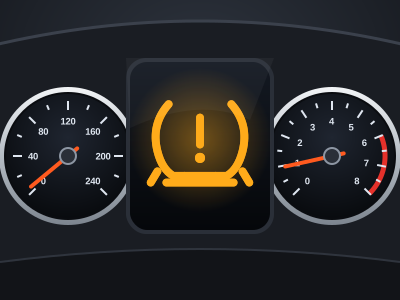
- AThey automatically inflate the tyre back to the correct pressure
- BThey alert the driver when a tyre pressure drops to an unsafe level
- CThey eliminate the need to check tyre pressure manually
- DThey measure tread depth and warn when tyres need replacing
Answer and explanation in the bank
- Q30Penalties and fines
What must a driver do when approaching a police or traffic checkpoint in Qatar?
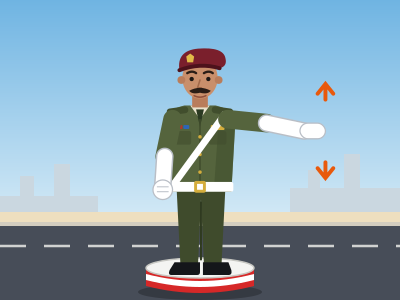
- AContinue at the same speed if they believe they have done nothing wrong.
- BSlow down, stop as directed and cooperate with the officers.
- CTurn around before reaching the checkpoint to avoid queuing.
- DStop briefly, then drive off if no officer approaches within 30 seconds.
Answer and explanation in the bank
- Q31Traffic rules
What does a speed limit sign show in Qatar?
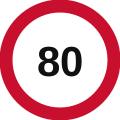
- AThe minimum speed you must travel at all times
- BThe recommended speed for the type of road, which you may exceed if safe
- CThe maximum speed permitted under ideal conditions; you must go slower if conditions require it
- DThe average speed measured by cameras along that road
Answer and explanation in the bank
- Q32Right of way
You are merging from an acceleration lane onto the highway. Traffic on the highway is heavy but moving. What is the correct technique?
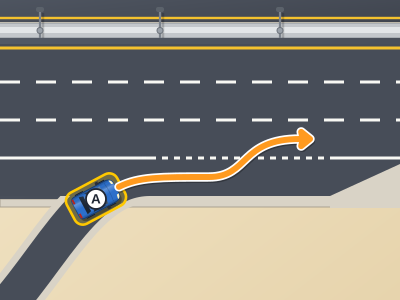
- AStop at the end of the acceleration lane and wait for a large gap
- BForce your way into the highway lane as you have been waiting longest
- CSlow down in the acceleration lane to create a gap behind highway traffic
- DAccelerate to match highway speed in the acceleration lane and merge smoothly into a gap
Answer and explanation in the bank
- Q33Safe driving
Before starting a journey, you notice one tyre looks visibly flat. What should you do?
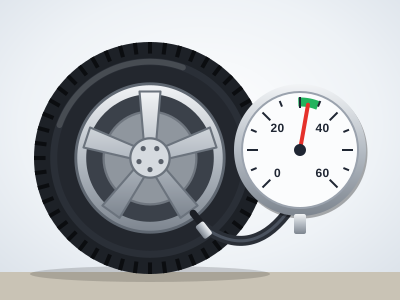
- ADrive slowly to the nearest petrol station to inflate it
- BDo not drive; inflate or replace the tyre before setting off
- CDrive normally; modern tyres can handle temporary low pressure
- DCheck the pressure in the other three tyres to confirm it is just one
Answer and explanation in the bank
- Q34Penalties and fines
A driver approaching a checkpoint in Qatar spots it ahead and makes a quick U-turn to avoid it. What offence may they have committed?
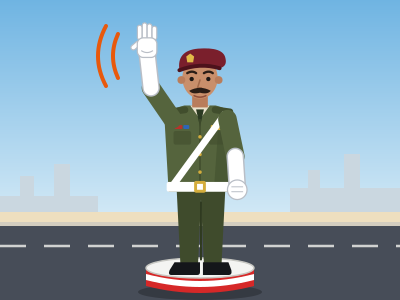
- ANo offence, as they had not yet reached the checkpoint.
- BA minor traffic infraction for the U-turn only, with no additional offence.
- CThe driver can only be charged if an officer physically waved them through first.
- DFailing to comply with a police checkpoint, and potentially an illegal U-turn. Both carry penalties.
Answer and explanation in the bank
- Q35Traffic rules
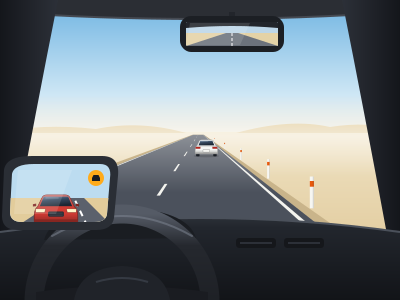
When is it unsafe to change lanes on a Qatar expressway?
- AWhen travelling at exactly the speed limit
- BOnly when a continuous white line is present
- CWhen a vehicle is in your blind spot, when gaps are insufficient, or when approaching an exit
- DLane changes on an expressway are always safe at night
Answer and explanation in the bank
- Q36Right of way
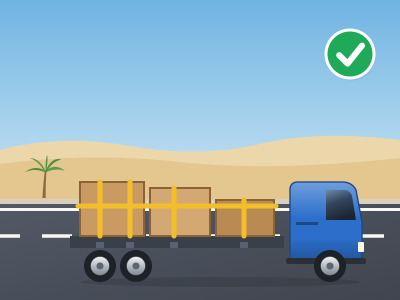
A wide load vehicle is travelling slowly on a two-lane road with outriders in front signalling vehicles to hold back. What must you do?
- AOvertake the outrider to pass the slow convoy
- BSlow down and follow the outriders' instructions to give way to the convoy
- CSound your horn to signal the convoy to speed up
- DTreat the outriders as ordinary drivers with no authority
Answer and explanation in the bank
- Q37Safe driving
What is the legal requirement for a warning triangle in Qatar?
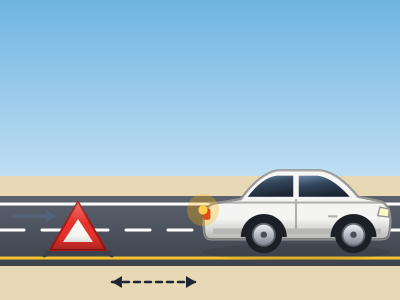
- AWarning triangles are optional safety accessories and not legally required
- BHazard lights replace the legal need for a warning triangle in Qatar
- CWarning triangles are only required for heavy vehicles, not private cars
- DVehicles must carry a warning triangle and it must be placed to warn approaching traffic in a breakdown or crash
Answer and explanation in the bank
- Q38Penalties and fines
At a checkpoint in Qatar, an officer asks a driver to step out of the vehicle and present their licence and Istimara. The driver refuses. What is the likely outcome?
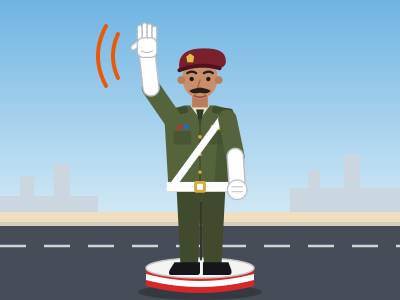
- AA small administrative fine and the driver is free to leave.
- BArrest for failing to comply with a lawful police instruction and additional charges related to obstruction.
- CThe officer cannot force compliance; the driver can legally decline.
- DNo penalty if the driver does eventually comply after a short delay.
Answer and explanation in the bank
- Q39Traffic rules
An emergency vehicle with lights and sirens activated is approaching from behind in Qatar. What must you do?
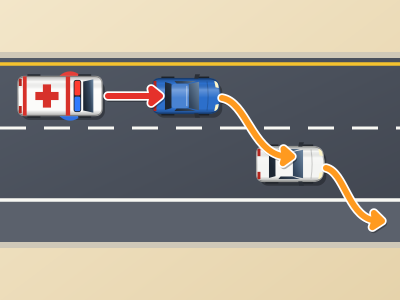
- AMaintain your speed so you do not obstruct traffic flow
- BMove to the left lane and slow down slightly
- CFollow the emergency vehicle through traffic to take advantage of the gap
- DPull to the right and stop safely to let the vehicle pass
Answer and explanation in the bank
- Q40Right of way
You are approaching a roundabout and see the road marking 'GIVE WAY' painted on the road before the entry line. What must you do?
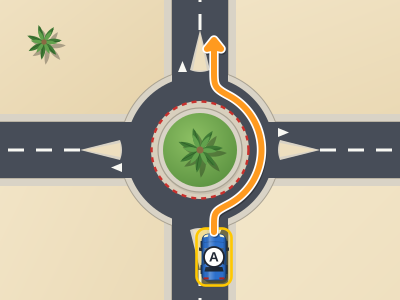
- AStop completely regardless of traffic in the roundabout
- BEnter the roundabout and signal for space
- CYield to vehicles already in the roundabout before entering
- DThe road marking is for guidance only and does not require action
Answer and explanation in the bank
Every answer above, with the rule it comes from, plus the full 40-question timed test.
Get the Qatar Driving Theory Online Practice Bank - QAR 39What this test covers
Topics include road signs, traffic signals, right of way, roundabouts, speed limits, seat belts, fines and penalties, and the safe-driving rules specific to your vehicle category. Full question-by-question feedback with explanations is shown immediately after you finish the test above.
Frequently asked questions
How many questions is the Al Shamal General Directorate of Traffic light vehicle theory test?
The official General Directorate of Traffic light vehicle theory test in Al Shamal has 40 questions and you need 37 correct (92.5%) to pass. This practice test has 40 questions.
Is this the real exam?
These are practice questions to help you revise, written to the published rules and to what candidates report from the real test. They are not the official Qatar exam and the real question bank, format, fees and pass mark are set by the General Directorate of Traffic (Ministry of Interior) and the driving schools, and can change. Always confirm the current requirements with your driving school or the traffic department (for example via the Metrash service).
Is this practice test free?
The first 10 questions are free, with no signup, and each shows the answer and the reason. The full 40-question test, timed, is in the Qatar Driving Theory Online Practice Bank (QAR 39, one payment), with every question in the bank.
What does the Al Shamal light vehicle theory test cover?
Road signs, traffic signals, right of way, roundabouts, speed limits, seat belts, penalties and safe-driving rules, plus the handling and safety topics specific to your vehicle.