

Al Shamal General Directorate of Traffic Light vehicle
Timed mock exam· Full mock examsAl Shamal General Directorate of Traffic - Qatar Theory Mock Test 3
Third full mock exam: another fresh set of 40 questions drawn from all topics. A great way to check your readiness before the real test.
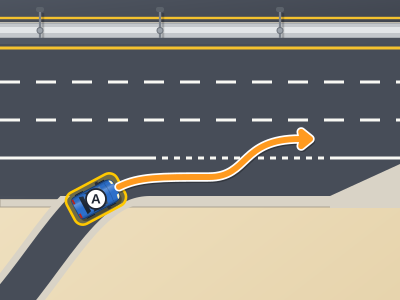
You are joining a highway from an on-ramp (slip road). Who has priority?
The other 30 questions in this test
Read them all. The answer and the reason for each, and the timed 40-question run, are in the Qatar Driving Theory Online Practice Bank.
- Q11Traffic rules
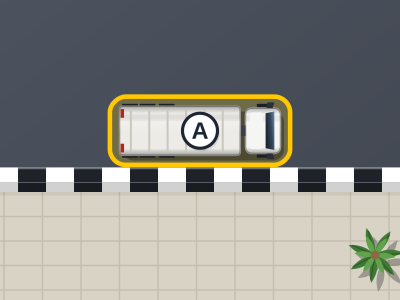
What does a loading zone sign on a Qatar road mean for private car drivers?
- APrivate cars may park there indefinitely as long as the boot is open
- BThe area is reserved for commercial vehicles loading and unloading; private car parking is not permitted
- CAny vehicle may use it for up to 30 minutes at any time
- DLoading zones become free for all during evenings and weekends
Answer and explanation in the bank
- Q12Right of way
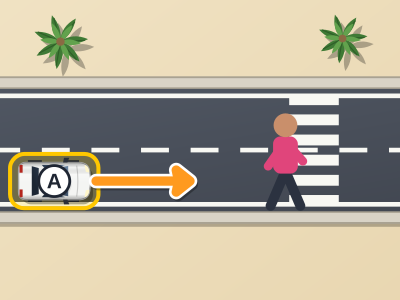
You are on a road where the pavement is very narrow and a group of pedestrians have stepped slightly into the road to pass each other. What is the correct right-of-way action?
- ASound your horn and maintain speed to encourage them back onto the pavement
- BPass quickly at normal speed; pedestrians on the road are at fault
- CStop completely and wait for a full minute before proceeding
- DSlow down and give the pedestrians space to return to the pavement safely before continuing
Answer and explanation in the bank
- Q13Penalties and fines
Which of the following scenarios in Qatar involves the greatest combination of offences and likely the most severe combined penalty?

- ADriving 10 km/h over the limit with a slightly expired Istimara.
- BParking on a yellow kerb briefly while answering a hands-free call.
- CUsing a handheld phone at a red light with a valid licence and current registration.
- DDriving at extreme speed while intoxicated, without a valid licence, with an unbelted passenger and failing to stop at a police checkpoint.
Answer and explanation in the bank
- Q14Traffic rules
A driver reverses onto a Qatar motorway slip road from the main carriageway, claiming they missed the exit. What offence has been committed and what is the principal danger?
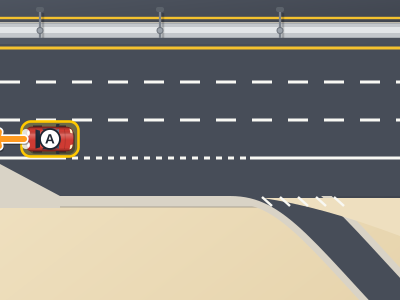
- AReversing on a motorway is a serious offence; other drivers travelling at speed cannot expect a reversing vehicle
- BNo offence if done quickly; the main danger is holding up traffic
- CIt is only an offence if CCTV cameras capture it
- DIt is permitted if hazard lights are activated and the distance reversed is less than 50 metres
Answer and explanation in the bank
- Q15Traffic rules
What is the purpose of a minimum speed limit sign on a Qatar expressway?
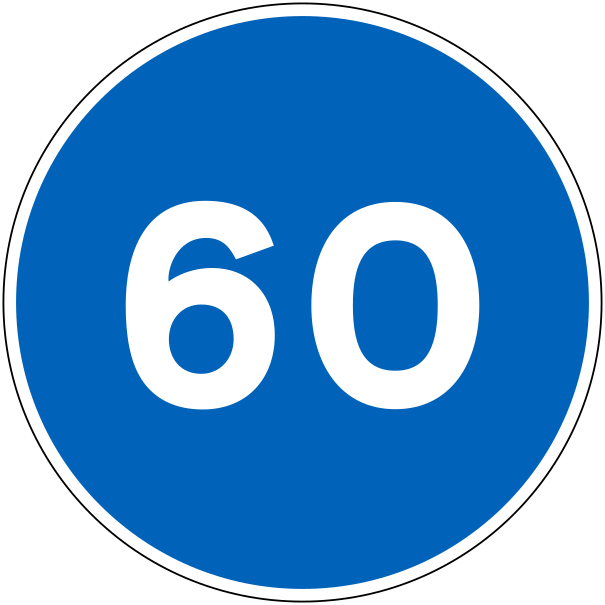
- AIt indicates the speed at which fuel consumption is minimised
- BIt applies only to heavy goods vehicles and buses
- CIt sets the lowest speed at which you must travel to avoid obstructing faster traffic
- DMinimum speed limits are advisory and not legally enforceable
Answer and explanation in the bank
- Q16Road signs and signals
What does this sign mean?

- ASlow down and give way
- BStop completely before proceeding
- CRoad closed ahead
- DNo answer is correct
Answer and explanation in the bank
- Q17Traffic rules
On a multi-lane road in Qatar, which lane should you normally drive in when the road is clear?
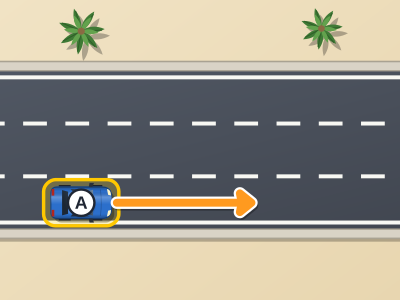
- AThe middle lane so you can move either way
- BThe left lane to allow others to overtake on the right
- CAny lane, provided you maintain speed
- DThe rightmost lane available to you
Answer and explanation in the bank
- Q18Right of way
You arrive at an unmarked junction where no signs or road markings indicate priority. Which vehicle has the right of way?
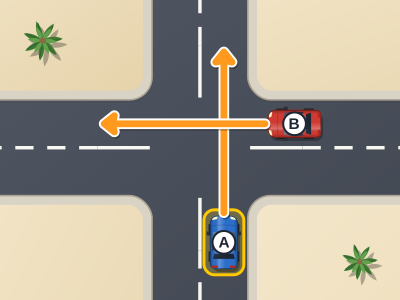
- AThe vehicle approaching from the left
- BThe vehicle approaching from the right
- CThe vehicle that arrived first
- DThe larger vehicle
Answer and explanation in the bank
- Q19Safe driving
What is the recommended minimum following distance behind the vehicle ahead on a dry road in Qatar?
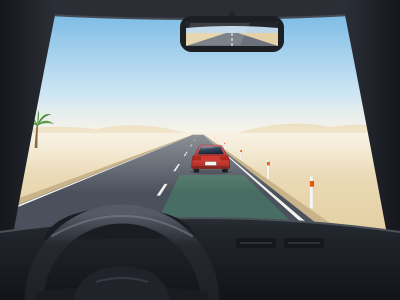
- AA 1-second gap
- BA 5-second gap at all times
- COne car length for every 10 km/h
- DA 2-to-3-second gap
Answer and explanation in the bank
- Q20Penalties and fines
What is Qatar's legal blood alcohol concentration (BAC) limit for all drivers?
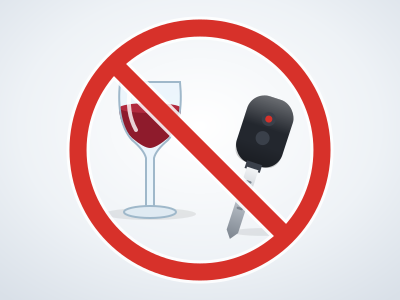
- AZero. Any detectable alcohol in the blood is a criminal offence.
- B0.05%, the same limit used in most European countries.
- C0.03% for private drivers and zero for professional drivers.
- D0.08%, which is the most common international standard.
Answer and explanation in the bank
- Q21Road signs and signals
What must you do when you see this sign?
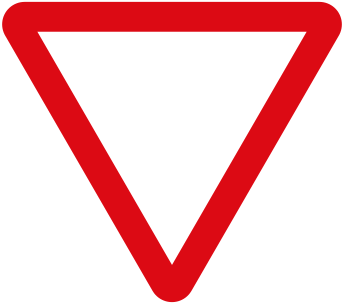
- AStop completely every time
- BYou have priority, proceed without slowing
- CYield to traffic on the main road before proceeding
- DTurn left only
Answer and explanation in the bank
- Q22Traffic rules
You are driving on a three-lane highway in Qatar. After overtaking a vehicle in the middle lane, what must you do?
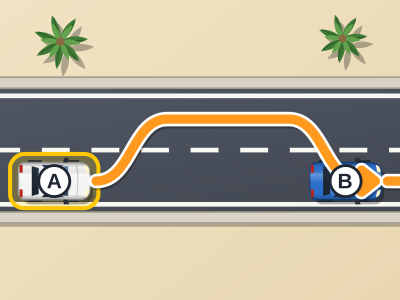
- AStay in the middle lane if traffic ahead is slower
- BReturn to the right lane as soon as it is safe to do so
- CMove to the left lane to allow further overtaking
- DMaintain your position until you reach your exit
Answer and explanation in the bank
- Q23Right of way
You are about to enter a roundabout. Who has priority?
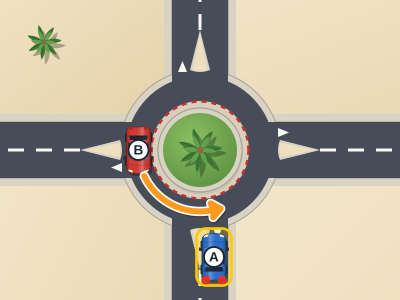
- ATraffic already circulating inside the roundabout
- BVehicles entering from the main road approach
- CVehicles on the right-hand entry lane
- DThe first vehicle to reach the yield line
Answer and explanation in the bank
- Q24Safe driving
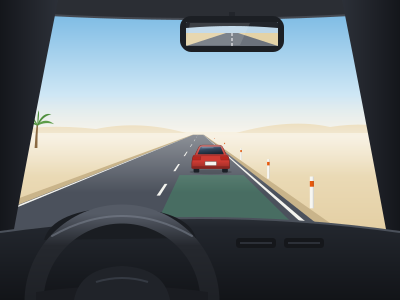
Under which condition should you at least double your normal following distance?
- AWhen driving on a motorway with no other traffic
- BWhen driving in rain, fog, or on sand-covered roads
- CWhen your vehicle has a full tank of fuel
- DWhen the road is straight and well lit
Answer and explanation in the bank
- Q25Penalties and fines
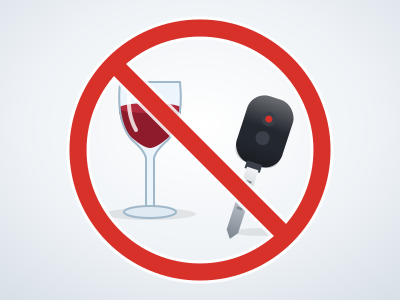
A driver is caught with alcohol in their system in Qatar. Which outcome is most likely for an expatriate offender?
- AA written warning for a first offence only.
- BA fine equivalent to a minor speeding ticket.
- CCriminal prosecution, imprisonment and possible deportation.
- DMandatory attendance at a road-safety workshop.
Answer and explanation in the bank
- Q26Road signs and signals
What does this sign tell you?
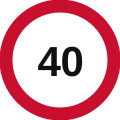
- AThe minimum speed allowed is 40 km/h
- BThe maximum speed allowed is 40 km/h
- CYou are 40 kilometres from the next city
- DRecommended speed in wet conditions is 40 km/h
Answer and explanation in the bank
- Q27Traffic rules
When approaching a roundabout in Qatar, who has priority?
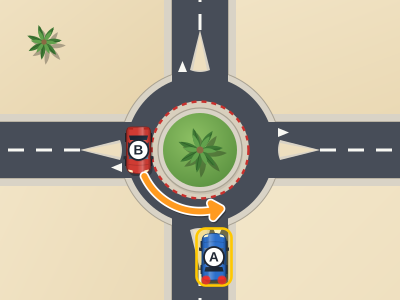
- AVehicles entering from the right
- BVehicles entering from the main approach road
- CVehicles already circulating inside the roundabout
- DThe vehicle that arrived at the roundabout first
Answer and explanation in the bank
- Q28Right of way
You hear a siren and see blue and red flashing lights from an emergency vehicle approaching from behind. What must you do?
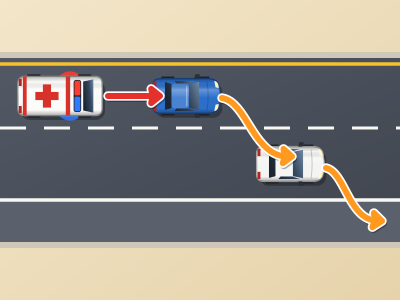
- ASpeed up to clear the road quickly
- BContinue at the same speed but stay in your lane
- CMove to the side of the road, slow down, and stop if safe to do so
- DStop immediately wherever you are
Answer and explanation in the bank
- Q29Safe driving
Why does stopping distance increase significantly on a wet road compared with a dry road?
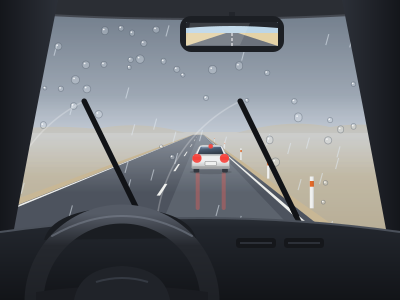
- AWater reduces tyre friction with the road surface
- BRain makes the brakes heat up faster
- CWipers slow the vehicle down
- DWet air is heavier and adds resistance
Answer and explanation in the bank
- Q30Penalties and fines
You are stopped at a traffic checkpoint in Qatar and an officer detects the smell of alcohol on your breath. What should you expect?
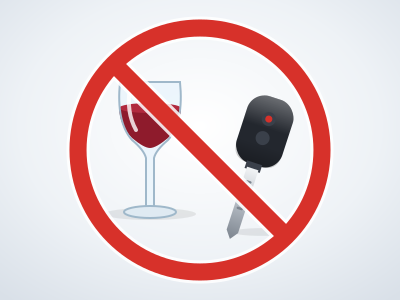
- AImmediate arrest and criminal proceedings regardless of the quantity consumed.
- BA breathalyser test and, if below 0.05%, a fine only.
- CA verbal warning and confiscation of your keys for that night.
- DA licence suspension of 30 days without further action.
Answer and explanation in the bank
- Q31Road signs and signals
What is the speed limit shown on this sign?
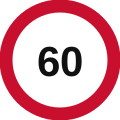
- A60 km/h maximum
- B60 km/h minimum
- C60 km/h recommended only at night
- D60 km/h advisory speed on curves
Answer and explanation in the bank
- Q32Traffic rules
You want to take the third exit at a two-lane roundabout in Qatar. Which lane should you generally use to enter?
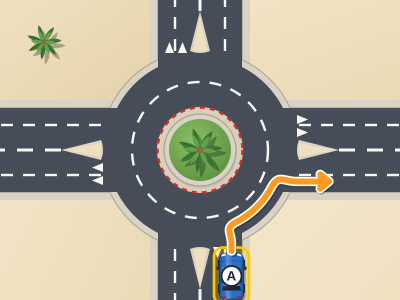
- AThe right lane, signalling right on entry and left before your exit
- BEither lane, as lane discipline inside roundabouts is optional
- CThe right lane, and signal right continuously throughout
- DThe left lane, signalling left on approach, then signal right as you pass the exit before yours
Answer and explanation in the bank
- Q33Right of way
A pedestrian is waiting at a marked pedestrian crossing. You are approaching in a vehicle. What must you do?
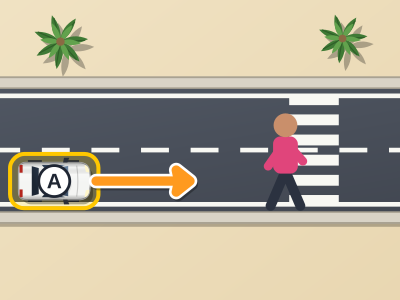
- ASlow down and stop to let the pedestrian cross
- BSound your horn to signal the pedestrian to wait
- CContinue at the same speed; pedestrians must wait for vehicles
- DFlash your headlights and proceed
Answer and explanation in the bank
- Q34Safe driving
You are driving on a desert road and your front wheels begin to skid on a patch of loose sand. What should you do?

- AApply the brakes firmly to stop the skid
- BAccelerate to regain traction quickly
- CTurn the steering wheel sharply in the opposite direction
- DEase off the accelerator, steer gently, and avoid harsh braking
Answer and explanation in the bank
- Q35Penalties and fines
Which statement best describes how Qatar's alcohol driving law differs from that of many Western countries?
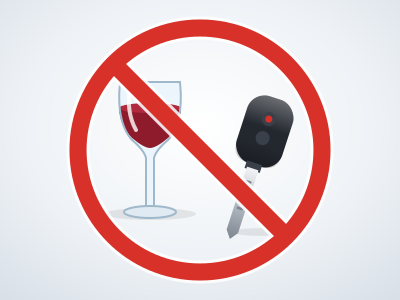
- AQatar allows up to 0.02% BAC, which is stricter but not zero.
- BQatar only applies its alcohol law to commercial vehicle drivers.
- CQatar sets the BAC limit at absolute zero, so any alcohol at all is an offence, whereas many Western countries permit up to 0.05% or 0.08%.
- DQatar and most Western countries share the same 0.05% BAC limit.
Answer and explanation in the bank
- Q36Road signs and signals
What is the maximum speed permitted where this sign is displayed?
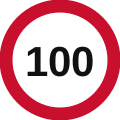
- A110 km/h
- B100 km/h
- C120 km/h
- D80 km/h
Answer and explanation in the bank
- Q37Traffic rules
A vehicle entering a roundabout in Qatar fails to give way and collides with your car. Who is normally at fault?
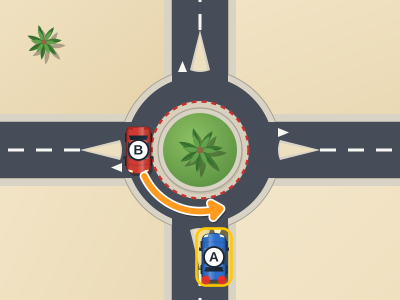
- AThe entering driver, as circulating traffic always has priority
- BYou, because you should have slowed to let them in
- CBoth drivers equally, as roundabouts are shared spaces
- DThe driver on the left, regardless of position
Answer and explanation in the bank
- Q38Right of way
You want to turn left across oncoming traffic. When may you complete the turn?
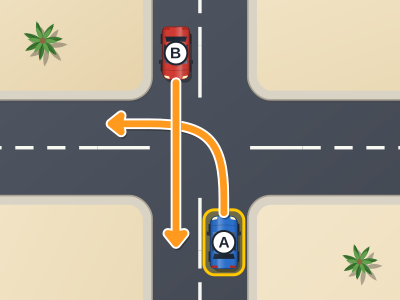
- AOnly when there is a safe gap in the oncoming traffic
- BAs soon as you reach the centre of the junction
- CWhen the oncoming driver slows down
- DImmediately, because turning vehicles have priority
Answer and explanation in the bank
- Q39Safe driving
What is aquaplaning (hydroplaning) and what is the correct response when it occurs?
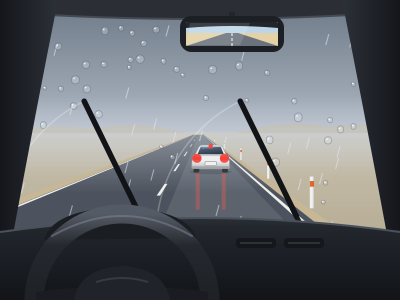
- AThe engine overheats in rain; turn off the engine immediately
- BThe windscreen mists up; apply the rear demister
- CThe wipers cannot clear the screen; increase wiper speed
- DThe tyres ride on a film of water; ease off the accelerator and steer straight until grip returns
Answer and explanation in the bank
- Q40Penalties and fines
Which action is illegal while driving in Qatar under the mobile phone regulations?
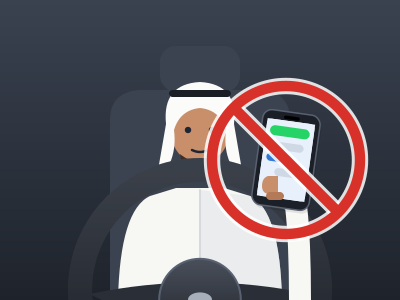
- AUsing a phone mounted on the dashboard in a holder.
- BReceiving a call through a built-in Bluetooth hands-free system.
- CPlaying music through the car speakers via Bluetooth.
- DHolding and using a mobile phone in your hand while the vehicle is moving.
Answer and explanation in the bank
Every answer above, with the rule it comes from, plus the full 40-question timed test.
Get the Qatar Driving Theory Online Practice Bank - QAR 39What this test covers
Topics include road signs, traffic signals, right of way, roundabouts, speed limits, seat belts, fines and penalties, and the safe-driving rules specific to your vehicle category. Full question-by-question feedback with explanations is shown immediately after you finish the test above.
Frequently asked questions
How many questions is the Al Shamal General Directorate of Traffic light vehicle theory test?
The official General Directorate of Traffic light vehicle theory test in Al Shamal has 40 questions and you need 37 correct (92.5%) to pass. This practice test has 40 questions.
Is this the real exam?
These are practice questions to help you revise, written to the published rules and to what candidates report from the real test. They are not the official Qatar exam and the real question bank, format, fees and pass mark are set by the General Directorate of Traffic (Ministry of Interior) and the driving schools, and can change. Always confirm the current requirements with your driving school or the traffic department (for example via the Metrash service).
Is this practice test free?
The first 10 questions are free, with no signup, and each shows the answer and the reason. The full 40-question test, timed, is in the Qatar Driving Theory Online Practice Bank (QAR 39, one payment), with every question in the bank.
What does the Al Shamal light vehicle theory test cover?
Road signs, traffic signals, right of way, roundabouts, speed limits, seat belts, penalties and safe-driving rules, plus the handling and safety topics specific to your vehicle.