

Al Shamal General Directorate of Traffic Truck & Bus
Timed mock exam· Full mock examsAl Shamal General Directorate of Traffic - Qatar Truck & Bus Theory Mock Test 3
Third full heavy-vehicle mock exam and a strong final readiness check before your real truck or bus theory test. Another distinct set of 40 timed questions.
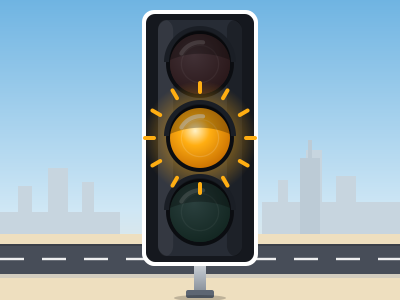
Traffic lights at a junction are showing a flashing amber signal. What does this require you to do?
The other 30 questions in this test
Read them all. The answer and the reason for each, and the timed 40-question run, are in the Qatar Driving Theory Online Practice Bank.
- Q11Penalties and fines
At a checkpoint in Qatar, an officer asks a driver to step out of the vehicle and present their licence and Istimara. The driver refuses. What is the likely outcome?
- AA small administrative fine and the driver is free to leave.
- BArrest for failing to comply with a lawful police instruction and additional charges related to obstruction.
- CThe officer cannot force compliance; the driver can legally decline.
- DNo penalty if the driver does eventually comply after a short delay.
Answer and explanation in the bank
- Q12Heavy vehicle
What is 'jackknifing' in an articulated truck, and what driving behaviour most commonly causes it?
- AThe fifth wheel uncouples spontaneously, allowing the trailer to slide out to one side
- BThe cab tilts forward due to a broken cab-tilt cylinder, causing loss of steering
- CThe trailer brakes apply harder than the tractor brakes causing the tractor to rotate around the coupling
- DThe trailer swings out of line with the tractor forming an acute angle; it is most often caused by sudden hard braking or harsh steering on a slippery surface that locks the tractor drive wheels
Answer and explanation in the bank
- Q13Traffic rules
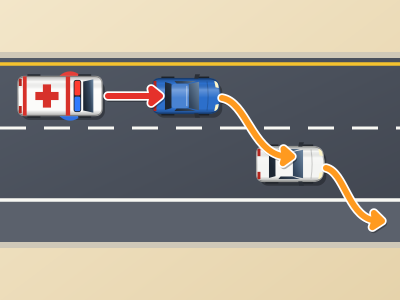
An emergency vehicle with lights and sirens activated is approaching from behind in Qatar. What must you do?
- AMaintain your speed so you do not obstruct traffic flow
- BMove to the left lane and slow down slightly
- CFollow the emergency vehicle through traffic to take advantage of the gap
- DPull to the right and stop safely to let the vehicle pass
Answer and explanation in the bank
- Q14Right of way
You are approaching a roundabout and see the road marking 'GIVE WAY' painted on the road before the entry line. What must you do?
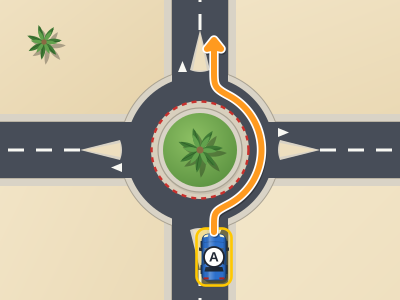
- AStop completely regardless of traffic in the roundabout
- BEnter the roundabout and signal for space
- CYield to vehicles already in the roundabout before entering
- DThe road marking is for guidance only and does not require action
Answer and explanation in the bank
- Q15Safe driving
You are driving at 100 km/h. A child runs onto the expressway approximately 60 metres ahead. You react normally. What is the likely outcome?
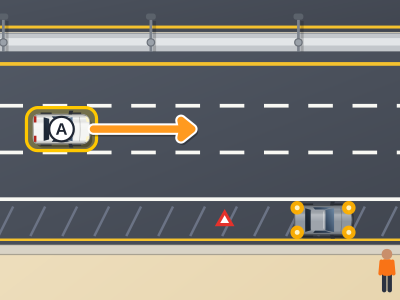
- AYou will stop comfortably with room to spare because ABS halves the braking distance
- BYou will stop exactly at the point of the hazard, which is the design limit of modern brakes
- CYour vehicle will not stop in time on a dry road because total stopping distance at 100 km/h typically exceeds 60 metres
- DThe outcome depends only on road surface and not on speed
Answer and explanation in the bank
- Q16Penalties and fines
What is Metrash and how does it relate to traffic fines in Qatar?
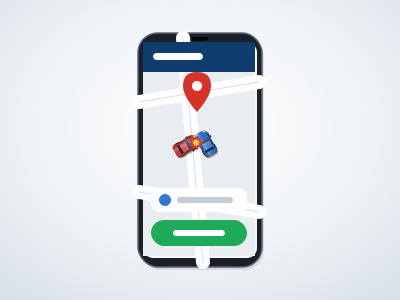
- AA private insurance comparison website unrelated to government fines
- BA toll payment system for highway travel
- CThe Ministry of Interior's official app, where residents can check and pay traffic fines and report minor accidents
- DAn app only for renewing the Istimara, not for paying traffic fines
Answer and explanation in the bank
- Q17Heavy vehicle
Before a heavy vehicle enters a tunnel, what should the driver confirm?
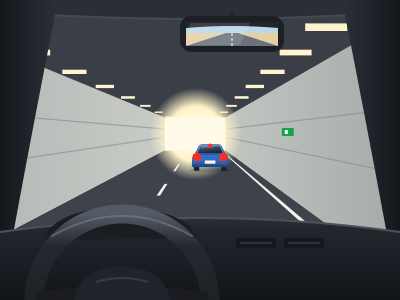
- AThe vehicle height and any cargo height is within the tunnel's posted clearance, and for dangerous goods, that the tunnel is open to the vehicle's hazard class
- BThe fuel tank is at least half full to avoid stopping inside the tunnel
- CThe speedometer is working accurately so the tunnel speed limit can be respected
- DThe cab air conditioning is switched off to reduce electrical load in the tunnel
Answer and explanation in the bank
- Q18Traffic rules
You are stopped at a red light in Qatar when an ambulance approaches from behind with sirens sounding. What should you do?
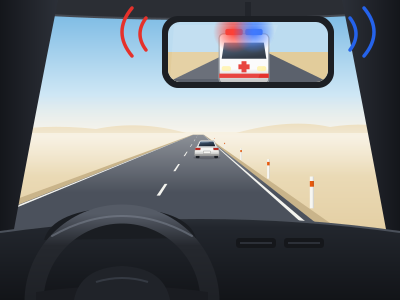
- AMove forward carefully if there is space, or to the side, to create a gap without entering the intersection unsafely
- BRun the red light immediately to clear the way
- CStay where you are; the ambulance will find another route
- DSwitch on hazard lights but do not move until the light turns green
Answer and explanation in the bank
- Q19Right of way
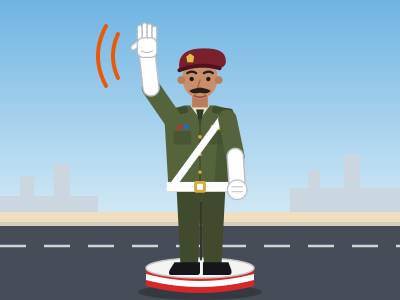
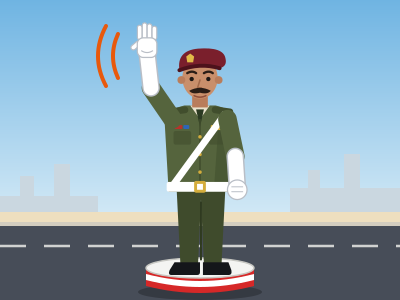
You are driving and a police officer at a junction signals you to stop with a raised hand, even though your traffic light is green. What must you do?
- AProceed on the green light; traffic lights take priority over officers
- BStop immediately; a police officer's signal overrides the traffic light
- CSlow down but continue through the junction
- DStop only if the officer is wearing a high-visibility jacket
Answer and explanation in the bank
- Q20Safe driving
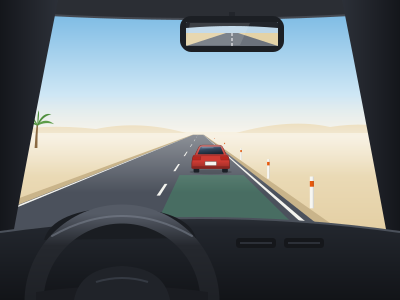
What effect does carrying extra passengers and luggage have on your vehicle's braking distance?
- AIt decreases braking distance because more weight improves tyre grip
- BIt has no effect on braking distance in vehicles with ABS
- CIt affects fuel economy only, not braking performance
- DIt increases braking distance because greater mass requires more force to decelerate
Answer and explanation in the bank
- Q21Penalties and fines
Where can a driver check the traffic violations recorded against them and pay the fines?
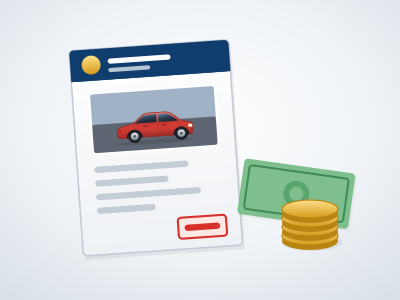
- AIn the Ministry of Interior's Metrash app or on the MOI website
- BOnly on social media groups that share fine lists
- COnly at the driving school where they trained
- DOnly at a police station after a court hearing
Answer and explanation in the bank
- Q22Heavy vehicle
What is the correct procedure if a tyre blows out at highway speed on a heavy truck?
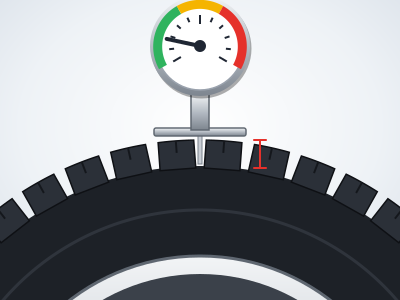
- AApply the brakes immediately and hard to stop as quickly as possible
- BGrip the steering wheel firmly, do not brake suddenly, allow the vehicle to decelerate gradually, and steer to the roadside safely before stopping
- CAccelerate briefly to stabilise the vehicle before braking
- DSwitch off the engine to reduce speed and steer to the shoulder
Answer and explanation in the bank
- Q23Traffic rules
What does a solid red traffic light mean in Qatar?
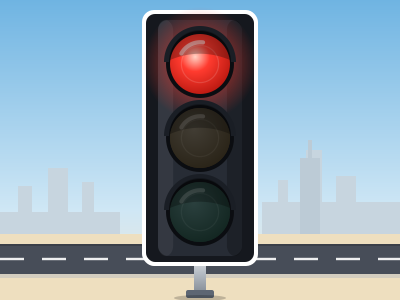
- ASlow down and be prepared to stop
- BStop completely before the stop line and do not proceed until the light changes
- CYou may proceed with caution if no crossing traffic is visible
- DStop only if pedestrians are crossing
Answer and explanation in the bank
- Q24Right of way
You are on a narrow bridge that is only wide enough for one vehicle. An oncoming vehicle is already on the bridge. What should you do?
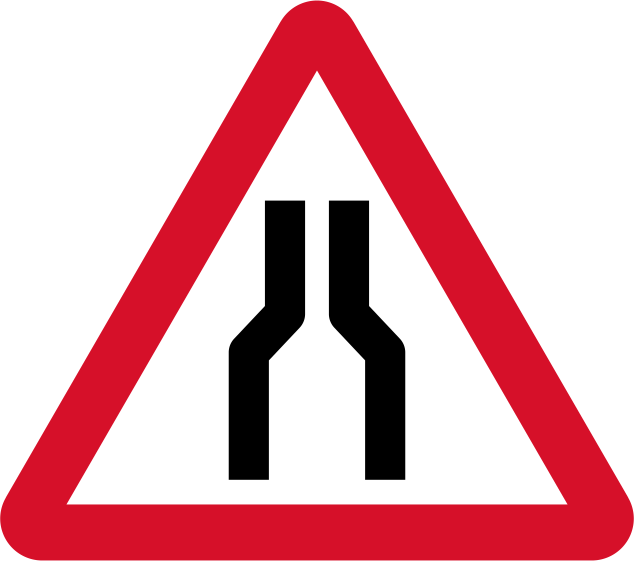
- AWait at your end of the bridge and allow the oncoming vehicle to pass first
- BProceed onto the bridge because you approached first
- CBoth vehicles proceed slowly and squeeze past each other
- DSound your horn to demand the other vehicle reverses
Answer and explanation in the bank
- Q25Safe driving
You are behind a large truck on a two-lane road and cannot see the road ahead. What should you do?
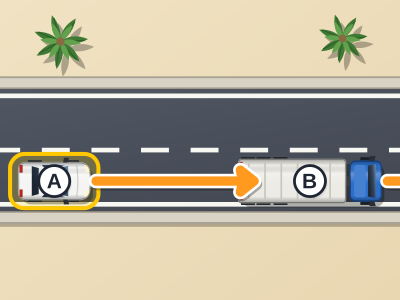
- AMove into the oncoming lane briefly to see around the truck
- BFlash your headlights to signal the truck driver to speed up
- CClose the gap so you can see past the truck using its mirrors
- DIncrease your following distance to improve your view and wait for a safe overtaking opportunity
Answer and explanation in the bank
- Q26Penalties and fines
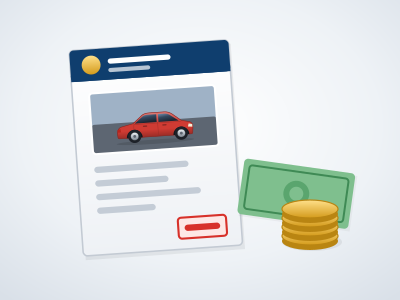
Can a driver pay outstanding traffic fines in Qatar without visiting a government office in person?
- ANo. All fines must be paid in cash at a traffic court only.
- BYes. Fines can be paid through the Metrash app, the official e-government portal and selected bank or payment channels.
- CFines can only be paid at the police station where the ticket was issued.
- DQatar does not accept online fine payment; all payments are by cheque only.
Answer and explanation in the bank
- Q27Heavy vehicle
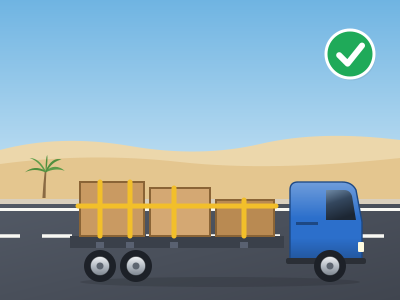
What safety device prevents a trailer from rolling away if it becomes accidentally uncoupled from the tractor?
- AThe secondary kingpin, a backup locking pin that engages if the main kingpin fails
- BThe breakaway cable, which automatically applies the trailer spring brakes if the trailer separates from the tractor
- CThe anti-roll hitch, a spring-tensioned coupling that pulls the trailer back toward the tractor
- DThe trailer ABS system, which detects separation and applies wheel-by-wheel braking
Answer and explanation in the bank
- Q28Traffic rules
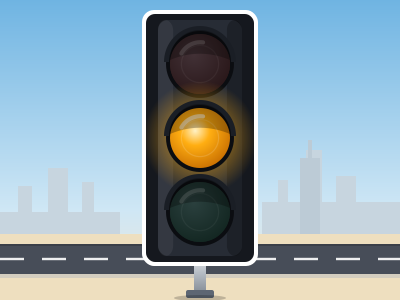
What should you do when a traffic light in Qatar shows an amber (yellow) signal?
- AAccelerate to clear the junction before it turns red
- BStop if it is safe to do so; only continue if stopping would be dangerous
- CAmber means the same as green; continue at speed
- DNo answer is correct
Answer and explanation in the bank
- Q29Right of way
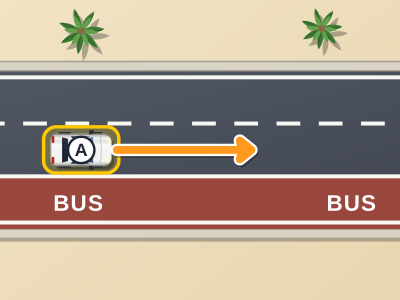
You are in a shared lane that is also marked as a bus and bicycle lane during certain hours. It is currently within those hours. Who has priority in the lane?
- APrivate cars because they were in the lane first
- BAll vehicles share the lane equally at all times
- CCyclists only; buses must use other lanes
- DBuses and cyclists; private cars must not use the lane during restricted hours
Answer and explanation in the bank
- Q30Safe driving
Why should you not park on a motorway hard shoulder unless it is an emergency or breakdown?
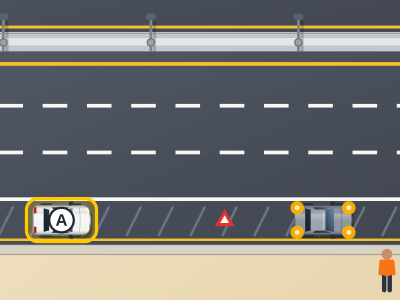
- AIt creates a hazard for other drivers and is illegal under Qatar traffic law
- BIt is permitted for rest stops of up to 10 minutes
- CIt is permitted if you switch on your hazard lights
- DIt is only prohibited between midnight and 6 am
Answer and explanation in the bank
- Q31Penalties and fines
What is the hard shoulder on a motorway and when may a driver use it in Qatar?
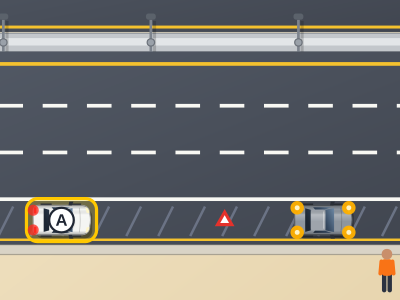
- AThe hard shoulder is the paved strip at the edge of the carriageway, reserved for genuine emergencies and breakdowns only.
- BThe hard shoulder is an extra lane that drivers may use at any time to overtake slow traffic.
- CThe hard shoulder is for use by motorcycles only.
- DThe hard shoulder is a bus lane open to all vehicles after 10 pm.
Answer and explanation in the bank
- Q32Heavy vehicle
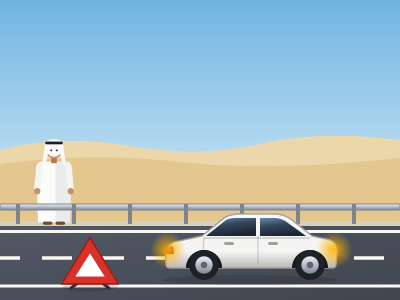
What lights must a heavy vehicle display when it breaks down and is stopped on a road at night?
- AFull headlights pointed toward oncoming traffic to warn drivers
- BOnly the park brake light; other lights are not required in an emergency
- CHazard warning lights and warning triangles placed a safe distance behind the vehicle; in poor visibility, rear marker lights must also be working
- DNo lights are required if the breakdown occurs on a lighted road
Answer and explanation in the bank
- Q33Traffic rules
What is a zebra crossing in Qatar and what are your obligations at one?
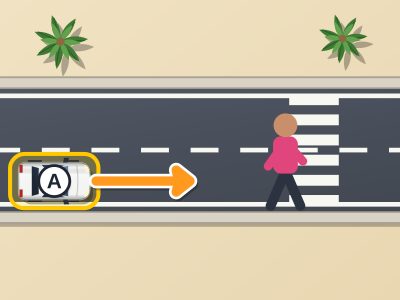
- AA painted crossing where pedestrians have priority and you must give way to them
- BA crossing for animals; you need not slow down
- CA crossing controlled by traffic lights where pedestrians must wait for a green signal
- DAn advisory crossing; pedestrians should wait for vehicles to pass first
Answer and explanation in the bank
- Q34Right of way
You are approaching a zebra crossing with a refuge island in the middle. A pedestrian is on the island waiting to cross the second half of the road. Do you need to stop?
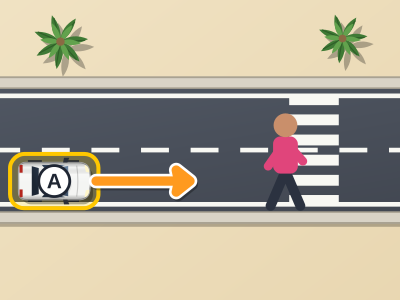
- ANo, because the pedestrian is on the island and not in the road
- BYes, if the pedestrian is clearly intending to cross the half of the road in front of you
- CNo, each half of the road is treated as a separate crossing with no obligation
- DOnly if the pedestrian raises their hand
Answer and explanation in the bank
- Q35Safe driving
What is the most effective strategy to prevent fatigue on a 500 km overnight desert drive in Qatar?
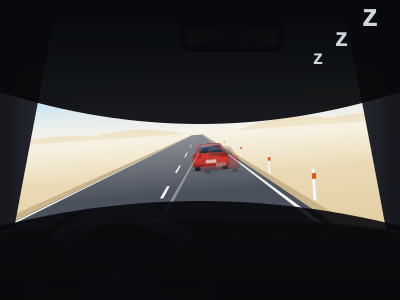
- ABegin the journey well rested, plan rest stops every 2 hours, stay hydrated, and avoid driving in the pre-dawn hours when fatigue is highest
- BDrink energy drinks every hour and keep the air conditioning very cold
- CDrive without stopping to complete the journey as quickly as possible
- DListen to loud music and keep the windows open throughout the journey
Answer and explanation in the bank
- Q36Penalties and fines
During heavy traffic on a Qatar motorway, a driver moves onto the hard shoulder to bypass a queue and travels along it for 500 metres. What offence have they committed?
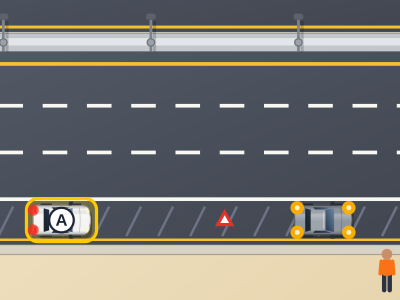
- ANo offence, because slow traffic justifies temporary hard-shoulder use.
- BMisuse of the hard shoulder, which is a traffic offence carrying a fine and black points.
- COnly an offence if the hard shoulder was marked with a continuous white line.
- DA minor infraction with no black points because the distance was short.
Answer and explanation in the bank
- Q37Heavy vehicle
A truck driver is about to drive over a recently constructed road in Qatar's industrial area. Why should they be particularly careful about the road surface?
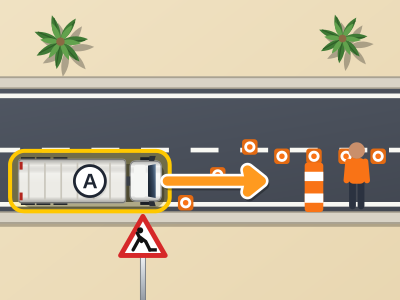
- ANew roads always have lower speed limits than older roads
- BNew road markings are slippery until they cure, but the road surface itself presents no extra hazard
- CNew asphalt in extreme heat can be soft and may deform under heavy axle loads, and construction debris or edge drop-offs can cause tyre damage
- DNew asphalt is harder and provides better traction than older worn surfaces
Answer and explanation in the bank
- Q38Traffic rules
You approach a zebra crossing in Qatar and a pedestrian is standing on the pavement appearing to want to cross. What should you do?
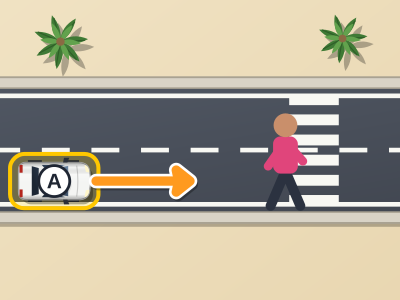
- ASlow down and be prepared to stop, giving way if they step onto the crossing
- BContinue at normal speed; they are not yet on the crossing
- CSound your horn so they know you are approaching
- DFlash your headlights to signal it is safe for them to cross
Answer and explanation in the bank
- Q39Right of way
You are in a tunnel and see an emergency vehicle behind you with lights and siren on. What is the safest action?
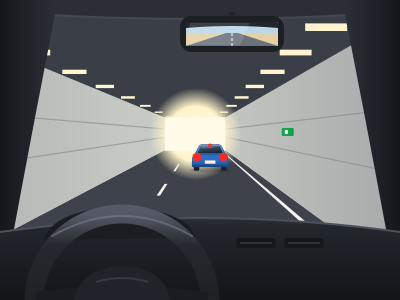
- AStop immediately in the tunnel lane
- BAccelerate to the tunnel exit to get out of the way
- CContinue at the same speed; tunnels are exempt from emergency vehicle rules
- DMove to the side as far as possible and slow down, but do not stop unless there is a designated lay-by or emergency alcove
Answer and explanation in the bank
- Q40Safe driving
In what circumstance should you use your hazard warning lights while driving (not stationary) in Qatar?
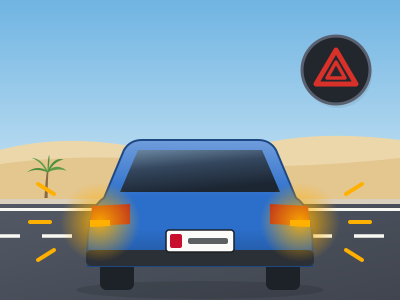
- AWhenever you are driving in heavy rain
- BTo signal a parking manoeuvre in a busy area
- CTo warn following drivers of an unexpected hazard or sudden stop ahead
- DHazard lights must never be used while the vehicle is moving
Answer and explanation in the bank
Every answer above, with the rule it comes from, plus the full 40-question timed test.
Get the Qatar Driving Theory Online Practice Bank - QAR 39What this test covers
Topics include road signs, traffic signals, right of way, roundabouts, speed limits, seat belts, fines and penalties, and the safe-driving rules specific to your vehicle category. Full question-by-question feedback with explanations is shown immediately after you finish the test above.
Frequently asked questions
How many questions is the Al Shamal General Directorate of Traffic truck & bus theory test?
The official General Directorate of Traffic truck & bus theory test in Al Shamal has 40 questions and you need 37 correct (92.5%) to pass. This practice test has 40 questions.
Is this the real exam?
These are practice questions to help you revise, written to the published rules and to what candidates report from the real test. They are not the official Qatar exam and the real question bank, format, fees and pass mark are set by the General Directorate of Traffic (Ministry of Interior) and the driving schools, and can change. Always confirm the current requirements with your driving school or the traffic department (for example via the Metrash service).
Is this practice test free?
The first 10 questions are free, with no signup, and each shows the answer and the reason. The full 40-question test, timed, is in the Qatar Driving Theory Online Practice Bank (QAR 39, one payment), with every question in the bank.
What does the Al Shamal truck & bus theory test cover?
Road signs, traffic signals, right of way, roundabouts, speed limits, seat belts, penalties and safe-driving rules, plus the handling and safety topics specific to your vehicle.