

Al Wakrah General Directorate of Traffic Light vehicle
Practice mode· Right of way & safetyAl Wakrah General Directorate of Traffic - Qatar Safe Driving Practice Test
Covers defensive driving, following distances, fatigue, visibility, adverse weather and hazard awareness. Safe driving habits save lives and keep your licence clean.
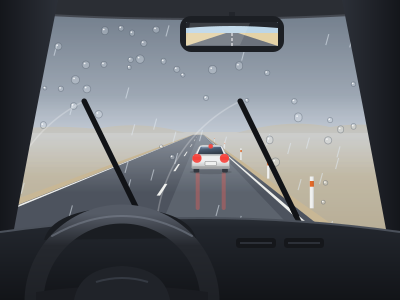
Why does stopping distance increase significantly on a wet road compared with a dry road?
The other 12 questions in this test
Read them all. The answer and the reason for each, and the timed 22-question run, are in the Qatar Driving Theory Online Practice Bank.
- Q11Safe driving
You are about to change lanes and your mirrors show no vehicles. What additional check must you make?
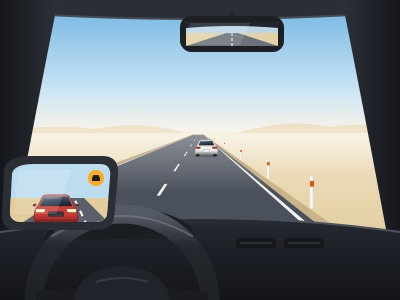
- AA shoulder check (quick glance) in the direction of the intended lane change to check the blind spot
- BSound the horn twice to warn any unseen vehicles
- CNo further check is needed if both door mirrors and the interior mirror are clear
- DCheck the instrument panel to ensure the indicator is flashing correctly
Answer and explanation in the bank
- Q12Safe driving
Your vehicle's brakes feel spongy and the pedal sinks toward the floor under moderate pressure. What does this indicate?
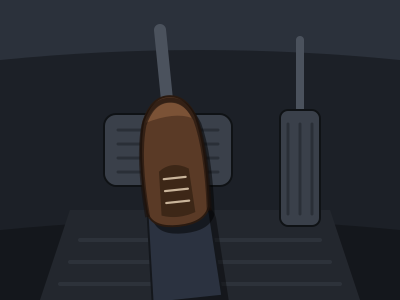
- AThe brakes are correctly adjusted for desert driving
- BAir or a fluid leak in the brake hydraulic system, requiring immediate professional inspection
- CThe brake pads need replacing soon but are safe to drive on for several weeks
- DBrake overheating from city traffic, which will resolve after cooling
Answer and explanation in the bank
- Q13Safe driving
Which of the following actions is an example of aggressive driving that is illegal in Qatar?

- AUsing the left lane to overtake and then returning to the right lane
- BSignalling before changing lanes on the expressway
- CTailgating, cutting other drivers off, and making obscene gestures
- DSlowing down when approaching a pedestrian crossing
Answer and explanation in the bank
- Q14Safe driving
What is the stopping distance composed of and why does it matter?
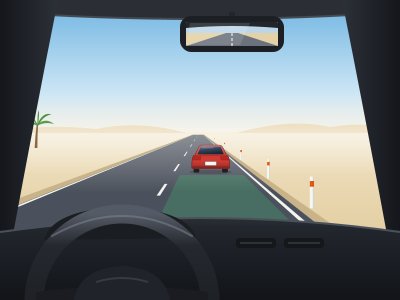
- ABraking distance only; thinking distance is negligible at motorway speeds
- BThinking distance (reaction time) plus braking distance; total stopping distance increases sharply with speed
- CThe length of the skid marks left on the road surface
- DThe distance from the hazard at which the driver first notices it
Answer and explanation in the bank
- Q15Safe driving
At 120 km/h on a dry expressway, approximately how much does doubling your speed from 60 km/h affect braking distance?
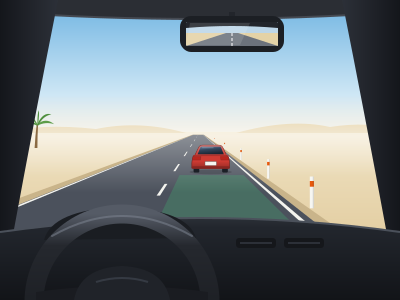
- ABraking distance exactly doubles
- BBraking distance roughly quadruples compared to 60 km/h
- CBraking distance increases by about 50%
- DBraking distance at high speed is similar because modern ABS compensates
Answer and explanation in the bank
- Q16Safe driving
Why should you avoid sudden harsh braking on a sand-covered desert road?
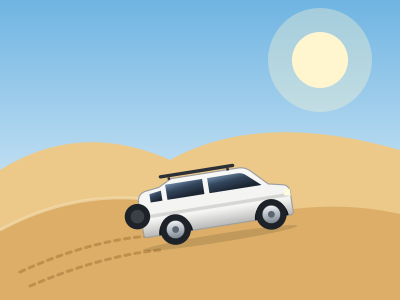
- ASand greatly reduces tyre grip, making it easy for the wheels to lock up and the vehicle to skid uncontrollably
- BHarsh braking is safe on sand because the loose surface absorbs the stopping force
- CBraking on sand damages the tyre sidewalls but does not affect stopping distance
- DABS compensates fully for sand and makes braking distance the same as on tarmac
Answer and explanation in the bank
- Q17Safe driving
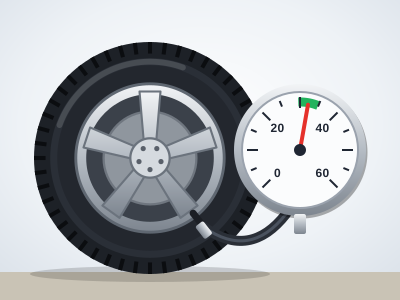
What warning sign indicates you may be about to experience a tyre blowout?
- AThe temperature gauge rising above normal
- BThe engine note rising unexpectedly
- CAll dashboard warning lights illuminating together
- DSudden vibration, a loud bang, and the vehicle pulling strongly to one side
Answer and explanation in the bank
- Q18Safe driving
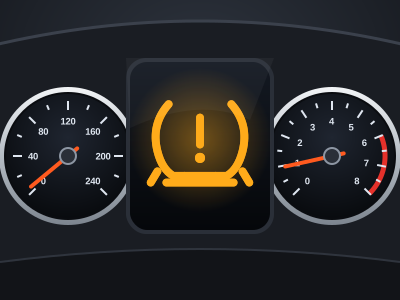
How do Tyre Pressure Monitoring Systems (TPMS) help drivers in Qatar?
- AThey automatically inflate the tyre back to the correct pressure
- BThey alert the driver when a tyre pressure drops to an unsafe level
- CThey eliminate the need to check tyre pressure manually
- DThey measure tread depth and warn when tyres need replacing
Answer and explanation in the bank
- Q19Safe driving
Before starting a journey, you notice one tyre looks visibly flat. What should you do?
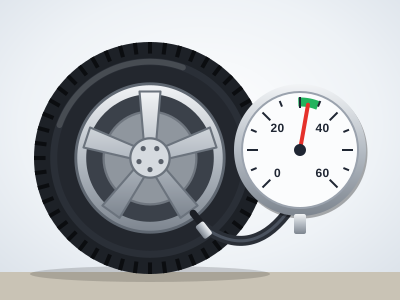
- ADrive slowly to the nearest petrol station to inflate it
- BDo not drive; inflate or replace the tyre before setting off
- CDrive normally; modern tyres can handle temporary low pressure
- DCheck the pressure in the other three tyres to confirm it is just one
Answer and explanation in the bank
- Q20Safe driving
What is the legal requirement for a warning triangle in Qatar?
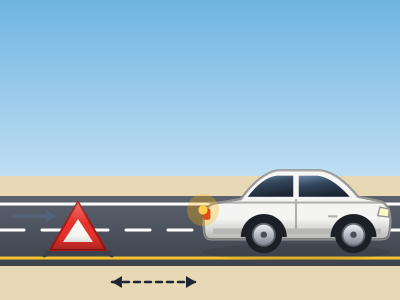
- AWarning triangles are optional safety accessories and not legally required
- BHazard lights replace the legal need for a warning triangle in Qatar
- CWarning triangles are only required for heavy vehicles, not private cars
- DVehicles must carry a warning triangle and it must be placed to warn approaching traffic in a breakdown or crash
Answer and explanation in the bank
- Q21Safe driving
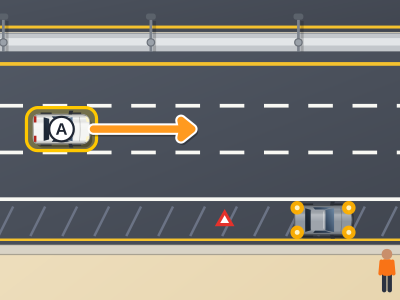
You are driving at 100 km/h. A child runs onto the expressway approximately 60 metres ahead. You react normally. What is the likely outcome?
- AYou will stop comfortably with room to spare because ABS halves the braking distance
- BYou will stop exactly at the point of the hazard, which is the design limit of modern brakes
- CYour vehicle will not stop in time on a dry road because total stopping distance at 100 km/h typically exceeds 60 metres
- DThe outcome depends only on road surface and not on speed
Answer and explanation in the bank
- Q22Safe driving
What effect does carrying extra passengers and luggage have on your vehicle's braking distance?
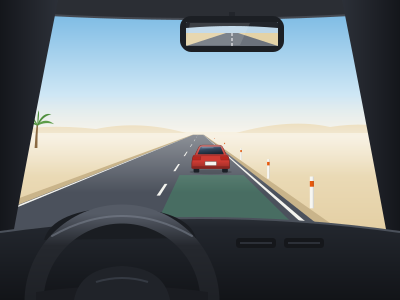
- AIt decreases braking distance because more weight improves tyre grip
- BIt has no effect on braking distance in vehicles with ABS
- CIt affects fuel economy only, not braking performance
- DIt increases braking distance because greater mass requires more force to decelerate
Answer and explanation in the bank
Every answer above, with the rule it comes from, plus the full 22-question timed test.
Get the Qatar Driving Theory Online Practice Bank - QAR 39What this test covers
Topics include road signs, traffic signals, right of way, roundabouts, speed limits, seat belts, fines and penalties, and the safe-driving rules specific to your vehicle category. Full question-by-question feedback with explanations is shown immediately after you finish the test above.
Frequently asked questions
How many questions is the Al Wakrah General Directorate of Traffic light vehicle theory test?
The official General Directorate of Traffic light vehicle theory test in Al Wakrah has 40 questions and you need 37 correct (92.5%) to pass. This practice test has 22 questions.
Is this the real exam?
These are practice questions to help you revise, written to the published rules and to what candidates report from the real test. They are not the official Qatar exam and the real question bank, format, fees and pass mark are set by the General Directorate of Traffic (Ministry of Interior) and the driving schools, and can change. Always confirm the current requirements with your driving school or the traffic department (for example via the Metrash service).
Is this practice test free?
The first 10 questions are free, with no signup, and each shows the answer and the reason. The full 22-question test, timed, is in the Qatar Driving Theory Online Practice Bank (QAR 39, one payment), with every question in the bank.
What does the Al Wakrah light vehicle theory test cover?
Road signs, traffic signals, right of way, roundabouts, speed limits, seat belts, penalties and safe-driving rules, plus the handling and safety topics specific to your vehicle.