

Al Wakrah General Directorate of Traffic Truck & Bus
Timed mock exam· Full mock examsAl Wakrah General Directorate of Traffic - Qatar Truck & Bus Theory Mock Test 1
A full 40-question timed practice exam for the Qatar heavy-vehicle (truck and bus) theory test, set at the reported 37/40 (92.5%) pass mark. Covers shared road rules and signs plus heavy-vehicle handling and safety.
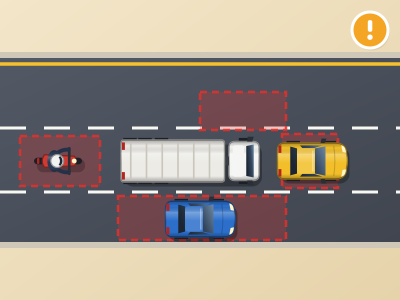
Which mirrors are most critical for a truck driver to check before making a left turn at an intersection?
The other 30 questions in this test
Read them all. The answer and the reason for each, and the timed 40-question run, are in the Qatar Driving Theory Online Practice Bank.
- Q11Right of way
Traffic lights at a junction are showing a flashing amber signal. What does this require you to do?
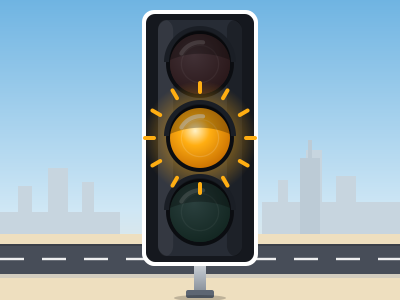
- AStop completely as if at a red light
- BProceed with caution, giving way to pedestrians and other vehicles
- CSpeed up to clear the junction before the signal changes
- DTreat it as a green light and proceed normally
Answer and explanation in the bank
- Q12Safe driving
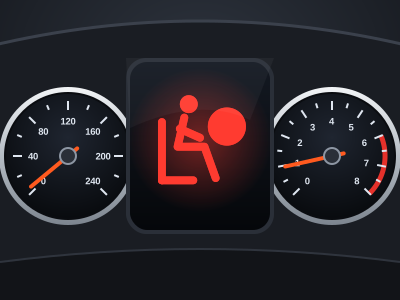
What is the primary purpose of a front airbag in a crash?
- ATo replace the seatbelt in low-speed collisions
- BTo cushion the occupant from hitting the steering wheel or dashboard
- CTo protect the engine from impact damage
- DTo automatically apply the brakes during a frontal crash
Answer and explanation in the bank
- Q13Penalties and fines
How does the severity of a speeding penalty in Qatar relate to how far above the limit you are travelling?
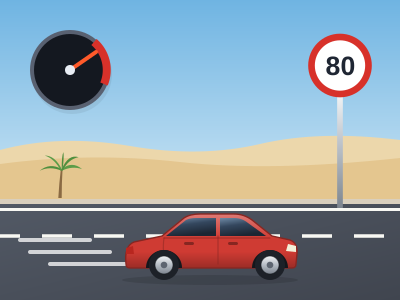
- APenalties increase with the margin of excess speed. Greater excess attracts higher fines, more black points and possible vehicle confiscation.
- BAll speeding offences carry an identical flat fine regardless of how fast you are going.
- CPenalties only apply if you exceed the limit by more than 30 km/h.
- DSpeeding penalties apply only when driving a commercial vehicle.
Answer and explanation in the bank
- Q14Road signs and signals
How should you approach the hazard shown in this sign?
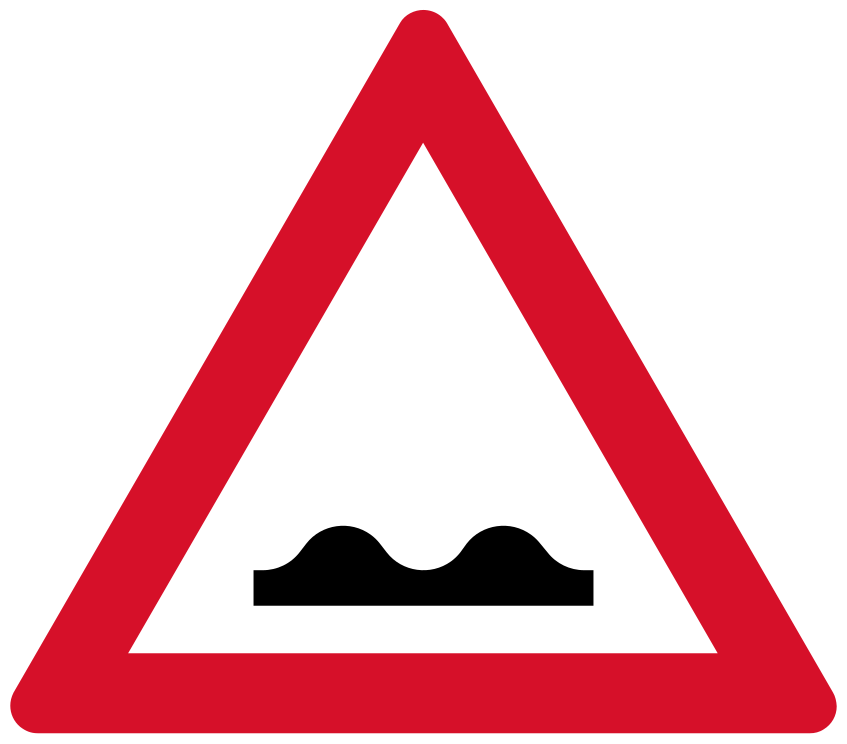
- AAccelerate to clear the bump smoothly
- BReduce speed before reaching the bump and cross it slowly
- CStraddle the bump with your wheels on either side
- DSound the horn and maintain your current speed
Answer and explanation in the bank
- Q15Traffic rules
When must you switch from high-beam (full-beam) headlights to low-beam in Qatar?
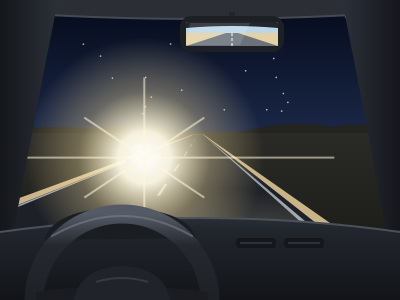
- AOnly in built-up areas with street lighting
- BOnly when the other driver flashes their lights at you
- CHigh-beam may always be used on unlit motorways
- DWhen an oncoming vehicle is within approximately 150 to 200 metres, or when following another vehicle closely
Answer and explanation in the bank
- Q16Right of way
You approach a level crossing with no barriers. The red lights are flashing. What must you do?
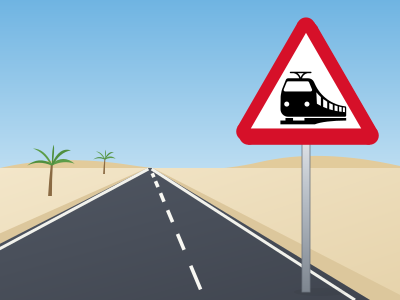
- AStop before the stop line and wait until the lights stop flashing and it is safe to cross
- BSlow down, check for trains, and proceed if you do not see one
- CStop only if you can hear a train approaching
- DProceed quickly to clear the crossing before the train arrives
Answer and explanation in the bank
- Q17Safe driving
What is the minimum recommended distance you should sit from the steering wheel to allow an airbag to deploy safely?
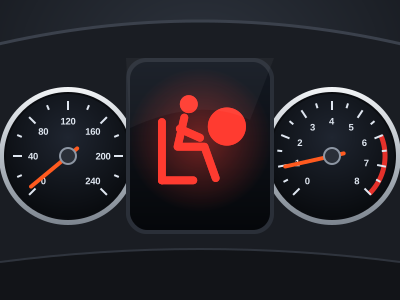
- AAbout 25 cm (10 inches) between the chest and the steering wheel hub
- BAs close as possible for maximum steering control
- CAt least 60 cm so the airbag has room to expand fully
- DDistance does not matter if the seatbelt is worn
Answer and explanation in the bank
- Q18Penalties and fines
A driver in Qatar is caught on a speed camera at a location where the posted limit is 80 km/h. If the driver was travelling at 130 km/h, which outcomes might they face?
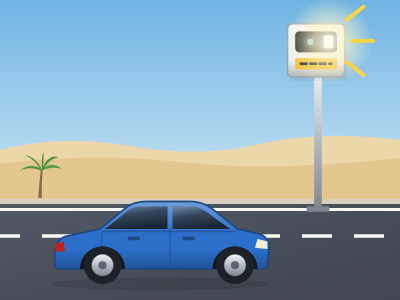
- AOnly a small administrative fine because it is a first offence captured by camera.
- BNo penalty because camera fines only apply to commercial vehicles in Qatar.
- CA warning letter only, with a fine applied on a second offence.
- DA QR 900 fine and 3 black points.
Answer and explanation in the bank
- Q19Heavy vehicle
A large truck has a blind spot directly in front of the cab extending several metres ahead. What should the driver do before moving off from a stop?
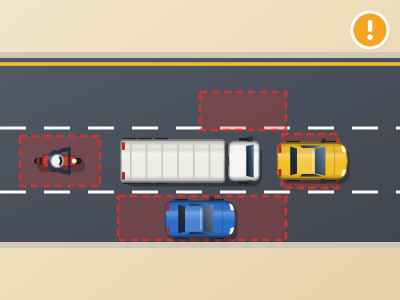
- ASound the horn twice and move off slowly; this is sufficient warning
- BWalk around the vehicle to check for children, animals, or obstacles before climbing into the cab and moving off
- CUse only the side mirrors; the front blind spot cannot be managed on commercial vehicles
- DRoll forward a few centimetres, pause, then continue; this allows time for pedestrians to move
Answer and explanation in the bank
- Q20Road signs and signals
What shape is the Stop sign in Qatar?

- AOctagonal (eight-sided)
- BCircular
- CTriangular
- DDiamond-shaped
Answer and explanation in the bank
- Q21Traffic rules
Under what conditions should you use front fog lights in Qatar?
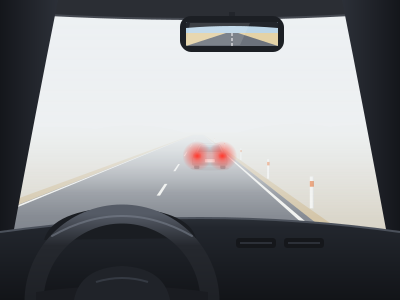
- AOnly in heavy rain, dense fog, or dust storms that significantly reduce visibility
- BWhenever you use high-beam headlights
- CDuring daytime to make your vehicle more visible to others
- DOnly on unlit desert roads regardless of conditions
Answer and explanation in the bank
- Q22Right of way
You are on a narrow road and meet an oncoming vehicle. There is a passing place on your left. What should you do?
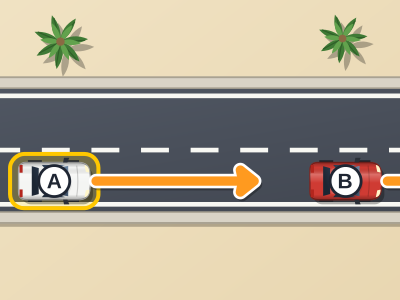
- APull into the passing place on your left to allow the oncoming vehicle to pass
- BContinue forward and expect the oncoming driver to reverse
- CThe vehicle going uphill always has priority on narrow roads
- DBoth vehicles should stop and wait for a third vehicle to clear the road
Answer and explanation in the bank
- Q23Safe driving
How should you correctly adjust your driving mirrors before starting a journey?
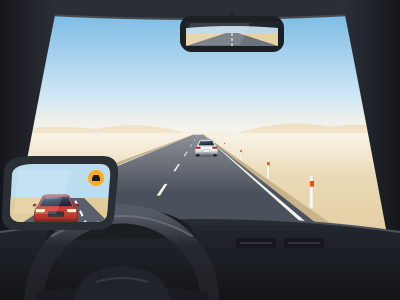
- AAdjust all mirrors so blind spots are minimised and you have a clear rear and side view
- BPoint the interior mirror upward to reduce glare from headlights at all times
- CAdjust only the interior mirror; exterior mirrors are set at the factory
- DSet the mirrors after reaching the first traffic signal
Answer and explanation in the bank
- Q24Penalties and fines
Why do many drivers in Qatar flash their headlights repeatedly on the motorway?
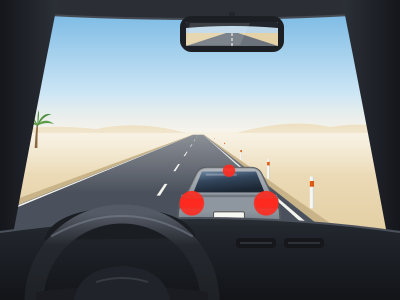
- ATo pressure the driver ahead to move out of the way, a form of tailgating that is illegal.
- BTo signal that the road ahead is clear.
- CTo communicate that their own vehicle has a fault.
- DFlashing headlights is an approved way to overtake in Qatar.
Answer and explanation in the bank
- Q25Heavy vehicle
What is tail swing, and why is it dangerous when a truck makes a sharp right turn?
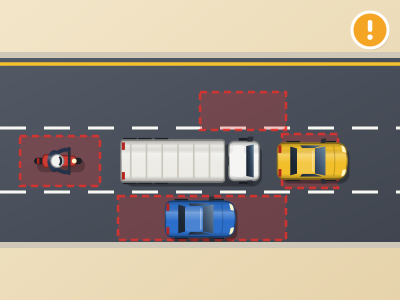
- AThe rear of the trailer swings left as the front turns right, potentially striking pedestrians or vehicles on the left side
- BThe drive axle loses traction and the rear of the truck slides forward
- CThe trailer hitch swings upward when the truck accelerates out of a turn
- DThe steering wheel swings back to centre after a turn, causing loss of directional control
Answer and explanation in the bank
- Q26Road signs and signals
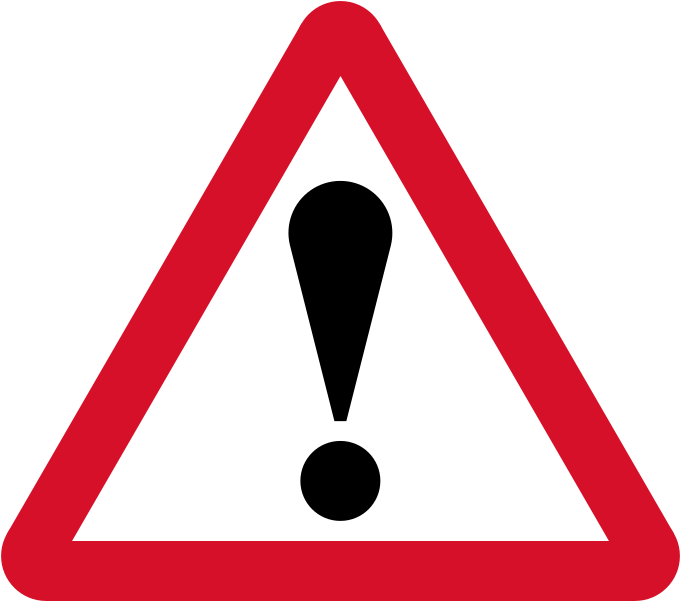
What is the general shape of a warning sign in Qatar?
- AA red circle
- BA blue rectangle
- CA red-bordered equilateral triangle pointing upwards
- DA green rectangle
Answer and explanation in the bank
- Q27Traffic rules
Which of the following is a legal parking restriction in Qatar?
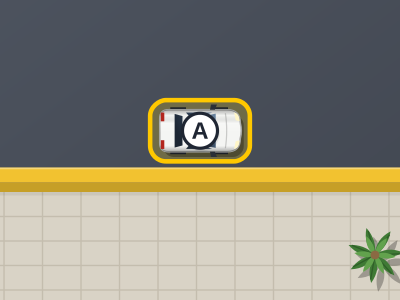
- AParking is allowed anywhere on a road shoulder for up to 30 minutes
- BParking is permitted on a pedestrian crossing if you leave hazard lights on
- CDouble parking is allowed at night when traffic is light
- DYou must not park within a specified distance of an intersection or junction
Answer and explanation in the bank
- Q28Right of way
A cyclist is travelling straight ahead through a junction. You want to turn left across their path. Who has right of way?
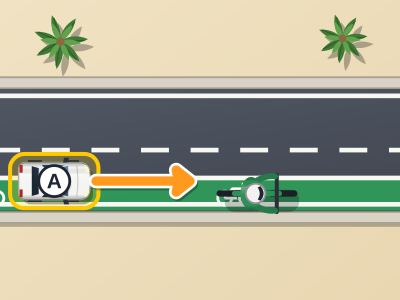
- AYou, because you are turning and already in the junction
- BThe cyclist going straight ahead
- CYou, because cyclists must use the designated cycle path
- DWhichever road user is moving faster
Answer and explanation in the bank
- Q29Safe driving
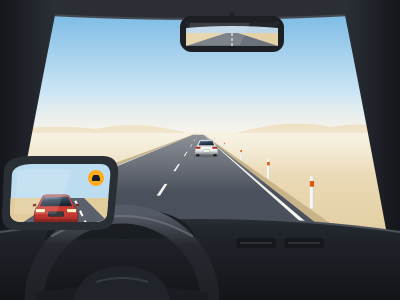
Which area around your vehicle represents the most dangerous blind spot when changing lanes on a motorway?
- ADirectly in front of the vehicle beyond the bonnet
- BDirectly behind the vehicle as seen in the interior mirror
- CThe zone diagonally behind each shoulder, not visible in door mirrors
- DThe area visible only when reversing
Answer and explanation in the bank
- Q30Penalties and fines
What must a driver do when a traffic signal turns red in Qatar?
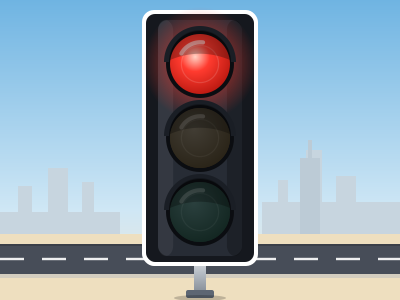
- AStop completely before the stop line and wait until the signal turns green.
- BSlow down and proceed only if no other vehicle is crossing.
- CStop only if a traffic officer is present.
- DContinue if you entered the intersection on amber.
Answer and explanation in the bank
- Q31Heavy vehicle
Why do articulated trucks need extra road width when making tight turns?
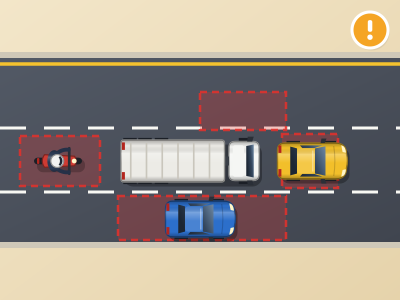
- AThe trailer's rear wheels follow a smaller radius than the tractor's front wheels, cutting the corner inward
- BThe long wheelbase makes the steering wheel difficult to turn quickly
- CThe fifth wheel joint allows the trailer to slide outward beyond the tractor's path
- DWide tyres on the drive axle increase the turning radius on both sides equally
Answer and explanation in the bank
- Q32Road signs and signals
What do prohibitory (regulatory) signs in Qatar look like?
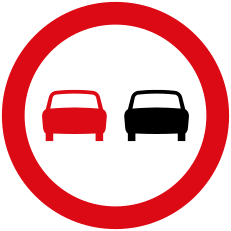
- AA red triangle with a white background
- BA blue square with white symbols
- CA green diamond
- DA red circle, sometimes with a diagonal red bar through the symbol
Answer and explanation in the bank
- Q33Traffic rules
What must you NOT do when parking near a pedestrian crossing in Qatar?
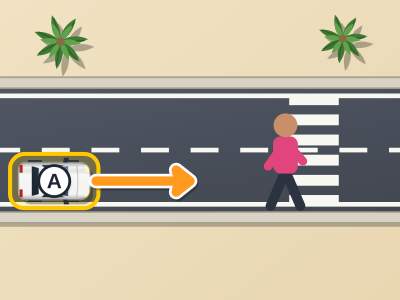
- ALeave your hazard lights on
- BEngage your handbrake before leaving the vehicle
- CPark on or so close to the crossing that you obstruct it
- DFace the vehicle downhill
Answer and explanation in the bank
- Q34Right of way
You are exiting a private driveway onto a public road. Who has priority?
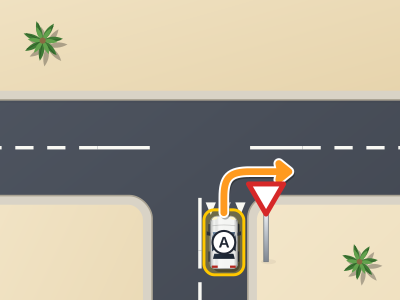
- AYou, because you are moving more slowly
- BYou, if you signal before exiting
- CPedestrians and cyclists only; other vehicles must wait for you
- DTraffic already on the public road
Answer and explanation in the bank
- Q35Safe driving
You are driving in a sandstorm and visibility on the expressway drops to almost nothing. What should you do?
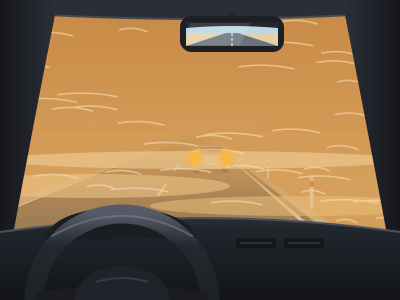
- ASlow to 40 km/h and keep going with the hazard lights on
- BFollow the tail lights of the vehicle immediately ahead closely
- CLeave the carriageway, stop well clear of the traffic, and then switch on the hazard lights
- DUse high-beam headlights so other drivers can see you from further away
Answer and explanation in the bank
- Q36Penalties and fines
What penalties can a driver face for running a red light in Qatar?
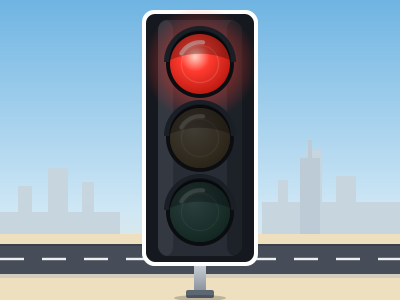
- AOnly a verbal caution at the roadside.
- BNo penalty if no collision results.
- CA QR 6,000 fine and 7 black points.
- DNo answer is correct
Answer and explanation in the bank
- Q37Heavy vehicle
Which combination of conditions most increases rollover risk for a high-sided curtain-sided trailer?
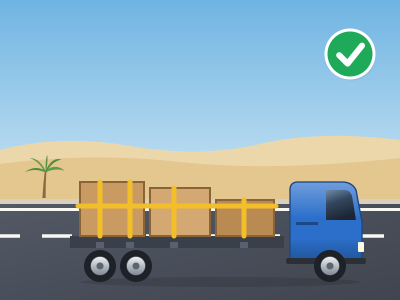
- ALow speed, gradual steering, and a uniformly distributed load
- BHigh speed, sudden steering input, and a raised centre of gravity from a top-heavy load
- CFull air-tank pressure and a fully loaded trailer on a straight motorway
- DUsing engine braking on a downhill gradient with a lightly loaded trailer
Answer and explanation in the bank
- Q38Road signs and signals
What is the highest speed limit posted on Qatar's highways?
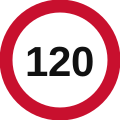
- A140 km/h
- B160 km/h
- C120 km/h
- DThere is no limit on highways
Answer and explanation in the bank
- Q39Traffic rules
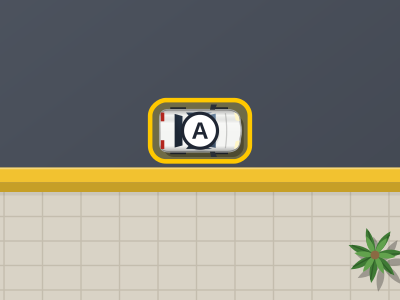
You park your car on a hill in Qatar and leave the vehicle unattended. What should you do in addition to applying the handbrake?
- ALeave the engine running to keep the brakes pressurised
- BTurn the front wheels toward the kerb when facing downhill, or away from it when facing uphill
- CSelect neutral gear to allow the vehicle to roll slowly if brakes fail
- DPark perpendicular to the slope to use friction
Answer and explanation in the bank
- Q40Right of way
An official convoy with police escort and flashing lights is passing through an intersection. What must other drivers do?
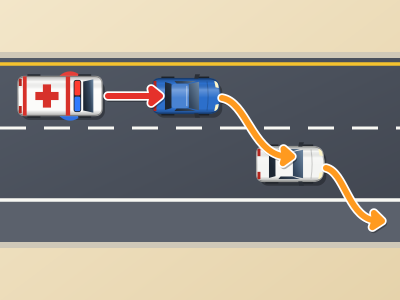
- AGive way to the entire convoy and wait until it has completely passed
- BProceed if the traffic light is green for your direction
- CMerge into the convoy if your route is the same
- DDrive between convoy vehicles if there is a large gap
Answer and explanation in the bank
Every answer above, with the rule it comes from, plus the full 40-question timed test.
Get the Qatar Driving Theory Online Practice Bank - QAR 39What this test covers
Topics include road signs, traffic signals, right of way, roundabouts, speed limits, seat belts, fines and penalties, and the safe-driving rules specific to your vehicle category. Full question-by-question feedback with explanations is shown immediately after you finish the test above.
Frequently asked questions
How many questions is the Al Wakrah General Directorate of Traffic truck & bus theory test?
The official General Directorate of Traffic truck & bus theory test in Al Wakrah has 40 questions and you need 37 correct (92.5%) to pass. This practice test has 40 questions.
Is this the real exam?
These are practice questions to help you revise, written to the published rules and to what candidates report from the real test. They are not the official Qatar exam and the real question bank, format, fees and pass mark are set by the General Directorate of Traffic (Ministry of Interior) and the driving schools, and can change. Always confirm the current requirements with your driving school or the traffic department (for example via the Metrash service).
Is this practice test free?
The first 10 questions are free, with no signup, and each shows the answer and the reason. The full 40-question test, timed, is in the Qatar Driving Theory Online Practice Bank (QAR 39, one payment), with every question in the bank.
What does the Al Wakrah truck & bus theory test cover?
Road signs, traffic signals, right of way, roundabouts, speed limits, seat belts, penalties and safe-driving rules, plus the handling and safety topics specific to your vehicle.