

Doha General Directorate of Traffic Light vehicle
Practice mode· Right of way & safetyDoha General Directorate of Traffic - Qatar Right of Way Practice Test
Tests your understanding of priority rules: unmarked junctions, roundabouts, emergency vehicles, merging lanes and more. Getting right of way right can prevent serious accidents.
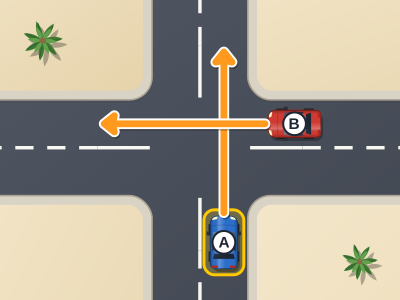
You arrive at an unmarked junction where no signs or road markings indicate priority. Which vehicle has the right of way?
The other 12 questions in this test
Read them all. The answer and the reason for each, and the timed 22-question run, are in the Qatar Driving Theory Online Practice Bank.
- Q11Right of way
You are joining a highway from an on-ramp (slip road). Who has priority?
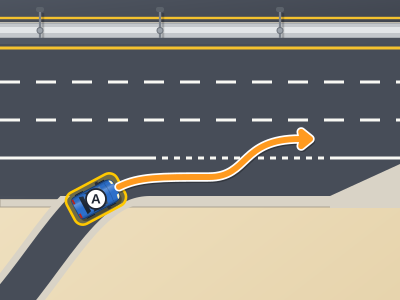
- ATraffic already on the highway
- BYou, because you are accelerating to match traffic speed
- CYou, if you have been on the slip road longer
- DBoth vehicles share equal priority and must negotiate
Answer and explanation in the bank
- Q12Right of way
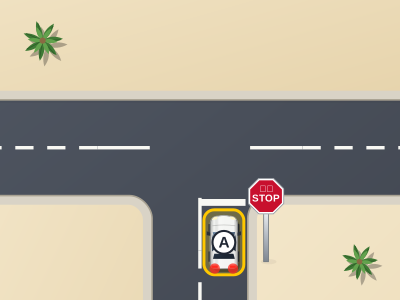
What is the key difference between a STOP sign and a GIVE WAY (Yield) sign?
- AA STOP sign applies only to heavy vehicles
- BAt a STOP sign you must come to a complete halt before proceeding; at a GIVE WAY sign you may continue slowly if the road is clear
- CA GIVE WAY sign means full stop is required at night
- DThere is no practical difference between the two signs
Answer and explanation in the bank
- Q13Right of way
You reach a junction with traffic lights that have failed and are showing no signal. What should you do?
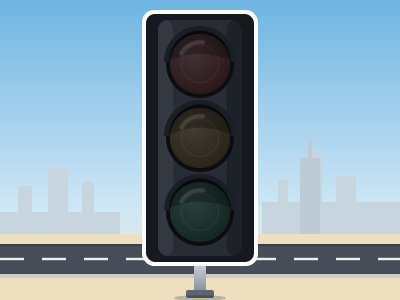
- ATreat the junction as an unmarked intersection and give way to traffic from the right
- BTraffic on the busier road automatically has priority
- CYou may proceed freely because there is no active signal
- DStop and wait until the lights are repaired
Answer and explanation in the bank
- Q14Right of way
Traffic lights at a junction are showing a flashing amber signal. What does this require you to do?
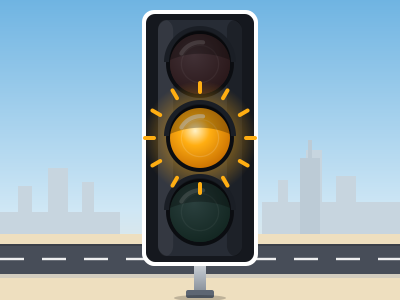
- AStop completely as if at a red light
- BProceed with caution, giving way to pedestrians and other vehicles
- CSpeed up to clear the junction before the signal changes
- DTreat it as a green light and proceed normally
Answer and explanation in the bank
- Q15Right of way
You approach a level crossing with no barriers. The red lights are flashing. What must you do?
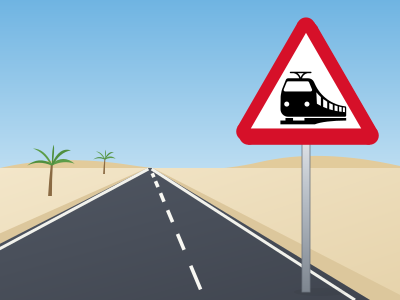
- AStop before the stop line and wait until the lights stop flashing and it is safe to cross
- BSlow down, check for trains, and proceed if you do not see one
- CStop only if you can hear a train approaching
- DProceed quickly to clear the crossing before the train arrives
Answer and explanation in the bank
- Q16Right of way
You are on a narrow road and meet an oncoming vehicle. There is a passing place on your left. What should you do?
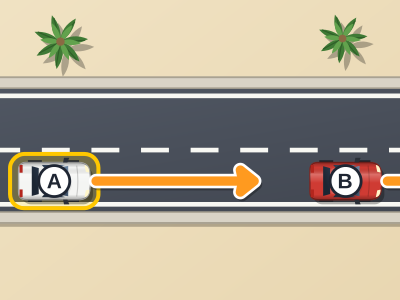
- APull into the passing place on your left to allow the oncoming vehicle to pass
- BContinue forward and expect the oncoming driver to reverse
- CThe vehicle going uphill always has priority on narrow roads
- DBoth vehicles should stop and wait for a third vehicle to clear the road
Answer and explanation in the bank
- Q17Right of way
A cyclist is travelling straight ahead through a junction. You want to turn left across their path. Who has right of way?
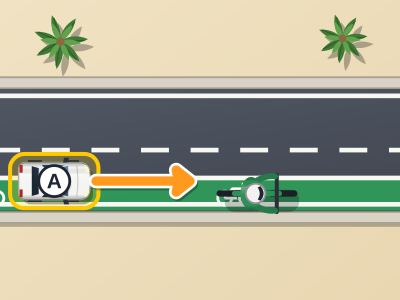
- AYou, because you are turning and already in the junction
- BThe cyclist going straight ahead
- CYou, because cyclists must use the designated cycle path
- DWhichever road user is moving faster
Answer and explanation in the bank
- Q18Right of way
You are exiting a private driveway onto a public road. Who has priority?
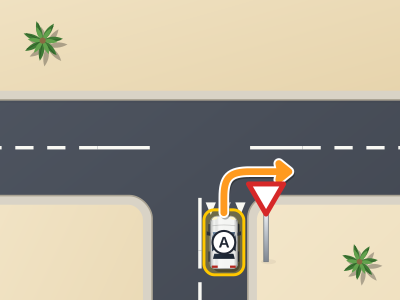
- AYou, because you are moving more slowly
- BYou, if you signal before exiting
- CPedestrians and cyclists only; other vehicles must wait for you
- DTraffic already on the public road
Answer and explanation in the bank
- Q19Right of way
An official convoy with police escort and flashing lights is passing through an intersection. What must other drivers do?
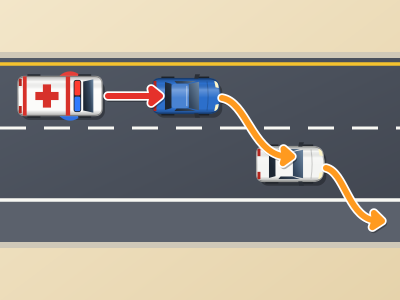
- AGive way to the entire convoy and wait until it has completely passed
- BProceed if the traffic light is green for your direction
- CMerge into the convoy if your route is the same
- DDrive between convoy vehicles if there is a large gap
Answer and explanation in the bank
- Q20Right of way
You are driving near a school at a time when children may be entering or leaving. What extra precaution relates to right of way?
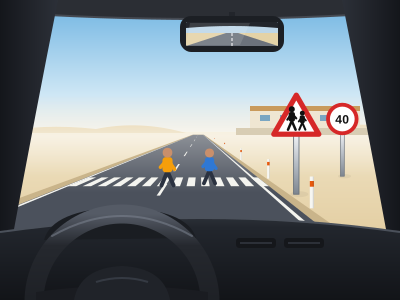
- AGive way to children at or near crossing points and be ready to stop at any time
- BSchool zones have no special right-of-way rules
- COnly stop if there is a crossing guard present
- DSound your horn to warn children and continue at normal speed
Answer and explanation in the bank
- Q21Right of way
At an unmarked crossroads, two vehicles arrive at the same time from opposite directions. Vehicle A is going straight and Vehicle B is turning left. Who has priority?
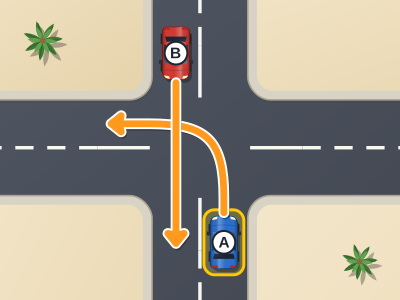
- AVehicle A going straight ahead
- BVehicle B turning left because it turns first
- CBoth vehicles share equal priority and must negotiate
- DThe vehicle on the wider road
Answer and explanation in the bank
- Q22Right of way
You are in the left lane of a two-lane roundabout and want to take the third exit. What is the correct procedure?
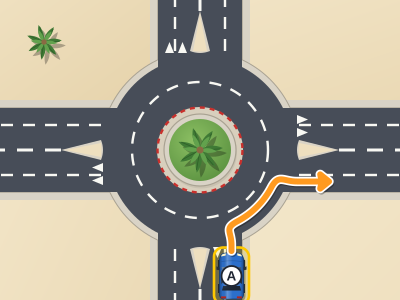
- AMove to the right lane immediately after entering the roundabout
- BExit from the left lane without signalling
- CUse either lane; roundabout lane discipline is optional
- DStay in the left lane until you approach your exit, then signal right and check mirrors before moving to the right lane to exit
Answer and explanation in the bank
Every answer above, with the rule it comes from, plus the full 22-question timed test.
Get the Qatar Driving Theory Online Practice Bank - QAR 39What this test covers
Topics include road signs, traffic signals, right of way, roundabouts, speed limits, seat belts, fines and penalties, and the safe-driving rules specific to your vehicle category. Full question-by-question feedback with explanations is shown immediately after you finish the test above.
Frequently asked questions
How many questions is the Doha General Directorate of Traffic light vehicle theory test?
The official General Directorate of Traffic light vehicle theory test in Doha has 40 questions and you need 37 correct (92.5%) to pass. This practice test has 22 questions.
Is this the real exam?
These are practice questions to help you revise, written to the published rules and to what candidates report from the real test. They are not the official Qatar exam and the real question bank, format, fees and pass mark are set by the General Directorate of Traffic (Ministry of Interior) and the driving schools, and can change. Always confirm the current requirements with your driving school or the traffic department (for example via the Metrash service).
Is this practice test free?
The first 10 questions are free, with no signup, and each shows the answer and the reason. The full 22-question test, timed, is in the Qatar Driving Theory Online Practice Bank (QAR 39, one payment), with every question in the bank.
What does the Doha light vehicle theory test cover?
Road signs, traffic signals, right of way, roundabouts, speed limits, seat belts, penalties and safe-driving rules, plus the handling and safety topics specific to your vehicle.