

Umm Salal General Directorate of Traffic Light vehicle
Practice mode· Fines & penaltiesUmm Salal General Directorate of Traffic - Qatar Fines & Black Points Test 1
First 20 questions on Qatar traffic fines and the black-points system. Know the consequences of common offences: speeding, tailgating, illegal parking and more.
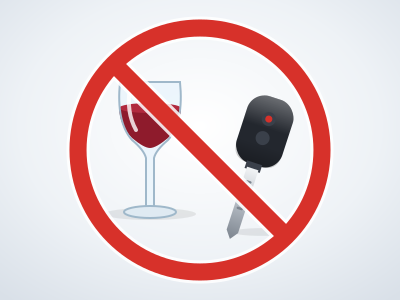
You are stopped at a traffic checkpoint in Qatar and an officer detects the smell of alcohol on your breath. What should you expect?
The other 10 questions in this test
Read them all. The answer and the reason for each, and the timed 20-question run, are in the Qatar Driving Theory Online Practice Bank.
- Q11Penalties and fines
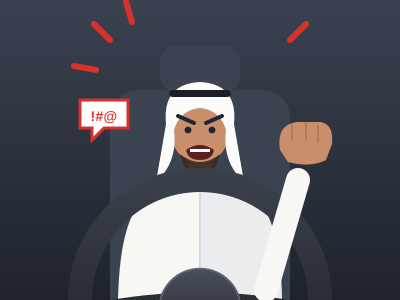
Which of the following best explains why Qatar treats drifting as a serious criminal offence rather than a minor traffic infraction?
- ADrifting is only serious because it damages road surfaces, not because of safety risk.
- BIt is classified as serious only because international motorsport regulations ban it.
- CDrifting involves deliberate loss of vehicle control at speed, creating a risk of fatal collision or injury to bystanders, which the law treats as reckless endangerment.
- DQatar penalises it heavily only to protect tyre and vehicle manufacturers.
Answer and explanation in the bank
- Q12Penalties and fines
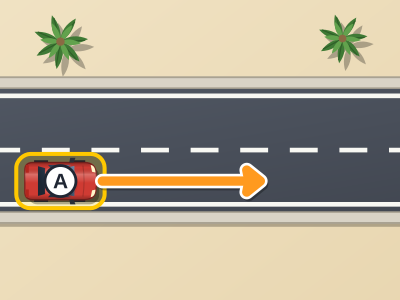
What does driving the wrong way on a road or motorway mean?
- ADriving in the right-hand lane when the left lane is available.
- BTravelling against the flow of traffic, facing oncoming vehicles in a lane intended for the opposite direction.
- CMaking a U-turn at a junction where a sign says no U-turn.
- DExceeding the speed limit in the direction of travel.
Answer and explanation in the bank
- Q13Penalties and fines
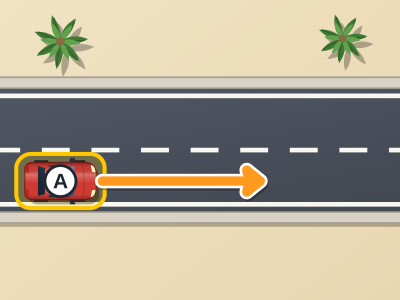
A driver in Qatar accidentally enters a motorway off-ramp and realises they are facing oncoming traffic. What is the correct and legal action?
- ASpeed up to reach the end of the ramp before any vehicle arrives.
- BReverse at speed back onto the main carriageway immediately.
- CFlash headlights and honk to make oncoming drivers stop and let you reverse.
- DStop as far to the side as possible, activate hazard lights and call for assistance. Do not attempt to reverse back into traffic flow.
Answer and explanation in the bank
- Q14Penalties and fines
In Qatar, which penalty scenario most accurately reflects the consequences for deliberate wrong-way driving on a main road?
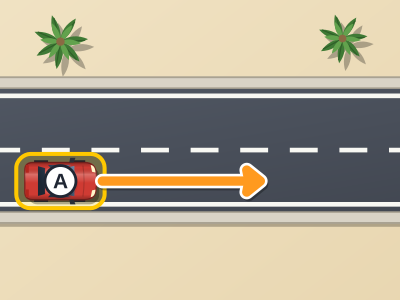
- AA modest fine and three black points, the same as a red-light offence.
- BA caution for a first offence, with stricter penalties only on recurrence.
- CA QR 6,000 fine and 6 black points, with court action possible in aggravated cases.
- DNo penalty at all unless a collision results.
Answer and explanation in the bank
- Q15Penalties and fines
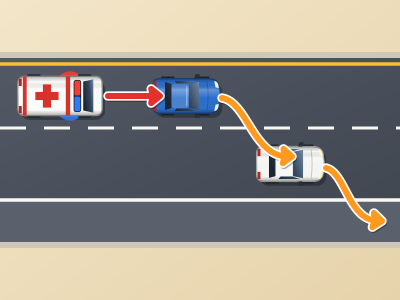
An ambulance with flashing lights and a siren is coming up behind you on a two-lane road in Qatar. What should you do?
- ASpeed up so that you stay ahead of the ambulance
- BStop at once in your lane, even if it blocks the road
- CMove safely to the right, slow down or stop, and let it pass
- DMove to the left lane and keep your current speed
Answer and explanation in the bank
- Q16Penalties and fines
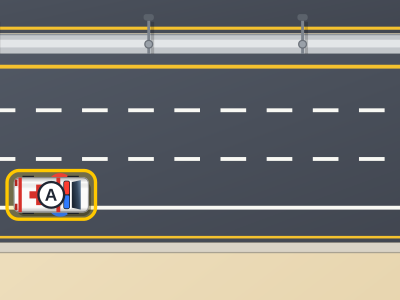
On a busy dual carriageway in Qatar, an ambulance with lights and sirens is approaching from behind. All lanes are heavily congested. What should drivers do?
- AStop in the current lane and do nothing, as there is no space to move.
- BEach driver should edge as far right as safely possible to create a corridor in the middle or left lane for the ambulance.
- CAccelerate to try to reach a gap in traffic further ahead.
- DMove to the left lane to let the ambulance use the right lane.
Answer and explanation in the bank
- Q17Penalties and fines
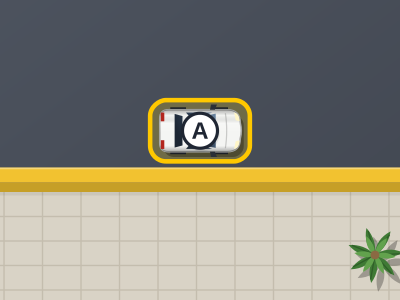
Which of the following is an example of illegal parking in Qatar?
- AParking in a paid public car park for the permitted time.
- BParking in front of a fire hydrant or on a yellow kerb line.
- CParking in a clearly marked residential bay outside peak hours.
- DParking in a multi-storey car park at night.
Answer and explanation in the bank
- Q18Penalties and fines
A driver parks their vehicle partially blocking a pedestrian crossing in Qatar while they go to collect a takeaway order. What may happen?
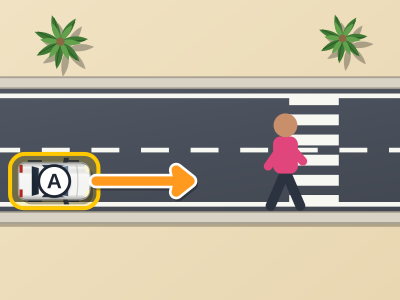
- AIt is acceptable for stops of five minutes or less.
- BThe vehicle can be fined and towed, even for a short stop. Pedestrian crossings must never be blocked.
- COnly an offence if a pedestrian complains to the police.
- DThe driver will only receive a warning if it is a first offence.
Answer and explanation in the bank
- Q19Penalties and fines
What should a driver do if they find no legal parking space near their destination in Qatar?
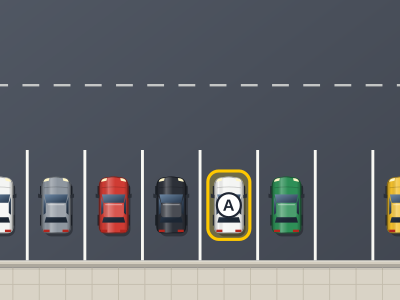
- APark on the pavement, leaving one lane clear for traffic.
- BDrive to an authorised car park or legal parking area, even if it is further away.
- CDouble park next to a legally parked car and leave their hazard lights on.
- DPark in a disabled bay if they do not plan to stay long.
Answer and explanation in the bank
- Q20Penalties and fines
A driver parks in a space reserved for people with disabilities without a valid disabled parking permit in Qatar. Which outcome is most likely?
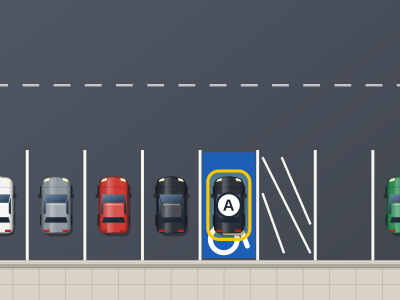
- ANo penalty if the space was empty and the stop lasted under 10 minutes.
- BOnly a verbal warning on a first occasion.
- CA penalty only if a person with a disability needed the space during that time.
- DA fine and 3 black points, and the vehicle may also be towed.
Answer and explanation in the bank
Every answer above, with the rule it comes from, plus the full 20-question timed test.
Get the Qatar Driving Theory Online Practice Bank - QAR 39What this test covers
Topics include road signs, traffic signals, right of way, roundabouts, speed limits, seat belts, fines and penalties, and the safe-driving rules specific to your vehicle category. Full question-by-question feedback with explanations is shown immediately after you finish the test above.
Frequently asked questions
How many questions is the Umm Salal General Directorate of Traffic light vehicle theory test?
The official General Directorate of Traffic light vehicle theory test in Umm Salal has 40 questions and you need 37 correct (92.5%) to pass. This practice test has 20 questions.
Is this the real exam?
These are practice questions to help you revise, written to the published rules and to what candidates report from the real test. They are not the official Qatar exam and the real question bank, format, fees and pass mark are set by the General Directorate of Traffic (Ministry of Interior) and the driving schools, and can change. Always confirm the current requirements with your driving school or the traffic department (for example via the Metrash service).
Is this practice test free?
The first 10 questions are free, with no signup, and each shows the answer and the reason. The full 20-question test, timed, is in the Qatar Driving Theory Online Practice Bank (QAR 39, one payment), with every question in the bank.
What does the Umm Salal light vehicle theory test cover?
Road signs, traffic signals, right of way, roundabouts, speed limits, seat belts, penalties and safe-driving rules, plus the handling and safety topics specific to your vehicle.