

Umm Salal General Directorate of Traffic Motorcycle
Timed mock exam· Full mock examsUmm Salal General Directorate of Traffic - Qatar Motorcycle Theory Mock Test 1
A full 40-question timed practice exam for the Qatar motorcycle (bike) theory test, set at the reported 37/40 (92.5%) pass mark. Covers shared road rules and signs plus motorcycle-specific control and safety.
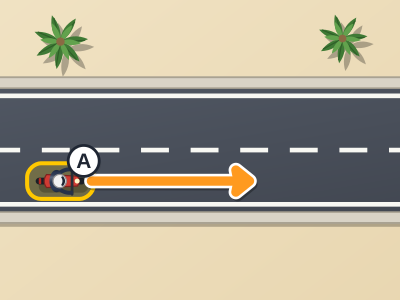
What is the 'friction zone' of a motorcycle clutch?
The other 30 questions in this test
Read them all. The answer and the reason for each, and the timed 40-question run, are in the Qatar Driving Theory Online Practice Bank.
- Q11Penalties and fines
A driver in Qatar repeatedly cuts between lanes at high speed on a busy expressway. Which category of offence does this most likely constitute?
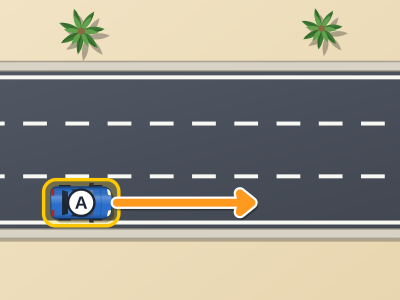
- AOnly a lane-discipline infraction with a very small fine.
- BNo offence as long as indicators were used.
- CReckless or dangerous driving, which carries serious penalties beyond a simple lane-change fine.
- DAn offence only if it causes another driver to brake sharply.
Answer and explanation in the bank
- Q12Motorcycle control
Approximately what proportion of a motorcycle's braking force comes from the front brake on a dry, flat road?
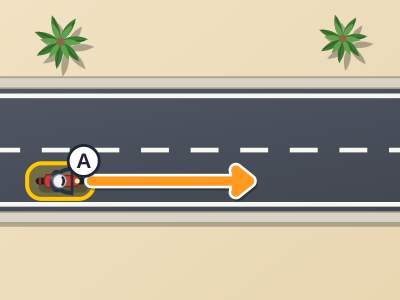
- AAround 20 percent; the rear brake does most of the work
- BExactly 50 percent split between front and rear
- CAround 70 percent, because forward weight transfer loads the front tyre
- DThe front brake provides no stopping force and is used only for balance
Answer and explanation in the bank
- Q13Motorcycle safety
How can a motorcyclist minimise the effect of crosswinds on open exposed roads?
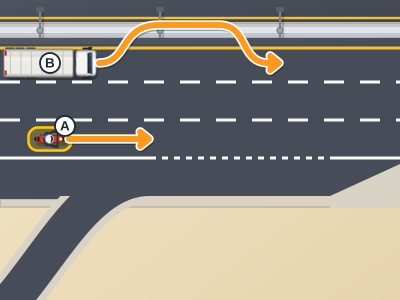
- AIncrease speed to reduce the time exposed to the wind
- BSteer hard against the wind with maximum force on the handlebars
- CCross to the opposite side of the road to use barriers as windbreaks
- DReduce speed, hold the bars firmly but not rigidly, lean slightly into the wind, and maintain a relaxed posture that allows the bike to move slightly without fighting it
Answer and explanation in the bank
- Q14Road signs and signals
On a multi-lane expressway in Qatar, which lane should you normally use?
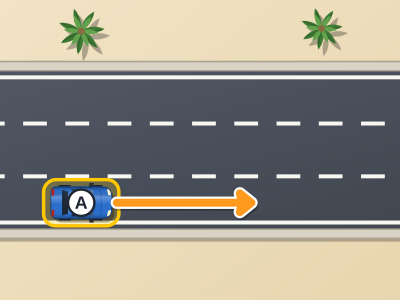
- AThe left lane at all times as it is the fastest
- BAny lane with equal frequency to distribute tyre wear
- CThe right lane, moving to the left only to overtake
- DThe centre lane to allow faster vehicles to pass on both sides
Answer and explanation in the bank
- Q15Traffic rules
Where must a child restraint seat be installed in a vehicle in Qatar?
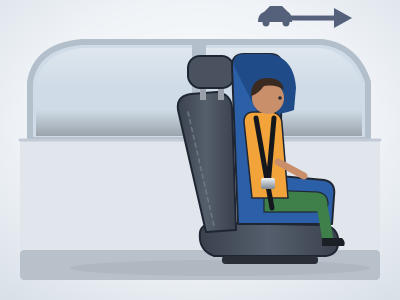
- AIn the front passenger seat facing forward
- BIn any seat, as long as the child is buckled in
- CIn the front seat if the vehicle has no rear seat
- DIn the rear seat, properly secured according to the manufacturer's instructions
Answer and explanation in the bank
- Q16Right of way
You are travelling uphill on a narrow mountain road and meet a vehicle coming downhill. Who should reverse or give way?
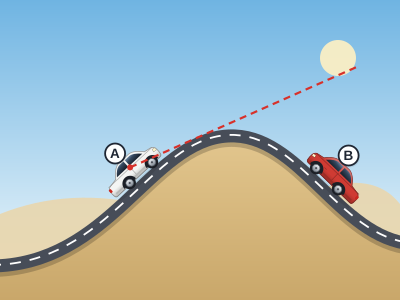
- AThe vehicle travelling downhill should give way, as it is easier to reverse downhill and the uphill vehicle has momentum
- BThe vehicle travelling uphill should give way because it can stop more easily
- CThe smaller vehicle must always give way
- DBoth vehicles stop and wait for a third party to direct them
Answer and explanation in the bank
- Q17Safe driving
What should you do immediately after a breakdown on a Qatar expressway?
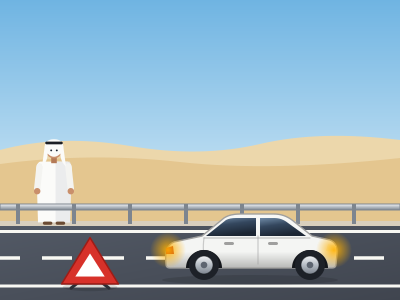
- AMove to the hard shoulder, switch on hazard lights, and place a warning triangle behind the vehicle
- BStop in the driving lane and wait for other drivers to go around you
- CAttempt repairs in the fast lane as quickly as possible
- DExit the vehicle on the traffic side to flag down help
Answer and explanation in the bank
- Q18Penalties and fines
Under Qatar law, which combination of actions by a driver would most strongly support a charge of dangerous driving?

- ABriefly exceeding the speed limit by 5 km/h on an empty road.
- BTravelling at twice the speed limit while using a handheld phone and overtaking on the hard shoulder.
- CMaking an unplanned right turn while signalling late.
- DParking slightly over a yellow line outside peak hours.
Answer and explanation in the bank
- Q19Motorcycle control
What effect does excessive speed have on the lean angle required for a given corner radius?
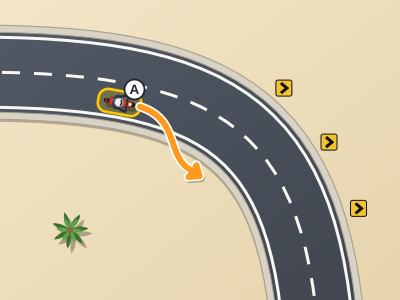
- AHigher speed requires greater lean angle to maintain the same radius, using more of the tyre's grip limit
- BHigher speed reduces the lean angle needed because aerodynamic forces push the bike upright
- CSpeed has no effect on the lean angle for a fixed corner radius
- DHigher speed allows a smaller radius with less lean due to gyroscopic stabilisation
Answer and explanation in the bank
- Q20Motorcycle safety
When riding at night, what is the safest headlight mode when following another vehicle?
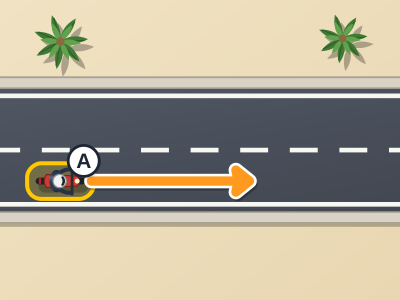
- AMain (high) beam at all times to maximise your own visibility
- BHazard lights to warn others you are there
- CDipped (low) beam to avoid dazzling the driver ahead via their mirrors
- DNo lights if there is sufficient street lighting
Answer and explanation in the bank
- Q21Road signs and signals
You are driving on an expressway and see a Variable Message Sign (VMS) showing a lower speed limit than the posted permanent sign. Which limit applies?
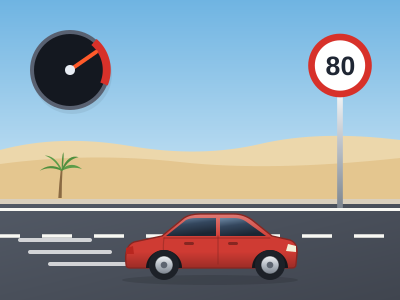
- AThe permanent sign, as it is legally binding
- BThe higher of the two limits
- CThe lower VMS limit; it overrides the permanent sign
- DNeither applies; VMS signs are advisory only in Qatar
Answer and explanation in the bank
- Q22Traffic rules
Is it legal to hold and use a mobile phone while driving in Qatar?
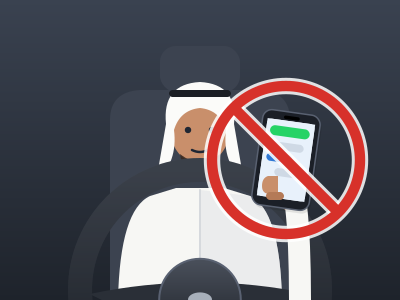
- ANo, it is prohibited to hold and use a mobile phone while driving
- BYes, if you are stopped at a red light
- CYes, if the call lasts less than 30 seconds
- DYes, if you keep one hand on the steering wheel
Answer and explanation in the bank
- Q23Right of way
A pedestrian has already stepped onto an unmarked crossing at an ordinary road junction. What should you do?
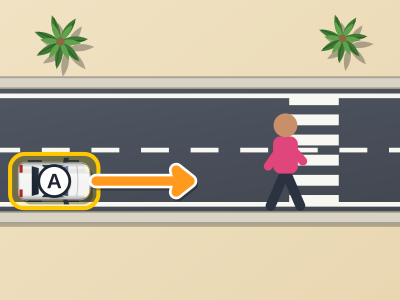
- ASound your horn and proceed slowly
- BContinue; pedestrians at unmarked crossings have no right of way
- CFlash your headlights and continue
- DStop and allow the pedestrian to finish crossing
Answer and explanation in the bank
- Q24Safe driving
After a breakdown on a high-speed expressway, where should occupants wait?
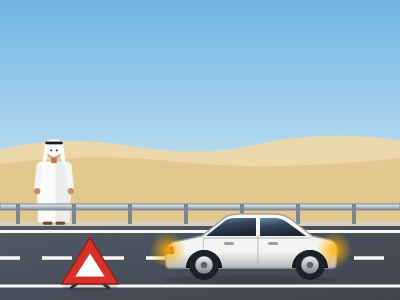
- ABehind a crash barrier away from the vehicle, if one is available
- BInside the vehicle with seatbelts fastened
- COn the shoulder directly behind the broken-down vehicle
- DIn the lane next to the broken-down vehicle to direct traffic
Answer and explanation in the bank
- Q25Penalties and fines
Is car drifting (deliberately spinning or sliding a vehicle's rear tyres) legal on public roads in Qatar?
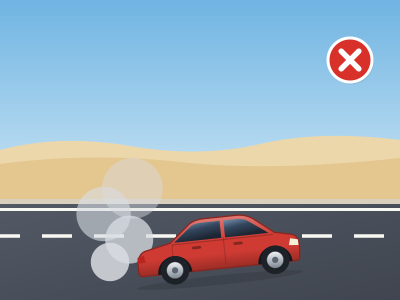
- AYes, provided it is done in a marked area and no pedestrians are present.
- BNo. Drifting on public roads is illegal and carries severe penalties.
- CIt is only illegal if spectators gather nearby.
- DDrifting is legal for vehicles with a specially endorsed licence plate.
Answer and explanation in the bank
- Q26Motorcycle control
What is the effect of riding over a loose surface (such as sand or gravel) while braking?
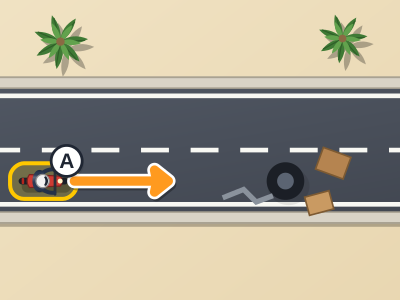
- AThe tyre loses contact with the road surface beneath the loose material, dramatically reducing grip and greatly increasing the risk of skidding
- BThe loose material increases friction and improves braking
- CBraking performance is unaffected if tyre pressure is correct
- DOnly the front brake is affected; the rear brake still works normally
Answer and explanation in the bank
- Q27Motorcycle safety
A car pulls out from a side road into your path. Applying the principles of defensive riding, what should you have already done to minimise this risk?
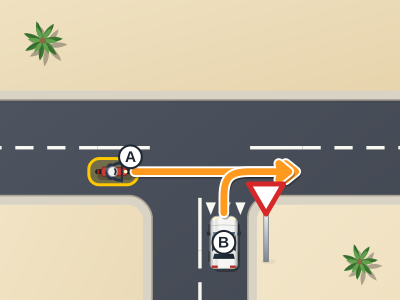
- ASounded the horn continuously from 200 metres away
- BRidden as close to the kerb as possible to pass on the left
- CFlashed the headlight repeatedly to warn all junction traffic
- DCovered the brakes, positioned in the lane for maximum visibility, reduced speed approaching the junction, and established eye contact with the waiting driver
Answer and explanation in the bank
- Q28Road signs and signals
What does an end-of-speed-restriction sign look like?
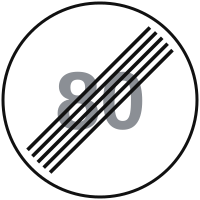
- AA green circle with the word END
- BThe same speed-limit sign repeated with a red X
- CA white triangle pointing downwards
- DA grey or white circle with a diagonal black line through a speed number or crossed diagonal lines
Answer and explanation in the bank
- Q29Traffic rules
Which method of using a mobile phone is legally permitted while driving in Qatar?
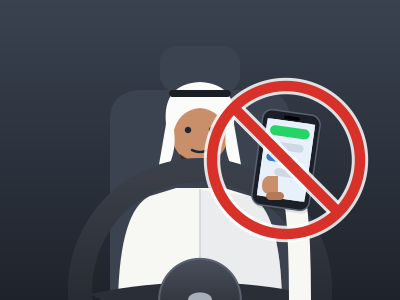
- AHolding the phone to your ear with your shoulder
- BUsing a properly mounted hands-free device that does not require you to hold the phone
- CReading a text message while stopped in traffic
- DUsing the phone on loudspeaker while holding it on the dashboard
Answer and explanation in the bank
- Q30Right of way
You are in a queue to enter a roundabout and the traffic signals at the roundabout entry show green. Who has priority?
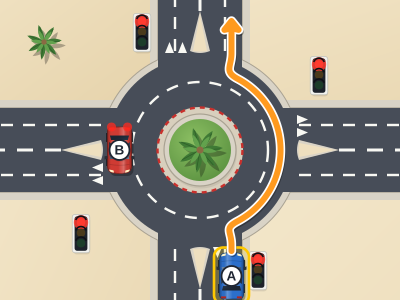
- ACirculating traffic still has priority even on a green signal
- BPedestrians on the crossing always have priority over the signal
- CYou must still stop and yield regardless of the signal
- DYou may enter because the traffic signal overrides the normal yield-to-circulating-traffic rule
Answer and explanation in the bank
- Q31Safe driving
You arrive at a road crash scene. What are the first two actions to take before assisting any casualties?
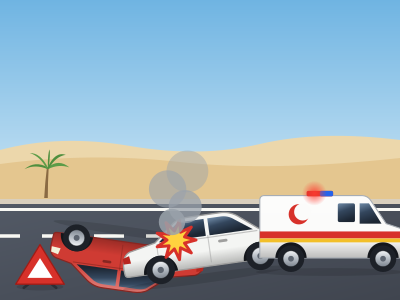
- AEnsure your own safety and call emergency services (999)
- BMove all casualties away from the vehicles immediately
- CTake photographs for insurance and then assist
- DSwitch off the ignition of all involved vehicles yourself first
Answer and explanation in the bank
- Q32Penalties and fines
A group of drivers plan a late-night drifting session on a quiet industrial road in Qatar. What legal risk do they face?

- AOnly a noise complaint from residents with no traffic offence.
- BSerious criminal penalties including heavy fines, vehicle confiscation and possible imprisonment, even on quiet roads.
- CA small fine because the road was quiet and no one was harmed.
- DNo legal risk if they post a lookout and stop when police approach.
Answer and explanation in the bank
- Q33Motorcycle control
What does it mean to 'feather' the front brake lever?
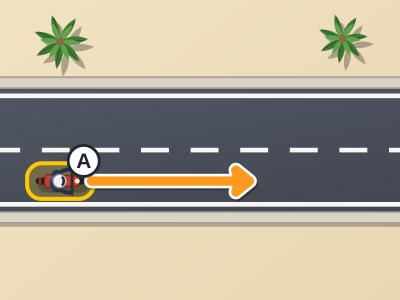
- ATo release the brake lever fully while still moving to cool the pads
- BTo apply the lever with a progressive, light squeeze that gradually increases pressure rather than grabbing it suddenly
- CTo use only the first 10 mm of lever travel and hold it there
- DTo pump the lever rapidly to prevent lockup on all motorcycles
Answer and explanation in the bank
- Q34Motorcycle safety
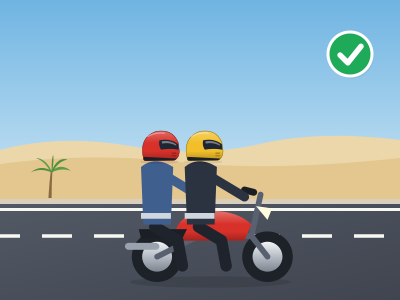
Who is responsible for the safety briefing of a pillion passenger before setting off?
- AThe pillion passenger is fully responsible for their own safety from the moment they sit on the bike
- BA police officer must conduct the briefing by law before any pillion journey
- CNo briefing is required if the pillion has ridden before
- DThe motorcycle rider, who must brief the passenger on how to sit, where to hold, how to move in corners, and when to mount and dismount
Answer and explanation in the bank
- Q35Road signs and signals
What does a sign showing a white arrow pointing straight ahead on a blue background in a roundabout mean?
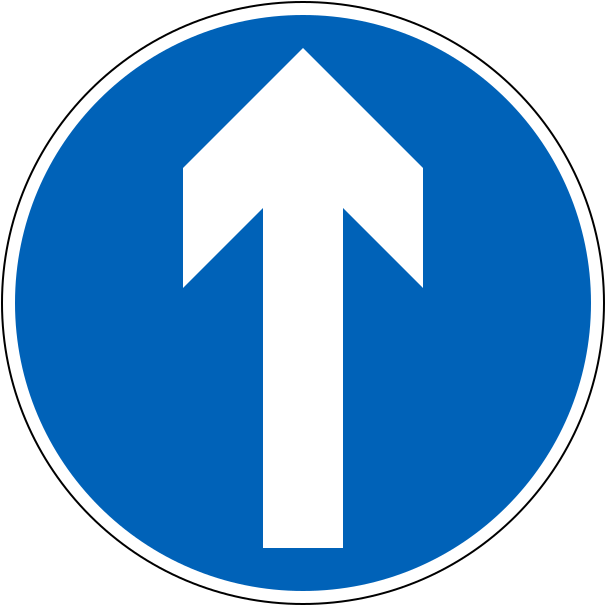
- AYou may exit at any point of the roundabout
- BNo entry from this direction
- CYou must follow the direction shown by the arrow and continue in the indicated direction
- DLane reserved for buses only
Answer and explanation in the bank
- Q36Traffic rules
When approaching a railway (level) crossing in Qatar with no barriers, what must you do?
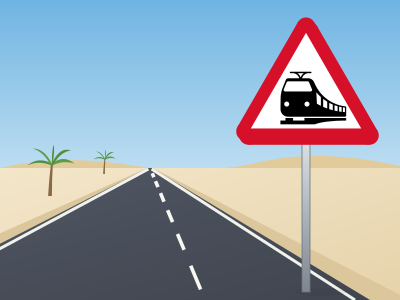
- AContinue at the same speed as trains always stop for road traffic
- BSound your horn to warn any train driver before crossing
- CSlow down, look and listen for trains in both directions, and only cross when safe
- DCross quickly without stopping to minimise time on the tracks
Answer and explanation in the bank
- Q37Right of way
You are the third vehicle in a convoy of private cars following a hearse at a funeral. An oncoming driver wants to turn left across the convoy. What should happen?
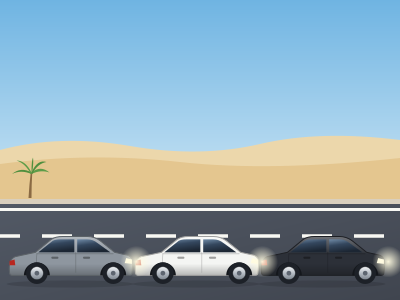
- AThe oncoming driver may turn between convoy vehicles if a large gap appears
- BThe oncoming driver must wait for the entire convoy to pass before turning
- CThe last vehicle in the convoy must stop to allow the turn
- DFuneral convoys have no special right-of-way status
Answer and explanation in the bank
- Q38Safe driving
What is the Qatar emergency services number to call after a serious road crash?
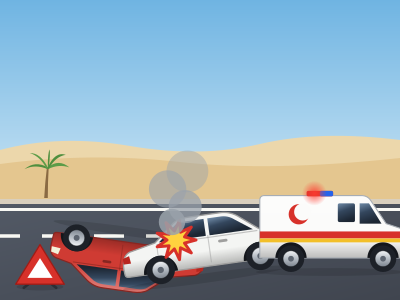
- A999
- B911
- C112
- D100
Answer and explanation in the bank
- Q39Penalties and fines
Which of the following best explains why Qatar treats drifting as a serious criminal offence rather than a minor traffic infraction?

- ADrifting is only serious because it damages road surfaces, not because of safety risk.
- BIt is classified as serious only because international motorsport regulations ban it.
- CDrifting involves deliberate loss of vehicle control at speed, creating a risk of fatal collision or injury to bystanders, which the law treats as reckless endangerment.
- DQatar penalises it heavily only to protect tyre and vehicle manufacturers.
Answer and explanation in the bank
- Q40Motorcycle control
A pillion passenger should move their body in which way when the motorcycle is cornering?
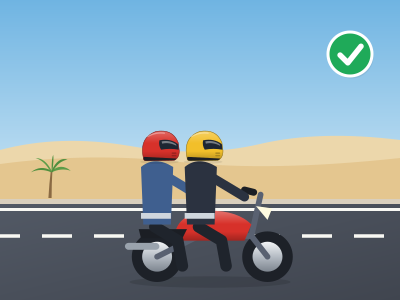
- ALean sharply to the outside to help counterbalance the motorcycle's lean
- BStay bolt upright to keep their weight centered regardless of the lean angle
- CMove with the rider, looking over the rider's shoulder in the direction of the corner, without independent leaning
- DLean independently toward the inside of the corner to help the bike turn tighter
Answer and explanation in the bank
Every answer above, with the rule it comes from, plus the full 40-question timed test.
Get the Qatar Driving Theory Online Practice Bank - QAR 39What this test covers
Topics include road signs, traffic signals, right of way, roundabouts, speed limits, seat belts, fines and penalties, and the safe-driving rules specific to your vehicle category. Full question-by-question feedback with explanations is shown immediately after you finish the test above.
Frequently asked questions
How many questions is the Umm Salal General Directorate of Traffic motorcycle theory test?
The official General Directorate of Traffic motorcycle theory test in Umm Salal has 40 questions and you need 37 correct (92.5%) to pass. This practice test has 40 questions.
Is this the real exam?
These are practice questions to help you revise, written to the published rules and to what candidates report from the real test. They are not the official Qatar exam and the real question bank, format, fees and pass mark are set by the General Directorate of Traffic (Ministry of Interior) and the driving schools, and can change. Always confirm the current requirements with your driving school or the traffic department (for example via the Metrash service).
Is this practice test free?
The first 10 questions are free, with no signup, and each shows the answer and the reason. The full 40-question test, timed, is in the Qatar Driving Theory Online Practice Bank (QAR 39, one payment), with every question in the bank.
What does the Umm Salal motorcycle theory test cover?
Road signs, traffic signals, right of way, roundabouts, speed limits, seat belts, penalties and safe-driving rules, plus the handling and safety topics specific to your vehicle.