

Dubai RTA Truck & Bus
Timed mock exam· Full mock examsDubai RTA - UAE Truck & Bus Theory Mock Test 1
A full 40-question timed practice exam for the UAE heavy-vehicle (truck and bus) theory test. Covers shared road rules and signs plus heavy-vehicle handling and safety. Aim for 30/40 (75%) to pass.
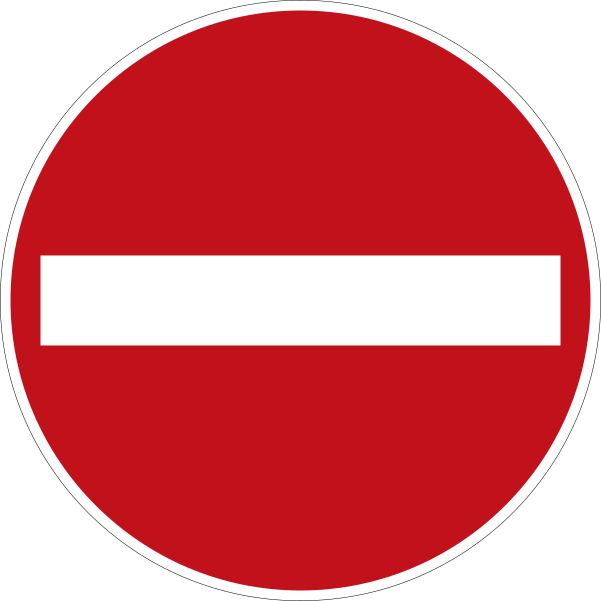
What does this sign mean?
The other 30 questions in this test
Read them all. The answer and the reason for each, and the timed 40-question run, are in the Dubai RTA Theory Test Questions PDF.
- Q11Safe driving
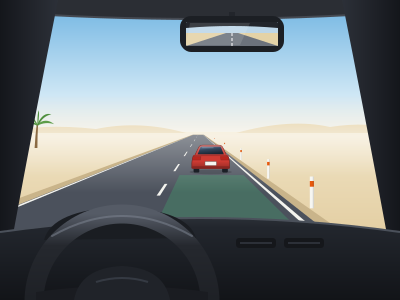
On a dry road in good conditions, what is the minimum following distance behind the vehicle ahead?
- AAt least a two-second gap
- BHalf a second
- COne car length regardless of speed
- DAs close as possible to save space
Answer and explanation in the bank
- Q12Heavy vehicle
Compared with an empty truck, a fully laden truck travelling at the same speed will have a stopping distance that is
- AConsiderably longer, because higher mass requires more braking force over a greater distance
- BRoughly the same, because the brakes are the same physical size
- CSlightly shorter, because extra weight increases tyre contact area and grip
- DShorter on wet roads only, due to increased weight pressing the tyres down
Answer and explanation in the bank
- Q13Road signs and signals
You see this sign on the road. What does it tell you?
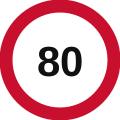
- AThe minimum speed is 80 km/h
- BThe maximum speed is 80 km/h
- CYou are 80 km from the next city
- DRecommended speed is 80 km/h only in rain
Answer and explanation in the bank
- Q14Traffic rules
What is the rule on wearing seat belts in the UAE?
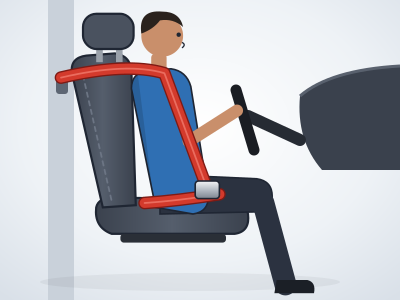
- AOnly the driver must wear one
- BThe driver and all passengers, front and rear, must wear seat belts
- COnly front-seat occupants must wear one
- DSeat belts are optional inside the city
Answer and explanation in the bank
- Q15Right of way
At an unmarked junction where two roads of equal importance meet and there are no signs or signals, who has priority?
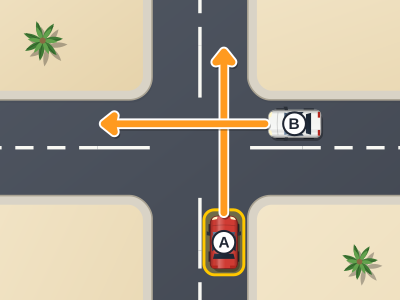
- AThe vehicle approaching from your left
- BThe vehicle approaching from your right
- CThe larger of the two vehicles
- DWhoever reaches the junction fastest
Answer and explanation in the bank
- Q16Penalties and fines
Under the 2024 Federal Traffic Law, what can a court impose on a driver convicted of driving under the influence of alcohol?
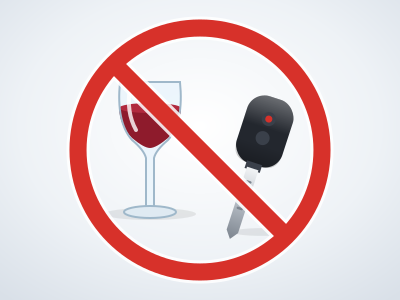
- AA warning only for a first offence
- BJail and/or a fine of AED 20,000 to 100,000, with the licence suspended
- CAED 200 fine with no other penalty
- DNothing, as long as no crash happened
Answer and explanation in the bank
- Q17Safe driving
How should your following distance change when driving in rain or fog?
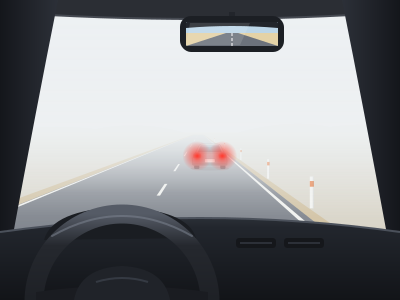
- AIncrease it well beyond the normal two-second minimum
- BKeep exactly the same gap
- CReduce it so you can follow the tail lights ahead
- DUse one car length
Answer and explanation in the bank
- Q18Heavy vehicle
What is the recommended minimum following distance for a heavy vehicle on an open highway in dry conditions?
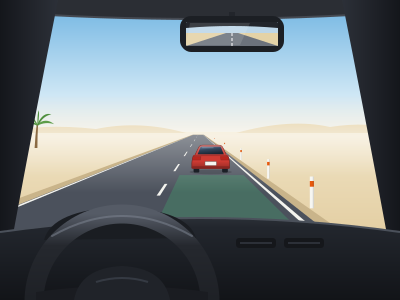
- AA gap well beyond the two-second rule used for cars, because heavy vehicles need far more distance to stop safely
- BOne car length for every 10 km/h of speed
- CThe same two-second rule as for a light vehicle
- DTen metres regardless of speed
Answer and explanation in the bank
- Q19Road signs and signals
What is the meaning of this sign?
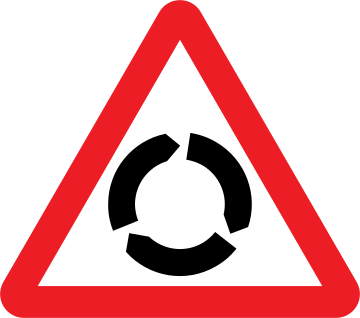
- ARoundabout ahead - give way to traffic already on it
- BNo U-turn allowed
- CSlippery road ahead
- DVehicles must turn around
Answer and explanation in the bank
- Q20Traffic rules
Using a hand-held mobile phone while driving in the UAE is:
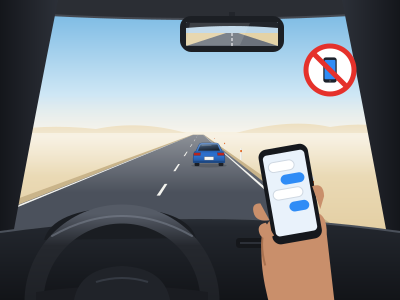
- AAllowed at traffic lights
- BAn offence with a fine and black points
- CAllowed for calls but not texting
- DOnly an offence on motorways
Answer and explanation in the bank
- Q21Right of way
As you approach a roundabout, who normally has priority?
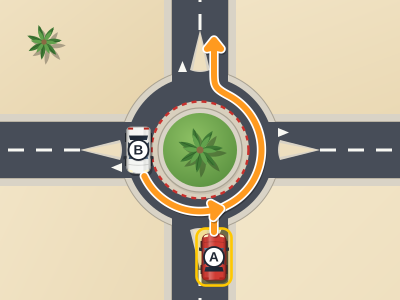
- ATraffic waiting to enter from your lane
- BThe vehicle travelling at the highest speed
- CTraffic already circulating on the roundabout
- DVehicles entering from the left only
Answer and explanation in the bank
- Q22Penalties and fines
A driver is caught driving after having one small alcoholic drink. What is the most accurate statement about the possible consequences?
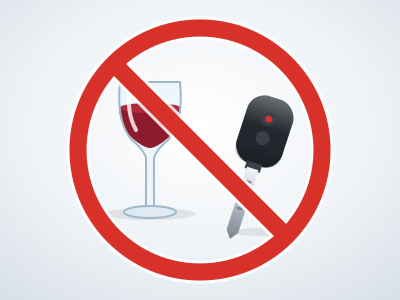
- AOne drink is always ignored because it is under the limit
- BBecause of zero tolerance, even one drink is an offence and can lead to fines, black points, vehicle confiscation, jail and possible deportation
- COnly a warning is given for a first offence
- DThe driver simply pays a small fixed parking-style fine
Answer and explanation in the bank
- Q23Safe driving
How does higher speed affect your overall stopping distance?
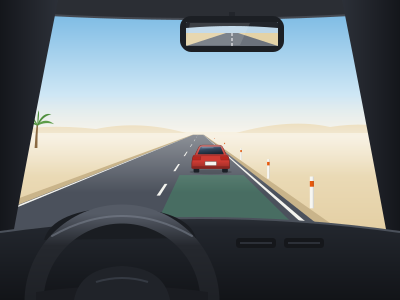
- AStopping distance increases sharply as speed rises
- BStopping distance stays the same at any speed
- CStopping distance decreases at higher speed
- DSpeed only affects reaction time, not braking distance
Answer and explanation in the bank
- Q24Heavy vehicle
How does rain affect the stopping distance of a heavy vehicle?
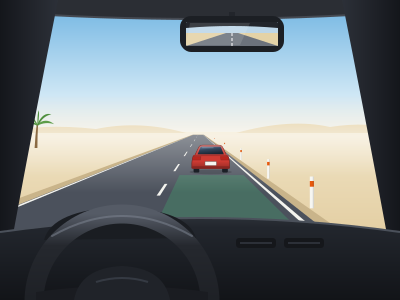
- AIt has no effect because truck tyres have deep tread patterns
- BIt slightly reduces stopping distance because water cools the brake drums
- CIt only affects stopping distance on gravel or unpaved roads
- DIt increases stopping distance significantly because wet roads reduce tyre grip
Answer and explanation in the bank
- Q25Road signs and signals
What does this sign tell you?
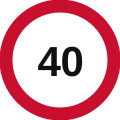
- AThe minimum speed here is 40 km/h
- BIt is 40 km to the next town
- CRecommended speed of 40 km/h in rain only
- DThe maximum speed here is 40 km/h
Answer and explanation in the bank
- Q26Traffic rules
In which direction do you drive around a roundabout in the UAE?
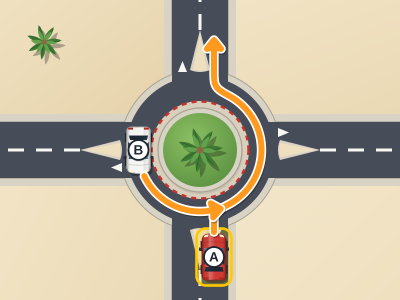
- AAnticlockwise, keeping the central island on your left
- BClockwise, keeping the central island on your right
- CEither way, whichever exit is closer
- DStraight across the central island if it is flat
Answer and explanation in the bank
- Q27Right of way
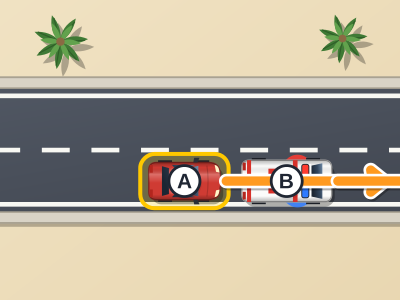
An emergency vehicle with flashing lights and a siren is approaching from behind on a multi-lane road. What should you generally do?
- ASpeed up to stay ahead of it
- BStop immediately in your lane wherever you are
- CPull over to the right where safe and let it pass
- DMove to the left lane and slow down
Answer and explanation in the bank
- Q28Penalties and fines
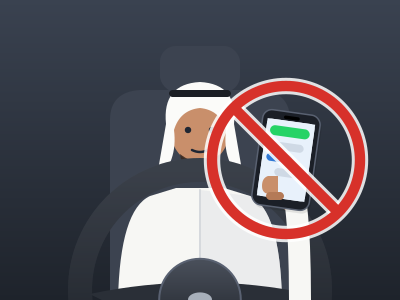
What is the federal penalty for using a hand-held mobile phone while driving?
- AAED 100 and no black points
- BAED 800 and 4 black points
- CAED 3,000 and 23 black points
- DA warning on the first offence
Answer and explanation in the bank
- Q29Safe driving
Why should you check your tyres regularly, including tread and pressure?
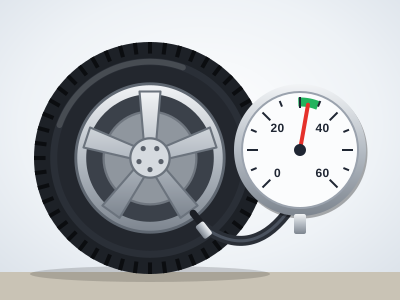
- AGood tread and correct pressure improve grip and braking, especially in the wet
- BIt only matters for the appearance of the car
- CTyres never affect braking distance
- DOnly the front tyres need to be checked
Answer and explanation in the bank
- Q30Heavy vehicle
A truck is travelling at the posted speed limit. The vehicle ahead brakes suddenly. Which factor MOST increases the risk that the truck will not stop in time?
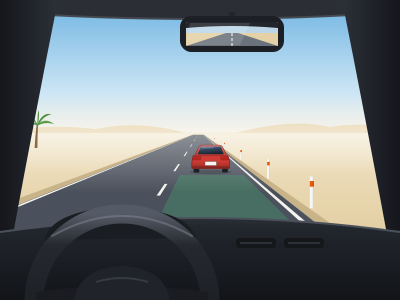
- AThe truck's engine is running at low revs at the time of braking
- BThe truck is fully loaded, greatly increasing its kinetic energy and extending stopping distance
- CThe driver changed lanes shortly before the emergency arose
- DThe truck is fitted with disc brakes rather than drum brakes
Answer and explanation in the bank
- Q31Road signs and signals
You see this sign. What does it mean?
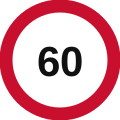
- AMinimum speed 60 km/h
- BAdvisory speed for heavy vehicles only
- CDistance of 60 km to a junction
- DMaximum speed 60 km/h
Answer and explanation in the bank
- Q32Traffic rules
On a multi-lane road with no obstructions, where should you normally drive?
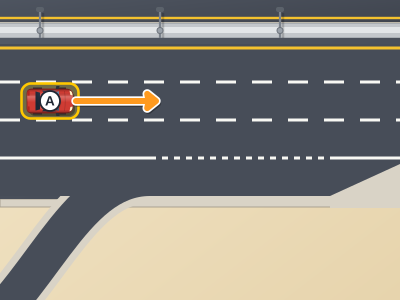
- AKeep to the right-hand lanes and use the left lanes mainly for overtaking
- BStay in the far left lane at all times
- CDrive in whichever lane is emptiest, changing freely
- DAlways use the middle lane so others can pass on both sides
Answer and explanation in the bank
- Q33Right of way
A pedestrian is waiting to cross at a marked zebra crossing with no traffic signal. What must you do?
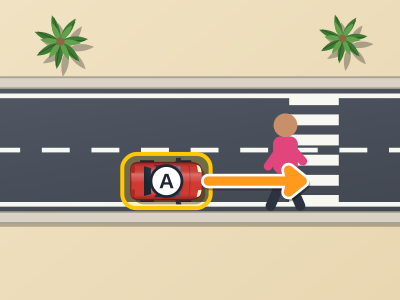
- AContinue because vehicles always have priority
- BSound your horn so the pedestrian waits
- COnly stop if the pedestrian is a child
- DSlow down and give way, letting the pedestrian cross
Answer and explanation in the bank
- Q34Penalties and fines
Who must wear a seatbelt in a moving car in the UAE?
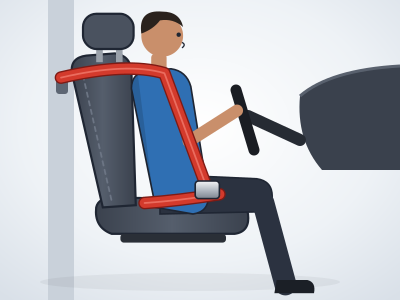
- AThe driver and all passengers, front and rear
- BOnly the driver
- COnly front-seat occupants
- DOnly on highways, not city roads
Answer and explanation in the bank
- Q35Safe driving
Before changing lanes, what should you always do in addition to using your mirrors?
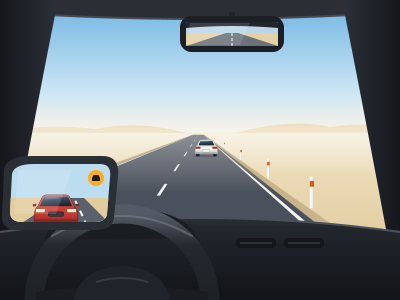
- ARely only on the interior mirror
- BCheck your blind spot with a quick glance over your shoulder
- CClose your eyes and hope the lane is clear
- DChange lanes first, then look
Answer and explanation in the bank
- Q36Heavy vehicle
What is brake fade in a heavy vehicle?
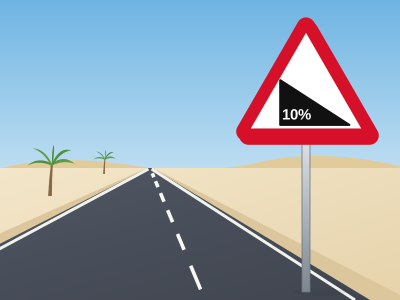
- AThe automatic release of brakes when air system pressure drops below a safe level
- BThe gradual wear of brake pads over thousands of kilometres of normal use
- CA warning light that tells the driver the brake linings need adjustment
- DA loss of braking effectiveness caused by heat build-up in the brakes after repeated or prolonged use
Answer and explanation in the bank
- Q37Road signs and signals
What does this sign indicate?
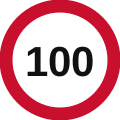
- AMinimum speed 100 km/h
- BMaximum speed 100 km/h
- CEnd of all speed limits
- DToll charge of 100 ahead
Answer and explanation in the bank
- Q38Traffic rules
When should you signal before changing lanes or turning?
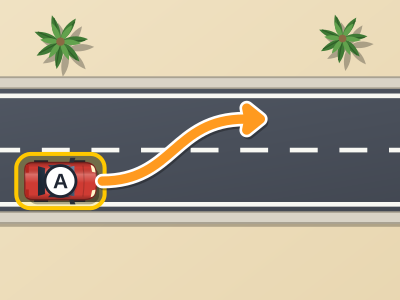
- AOnly after you have started to move across
- BOnly if you can see another vehicle nearby
- CIn good time before the manoeuvre, so other road users can react
- DSignalling is optional as long as you check your mirrors
Answer and explanation in the bank
- Q39Right of way
You want to turn across the path of oncoming traffic to reach a side road or entrance. When should you turn?
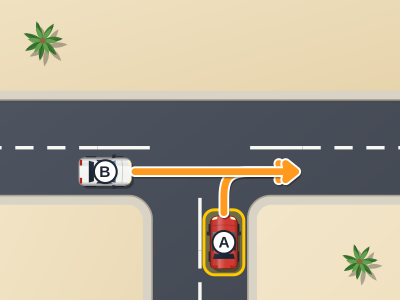
- AOnly when there is a safe gap and oncoming traffic has cleared
- BAs soon as your traffic light turns green
- CWhenever the oncoming vehicles flash their headlights
- DImmediately, because turning vehicles have priority
Answer and explanation in the bank
- Q40Penalties and fines
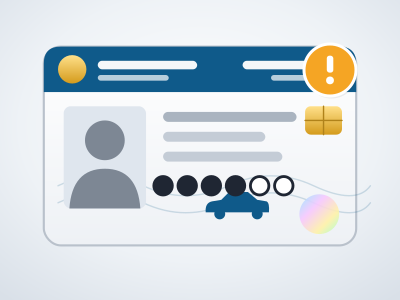
What is the purpose of the black-points system in the UAE?
- ATo reward drivers who never get fined
- BTo record traffic offences against a driving licence so that repeated or serious violations lead to penalties such as suspension
- CTo track how many kilometres a driver has covered
- DTo rank drivers for insurance discounts only
Answer and explanation in the bank
Every answer above, with the rule it comes from, plus the full 40-question timed test.
Get the Dubai RTA Theory Test Questions - AED 29What this test covers
Topics include road signs, traffic signals, right of way, roundabouts, speed limits, seat belts, fines and penalties, and the safe-driving rules specific to your vehicle category. Full question-by-question feedback with explanations is shown immediately after you finish the test above.
Frequently asked questions
How many questions is the Dubai RTA truck & bus theory test?
The official RTA truck & bus theory test in Dubai has 40 questions and you need 30 correct (75%) to pass. This practice test has 40 questions.
Is this the real exam?
These are practice questions for study only, written from the public RTA handbook and UAE traffic rules and to what candidates report from the real test. They are not the official exam questions and Wathim is not affiliated with the RTA, ITC, SRTA or any UAE government body. Test format, question count and pass mark can change and vary by emirate, so always confirm the current requirements with the licensing authority before your real test.
Is this practice test free?
The first 10 questions are free, with no signup, and each shows the answer and the reason. The full 40-question test, timed, is in the Dubai RTA Theory Test Questions PDF (AED 29, one payment), with every question in the bank.
What does the Dubai truck & bus theory test cover?
Road signs, traffic signals, right of way, roundabouts, speed limits, seat belts, penalties and safe-driving rules, plus the handling and safety topics specific to your vehicle.