

UAE road signs and meanings: the short answer
This page is the reference chart for road signs in the United Arab Emirates. It sets out every sign family you will meet on UAE roads and in the RTA theory test, the shape and colour that identify each family, what each sign means and what you must do about it. It is written for candidates preparing for the knowledge test in Dubai, Abu Dhabi, Sharjah or the northern emirates, and for newcomers who want to read the signs on the road with confidence.
The UAE uses the GCC unified sign system, and the Roads and Transport Authority (RTA) publishes the Dubai versions in its light vehicle handbook. Shape and colour give the type of instruction before you read the picture: a red-bordered triangle warns, a red ring forbids, a blue disc commands, and a red octagon means stop. Direction and information boards are bilingual, with Arabic and English text on the same board.
Chart first, then the signs test
Read a section and then check it. The signs test is our free UAE road signs practice paper: 22 questions, a picture for each, 17 correct to pass, and the reason after every answer. Signs test 2 adds 22 more. They are the quiz. This page is the chart behind them, so work through both together instead of reading the chart alone.
Which page does what
For the full paper, see the RTA mock test guide. If you are testing outside Dubai, read the Abu Dhabi theory test guide or the Sharjah theory test guide. If you have failed once, use what to do after failing the UAE theory test. The UAE theory test hub links to every emirate.
How signs appear in the RTA theory test
The RTA knowledge test is a computer-based, multiple-choice paper, and it is picture-led. Signs, junction scenes and driver views appear in a large share of questions. For the light vehicle test the format that matches our country data and what candidates report is 40 questions in 30 minutes, with 30 correct (75%) to pass. The RTA does not publish a percentage split by topic, and we will not invent one. What candidates consistently report is that signs and signals appear throughout the paper, not in a single block.
| Item | What to expect on the light vehicle test |
|---|---|
| Test name | RTA Theory (Knowledge) Test |
| Questions | 40 multiple choice, including the hazard section |
| Correct to pass | 30 of 40, which is 75% |
| Time | 30 minutes |
| Languages | Arabic and English, with interpretation in Urdu, Hindi and Malayalam among others |
| Sign share | Not published. Signs are mixed through the paper |
| Hazard clips | A video hazard section has been part of the Dubai test since July 2015 |
What a sign question looks like
You see the picture, then a short question: what does this sign mean, what must you do, or which sign applies to a situation. Three or four options follow. The test checks shape and colour first. Red rings forbid, red triangles warn, blue discs instruct. Candidates who know the meaning but misjudge a look-alike are the ones who drop marks.
Why 75% leaves little room
On a 40 question paper you can miss ten and still pass, but not eleven. Signs are the most predictable marks, so each one you throw away is a mark you must win back elsewhere. From 1 January 2027 federal rules set 75% as the minimum in every emirate, so the line is not going to move in your favour. Check your readiness on the first RTA mock, which uses the same size and clock.
Every UAE sign family at a glance
Learn this table and the rest of the page is detail. The columns that do the work are shape and colour. They tell you whether a sign warns, forbids or commands before you have read the symbol.
| Family | Shape and colour | What you must do | Example |
|---|---|---|---|
| Warning | Triangle with a red border | Slow down and prepare for the hazard | Pedestrian crossing, slippery road, camels crossing |
| Prohibition | Red ring with a black symbol | Do not do what is shown | No entry, no overtaking, no U-turn |
| Mandatory | Blue disc with a white symbol | Do exactly what is shown | Turn left, ahead only, minimum speed |
| Priority | Red octagon, inverted triangle, yellow diamond | Stop, give way, or you have priority | Stop, give way, priority road |
| Stopping and parking | Blue disc with a red ring | Obey the bar or cross | No parking, no stopping |
| Information | Blue rectangle | Use it to find services | Hospital, fuel station, parking |
| Direction and highway | Green boards with white text in Arabic and English | Pick your exit and lane early | Motorway start, exit boards |
| Temporary and roadworks | Often orange or yellow | Follow the diversion, give workers room | Road works, lane closed |
| Road markings | Painted lines, arrows, hatching | Stay in lane, do not cross solid lines | Solid line, bus lane, yellow box |
| Traffic lights | Red, amber, green; steady or flashing | Stop on red, go on green when clear | Flashing amber |
| Police signals | Arm and hand positions of an officer | Obey the officer over any sign or light | Raised hand |
Priority signs are the exception to the colour rule
Most families follow a shape and colour rule, but priority signs break it on purpose. A red octagon, an inverted triangle and a yellow diamond are different shapes with different jobs, and the test uses them to separate people who guess from people who know. Treat the three as one small group and learn them together. Then check yourself on the right of way test.
Warning signs: red-bordered triangles
Warning signs say that something ahead needs extra care. They are triangles with a red border and a picture of the hazard. In the test, the question asks you either to identify the hazard or to choose the safe action, and the safe action is almost always to reduce speed and be ready to stop. Roadworks and temporary warnings may use an orange or yellow face.
| Sign | What it shows | Meaning | What you must do |
|---|---|---|---|
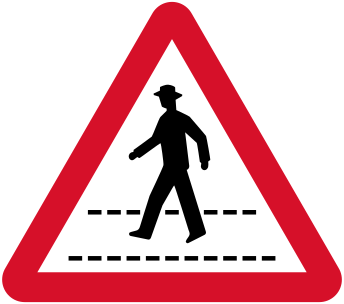 | Walking figure | Pedestrian crossing ahead | Slow down and give way to people crossing |
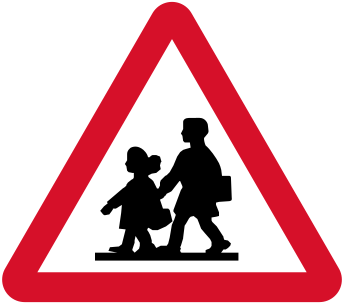 | Two children | School or play area nearby | Slow down and watch for children stepping out |
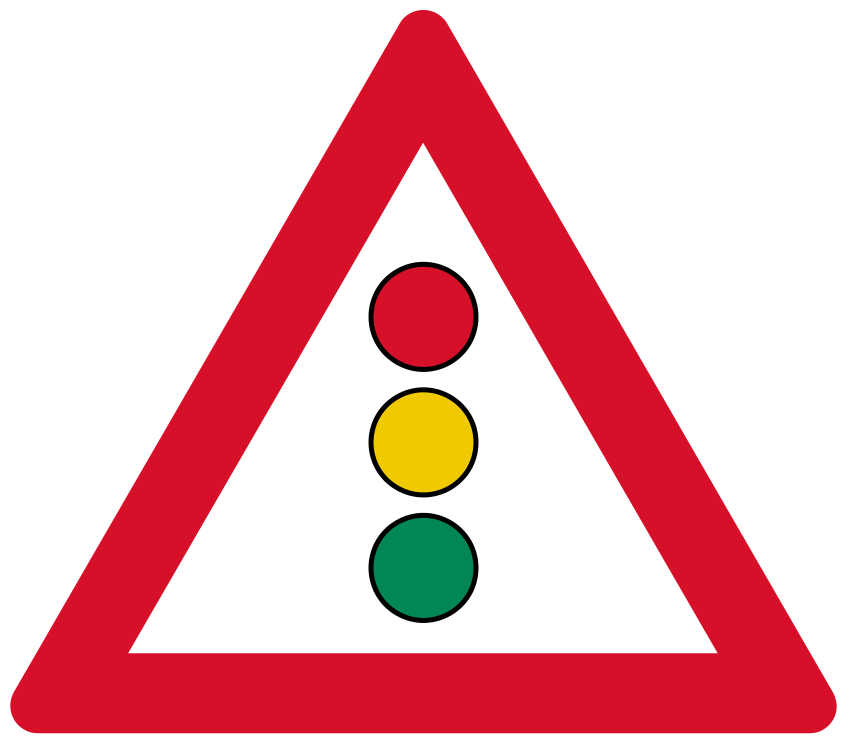 | Three lights | Traffic signals ahead | Be ready to stop at the lights |
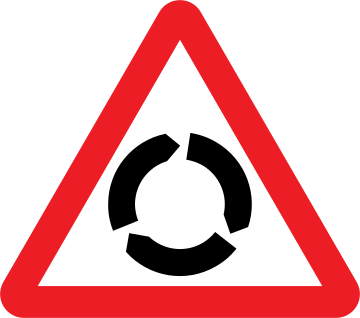 | Three curved arrows | Roundabout ahead | Slow down and prepare to give way |
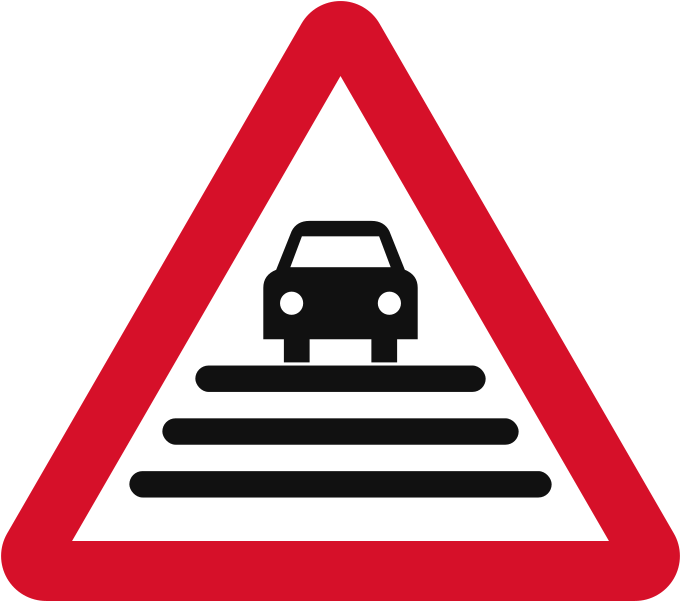
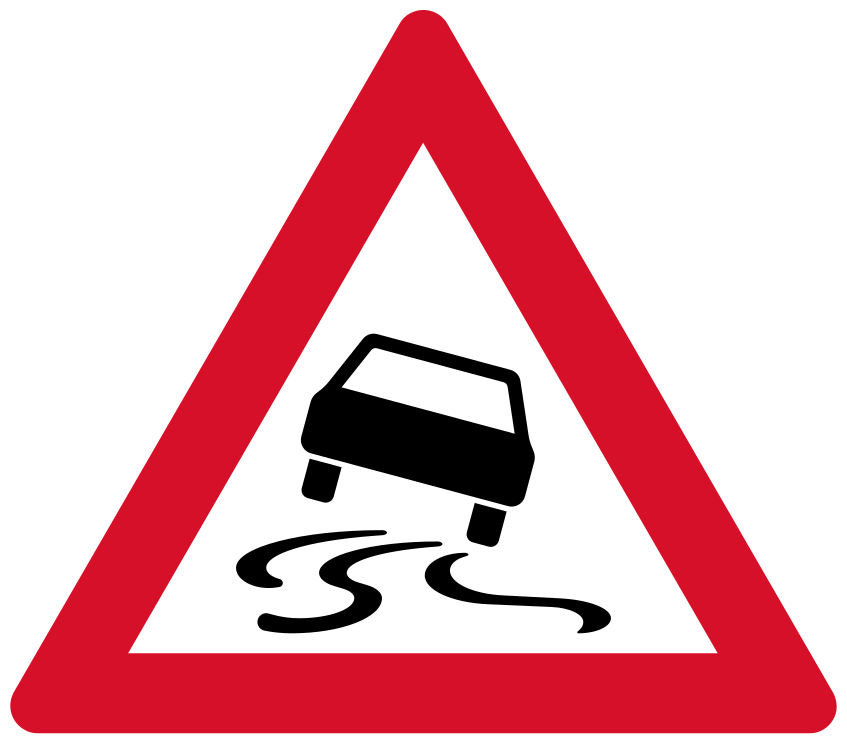 | Car with skid marks | Slippery road | Reduce speed, brake and steer gently |
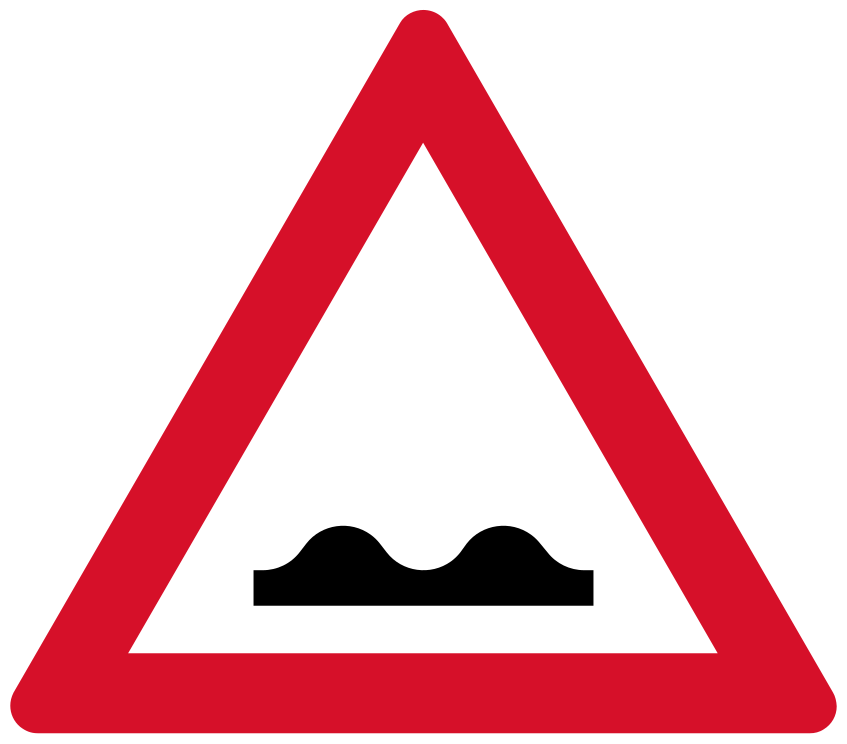 | Hump | Speed bump | Slow right down before it |
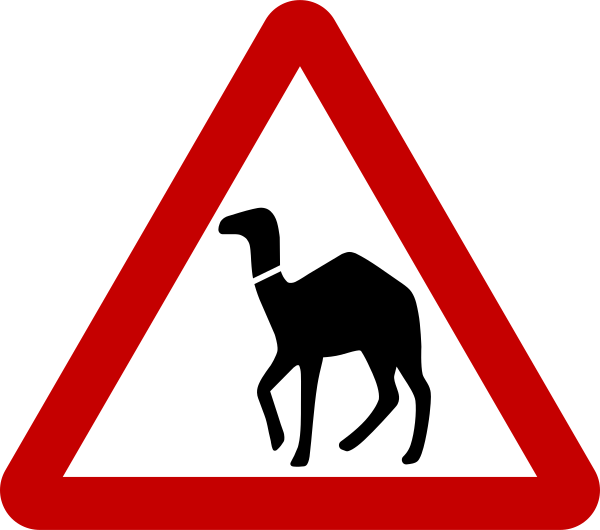 | Camel | Camels may cross | Slow down, most of all at night, and be ready to stop |
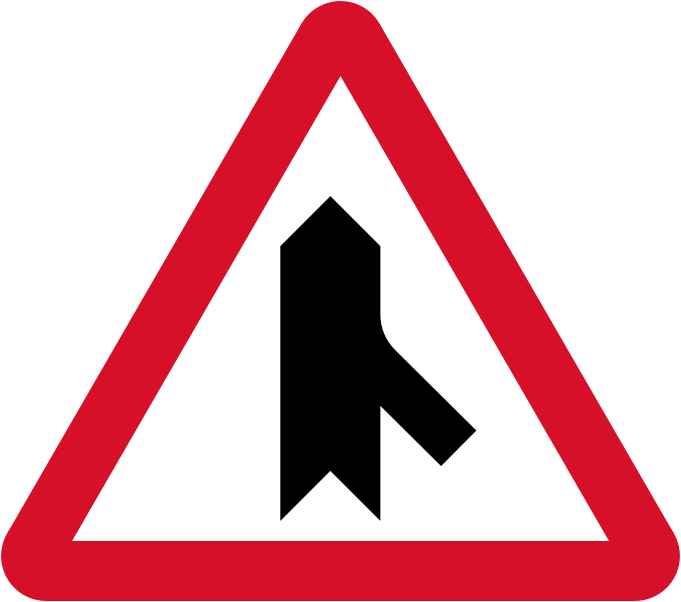 | Merging symbol | Traffic joins your road | Check your mirror and make room |
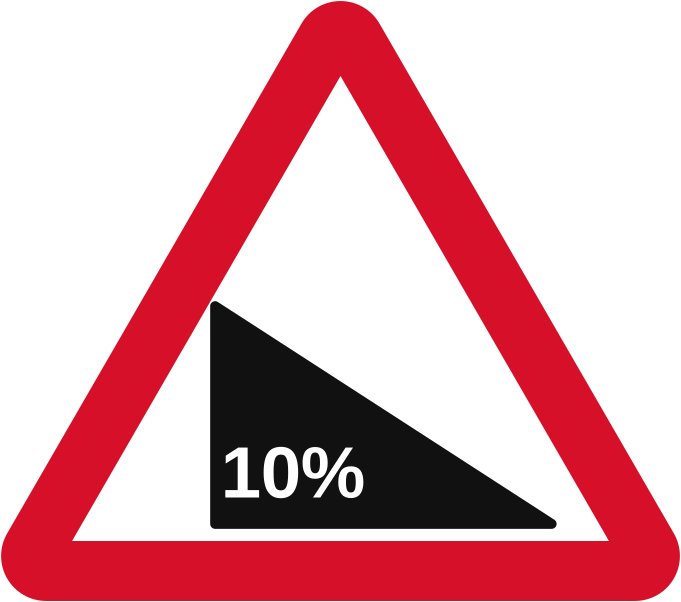 | Downhill slope | Steep descent | Use a lower gear and do not ride the brake |
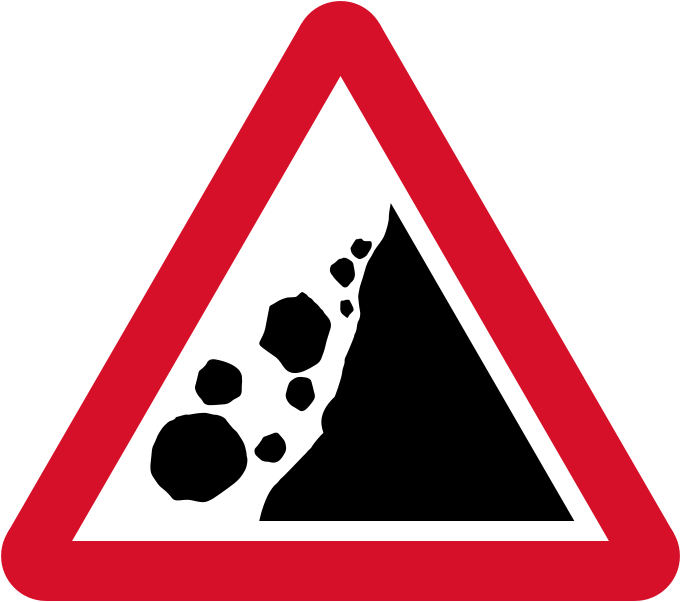 | Rocks on a slope | Falling rocks possible, common near wadis and mountain roads | Watch for rocks and do not stop beneath the slope |
 | Fog | Fog ahead | Slow down, use fog lights and keep a bigger gap |
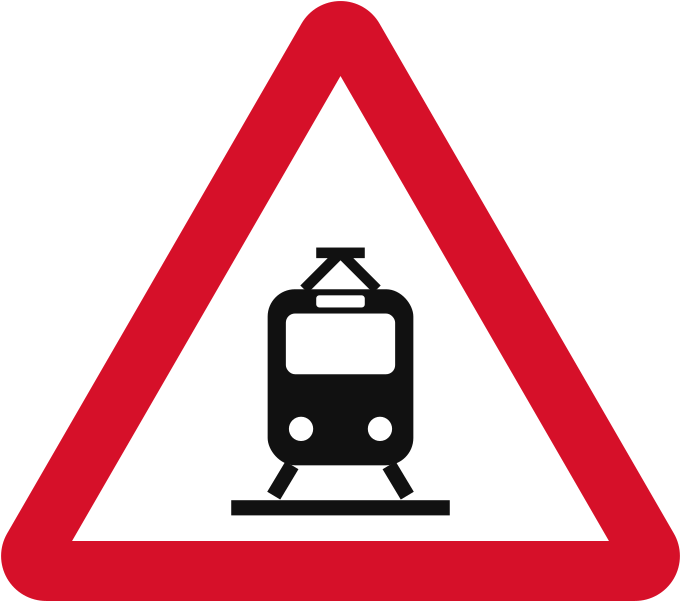 | Tram | Tram crossing | Stop for a tram. Do not stop on the tracks |
Hazards that are particular to the UAE
Camels crossing, fog ahead, sand and dust, and tram crossings in Dubai appear on UAE papers because they appear on UAE roads. Fog and sand are driver-view scenes in our bank, so you practise the correct action: lower speed, lights on, bigger gap. You will meet these in the safe driving test.
A warning does not forbid
A warning does not remove any right or add any ban. It tells you to take care. If a question asks what a triangle orders, the answer is that it warns. That is a small distinction that wins a mark. Test it in the signs test.
Prohibition and mandatory signs
These are the signs that tell you what you may and may not do. Red rings forbid. Blue discs command. They carry most of the tricky questions, so learn the numbers on the speed signs and the difference between the stopping and parking pair first.
| Sign | Shape and colour | Meaning | What you must do |
|---|---|---|---|
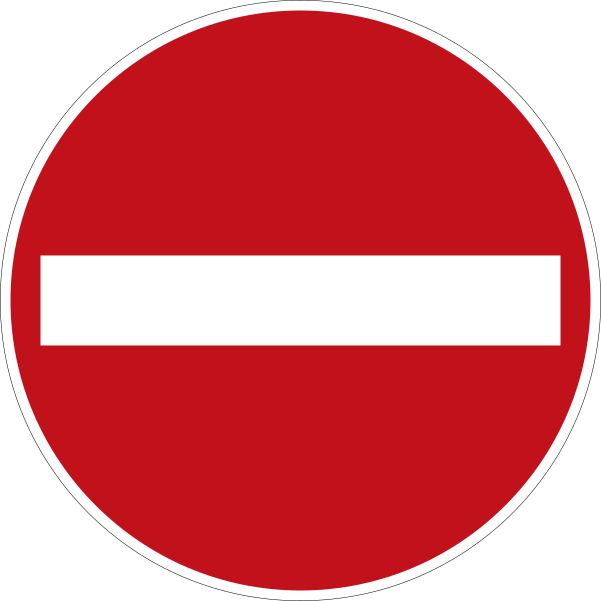 | Red disc, white bar | No entry | Do not drive in. Usually the exit of a one way street |
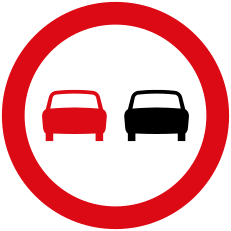 | Red ring, two cars | No overtaking | Stay behind the vehicle ahead |
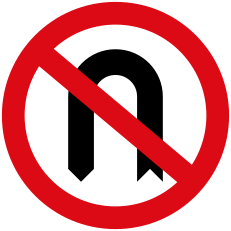 | Red ring, crossed U arrow | No U-turn | Continue and turn at the next permitted place |
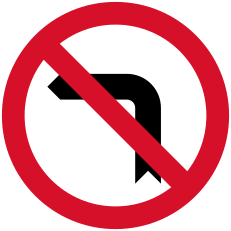 | Red ring, crossed arrow | No left turn | Go another way |
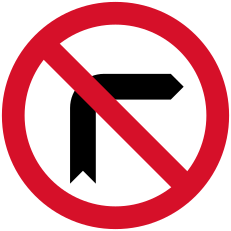 | Red ring, crossed arrow | No right turn | Go another way |
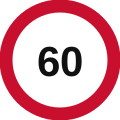 | Red ring and a number | Maximum speed | Never exceed the number in km/h |
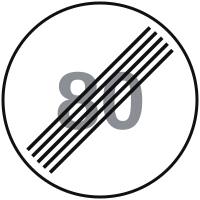 | Number with a diagonal bar | End of the limit | That limit stops here. Check the next sign |
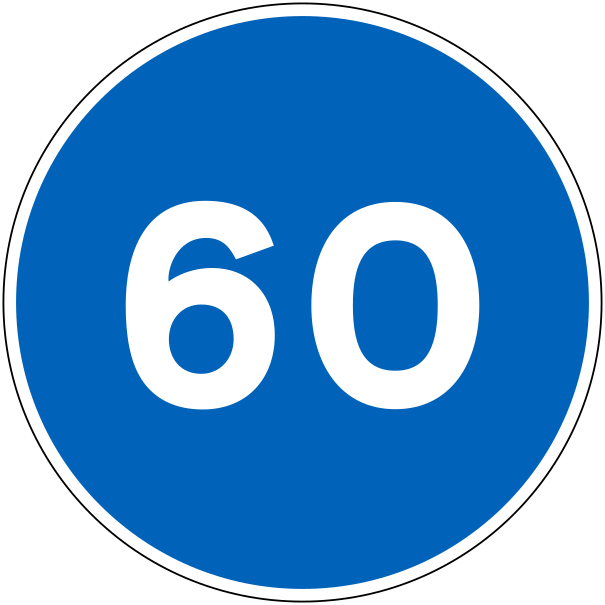 | Blue disc with a number | Minimum speed | Do not drive slower than the number, unless unsafe |
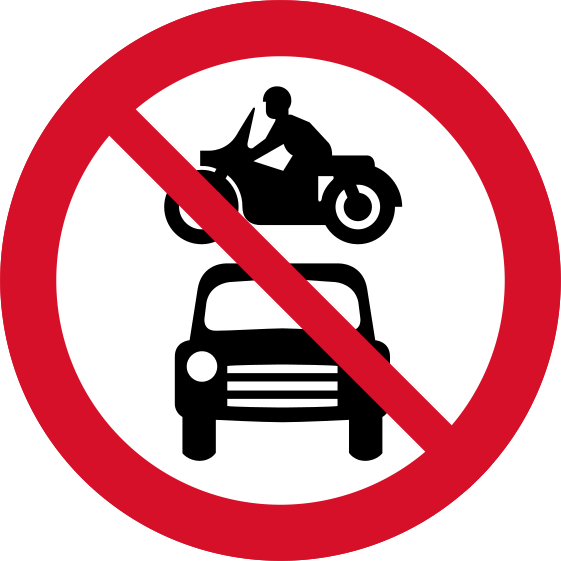 | Red ring, vehicles | No motor vehicles | Motor vehicles must not enter |
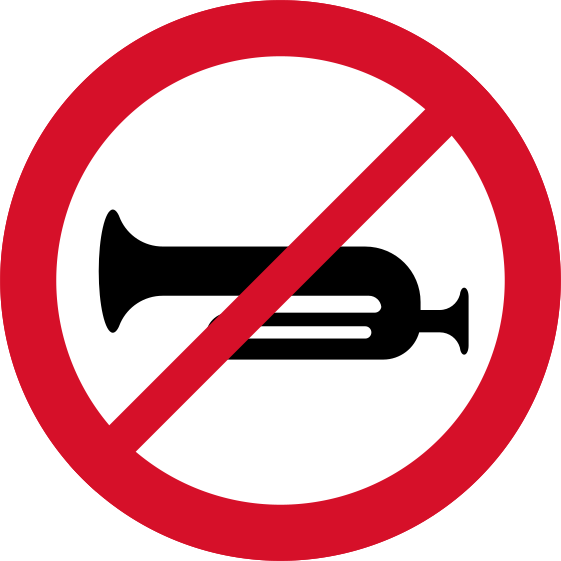 | Red ring, horn symbol | No use of the horn | Do not sound the horn, for example near hospitals |
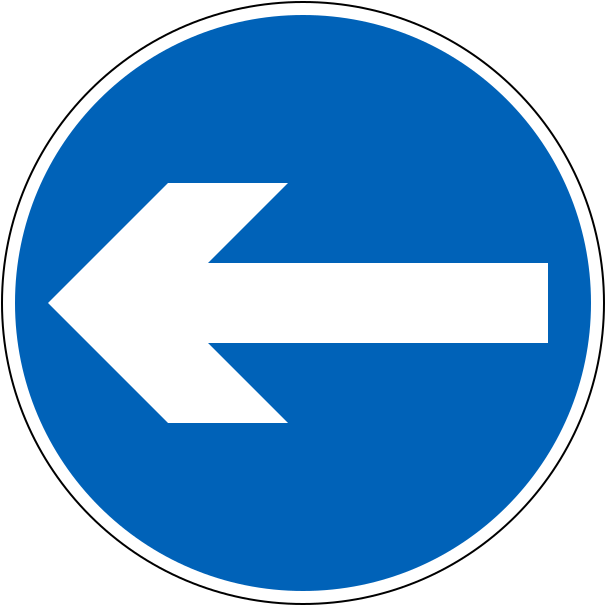 | Blue disc, bent arrow | Turn left | Turn left at the junction |
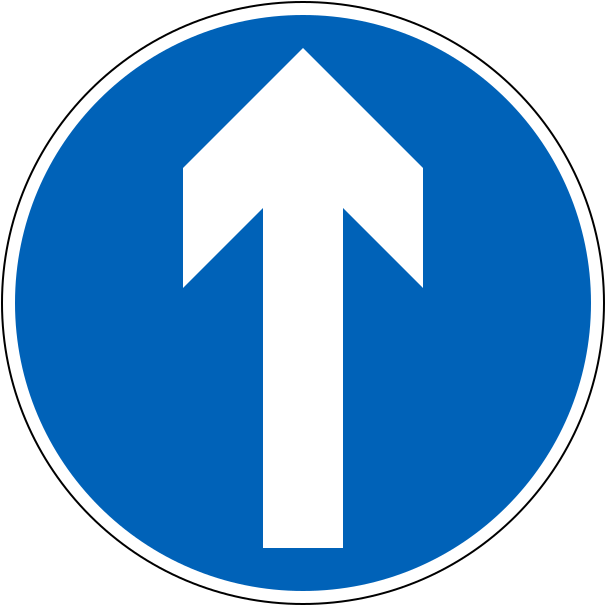 | Blue disc, straight arrow | Ahead only | Go straight. No turning |
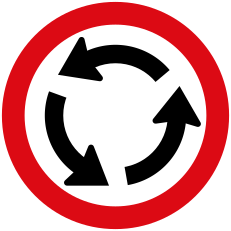 | Blue disc, circular arrows | Roundabout | Go round to the right, anticlockwise, and give way to traffic already in it |
No stopping and no parking
This is the pair candidates miss most often. Both use a blue disc with a red ring. The no stopping sign has a red cross and means that you must not stop at all, even briefly. The no parking sign has a single diagonal bar and means that you must not park, though a short stop to drop someone off is usually allowed. Some UAE roads add a tow away message, so a parked car may be removed.
| Sign | Looks like | What it means |
|---|---|---|
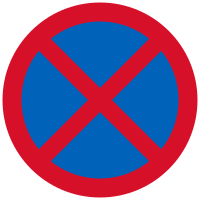 | Cross | No stopping at all |
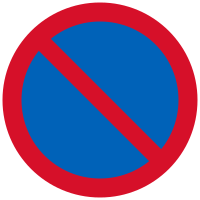 | One bar | No parking |
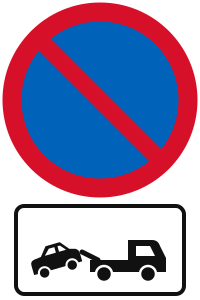 | Tow away message | No parking and a car will be towed |
The no entry and no overtaking signs are in signs test 2 alongside this pair.
Priority signs: stop, give way and priority road
Priority signs answer one question: who goes first. Three signs do most of the work, and the right of way section of the test builds on them.
| Sign | Shape and colour | Meaning | What you must do |
|---|---|---|---|
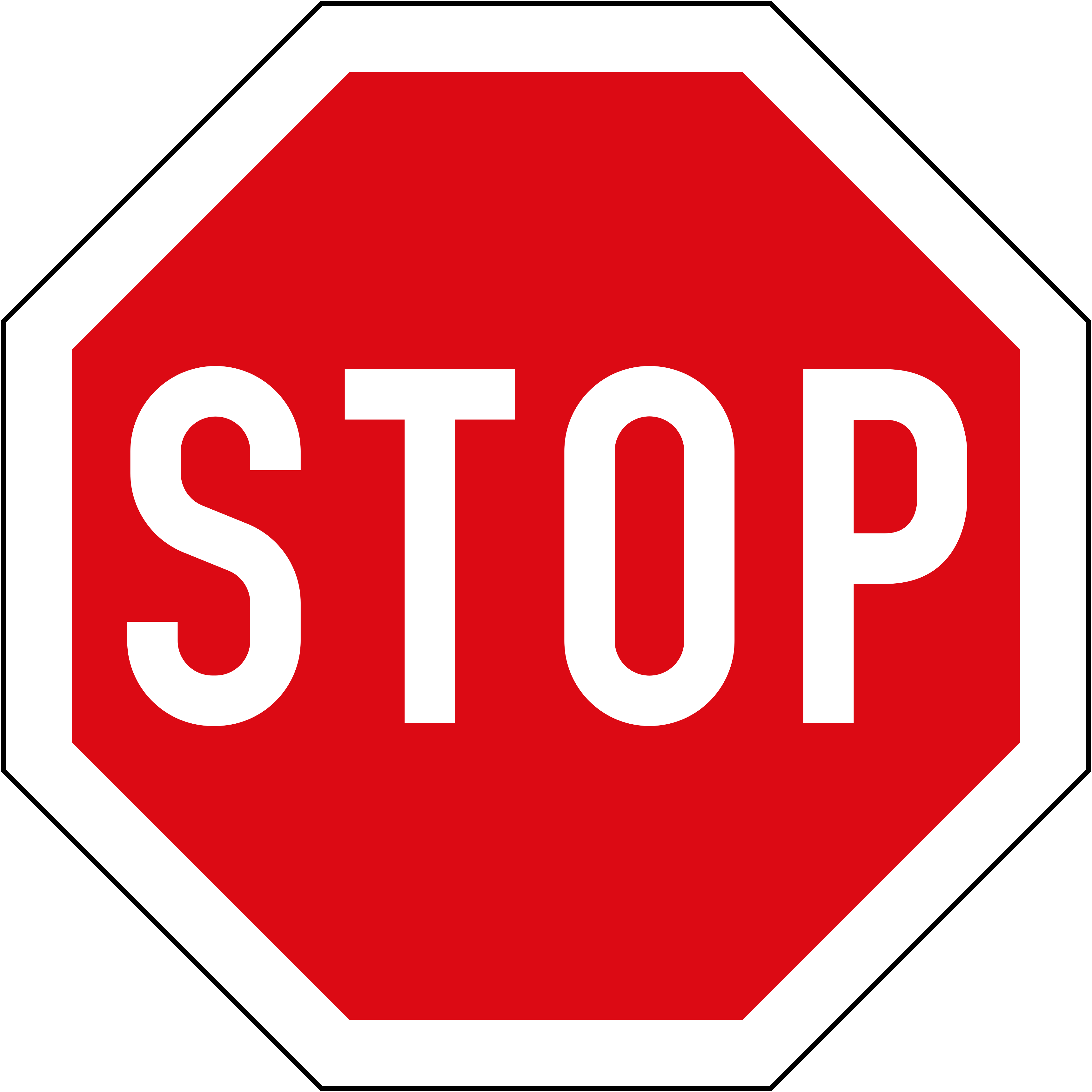 | Red octagon | Stop | Come to a complete stop at the line, then go when it is clear |
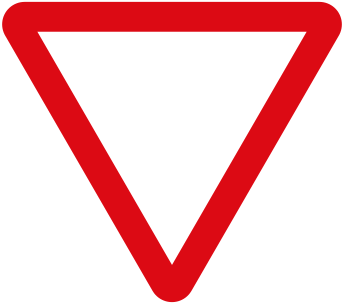 | Inverted triangle | Give way | Slow down. Stop only if traffic has priority |
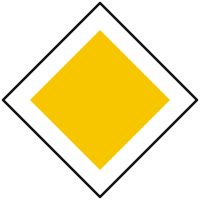 | Yellow diamond | You have priority | Continue, but watch for drivers who may not give way |
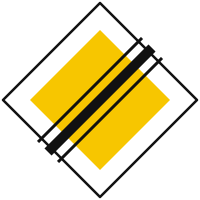 | Diamond with a bar | Priority ends | Treat the next junction as unsigned |
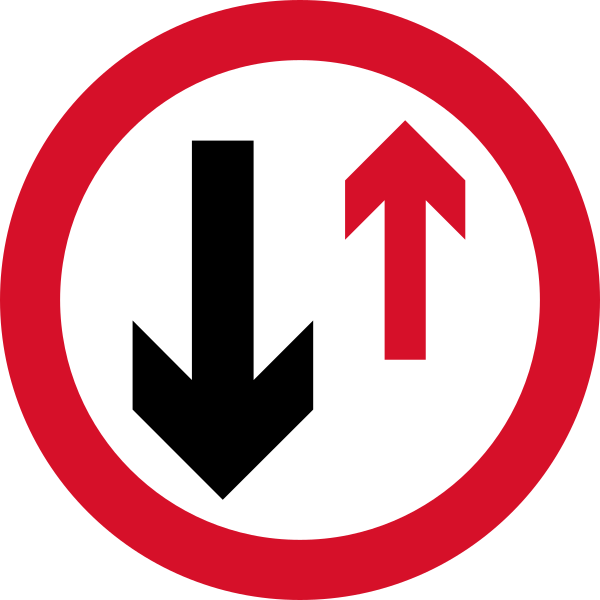 | Give-way symbol | Give way to oncoming traffic | Let oncoming vehicles through the narrow section first |
Stop means stop
A red octagon means that the wheels stop at the line. A rolling stop is a violation, and the test asks about it. The correct answer is to stop completely and then proceed when the way is clear.
Unsigned junctions and roundabouts
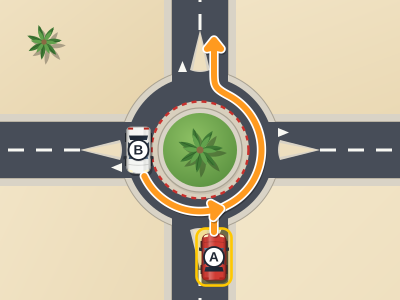
When a junction has no sign or light, the usual rule is that traffic on your right has priority. UAE roundabouts run anticlockwise, and you give way to traffic already on the roundabout. The priority-ends sign puts you back into this unsigned situation. Practise scenes with cars A and B in the right of way test.
Direction, information and highway signs
Direction and information signs do not forbid or command. They help you choose a route or find a service. They are rectangles: green for routes and highways, blue for services, with white text and symbols. In the UAE they are bilingual, with Arabic and English on the same board. Distances are in kilometres.
| Sign | Shape and colour | What it tells you |
|---|---|---|
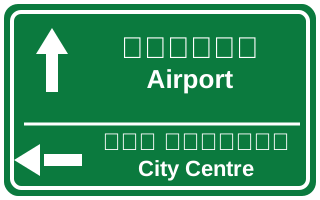 | Green board, white text | Where the road leads and how far |
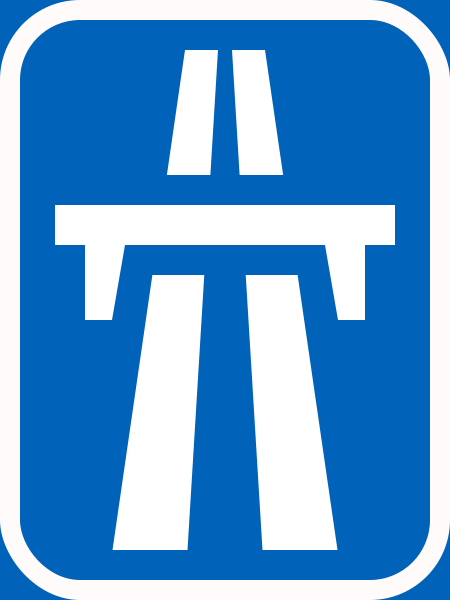 | Motorway symbol | Motorway rules apply from here |
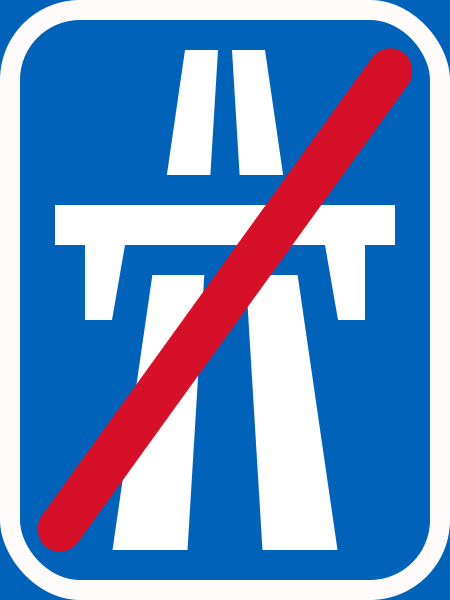 | Motorway symbol with a bar | Motorway rules end here |
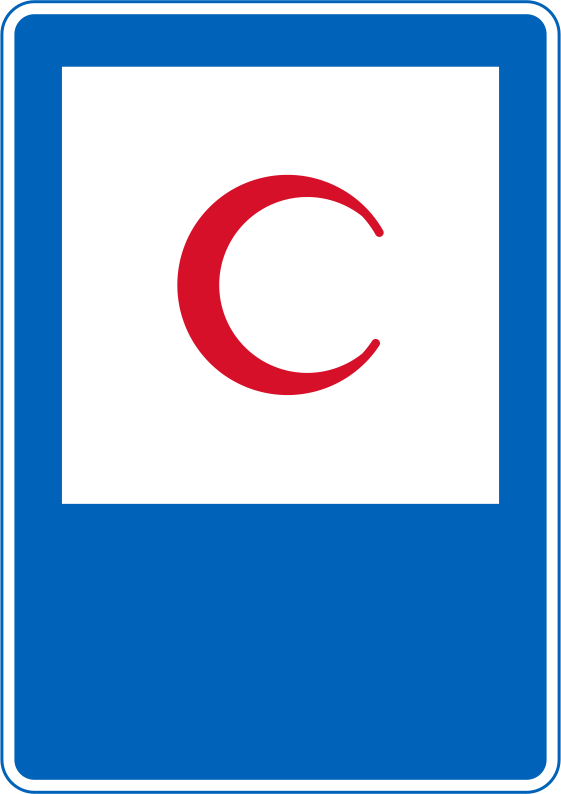 | Rectangle with a blue border | A hospital is near. Make way for ambulances |
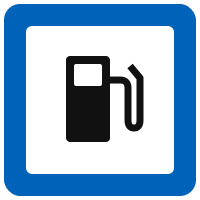 | Fuel symbol | Fuel ahead |
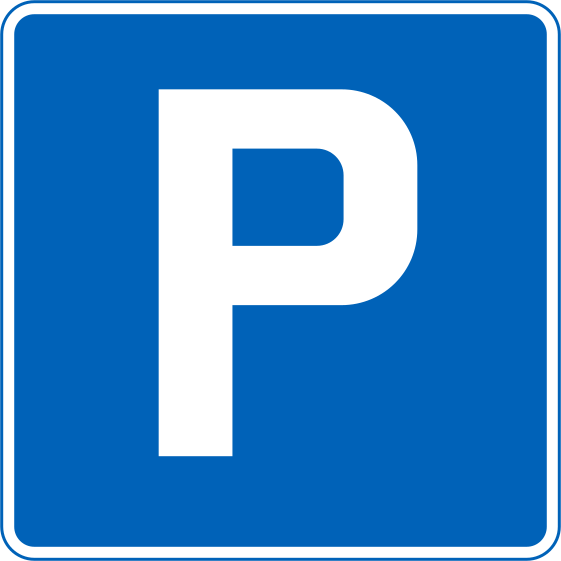 | Rectangle with a P | Parking is allowed here |
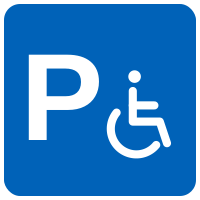 | P with a disabled symbol | Reserved for permit holders |
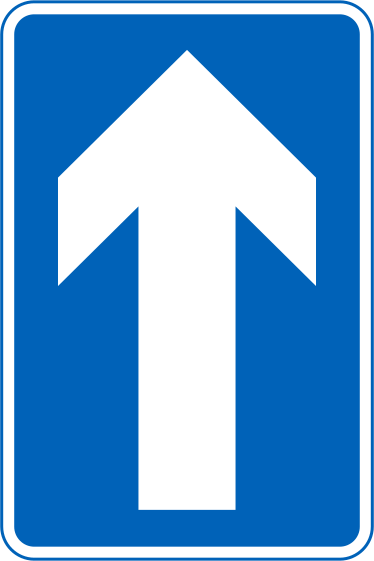 | Rectangle with an arrow | Traffic flows one way only |
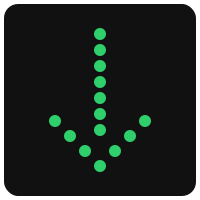 | Open lane symbol | This lane is open |
Reading a highway board
UAE highways carry several lanes at high speed, so boards are placed well before the exit. Read the board, pick your lane early and signal. Cutting across lanes at the last moment is a common cause of collisions and a common question in the rules section of the test. Candidates who find Arabic place names awkward should read a few boards in both scripts before the test.
Overhead lane control signs
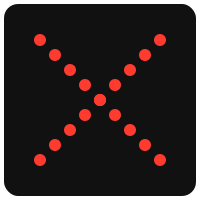
Overhead signs show a green arrow over an open lane and a red cross over a closed one. Never drive in a lane under a red cross. The test shows the symbols and asks which lane you may use.
For a mix of signs and rules, take the first road rules test straight after this section.
Dubai printable theory pack
609 questions with the answer and the rule, 3 full papers at the real length. One payment, no account.
Fail on the day
AED 200+
Pass first time
AED 15
- 3
- Full papers
- 609
- Questions
- printable
That's 2.5 fils a question, every answer explained.
Roadworks, temporary and special signs
Temporary signs warn of work that will not last: lane closures, diversions, narrowed carriageways and workers on the road. They are often orange or yellow and mounted on stands or barriers, and they take priority over the permanent signs beside them. In the test the question asks what you do, and the answer is the cautious one: slow down, follow the diversion and give the crew room.
| Sign | What it shows | What you must do |
|---|---|---|
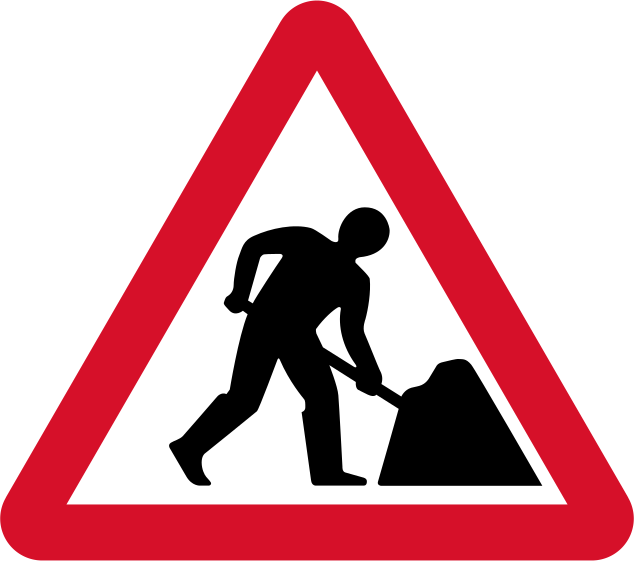 | Roadworks symbol | Slow down, expect workers, narrowing and changed lanes |
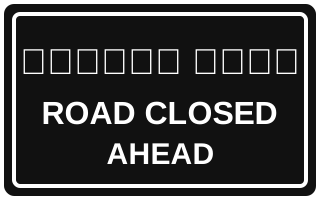 | Road closed symbol | Do not enter. Take the diversion |
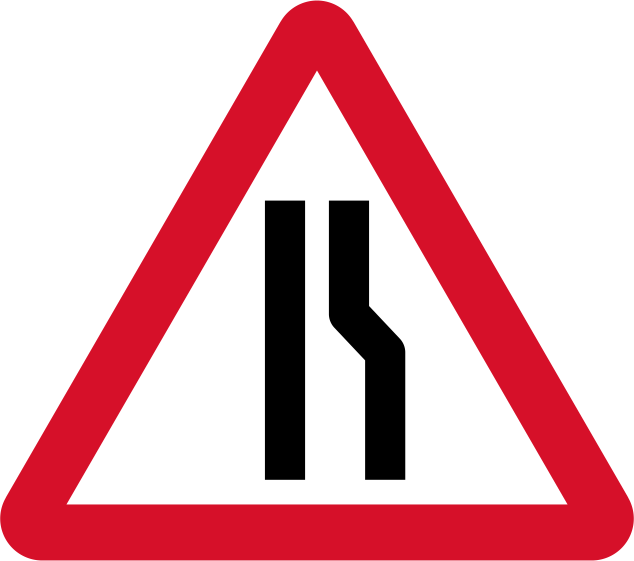 | Pinched lines on one side | Slow down and merge early |
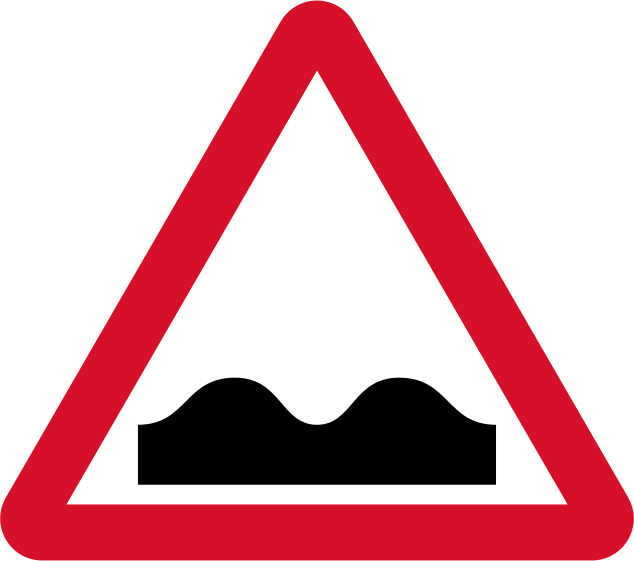 | Uneven surface | Reduce speed and keep a firm grip on the wheel |
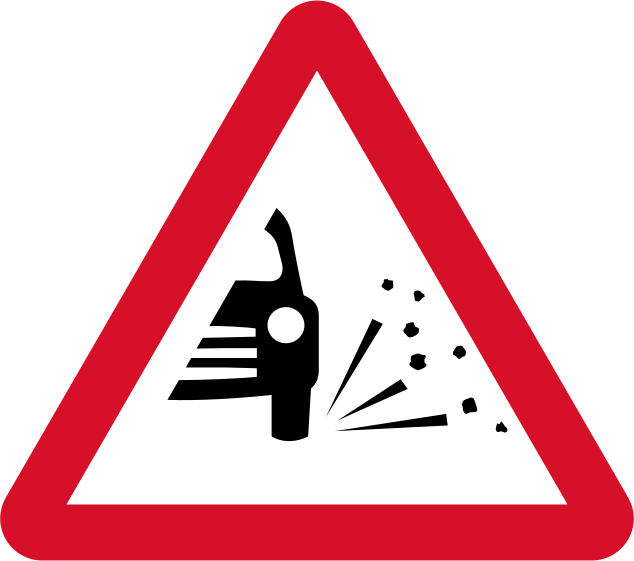 | Chippings symbol | Slow down and keep distance to protect your windscreen |
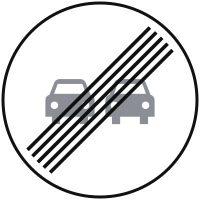 | No overtaking sign with a bar | The overtaking ban ends. Overtake only if safe |
Merge early, not late
When a lane is closed, the safest move is to merge as soon as it is safe, not at the last cone. Forcing in late is a recognised cause of crashes at works. The questions on this topic favour the calm, early option.
Ending a restriction
A sign that ends a restriction, such as the end of speed limit 80, cancels that restriction only. It does not mean you can go as fast as you like. Read the next permanent sign. Look in the second road rules test for questions about speed and works together.
Level crossings and low aircraft
The UAE bank includes some unusual warnings, such as level crossings and low flying aircraft near airports. You will see them rarely on the road, but the test can ask what they warn of. The answer is always about attention and speed.
Road markings: lines, bus lanes and the yellow box
Markings are signs painted on the road, and they appear in picture questions. The rule that covers most of them is plain: a broken line is a permission, a solid line is a barrier, and a double solid line is a firm barrier in both directions.
| Marking | What it means | What you must do |
|---|---|---|
| Broken line | You may cross if it is safe | Check mirrors, signal, then move |
| Solid line | Do not cross | Stay in lane. No overtaking across it |
| Double solid line | Do not cross from either side | No overtaking, no U-turn over it |
| Zebra crossing | Pedestrians have priority | Slow down and stop for anyone waiting or crossing |
| Bus lane markings | Lane reserved for buses at set times | Do not use it unless the sign allows |
| Yellow box at a junction | Keep the junction clear | Do not enter unless your exit is clear |
| Stop line | Where you must halt | Stop behind it, not on it |
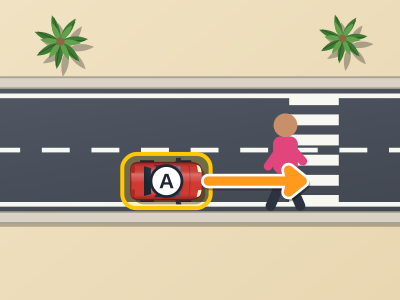
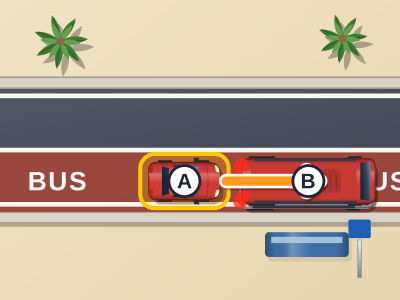
Reading a top-down scene
Most marking questions show a top-down scene with a red car A and a white car B. Look at the line beside car A first. Then ask what A may do, not what B is doing. The mistake is to answer the question about the more interesting car.
Work through more scenes like these in the right of way test.
Traffic lights, speed cameras and police signals
Lights and officers give moving instructions that override the signs beside them. The test shows a signal or an officer and asks what you do.
| Signal | Meaning | What you must do |
|---|---|---|
| Steady red | Stop | Stop behind the line. Jumping a red light is a serious violation |
| Steady amber | About to turn red | Stop if you can do so safely |
| Steady green | Go when clear | Move off, giving way to anything still in the junction |
| Flashing amber | Caution | Slow down and proceed only when clear |
| Flashing red | Stop | Treat it like a stop sign, then go when clear |
| Officer with raised hand | Stop | Stop where directed, even on a green light |
| Officer beckoning | Go | Move on when it is safe |
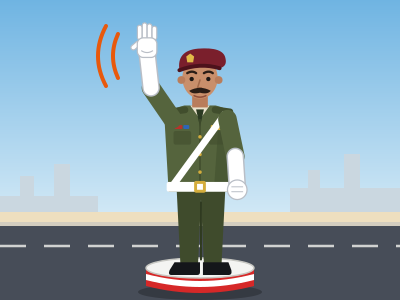
Police signals beat lights
If an officer directs you to go on a red light, you go. If the officer tells you to stop on a green, you stop. This is the one rule in the signs chapter that overrides everything else. The questions are short and the answer is obedience to the officer.
Speed camera signs
UAE roads carry fixed and mobile cameras and the signs that warn of them. The camera sign does not state the limit. The limit is on the speed limit sign. When you see a camera warning, check your speed. The signs and the penalties are in the fines and black points test.

Look-alike pairs people confuse
Most lost marks come from two signs the candidate has seen many times and swaps. Use this table as a checklist, and for each pair say aloud what separates them. The mocks put the twin among the wrong answers on purpose.
| Pair | How to tell them apart |
|---|---|
| No stopping against no parking | Cross means no stopping at all. One bar means no parking |
| No entry against no stopping | A white bar across a red disc stops you entering. A red cross on blue stops you stopping |
| Stop against give way | Octagon is a full stop. Inverted triangle is give way |
| Speed limit against minimum speed | Red ring is a maximum. Blue disc is a minimum |
| Speed limit against end of speed limit | A bar through the number cancels it |
| Roundabout ahead against roundabout | Red triangle warns. Blue disc commands |
| Priority road against priority road ends | A bar through the diamond means you lose priority |
| No left turn against turn left | Crossed arrow in a red ring forbids. Blue disc arrow commands |
| Pedestrian crossing against children crossing | One figure against two children. Both mean slow down |
| Flashing red against flashing amber | Red means stop, then go when clear. Amber means proceed with care |
Drill one pair a day
Write one row on a card, picture on the front. Then sit a timed paper and look for that pair among the questions. Do the pairs in signs test 2, then check yourself on the third RTA mock.
Say the family first
Before you read the options, say triangle, red ring, blue disc or rectangle. That removes half the options in one step and makes the twin easier to spot.
A seven day plan to learn every UAE sign
You do not need weeks for signs, you need repetition with feedback. This plan takes 30 to 40 minutes a day and ends with two timed papers, so you finish above the line and not on it.
| Day | Work | Check |
|---|---|---|
| 1 | Family table and warning triangles | Rebuild the table from memory |
| 2 | Prohibition and mandatory discs, speed signs | Signs test 1 |
| 3 | Priority signs and junction rules | Right of way test |
| 4 | Markings, roadworks and direction boards | Redo the misses from days 2 and 3 |
| 5 | Lights, officers and camera signs | Signs test 2 |
| 6 | Look-alike pairs | RTA mock test 1, timed |
| 7 | Weak signs only, then a second paper | RTA mock test 4, aim above 34 of 40 |
Memory tricks that work
- Red takes, blue gives. Red rings take something away. Blue discs tell you what to do.
- Look for the bar. A diagonal bar usually cancels or forbids.
- Cross beats bar. A cross means no stopping, a single bar means no parking.
- Draw it. Sketching a sign from memory fixes it better than looking again.
If you already drive abroad
Experienced drivers from outside the Gulf often assume the signs match their own country. Most do, but the blue stopping and parking discs, the yellow diamond and the local hazards differ, and the RTA test asks the details. Do the plan, even in half the time.
UAE road signs PDF and printable sheets
Many people search for this chart as a PDF so they can print it or keep it on a phone. There are two sources, and they do different jobs.
The official reference
The RTA publishes a free light vehicle driver handbook as a PDF, which covers the signs, the rules and the test. It is the authority on how a Dubai sign looks, and our sources list links to it. Abu Dhabi and the other emirates publish through their own authorities and driving schools, so ask your institute for the current study material in your emirate.
Printable practice
A chart tells you what a sign means. It does not tell you whether you can recall it under a clock. Our Dubai printable papers give you question sheets with pictures that you can print and mark by hand. If you test elsewhere, see the printable papers for Abu Dhabi and Sharjah. They are written to the published rules and to what candidates report from the real test, and they are practice, not the official exam.
How to use a printed sheet
- Print one paper and set a 30 minute timer.
- Answer without the chart in front of you.
- Mark it and circle every sign you got wrong.
- Write the family and the action next to each circled sign.
- Sit the paper again two days later.
Mistakes that fail people on signs, and what a fail costs
These patterns come up again and again in what candidates report after a failed attempt. Each is a habit, and each has a fix.
| Mistake | Fix |
|---|---|
| Reading the picture and not the question | Read the stem first, then the picture |
| Mixing up no stopping and no parking | Compare the two signs side by side until the difference is automatic |
| Reading a blue number as a limit | A blue disc with a number is a minimum, a red ring is a maximum |
| Answering about the wrong car in a scene | Answer for car A, the one the question names |
| Memorising answer letters | Learn the reason. Order and wording change |
| Rushing the last ten questions | Practise the full 30 minute paper |
What a fail costs in Dubai
Every Dubai knowledge test appointment is paid for. It is AED 220: AED 200 for the test plus a AED 20 Knowledge and Innovation fee. Moving to an earlier slot costs AED 300. A retest is a new paid appointment, so a second attempt costs another AED 220 or more, and there is no fixed delay, only the next available slot at your institute. If you take no knowledge, yard or road test for six months after your last appointment, your training file is suspended. Sharjah and Abu Dhabi fees differ and are set locally, and in Abu Dhabi they depend on your school.
Practise before you book
Take the signs test today and the second one tomorrow. When you score 20 or more of 22 on both, move to a full RTA mock and book only when two papers in a row land at 34 of 40 or better. The printable Dubai papers give you the full bank to work through offline. Paying AED 220 to find out you were not ready is the most expensive way to revise. Start with the free 10-question test above to see where you stand.
Free Dubai mock tests and topic tests
Every test opens on ten free questions. Pick a full mock at the real length, or drill one topic.
- UAE RTA Theory Mock Test 1Mock · 40 questions
- UAE RTA Theory Mock Test 2Mock · 40 questions
- UAE RTA Theory Mock Test 3Mock · 40 questions
- UAE RTA Theory Mock Test 4Mock · 40 questions
- UAE Road Signs Practice Test 1Topic · 22 questions
- UAE Road Signs Practice Test 2Topic · 22 questions
- UAE Road Rules Test 1Topic · 20 questions
- UAE Road Rules Test 2Topic · 20 questions
- UAE Right of Way Practice TestTopic · 22 questions
- UAE Safe Driving Practice TestTopic · 22 questions
- UAE Fines & Black Points Test 1Topic · 20 questions
- UAE Fines & Black Points Test 2Topic · 20 questions
Practise for your emirate
The rules are national, but the test centre, booking and fees can differ by area.
Frequently asked questions
The UAE uses the GCC road sign system. Red-bordered triangles warn, red rings forbid, blue discs command, the red octagon means stop, and rectangles give direction and information. Direction boards are bilingual in Arabic and English. This page lists each family with its shape, colour, meaning and the action you must take.
The RTA does not publish a topic split. The light vehicle test is reported as 40 multiple-choice questions in 30 minutes with 30 correct to pass, and signs appear throughout the paper alongside rules, priority and hazard clips. Practise with a full 40-question mock, not only the sign tests.
The RTA publishes a free light vehicle driver handbook as a PDF that includes the signs, and we link to it in our sources. For printable practice with pictures, use our Dubai printable papers. Other emirates publish through their own authorities and schools, so ask your institute.
Both are blue discs with a red ring. No stopping has a red cross and means you must not stop at all. No parking has a single diagonal bar and means you must not park, although a brief stop to drop someone off is usually allowed. The test asks this often, so learn them as a pair.
They follow the same GCC system, so shapes, colours and most symbols are the same. Details differ, such as local warnings, direction boards, speed limits and the way each test presents them. Learn the UAE paper's own questions and use the chart on this page for the shapes.
A blue disc with a number is a minimum speed. A red ring with a number is the maximum. They are opposite instructions, so read the colour before the number. A diagonal bar through a number cancels that limit and does not set a new one.
Yes. If an officer directs you to stop on a green light, you stop, and if an officer waves you on at a red light, you go when it is safe. Hand signals from police override signs, markings and lights. The test asks this in a short picture question.
In Dubai you book a new knowledge test appointment and pay again, AED 220 per appointment. There is no published fixed delay. Abu Dhabi and Sharjah set their own fees. Use the first day to diagnose, then book a date at least a week out and sit mocks first.
Most first-time candidates can learn the signs in about a week at 30 to 40 minutes a day, using the chart, the two signs tests and then timed mocks. Experienced drivers may need half that. The aim is to score well above the 30 of 40 pass line.
Dubai printable theory pack
609 questions with the answer and the rule, 3 full papers at the real length. One payment, no account.
Fail on the day
AED 200+
Pass first time
AED 15
- 3
- Full papers
- 609
- Questions
- printable
That's 2.5 fils a question, every answer explained.