

Fujairah Traffic Light vehicle
Timed mock exam· Full mock examsFujairah Traffic - UAE RTA Theory Mock Test 2
Second full mock exam covering all RTA theory topics. A different question selection to Mock Test 1 so you can keep practising without repetition.
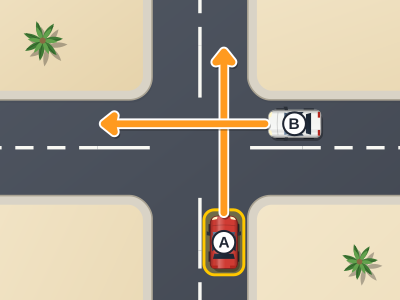
At an unmarked junction, a car arrives from your left at the same time as you. Who should go first?
The other 30 questions in this test
Read them all. The answer and the reason for each, and the timed 40-question run, are in the Fujairah Traffic Theory Test Questions PDF.
- Q11Road signs and signals
You are on a highway and see this sign. What change must you make?
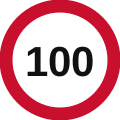
- AAccelerate to exactly 100 km/h
- BMove to the leftmost lane
- CNothing, speed limit signs on highways are advisory
- DReduce your speed to no more than 100 km/h if you were driving faster
Answer and explanation in the bank
- Q12Traffic rules
When towing a broken-down vehicle with a tow rope, what must the driver of the towed vehicle do?
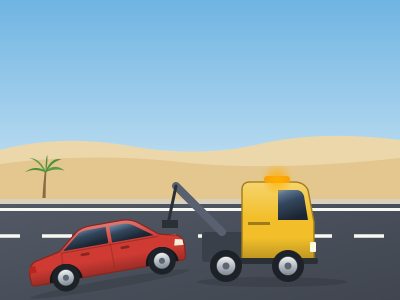
- AStay alert, keep the rope taut, steer and brake as needed, and follow the towing vehicle's signals
- BTurn the engine off and leave the steering unlocked without any input
- CApply the brakes continuously so the rope stays tight
- DSit in the passenger seat and let the rope do all the work
Answer and explanation in the bank
- Q13Right of way
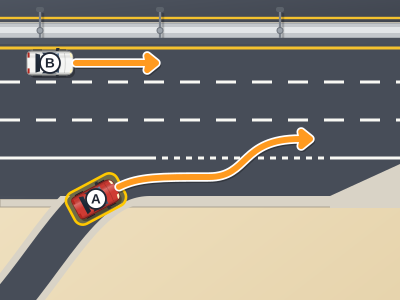
You are on a highway on-ramp and want to join the main carriageway. What is the key requirement before merging?
- AStop at the end of the ramp and wait for a very long gap
- BBuild up speed on the ramp to match the flow of highway traffic, then merge into a gap
- CMerge slowly regardless of the speed of motorway traffic
- DFlash your headlights so motorway traffic moves over for you
Answer and explanation in the bank
- Q14Penalties and fines
A driver cuts ahead of a queue of vehicles at a merge point without waiting their turn. What is the correct statement?
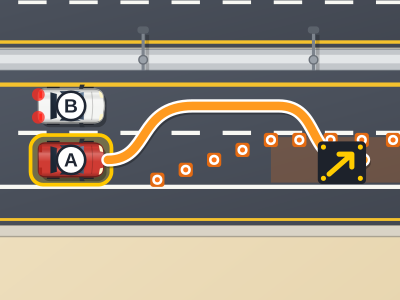
- AQueue-jumping is a common practice with no legal consequence
- BIt is allowed if the driver needs to reach a destination urgently
- CCutting or jumping a traffic queue is an offence that can carry a fine and black points
- DOnly the driver being passed can report it, not a camera
Answer and explanation in the bank
- Q15Safe driving
Where should you place a warning triangle after breaking down on a fast road?
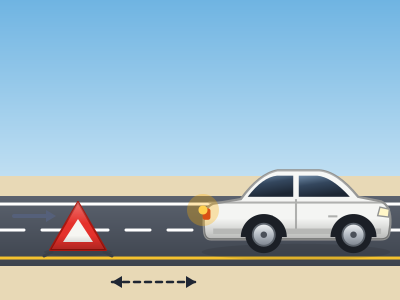
- ADirectly against the rear bumper
- BAt the nearest junction regardless of distance
- CWell behind the vehicle on the same side, far enough for approaching drivers to see it and slow down, and further back on high-speed roads
- DWarning triangles are not used in the UAE
Answer and explanation in the bank
- Q16Road signs and signals
Where in the UAE is a 120 km/h speed limit sign most commonly seen?
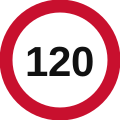
- AInside residential neighbourhoods
- BOn major inter-city highways and motorways
- CNear school zones during school hours
- DOn multi-storey car park ramps
Answer and explanation in the bank
- Q17Traffic rules
Is it legal to make or receive a phone call while driving using a hands-free device in the UAE?
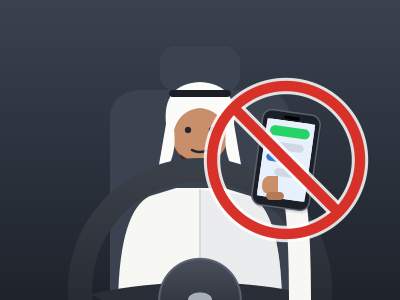
- AYes, a properly fitted hands-free system is permitted, but it is still safer to avoid calls
- BNo, all phone use including hands-free is completely banned
- CYes, and you may also read the screen as long as one hand is on the wheel
- DOnly if you are driving below 60 km/h
Answer and explanation in the bank
- Q18Right of way
You are driving on a highway and a vehicle is merging from an on-ramp on your right. Who has priority?
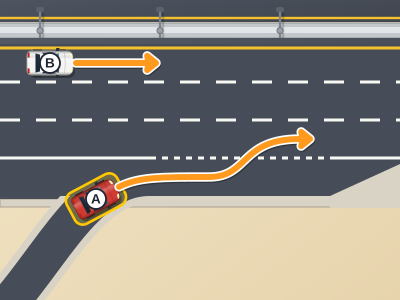
- AYou do, but moving to a left lane early helps both vehicles merge smoothly
- BThe merging vehicle always has priority on a UAE highway
- CThe heavier vehicle has priority
- DBoth must stop and negotiate
Answer and explanation in the bank
- Q19Penalties and fines
A driver obscures part of their number plate with a cover or dirt so it is hard to read. What is the correct statement?
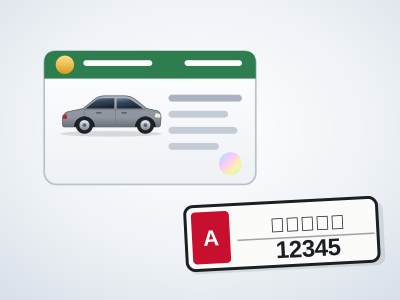
- ANumber plates only need to be readable from the front
- BObscuring or making a number plate unreadable is an offence that can carry a fine and black points
- CA dirty plate is always acceptable and not penalised
- DNumber-plate covers are legal accessories everywhere in the UAE
Answer and explanation in the bank
- Q20Safe driving
You arrive at a serious road crash. After making the scene safe, what is the internationally accepted first action of basic first aid?
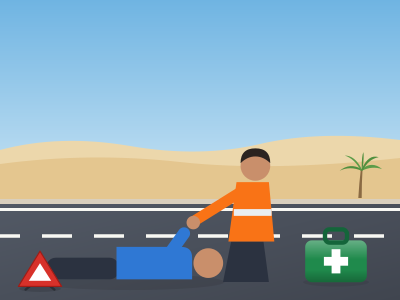
- ACheck for danger, then assess the casualty's response and call emergency services
- BMove all casualties off the road immediately
- CGive the casualty water and reassurance before anything else
- DBegin CPR on every unconscious person without checking for breathing
Answer and explanation in the bank
- Q21Road signs and signals
You see this sign before a junction. What does it tell you about that junction?
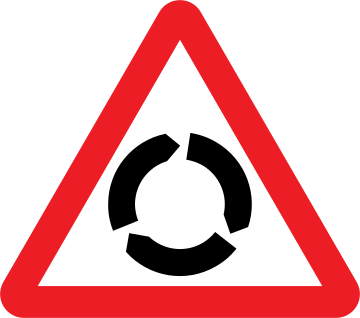
- AA three-way road works detour is ahead
- BA one-way circular road begins here
- CA mandatory U-turn ahead
- DA roundabout is approaching; prepare to give way to circulating traffic
Answer and explanation in the bank
- Q22Traffic rules
When overtaking a cyclist on the road, what is the safe and considerate approach?
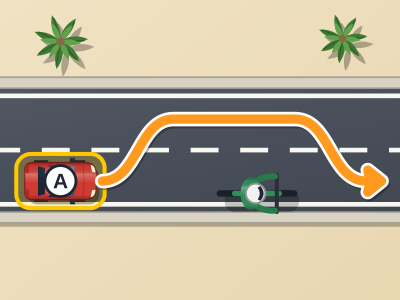
- ASound your horn as you pass to warn them of your presence
- BPass wide, giving the cyclist plenty of lateral space, and only when it is safe to do so
- CSqueeze past as close as possible to save road space
- DFlash your lights and wave them to the side of the road
Answer and explanation in the bank
- Q23Right of way
At a signalled pedestrian crossing the walking man signal turns green and pedestrians step off the kerb. You want to turn into that road. What must you do?
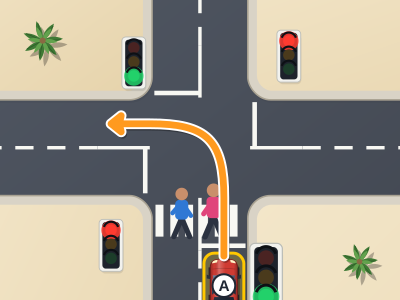
- ATurn immediately since you also have a green signal
- BSound the horn and edge forward slowly
- CDrive through the gaps between pedestrians
- DStop and wait for all pedestrians to cross before turning
Answer and explanation in the bank
- Q24Penalties and fines
A driver removes or alters the numbers or letters on their number plate. What is the likely consequence?
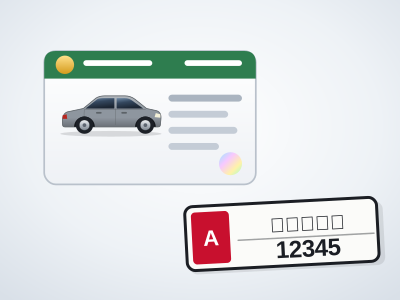
- AIt is allowed if the driver prefers a different style
- BOnly the style of plate matters, not the characters on it
- CAuthorities only enforce plate rules for commercial vehicles
- DTampering with or altering a number plate is a serious offence that can result in heavy fines, black points and possible vehicle impounding
Answer and explanation in the bank
- Q25Safe driving
After a minor collision with no injuries, what should you do before moving vehicles?
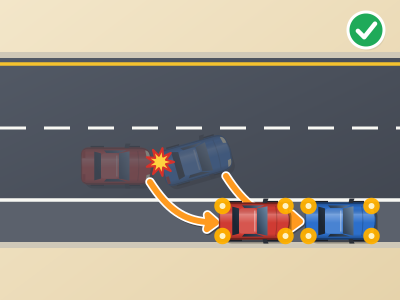
- ADrive away quickly to avoid a traffic jam
- BMove vehicles immediately without documenting anything
- CExchange details with the other driver and photograph the scene, then notify police as required
- DWait for police even if the road is clear and both sides agree on what happened
Answer and explanation in the bank
- Q26Road signs and signals
You see this sign on a slip road joining a main road. What must you do?
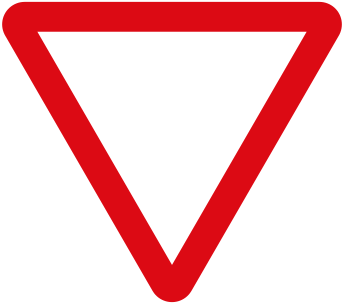
- AAccelerate to match speed with main road traffic, then merge without yielding
- BGive way to traffic already on the main road before merging
- CStop, then proceed only when the road is completely empty
- DUse the hard shoulder to enter and avoid the sign
Answer and explanation in the bank
- Q27Traffic rules
For what purpose is the hard shoulder on a UAE motorway intended?
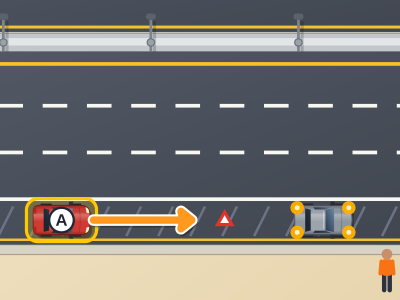
- AAs an extra lane that drivers may use in heavy traffic
- BFor stopping in an emergency or breakdown only, not for driving or overtaking
- CAs an overtaking lane for motorcycles
- DFor police vehicles to park, with no other permitted use
Answer and explanation in the bank
- Q28Right of way
A pedestrian started crossing a signalled junction when the green man was showing but is still on the crossing when it changes to a flashing or red man. What should you do?
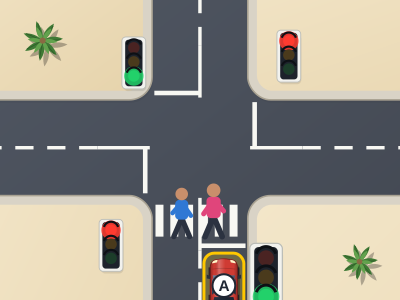
- AMove forward now because the pedestrian signal is no longer green
- BSound your horn to hurry them along
- CContinue to wait until they have completely finished crossing
- DEdge forward to signal that you need to go
Answer and explanation in the bank
- Q29Penalties and fines
What can happen if you park in a space marked for people with disabilities without holding a valid permit?
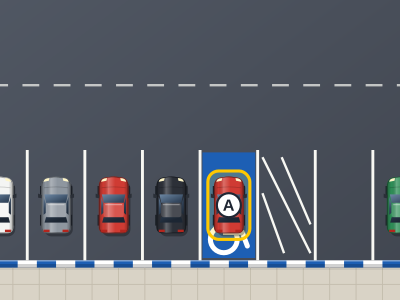
- AIt is fine if the space is empty for more than five minutes
- BDisabled bays have no legal enforcement
- COnly the vehicle owner, not the driver, can be fined
- DIt is an offence that typically carries a fine and possibly vehicle towing
Answer and explanation in the bank
- Q30Safe driving
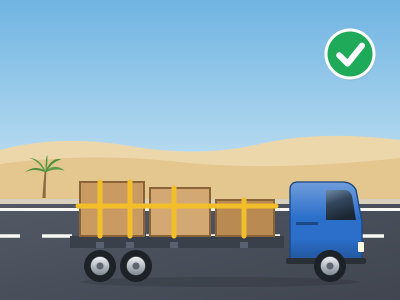
How does unsecured load in a vehicle or trailer create a hazard for other road users?
- AAn unsecured load only risks the carrier vehicle, not others
- BIt only matters for loads above 500 kg
- CLoad securing is optional on private roads
- DItems can shift, unbalance the vehicle, or fall into the road and strike other vehicles
Answer and explanation in the bank
- Q31Road signs and signals
This sign is next to a road marked as a one-way exit. Why is this sign placed there?

- ATo mark a dead-end street where no vehicles may travel
- BTo indicate the road is closed for maintenance
- CTo prevent vehicles entering from the wrong end of a one-way road
- DTo show that cyclists only may use this road
Answer and explanation in the bank
- Q32Traffic rules
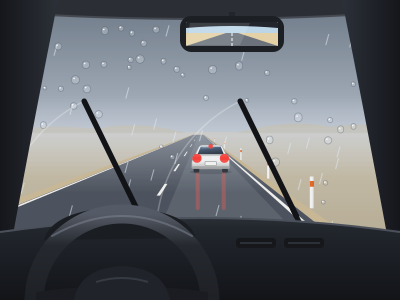
What should you do if your car begins to aquaplane (skid on a film of water) on a wet road?
- ABrake hard to slow down as fast as possible
- BSteer sharply to the right to regain control
- CEase off the accelerator gently, hold the steering straight, and wait for the tyres to regain grip
- DAccelerate through the water to regain traction
Answer and explanation in the bank
- Q33Right of way
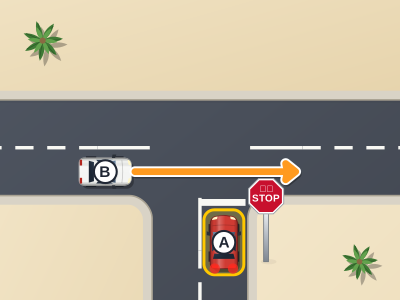
You arrive at a STOP sign but can clearly see the junction is empty. Must you still stop?
- ANo, you may roll through slowly if the road is clear
- BYes, a STOP sign always requires a complete stop before proceeding
- COnly stop if another vehicle is within 50 metres
- DStop only between 7 am and 10 pm when traffic is heavier
Answer and explanation in the bank
- Q34Penalties and fines
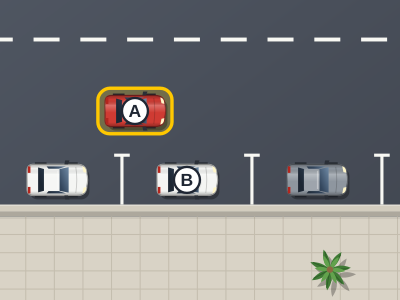
A driver parks next to another parked vehicle, blocking it in (double parking). What is the correct statement?
- ADouble parking is acceptable for short stops of under ten minutes
- BDouble parking is an offence carrying a fine and the vehicle may be towed
- COnly the vehicle that is blocked can report it
- DDouble parking is only an offence if it causes an accident
Answer and explanation in the bank
- Q35Safe driving
Why is using a hand-held mobile phone while driving so dangerous?
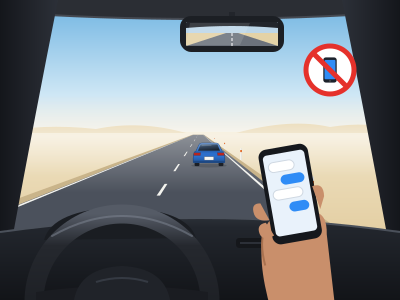
- AIt only matters if the phone screen is bright
- BIt is safe as long as you glance at the screen briefly
- CIt occupies your hand and diverts your attention, significantly slowing reaction time
- DThe risk only applies at speeds above 100 km/h
Answer and explanation in the bank
- Q36Road signs and signals
You need to make a U-turn but see this sign. What should you do?
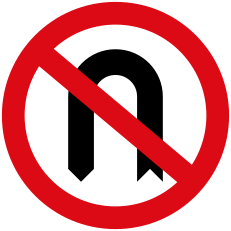
- AMake the U-turn if no other vehicles are visible
- BContinue to the next permitted U-turn or turning point
- CReverse instead, as that is not a U-turn
- DTurn into a side street and immediately reverse back onto the main road
Answer and explanation in the bank
- Q37Traffic rules
How does driving at high speed affect the risk of aquaplaning on a wet road?
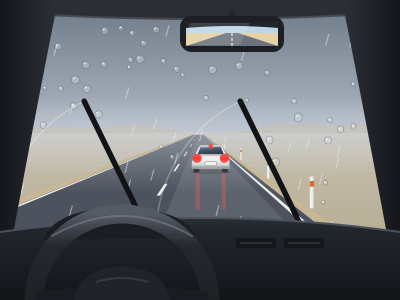
- AIt reduces the risk because the car moves through the water faster
- BSpeed has no effect on aquaplaning; only tyre type matters
- CAquaplaning only occurs when the car is stationary
- DIt greatly increases the risk because tyres cannot displace water fast enough at higher speeds
Answer and explanation in the bank
- Q38Right of way
A GIVE WAY sign faces you at a junction. Can you continue without stopping if traffic on the priority road is far away?
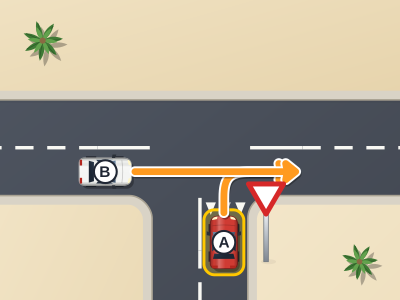
- AYes, you may proceed without stopping if it is safe and you will not force others to slow down
- BNo, a GIVE WAY sign always requires a full stop just like a STOP sign
- CYes, but only if you sound the horn to warn others
- DNo, you must stop for at least five seconds
Answer and explanation in the bank
- Q39Penalties and fines
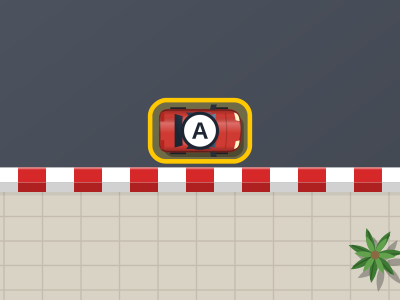
A driver parks in front of a fire hydrant, blocking access. What is the most accurate statement?
- AIt is acceptable as long as the driver stays near the car
- BFire hydrant areas have no parking restrictions
- CParking in front of a fire hydrant is an offence, as it can prevent emergency crews from accessing water quickly, and a fine or towing typically applies
- DOnly blocking the hydrant itself matters, not the surrounding access area
Answer and explanation in the bank
- Q40Safe driving
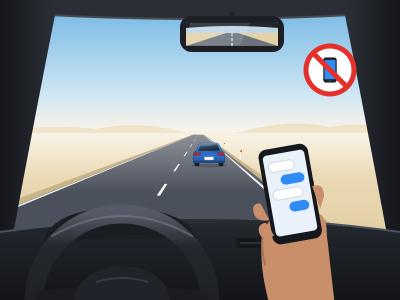
Which distraction is considered just as risky as a hand-held phone call, even though your hands stay on the wheel?
- AListening to the radio on low volume
- BHolding a hands-free phone conversation when mentally demanding
- CUsing cruise control on a clear motorway
- DChecking your dashboard instruments every few seconds
Answer and explanation in the bank
Every answer above, with the rule it comes from, plus the full 40-question timed test.
Get the Fujairah Traffic Theory Test Questions - AED 29What this test covers
Topics include road signs, traffic signals, right of way, roundabouts, speed limits, seat belts, fines and penalties, and the safe-driving rules specific to your vehicle category. Full question-by-question feedback with explanations is shown immediately after you finish the test above.
Frequently asked questions
How many questions is the Fujairah Traffic light vehicle theory test?
The official Fujairah Traffic light vehicle theory test in Fujairah has 40 questions and you need 30 correct (75%) to pass. This practice test has 40 questions.
Is this the real exam?
These are practice questions for study only, written from the public RTA handbook and UAE traffic rules and to what candidates report from the real test. They are not the official exam questions and Wathim is not affiliated with the RTA, ITC, SRTA or any UAE government body. Test format, question count and pass mark can change and vary by emirate, so always confirm the current requirements with the licensing authority before your real test.
Is this practice test free?
The first 10 questions are free, with no signup, and each shows the answer and the reason. The full 40-question test, timed, is in the Fujairah Traffic Theory Test Questions PDF (AED 29, one payment), with every question in the bank.
What does the Fujairah light vehicle theory test cover?
Road signs, traffic signals, right of way, roundabouts, speed limits, seat belts, penalties and safe-driving rules, plus the handling and safety topics specific to your vehicle.