

Fujairah Traffic Motorcycle
Timed mock exam· Full mock examsFujairah Traffic - UAE Motorcycle Theory Mock Test 3
Third full motorcycle mock exam and a great final readiness check before your real bike theory test. Another distinct set of 30 timed questions.
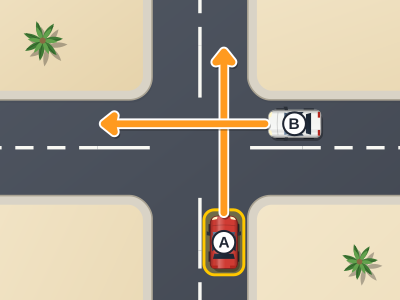
At an unmarked junction, a car arrives from your left at the same time as you. Who should go first?
The other 30 questions in this test
Read them all. The answer and the reason for each, and the timed 40-question run, are in the Fujairah Traffic Theory Test Questions PDF.
- Q11Road signs and signals
What does this sign mean and where is it commonly placed in the UAE?
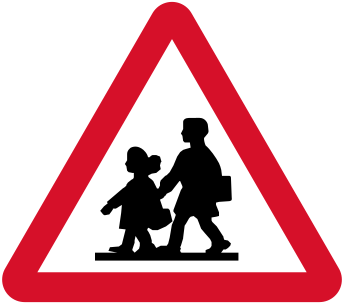
- AChildren or a school zone ahead; often placed near schools and parks
- BA nursery school advertisement; no legal effect
- CA hospital with a paediatric ward ahead
- DNo children allowed on the road beyond this point
Answer and explanation in the bank
- Q12Traffic rules
You want to enter a roundabout but traffic is continuously circulating with no gap. What should you do?
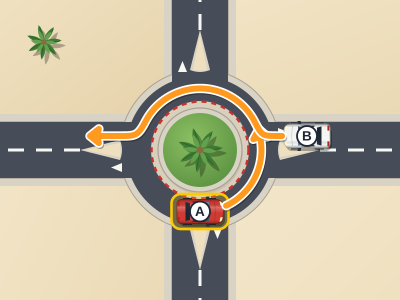
- APush out into the flow and make circulating traffic brake
- BSound your horn until a gap is created
- CEnter slowly and hope traffic avoids you
- DWait at the give-way line until a safe gap appears, then enter
Answer and explanation in the bank
- Q13Right of way
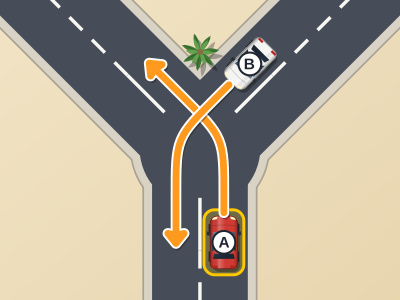
You reach a Y-junction where your road forks and there are no signs. Which road has priority?
- AThe straight-ahead road always has priority at a Y-junction
- BThe wider road always has priority
- CFollow the markings or, where there are none, treat it as an unmarked junction and give way to the right
- DThe road with more traffic automatically has priority
Answer and explanation in the bank
- Q14Penalties and fines
A driver performs drifting on a public road in the UAE. How is this treated under the law?
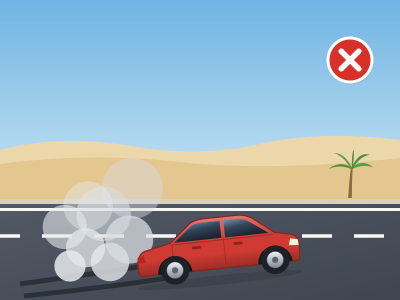
- ADrifting is allowed on public roads after midnight when traffic is light
- BDrifting is only an offence if you hit something
- CDrifting on a public road is a serious offence that can result in heavy fines, high black points, vehicle impounding and possible imprisonment
- DDrifting carries only a small warning fine
Answer and explanation in the bank
- Q15Safe driving
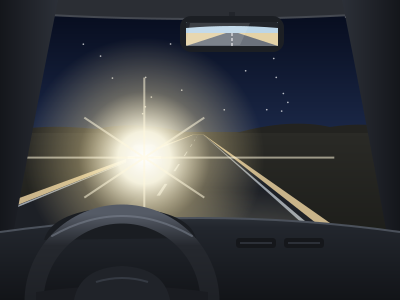
What should you do if oncoming headlights are dazzling you at night?
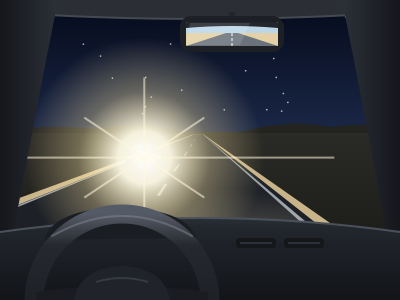
- AStare directly at the oncoming lights to judge their position
- BFlash your full beam back at the other driver
- CClose your eyes briefly until they pass
- DLook slightly towards the right edge of your lane until the vehicle passes
Answer and explanation in the bank
- Q16Road signs and signals
What should you do before you reach this road feature?
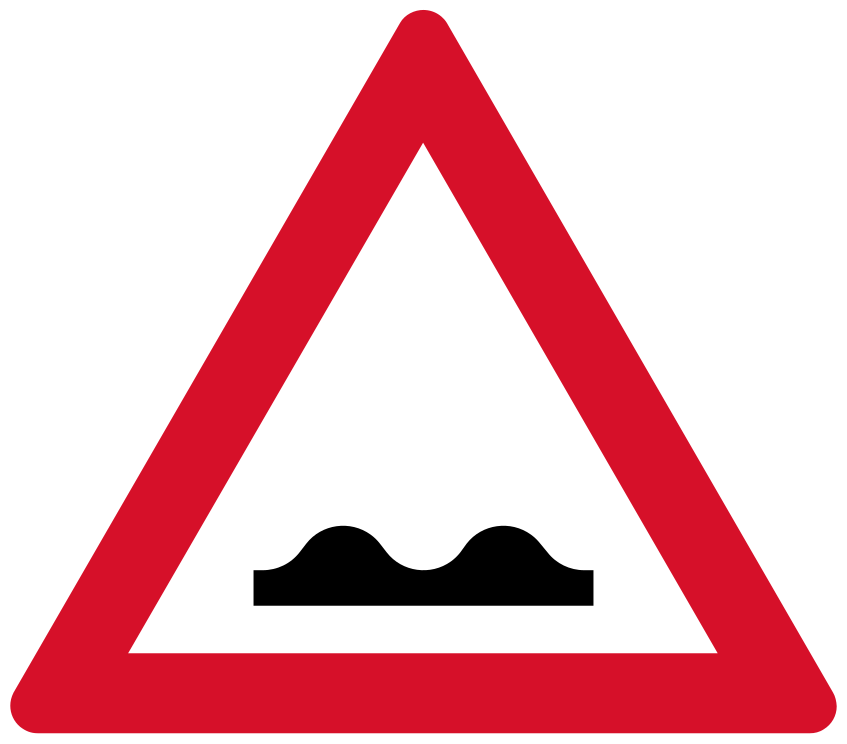
- ASpeed up to absorb the bump using momentum
- BSteer around it onto the opposite carriageway
- CContinue at the same speed and let the suspension absorb it
- DSlow down before you reach the bump, not on top of it
Answer and explanation in the bank
- Q17Traffic rules
Which combination of actions best describes correct behaviour when driving through a long tunnel in daylight?
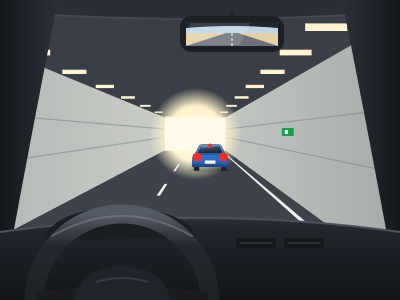
- ATurn on dipped headlights, keep your distance, follow lane markings and do not change lanes unnecessarily
- BKeep lights off because it is daytime and overtake freely
- CUse hazard lights the whole way and weave between lanes
- DStop midway to let your eyes adjust to the dark
Answer and explanation in the bank
- Q18Right of way
Two roads join at a sharp Y-junction. One road has a broken white give-way line across it and the other does not. Which driver must yield?
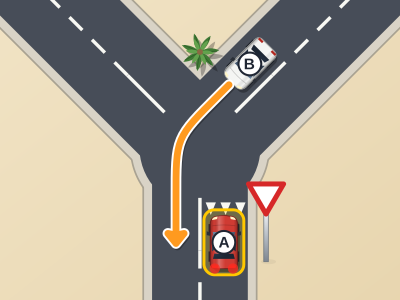
- AThe driver on the road with the give-way line must yield
- BBoth drivers have equal rights and negotiate
- CThe driver approaching from the left must yield
- DThe driver going straight has priority regardless of the line
Answer and explanation in the bank
- Q19Penalties and fines
A driver films themselves drifting and posts the video on social media. How does this affect the authorities' ability to prosecute?
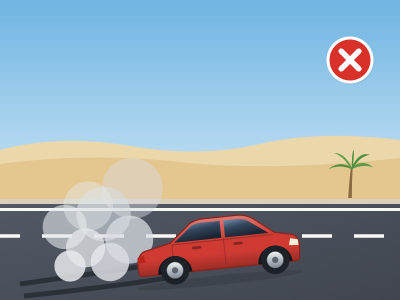
- APolice cannot use social media videos as evidence
- BVideo evidence of drifting on a public road, including self-posted footage, can be used to identify and prosecute the offender
- CPosting the video is itself a traffic offence but drifting is not
- DSelf-posted videos automatically grant immunity from prosecution
Answer and explanation in the bank
- Q20Safe driving
Strong sunlight is shining directly into your eyes while driving. Which action reduces glare most effectively?
- ADrive with your eyes partially closed
- BUse the sun visor and wear good quality polarised sunglasses
- CIncrease your speed to exit the glare zone faster
- DRemove your hands from the wheel and shield your eyes
Answer and explanation in the bank
- Q21Road signs and signals
You see this sign on the approach to a bend. Why is it placed there?
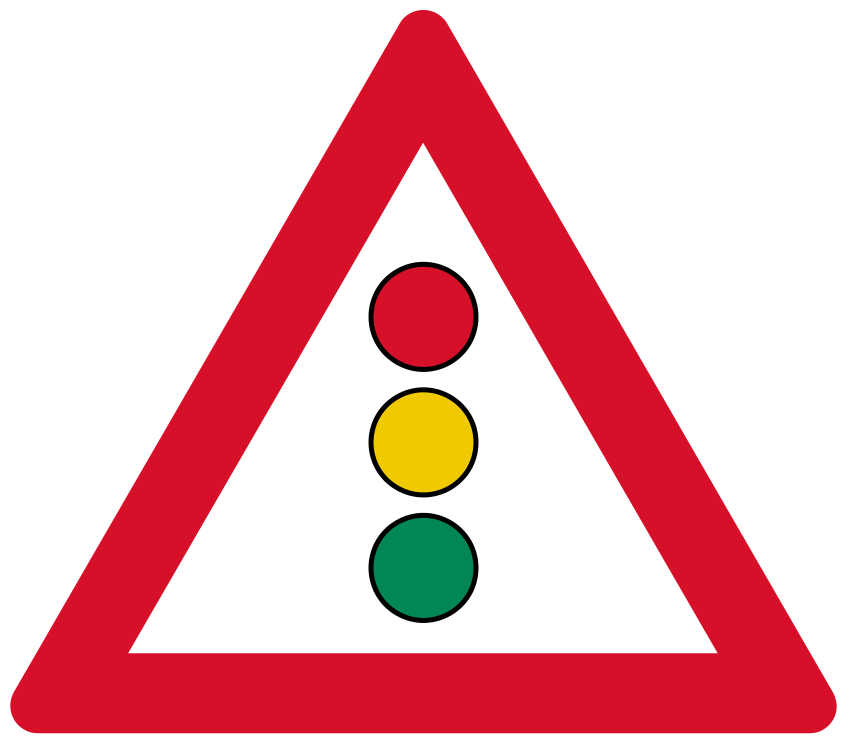
- ATo tell you the signals are broken and you should proceed with care
- BTo indicate you should switch on your own car lights
- CTo show where you are allowed to run a red light
- DThe signals may not be visible until after the bend, so advance warning is given
Answer and explanation in the bank
- Q22Traffic rules
You are driving at night with full-beam headlights and an oncoming vehicle appears. What must you do?
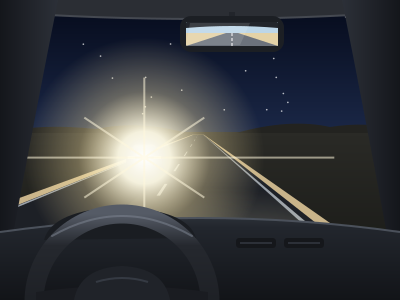
- AKeep full beam on so you can see the road better
- BSwitch to dipped (low-beam) headlights immediately to avoid dazzling the other driver
- CSwitch your lights off briefly as a courtesy signal
- DFlash your lights to warn the other driver
Answer and explanation in the bank
- Q23Right of way
You are entering a one-way street from a two-way road. Who has priority?
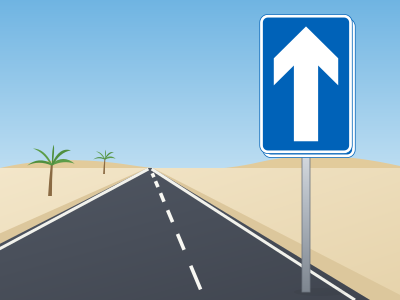
- AYou, because you are joining from a wider road
- BWhoever enters the one-way section first
- CThe two-way road always has priority over a one-way street
- DTraffic already travelling on the one-way street
Answer and explanation in the bank
- Q24Penalties and fines
What happens if a driver fails to pay a Salik (Dubai road-toll) charge?
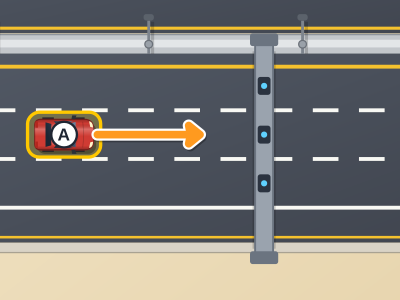
- ANothing happens; Salik evasion is never enforced
- BAn additional administrative penalty or fine is typically added to the unpaid toll, and renewal of registration may be blocked until the balance is cleared
- COnly a polite reminder letter is sent with no consequences
- DThe driver earns a free Salik credit
Answer and explanation in the bank
- Q25Safe driving
What does good hazard anticipation in defensive driving require?
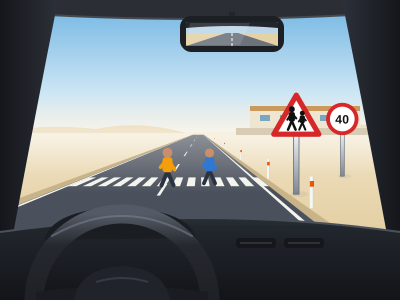
- AScanning far ahead, checking mirrors regularly, and reading the road for clues of danger
- BFocusing only on the vehicle directly in front of you
- CReacting only after a hazard has fully developed
- DTrusting other drivers to warn you before acting
Answer and explanation in the bank
- Q26Road signs and signals
This sign is posted at the top of a hill. Can you overtake the vehicle in front?
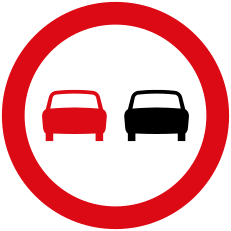
- ANo, the no-overtaking restriction applies regardless of what you think you can see
- BYes, if the road looks clear when you reach the crest
- CYes, if the vehicle ahead is going below the speed limit
- DYes, because the sign only applies on flat roads
Answer and explanation in the bank
- Q27Traffic rules
You are parking on a downhill slope facing downhill. Which way should you turn your front wheels as an added safety measure?
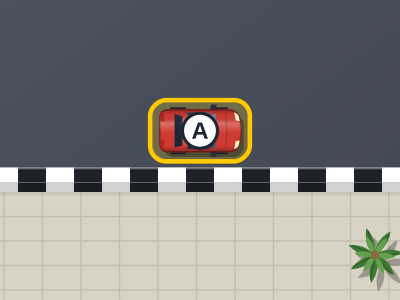
- AKeep them straight to make re-starting easier
- BTurn them toward the kerb so the car rolls into it if the handbrake fails
- CTurn them away from the kerb so the car rolls into the road
- DWheel direction does not matter as long as the handbrake is on
Answer and explanation in the bank
- Q28Right of way
You are exiting a one-way street onto a two-way road. Which way must you look before pulling out?
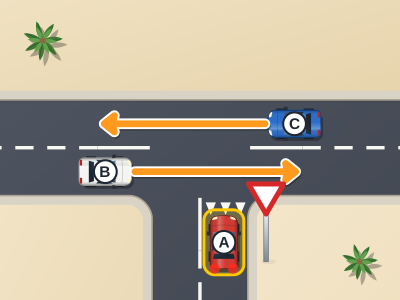
- ABoth left and right, as two-way traffic may come from either direction
- BOnly right, because you are joining from the left side
- COnly left, because the closest traffic will come from the left
- DStraight ahead only, to monitor the exit
Answer and explanation in the bank
- Q29Penalties and fines
A driver is involved in a minor traffic collision and drives away without stopping. What is the correct statement?
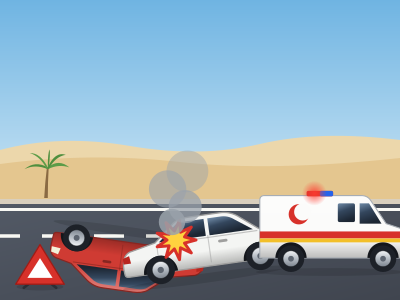
- AIt is acceptable to leave if there are no injuries
- BLeaving the scene of an accident is an offence that typically carries a fine, black points and possibly imprisonment
- COnly the other driver needs to stay; you may leave
- DLeaving is fine as long as you call the police from elsewhere
Answer and explanation in the bank
- Q30Safe driving
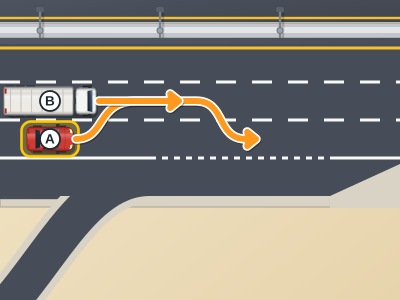
When following a large truck, why should you increase your following gap beyond normal?
- ATrucks always stop faster than cars, so you need less distance
- BYou do not need any adjustment when following a truck
- CThe truck blocks your view ahead, so you need extra time to see and react to hazards
- DA bigger gap lets you draft behind the truck to save fuel
Answer and explanation in the bank
- Q31Road signs and signals
You see this sign on an urban road. What must you NOT do?
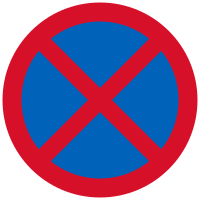
- AOvertake the vehicle in front
- BStop your vehicle at any time, even briefly
- CExceed the speed limit
- DUse your horn
Answer and explanation in the bank
- Q32Traffic rules
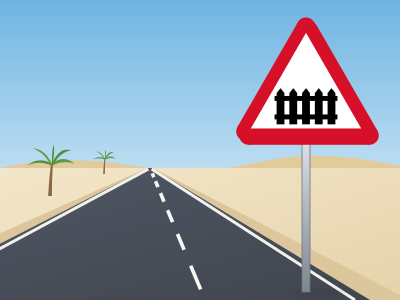
You approach a level crossing and the warning lights begin to flash and the barrier starts to lower. What should you do?
- AAccelerate quickly to cross before the barrier fully closes
- BStop before the barrier or stop line and wait until the train has passed and it is fully clear
- CProceed slowly under the descending barrier
- DStop on the tracks and wait for instructions
Answer and explanation in the bank
- Q33Right of way
On a multi-lane roundabout you want to take the next exit. Which lane should you generally be in before reaching that exit?
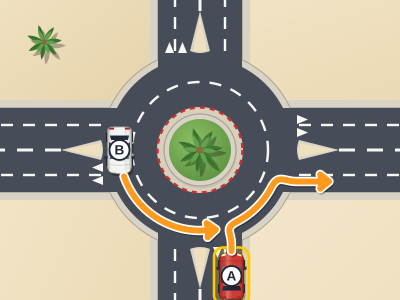
- AThe outer (rightmost) lane of the roundabout to make a smooth exit
- BThe innermost lane so you can see further ahead
- CAny lane, since you can change lanes freely near the exit
- DThe lane to the left of the inner lane only
Answer and explanation in the bank
- Q34Penalties and fines
What is the penalty for throwing rubbish or littering from a vehicle on a UAE road?
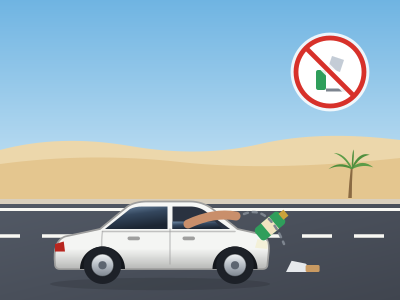
- AIt is an offence that typically carries a fine, as littering from a vehicle is illegal
- BIt is only an offence if the litter hits another vehicle
- CSmall items such as cigarette butts are always exempt
- DLittering from a car is not a traffic offence
Answer and explanation in the bank
- Q35Safe driving
What is the safest way to overtake a large truck on a multi-lane road?
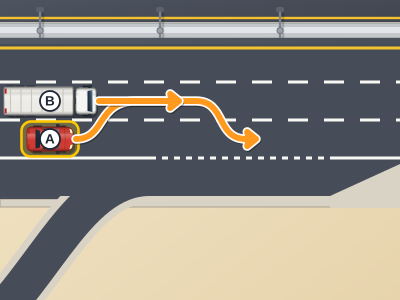
- AStay alongside the truck until traffic clears ahead
- BPass quickly in one smooth move, do not linger in the truck's blind spots
- CMove into the space directly alongside the cab first and signal to the driver
- DOvertake on the right-hand side, where the driver can see you better
Answer and explanation in the bank
- Q36Road signs and signals
You see a No Parking sign. Your passenger urgently needs to leave the car. What are you allowed to do?
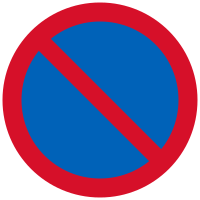
- APark normally because emergencies override the sign
- BStop briefly to let the passenger out, but do not leave the vehicle unattended
- CNeither stop nor park at any point along this stretch
- DPark for up to five minutes, as the sign allows short waits
Answer and explanation in the bank
- Q37Traffic rules
What is the primary purpose of a marked bus lane?
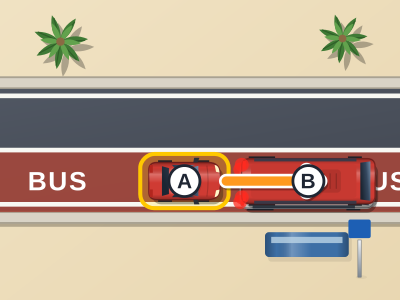
- ATo provide an extra overtaking lane for private cars in rush hour
- BTo mark the hard shoulder as a bus-only stopping area
- CTo keep a dedicated lane clear for buses, taxis and other authorised vehicles so they can move freely
- DTo separate oncoming traffic from the main flow
Answer and explanation in the bank
- Q38Right of way
You are in the inner lane of a multi-lane roundabout and need to exit. A vehicle in the outer lane is level with you and also approaching your intended exit. Who gives way?
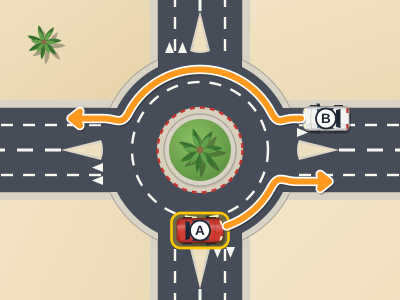
- AYou give way to the outer-lane vehicle and exit behind it when safe
- BYou have priority because you are further into the roundabout
- CBoth can exit simultaneously if they signal
- DThe faster vehicle exits first
Answer and explanation in the bank
- Q39Penalties and fines
A driver stops their vehicle in the middle of a road, blocking traffic with no emergency or breakdown. What can happen?
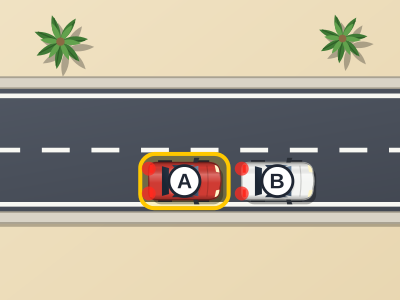
- AObstructing traffic without a valid reason is an offence carrying a fine and possibly black points
- BIt is allowed as long as the hazard lights are on
- CBlocking traffic is never a separate offence
- DIt only becomes an offence if other drivers complain
Answer and explanation in the bank
- Q40Safe driving
Your vehicle breaks down on a motorway. In what order should you take the first actions?
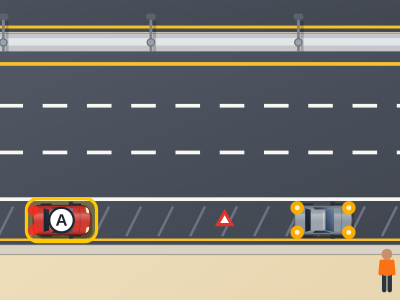
- AStop in the live lane, then get out to inspect the vehicle
- BStay in the car in the live lane and wait for police
- CMove to the hard shoulder, switch on hazard lights, get everyone out by the right-hand (passenger) doors away from traffic, put out a warning triangle if safe and call for help
- DPush the car to the nearest junction before stopping
Answer and explanation in the bank
Every answer above, with the rule it comes from, plus the full 40-question timed test.
Get the Fujairah Traffic Theory Test Questions - AED 15What this test covers
Topics include road signs, traffic signals, right of way, roundabouts, speed limits, seat belts, fines and penalties, and the safe-driving rules specific to your vehicle category. Full question-by-question feedback with explanations is shown immediately after you finish the test above.
Frequently asked questions
How many questions is the Fujairah Traffic motorcycle theory test?
The official Fujairah Traffic motorcycle theory test in Fujairah has 40 questions and you need 30 correct (75%) to pass. This practice test has 40 questions.
Is this the real exam?
These are practice questions for study only, written from the public RTA handbook and UAE traffic rules and to what candidates report from the real test. They are not the official exam questions and Wathim is not affiliated with the RTA, ITC, SRTA or any UAE government body. Test format, question count and pass mark can change and vary by emirate, so always confirm the current requirements with the licensing authority before your real test.
Is this practice test free?
The first 10 questions are free, with no signup, and each shows the answer and the reason. The full 40-question test, timed, is in the Fujairah Traffic Theory Test Questions PDF (AED 15, one payment), with every question in the bank.
What does the Fujairah motorcycle theory test cover?
Road signs, traffic signals, right of way, roundabouts, speed limits, seat belts, penalties and safe-driving rules, plus the handling and safety topics specific to your vehicle.