

Fujairah Traffic Motorcycle
Practice mode· Motorcycle skillsFujairah Traffic - UAE Motorcycle Safety Practice Test
Rider safety essentials: protective gear, visibility, safe following distances, hazard awareness, lane position and sharing the road with larger vehicles.
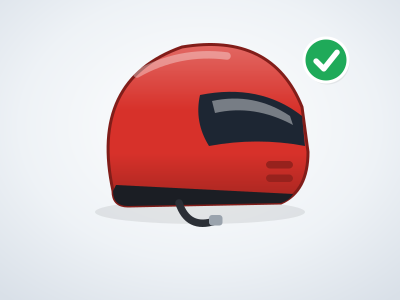
Which helmet standard is accepted by the UAE for motorcycle riders?
The other 10 questions in this test
Read them all. The answer and the reason for each, and the timed 20-question run, are in the Fujairah Traffic Theory Test Questions PDF.
- Q11Motorcycle safety
In UAE summer conditions, why is dehydration a particular hazard for motorcyclists?
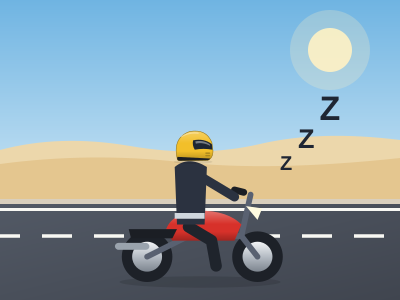
- AHeat and wind cause rapid fluid loss, which impairs concentration, reaction time, and decision-making
- BDehydration only affects physical strength and does not impact riding ability
- CModern motorcycle gear prevents dehydration by trapping body moisture
- DDehydration only becomes dangerous after twelve hours of continuous riding
Answer and explanation in the bank
- Q12Motorcycle safety
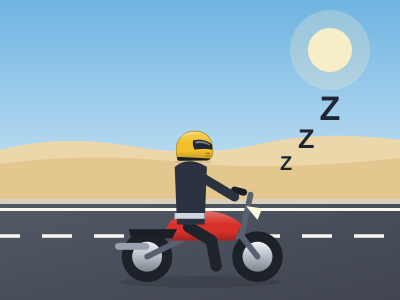
How often should a motorcyclist take a break on a long UAE desert highway journey?
- AOnly when the fuel tank is running low
- BEvery five hours is sufficient for an experienced rider
- CBreaks are only necessary at night because daytime alertness is self-sustaining
- DAt least every two hours, or sooner if feeling tired, drowsy, or thirsty
Answer and explanation in the bank
- Q13Motorcycle safety
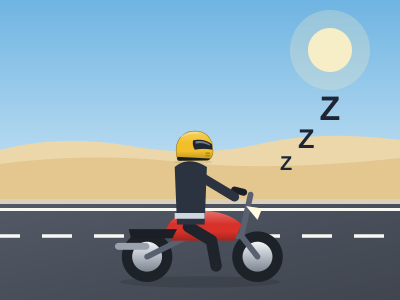
A rider notices their eyes are dry and they keep misjudging distances to vehicles ahead. What is the most likely cause and correct action?
- AThese symptoms indicate a dirty visor; clean the visor and continue riding
- BDistance misjudgement is normal on long straight UAE roads and no action is needed
- CThese are signs of dehydration and fatigue; stop at the next safe location, drink water, and rest before continuing
- DDry eyes are caused only by air conditioning; opening the visor fully will resolve it
Answer and explanation in the bank
- Q14Motorcycle safety
When is a motorcyclist most at risk of being missed by a car driver turning across their path at a junction?
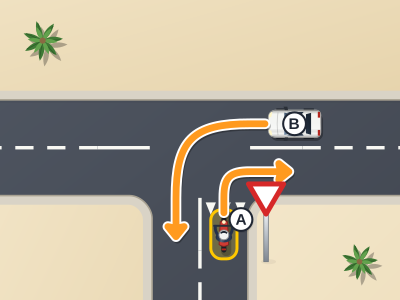
- AWhen overtaking at high speed, because the car driver is surprised by the sudden appearance
- BWhen riding slowly through a car park, because drivers do not expect motorcycles there
- CWhen riding at night with a headlight on, because the light dazzles the turning driver
- DWhen approaching at a steady speed in daylight, appearing slow or stationary to the turning driver due to the looked but failed to see phenomenon
Answer and explanation in the bank
- Q15Motorcycle safety
You are riding and notice gravel scattered across a bend in the road. What is the safest response?
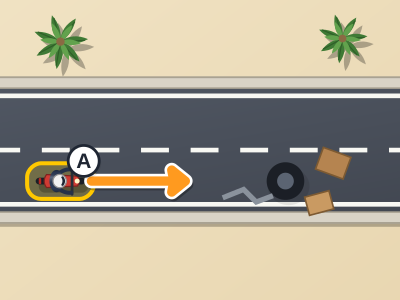
- AAccelerate through the gravel to cross it as quickly as possible
- BApply the front brake hard to stop before reaching the gravel
- CLean the bike as normal and trust the tyre tread to grip the gravel
- DSlow down before the bend, stay as upright as possible, and do not brake or accelerate sharply while on the gravel
Answer and explanation in the bank
- Q16Motorcycle safety
You are riding on a UAE expressway and notice a large lorry ahead. What additional space buffer should you maintain?
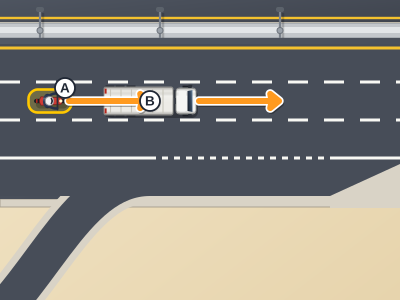
- AMaintain the same two-second gap as you would for a car
- BReduce the gap to use the lorry as a windbreak
- CRide in the lorry driver's blind spot to avoid wind buffeting
- DIncrease the following distance significantly because lorries have much longer stopping distances and create large wind turbulence
Answer and explanation in the bank
- Q17Motorcycle safety
Is lane-splitting (riding between lanes of slow or stopped traffic) generally permitted in the UAE?
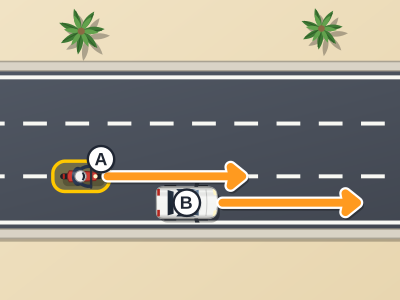
- AIt is fully permitted at speeds under 30 km/h
- BIt is permitted on all roads except expressways
- CIt is permitted only on motorcycles over 600 cc
- DNo: riders must stay within a lane and not ride between lanes of traffic
Answer and explanation in the bank
- Q18Motorcycle safety
What is the main danger of riding between stationary vehicles even briefly?
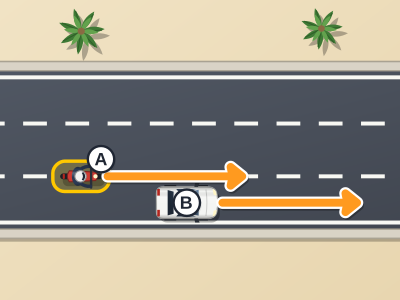
- AThe rider's exhaust may overheat due to reduced airflow at low speed
- BThe rider will use significantly more fuel than normal
- CCar doors may open suddenly, vehicles may move without warning, and mirrors can strike the rider
- DThe motorcycle engine may stall due to reduced speed
Answer and explanation in the bank
- Q19Motorcycle safety
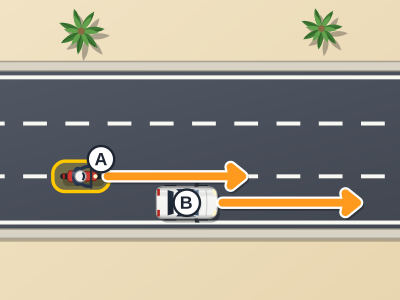
Which area of the road is the most common blind spot for car drivers that places motorcyclists at risk?
- ADirectly behind the car at a distance of 50 metres or more
- BDirectly in front of the car beyond 20 metres
- COn the bonnet of the car within two metres of the bumper
- DJust to the rear and side of the car, in the area not covered by the door or rear-view mirrors
Answer and explanation in the bank
- Q20Motorcycle safety
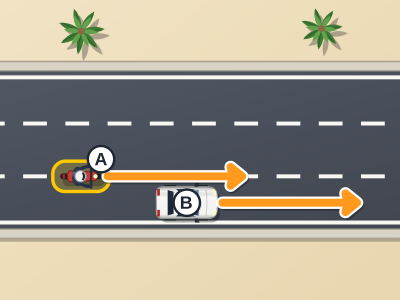
A car is about to merge left on a UAE multi-lane road and you are on the car's left. What should you do?
- AAccelerate to pass the car before it can move
- BBack off, sound the horn if needed, and allow space for the car to merge without assuming the driver sees you
- CMove toward the central reservation to create room
- DFlash your headlight to signal your presence
Answer and explanation in the bank
Every answer above, with the rule it comes from, plus the full 20-question timed test.
Get the Fujairah Traffic Theory Test Questions - AED 15What this test covers
Topics include road signs, traffic signals, right of way, roundabouts, speed limits, seat belts, fines and penalties, and the safe-driving rules specific to your vehicle category. Full question-by-question feedback with explanations is shown immediately after you finish the test above.
Frequently asked questions
How many questions is the Fujairah Traffic motorcycle theory test?
The official Fujairah Traffic motorcycle theory test in Fujairah has 40 questions and you need 30 correct (75%) to pass. This practice test has 20 questions.
Is this the real exam?
These are practice questions for study only, written from the public RTA handbook and UAE traffic rules and to what candidates report from the real test. They are not the official exam questions and Wathim is not affiliated with the RTA, ITC, SRTA or any UAE government body. Test format, question count and pass mark can change and vary by emirate, so always confirm the current requirements with the licensing authority before your real test.
Is this practice test free?
The first 10 questions are free, with no signup, and each shows the answer and the reason. The full 20-question test, timed, is in the Fujairah Traffic Theory Test Questions PDF (AED 15, one payment), with every question in the bank.
What does the Fujairah motorcycle theory test cover?
Road signs, traffic signals, right of way, roundabouts, speed limits, seat belts, penalties and safe-driving rules, plus the handling and safety topics specific to your vehicle.